Coolant Flush vs Coolant Top-Off: Which You Need First
Top off coolant only when the engine is cold and the level sits just below the MIN line; flush only for dirty coolant, wrong coolant type, or a service interval that has arrived, and diagnose any repeat loss before adding more. Guessing wrong can overfill, hide a leak, or leave corrosive coolant in the system until a water pump, radiator, or head gasket pays the price. This guide shows how to choose between top-off, flush, and leak diagnosis, plus what to check before you buy fluid.
Coolant flush vs coolant top-off: the real choice
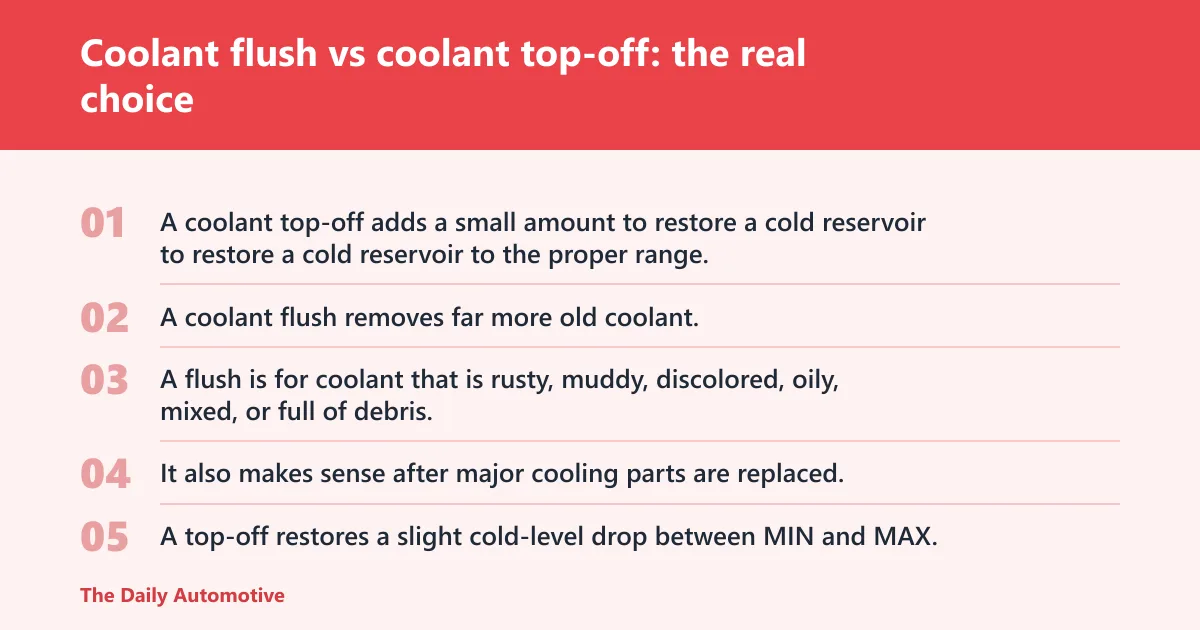


The trade-off is simple. A coolant top-off adds a small amount to restore a cold reservoir to the proper range. A coolant flush removes far more old coolant, then refills with the correct mix and air-bleeds the system when the fluid is dirty, wrong, or overdue.
| Decision factor | Coolant Flush | Coolant Top-Off | Winner |
|---|---|---|---|
| What it changes | Removes old coolant more completely and replaces it with fresh coolant | Adds a small amount only; old coolant stays in the system | Coolant Flush |
| Best use case | Contaminated, mixed, wrong, or overdue coolant | Known-correct coolant is slightly low on a cold engine | Tie |
| Risk if chosen wrong | Wasted work if the system only needed a small add | Leaves dirty or incompatible coolant in place | Coolant Flush |
| Repeat-loss clue | Does not diagnose a leak by itself | Does not diagnose a leak by itself | Tie |
| Needed follow-up | Correct concentration and air bleeding | Check for leaks if the level drops again | Tie |
What the flush actually does
A flush is for coolant that is rusty, muddy, discolored, oily, mixed, or full of debris. It also makes sense after major cooling parts are replaced, because the system may carry old contamination or the wrong chemistry into the new repair. A flush is not the same as a quick add.
What the top-off actually does
A top-off restores a slight cold-level drop between MIN and MAX. It does not remove old coolant, it does not fix contamination, and it does not repair a leak. When the right coolant is already known, this is the smallest correct move.
Why the winner changes with the symptom
If the reservoir is just a little low once, top-off wins because it is the lightest valid action. If the coolant is dirty or the service history is unclear, flush wins because the problem is inside the fluid itself. When the level keeps falling, neither service wins until the leak is found.
How high should coolant be filled?
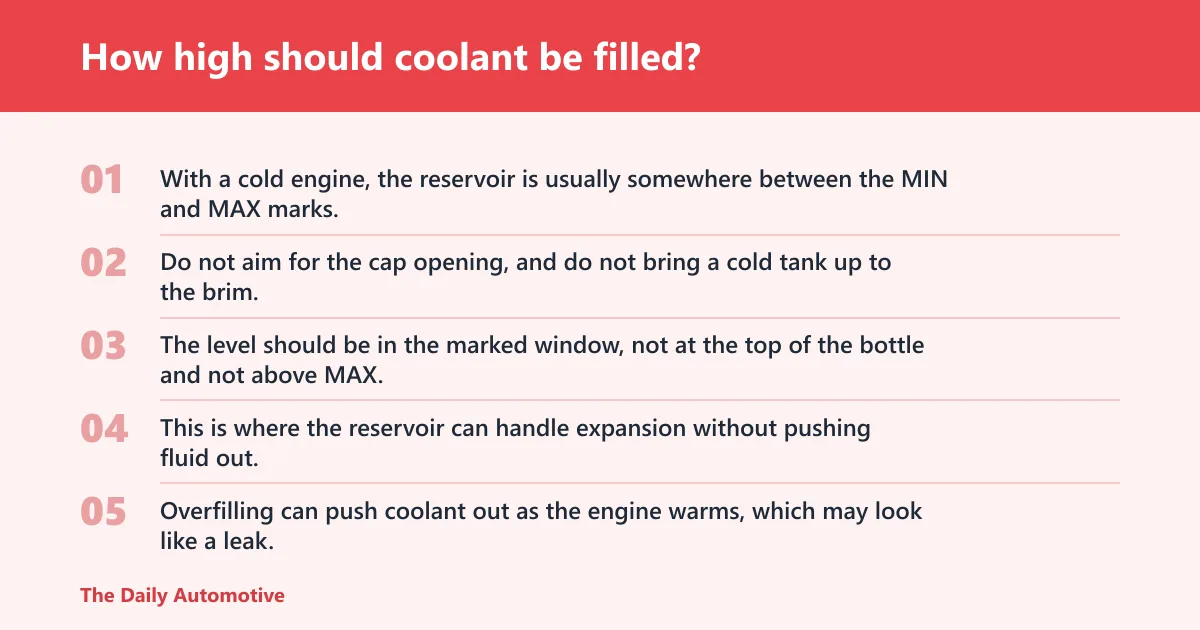
With a cold engine, the reservoir is usually somewhere between the MIN and MAX marks. That is the target. Do not aim for the cap opening, and do not bring a cold tank up to the brim, because coolant expands as it heats and the system needs air space to work correctly.
Cold-engine reservoir reading: MIN to MAX is the target range
Read the tank only when the engine is cold. The level should be in the marked window, not at the top of the bottle and not above MAX. This is where the reservoir can handle expansion without pushing fluid out.
Why you do not fill to the top
Overfilling can push coolant out as the engine warms, which may look like a leak. It can also splash into places it should not be. A small drop below MAX is normal in some systems after cooling down.
When the cap area should stay untouched
The cap and pressure neck are not the place to chase a level. A cooling system pressure cap maintains pressure, and opening a warm system can spray scalding coolant. If the level is at MAX on a cold reservoir, leave it alone.
When is a coolant top-off enough?
Top-off is enough when the engine is cold, the reservoir is only slightly low, the correct coolant is already known, and there are no signs of contamination or repeat loss. A sealed cooling system should not need routine repeated top-offs, so a second drop needs attention.
Small cold-level drop after normal driving
A little movement in the reservoir can happen after service, after a repair, or as air works out of the system. If the level is just under MIN and the fluid looks clean, add only enough to return it to the proper range.
Correct coolant spec already in the car
Coolant top-off is fine when the exact coolant type is known. That matters more than color. IAT, OAT, and HOAT are coolant chemistry families, and compatibility matters more than matching the bottle color.
No signs of contamination, overheating, or repeat loss
If the fluid is clean and the engine stays at normal temperature, top-off can be the correct stopgap. If the level keeps falling, that points toward a leak, a weak cap, or another fault that needs diagnosis.
When do you need a coolant flush?
A flush is often a good idea when coolant is contaminated, the chemistry is wrong or unknown, or the owner’s manual calls for service. A flush removes much more old coolant than a drain-and-fill, then refills with the correct concentration and bleeds air so the system can heat and cool normally.
Rusty, sludgy, oily, or mixed coolant
Rusty, muddy, discolored, oily, or debris-filled coolant is a flush case. Those conditions fit the kind of contamination that can block heat transfer and shorten component life. If the fluid looks wrong, adding more of the same is the wrong move.
Wrong chemistry or unknown service history
If the previous service is unknown, or the wrong coolant may have been added, a flush is the safer reset. Do not trust color alone. A bright green coolant and a pink coolant can be incompatible depending on the formulation.
Overdue service called out in the owner’s manual
The owner’s manual service interval overrides generic mileage advice. Coolant additives like corrosion inhibitors and pH stabilizers degrade over time, so old coolant can lose protection even when it still looks passable. Some vehicles also call for service after major cooling parts are replaced.
What to check before buying fluid
Check the owner’s manual first. Then match coolant chemistry, concentration, and service type to the vehicle’s needs. The cheapest bottle is not the right bottle if it does not meet the spec already in the system.
Coolant chemistry types: IAT, OAT, and HOAT
IAT, OAT, and HOAT are different chemistry families. Compatibility matters more than color because the additives inside the coolant do the real work. Mixing the wrong types can create protection problems even when the liquid looks normal.
Coolant concentration and why 50/50 is common but not universal
Coolant concentration must match the vehicle spec. A 50/50 mix is common, but not universal, and the wrong concentration can reduce freeze and boil protection. Use what the manual calls for, not what a shelf label suggests by default.
Owner’s manual first, generic mileage second
Routine mileage rules are too blunt for cooling systems. The manual is the source that matters because engine design, coolant type, and heat load change the interval. That is why two vehicles with similar mileage can need different service.
Use this coolant decision checklist
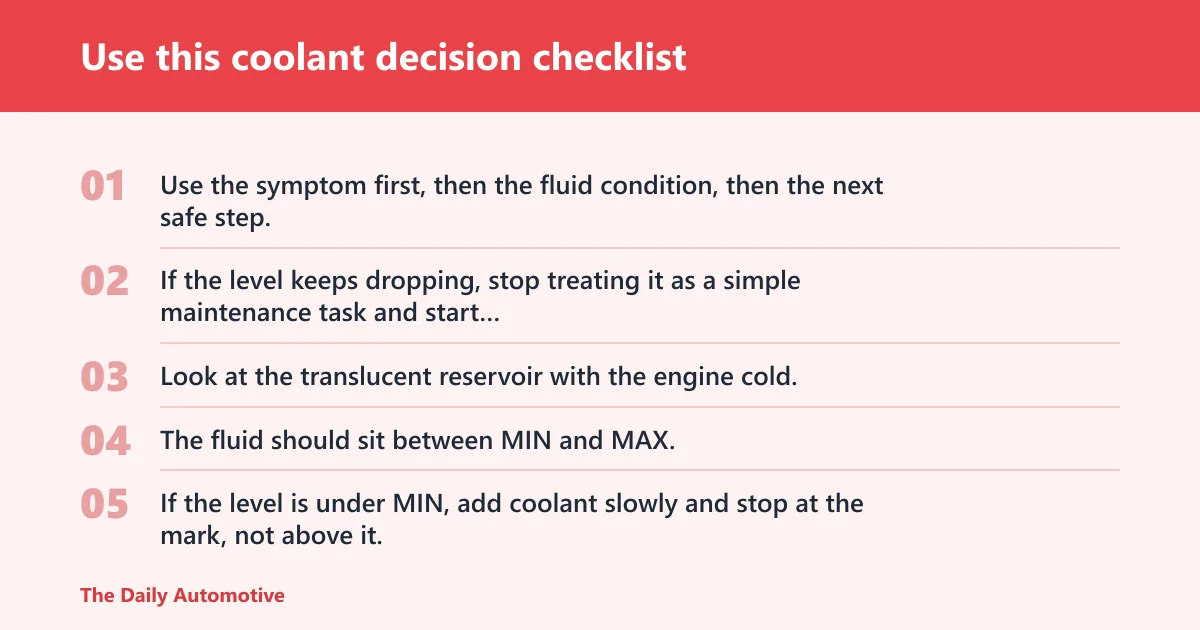
Use the symptom first, then the fluid condition, then the next safe step. If the level keeps dropping, stop treating it as a simple maintenance task and start treating it as a leak problem.
| Symptom | Likely cause | Safe next step | Do-not-do warning |
|---|---|---|---|
| Cold reservoir is just below MIN once | Normal small loss, recent service, or minor air purge | Top off with the correct coolant to the MIN/MAX range | Do not fill above MAX or to the brim |
| Coolant is rusty, sludgy, oily, mixed, or dirty | Contamination or wrong coolant | Plan a flush with correct refill and air bleeding | Do not keep topping off dirty coolant |
| Level keeps dropping after being topped off | Leak, weak pressure cap, hose, radiator, water pump, heater core, or head gasket issue | Stop and diagnose the leak source | Do not assume another top-off will solve it |
| Heater output is weak after a drain or repair | Trapped air in the system | Bleed the system or use vacuum fill as required | Do not ignore air in the system |
| Overheating or temperature swings | Cooling-system fault, flow issue, or air pocket | Diagnose before adding fluid | Do not treat overheating as a coolant shortage alone |
Photo guide for reservoir MIN/MAX marks and cold fill targets
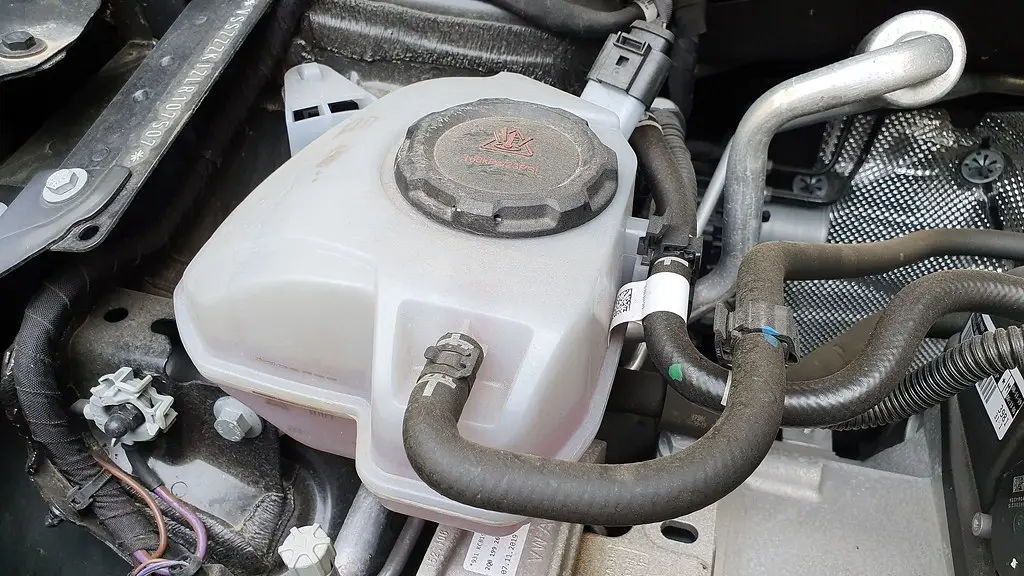
Look at the translucent reservoir with the engine cold. The fluid should sit between MIN and MAX, usually near the middle or slightly toward MAX after a proper fill. If the level is under MIN, add coolant slowly and stop at the mark, not above it.
Stop-and-diagnose trigger for repeat low coolant
If the level drops again after a top-off, stop there. If coolant keeps running low, it often points to a leak rather than simply needing more fluid. Common places to look include the radiator, hoses, water pump, heater core, or a pressure cap that may no longer hold pressure.
Choose Coolant Flush if… / Choose Coolant Top-Off if…
Choose a coolant flush when the fluid is contaminated, the chemistry is wrong or unknown, the service interval is due, or major cooling parts were just replaced. Choose a coolant top-off when the engine is cold, the level is only slightly low, and the correct coolant is already known. If the level drops again, the next step is diagnosis.
Choose Coolant Flush if…
Use a flush when coolant is rusty, sludgy, oily, mixed, or debris-filled. Use it when the owner’s manual says service is due, or when the vehicle has had major cooling-system parts replaced and the old fluid should be removed more thoroughly than a drain-and-fill.
Choose Coolant Top-Off if…
Use a top-off when the reservoir is just below MIN on a cold engine, the coolant type is known, and the system otherwise looks healthy. It is the right move for a small, confirmed level correction. It is not a fix for contamination or repeat loss.
Why repeated loss means leak diagnosis, not more coolant
A sealed cooling system should not need routine repeated top-offs. If the level keeps falling, inspect the radiator, hoses, water pump, heater core, pressure cap, and related seals. Coolant added over and over only hides the real fault.
Frequently asked questions
coolant flush vs coolant top off
A coolant top-off adds only enough fluid to bring a cold reservoir back between MIN and MAX. A flush removes much more of the old coolant and replaces it with the correct mix. Top-off is for a small confirmed drop; flush is for dirty, wrong, or overdue coolant.
how high should coolant be filled
When the engine is cold, coolant should sit between the reservoir’s MIN and MAX marks. That range leaves room for expansion as the engine warms. Do not fill to the cap opening or above MAX, because overflow and false leak symptoms can follow.
is radiator flush same as coolant flush
People often use the terms interchangeably, but a coolant flush is the broader service idea. It involves removing old coolant more completely than a drain-and-fill, then refilling with the correct mix and bleeding air. A simple radiator drain alone is usually only partial renewal.
how often should you flush cooling system and replace coolant
Follow the owner’s manual, not a generic mileage rule. Intervals vary with coolant type, engine design, and service history. Some vehicles also call for service after major cooling parts are replaced. If the fluid is contaminated before the interval, service comes earlier.
will a coolant flush help overheating
Not by itself. Overheating is a diagnosis problem first, because the cause may be low coolant from a leak, trapped air, a weak pressure cap, a water pump issue, or even a head gasket fault. A flush only helps when bad coolant is part of the problem.
what to use for coolant flush
Use the method the owner’s manual allows, and end with the correct coolant concentration for the vehicle. A flush may use plain water rinse, a cleaning product, or exchange equipment, depending on the system and the contamination level. Air bleeding or vacuum fill afterward matters just as much as the flush itself.
Products related to this article
Sponsored / affiliate links. As an Amazon Associate I earn from qualifying purchases. I may earn additional commission from eligible campaigns.