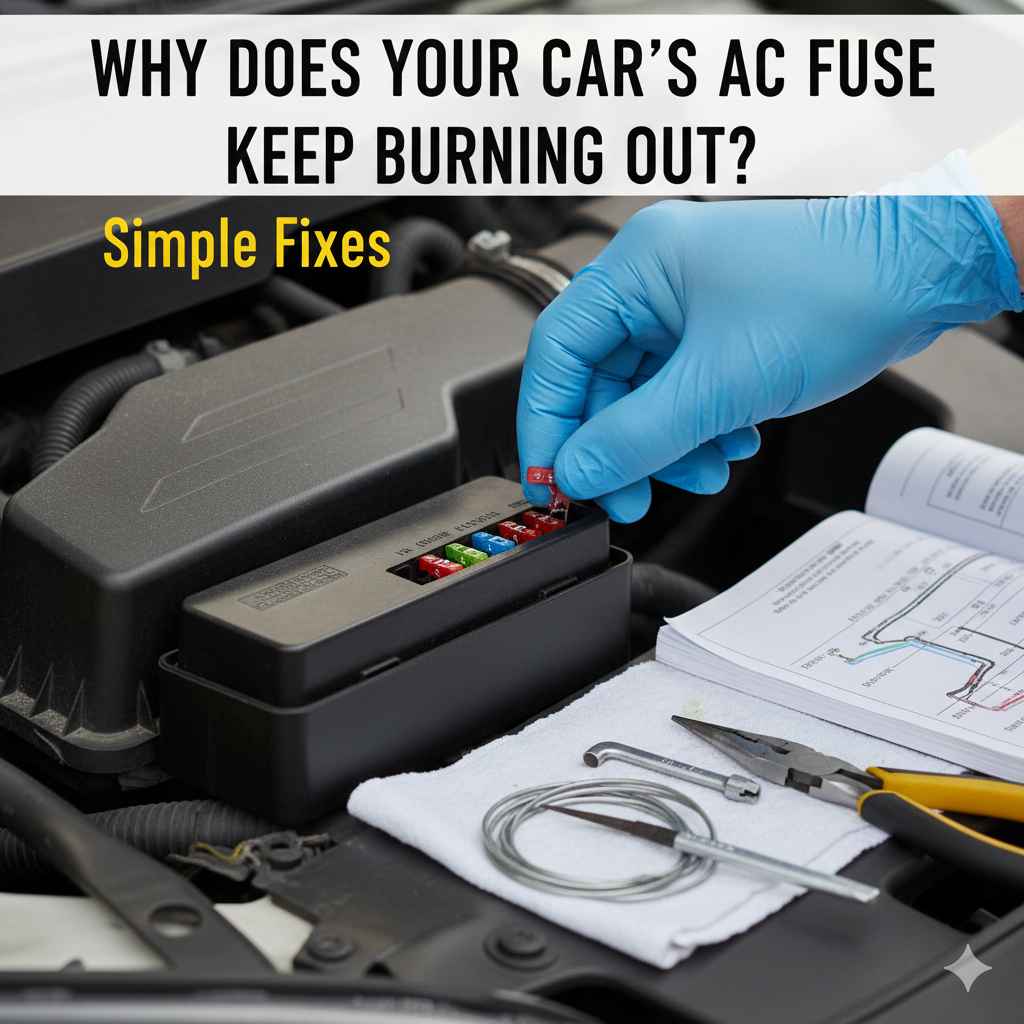
Why Does Your Car’s AC Fuse Keep Burning Out? Simple Fixes
If you’re wondering Why Does My Car’s AC Fuse Keep Blowing?, you’re not alone. This is a common car problem, especially for people who are just starting out with car repairs. It can seem confusing, but don’t worry! We’ll explore the issue step by step, making it easy to see what’s happening. You’ll learn the most likely causes and get clear advice on how to get your air conditioning working again. Let’s find out what’s causing this problem and how to solve it!
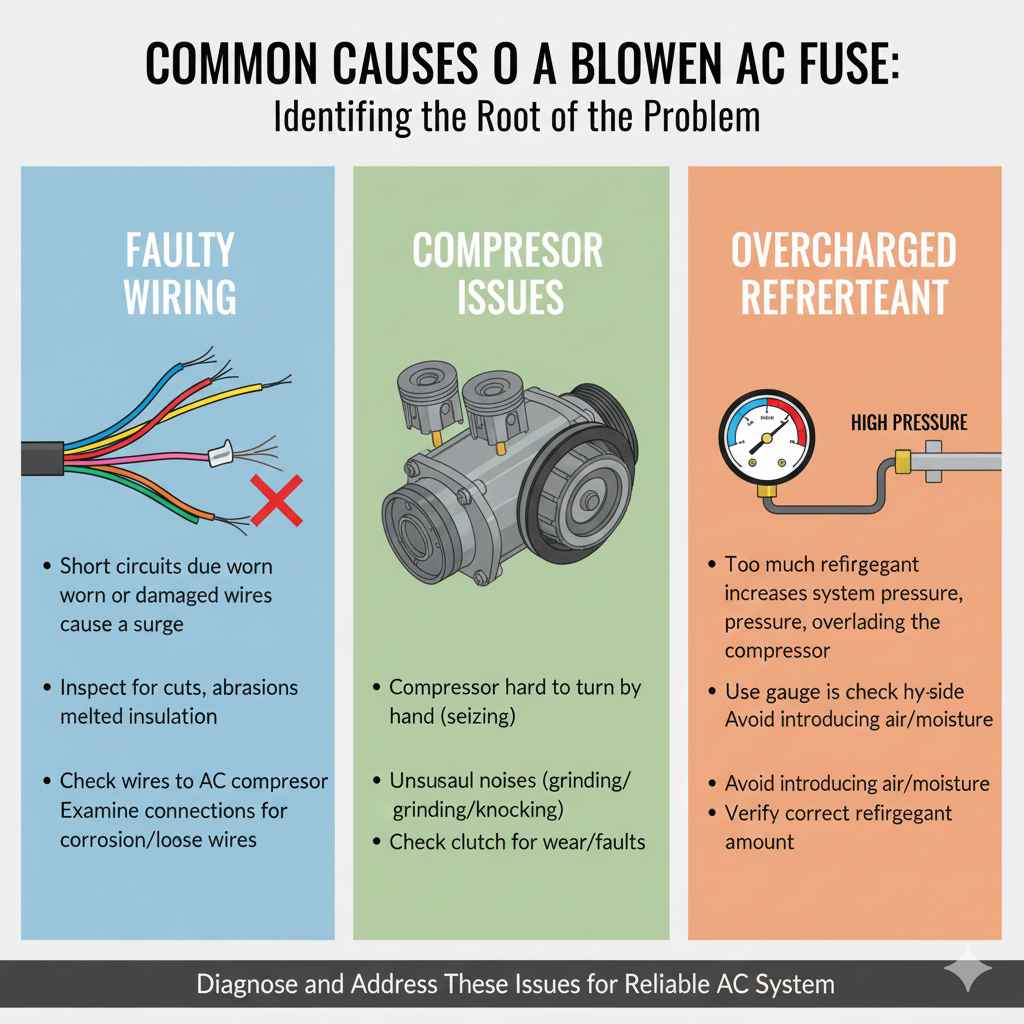
Common Causes of a Blown AC Fuse
A blown fuse is a frustrating problem. The air conditioning system in your car is designed to cool you down, and when it stops working, it can make for an uncomfortable drive. When the AC fuse keeps blowing, it’s usually a sign that something isn’t right within the AC system. Identifying the root cause is the first step in fixing the issue.
Several things can cause this, ranging from simple wiring issues to more complex mechanical problems. We’ll explore the most frequent culprits and how they might lead to your AC fuse repeatedly failing. This section focuses on easy-to-check components, which are often the source of the trouble.
Faulty Wiring
One of the most frequent reasons a car’s AC fuse blows is a wiring problem. Wires can become worn out, frayed, or damaged over time, leading to shorts. A short circuit happens when electricity takes an unintended path, which causes a surge of current and blows the fuse to protect the system. Look for any visible damage to the wires connected to your AC compressor, condenser, or other AC components. Even a small piece of damaged insulation can create a short. It is essential to ensure that the wiring is correctly routed and securely fastened, as loose wires can move around and potentially create a short.
The wiring harness might show signs of wear and tear, and it’s always a good idea to inspect it thoroughly. Also, check for any corroded connections, as corrosion can increase resistance and cause overheating, which can lead to a fuse failure.
- Inspect the wiring harness for any signs of damage, such as cuts, abrasions, or melted insulation.
- Check the wires that connect to the AC compressor, as they are a common spot for problems.
- Examine the connections for corrosion or loose connections that could cause a short.
For example, a car owner noticed their AC fuse kept blowing after they had their car washed. They found that water had gotten into a connector near the AC compressor, causing a short circuit. After drying the connector and ensuring it was sealed properly, the problem was solved. This shows how crucial it is to examine wiring in areas that may be exposed to water or moisture. Another car owner had an intermittent AC problem. They found a wire had been pinched and its insulation worn off. This was causing a short only when the car was driven over bumps. Replacing the damaged wire fixed the issue.
Compressor Issues
The AC compressor is the heart of your air conditioning system. It’s responsible for circulating the refrigerant that cools the air. If the compressor has a problem, like an internal short or seizure, it can draw too much current and blow the fuse. The compressor can become difficult to turn or seize up because of internal mechanical issues. This situation forces the AC system to work harder, and the additional load frequently causes a blown fuse.
When a compressor fails, it may show symptoms like unusual noises, a decrease in cooling power, or the AC not working at all. You can explore these issues by inspecting the compressor’s clutch for wear and tear, and you may also need a professional to assess the compressor’s internal workings.
- If the compressor is hard to turn by hand, it could be seizing and drawing too much current.
- Listen for unusual noises, such as grinding or knocking, that could indicate a problem.
- Check the compressor clutch for wear, as a faulty clutch can put extra stress on the system.
Consider a scenario where a car’s AC starts blowing fuses after a long period of inactivity. Over time, the compressor’s internal seals can degrade, causing the refrigerant to leak and the compressor to seize. Replacing the compressor is often the solution in this situation. In another instance, a car’s AC began to blow fuses, but only when it was very hot outside. The compressor’s internal components were worn. This caused increased friction when the compressor was under heavy load in hot conditions. The fuse would blow to protect the system from the increased strain. Replacing the compressor solved the problem.
Overcharged Refrigerant
Overfilling the AC system with refrigerant can also cause the fuse to blow. If there’s too much refrigerant in the system, it will increase the pressure inside the lines and components. This pressure overload can cause the compressor to work harder, draw more current, and ultimately blow the fuse.
The amount of refrigerant is critical for the AC system to operate correctly. The incorrect amount could lead to performance issues, or, in more severe cases, damage to the system’s components. Checking the refrigerant level, which requires the appropriate tools and expertise, is an essential step in AC system maintenance.
- Use a gauge to check the high-side pressure of the AC system, which should be within the manufacturer’s specified range.
- Be sure not to introduce any air or moisture into the AC system, as that can also affect its performance.
- If the system has been serviced, double-check that the correct amount of refrigerant was added.
For instance, an owner who had their AC recharged by a non-certified technician experienced a repeatedly blown fuse shortly after. The technician had put too much refrigerant into the system, causing the pressure to spike and blow the fuse. When the refrigerant level was corrected, the fuse stopped blowing.
A second example is a car that developed a leak in its AC system, causing it to lose refrigerant over time. The owner, trying to top it up, inadvertently added too much, as the low refrigerant level initially gave the impression that the system was empty. In this case, the overcharge caused the fuse to fail. The remedy was to remove the excess refrigerant and recharge the system correctly.
Step-by-Step Fixes for AC Fuse Problems
The most important part of troubleshooting the AC fuse problem is a structured approach. Trying to blindly replace fuses is not a lasting fix and could point to more severe underlying problems. This section will guide you through the process, from doing preliminary checks to getting a better understanding of the problem.
Follow these steps carefully, as they are laid out in a logical order that will help you solve the problem. Safety comes first, so make sure to always disconnect the negative battery cable before you begin working on your car’s electrical system.
Initial Inspection and Fuse Check
Before doing anything else, you should perform an initial inspection to look for obvious issues. This first stage is basic, but it can often point you in the right direction. Inspect the fuse box for the AC fuse itself. Consult your car’s owner’s manual to find the correct fuse location. Carefully remove the fuse and check if it is blown. If the fuse is visibly damaged, replacing it is the first step. When replacing the fuse, use one that has the same amperage rating as the original.
Using a fuse with a higher rating can damage your AC system. While the fuse is out, check the fuse box and surrounding area for any signs of water or corrosion. Water can cause shorts, which can blow the fuse, and corroded connections can cause the fuse to fail.
- Locate the AC fuse in the fuse box, consulting your owner’s manual for its location.
- Carefully remove the fuse and inspect it for signs of a blown filament.
- If the fuse is blown,
Imagine a scenario where a car owner found that their AC fuse had blown after a heavy rain. After replacing the fuse, the AC started working again. A visual inspection of the fuse box did not reveal any other issues. This example underlines how sometimes, a simple replacement is all that is needed. Another example involves a car owner who found that their AC fuse was blown and was also corroded. Replacing the fuse and cleaning the fuse box contacts were enough to fix the problem. These experiences prove that taking the time to inspect can pay off quickly.
Check the AC Relay
The AC relay acts like a switch, controlling the flow of power to the AC compressor. If the relay is faulty, it can also cause the fuse to blow. The relay may be stuck in the “on” position, constantly drawing power and causing the fuse to fail. You can find the AC relay in the fuse box along with the AC fuse. To check the relay, you can try swapping it with a known good relay of the same type. If the fuse stops blowing after the swap, you’ve found the problem. The relay’s role is to control the compressor, so any malfunction here will affect the whole AC system.
- Locate the AC relay in the fuse box and identify it by its markings.
- Swap the AC relay with a relay of the same type that’s known to be working.
- If the fuse stops blowing after the swap, the AC relay was likely the problem.
For example, a car owner’s AC fuse kept blowing after they turned on the AC. After swapping the AC relay with a known good one, the fuse stopped blowing, which pinpointed the faulty relay. In another instance, a car owner’s AC would work sometimes and not others. After checking the relay, it was found to be loose in its socket, causing intermittent electrical contact. Securing the relay in its socket fixed the issue. These real-life cases prove the importance of doing a thorough check.
Compressor Clutch Test
The AC compressor clutch engages and disengages the compressor. If the clutch has an internal short or is drawing too much current, it can blow the fuse. You can test the clutch with a multimeter set to ohms to check for a short. Disconnect the electrical connector from the AC compressor clutch. Measure the resistance between the clutch terminals.
A healthy clutch usually has a resistance of a few ohms. A reading close to zero or infinity indicates a problem with the clutch. If the clutch is faulty, it needs to be replaced or repaired. The clutch’s function is critical to the AC system, and its failure usually leads to fuse failure.
- Disconnect the electrical connector from the AC compressor clutch.
- Use a multimeter to measure the resistance across the clutch terminals.
- If the resistance is very low or infinite, there may be a problem with the clutch.
Consider a case where a car owner’s AC fuse kept blowing, even after replacing the fuse and relay. By inspecting the compressor clutch, they found that its coil had a short. Replacing the clutch fixed the problem. A different owner experienced a similar problem, where their AC fuse blew only when the AC was turned on.
The clutch coil resistance was too low, which resulted in the fuse blowing when the compressor attempted to engage. Replacing the clutch solved the issue. These actual cases highlight that the clutch should be checked thoroughly.
Advanced Troubleshooting Steps
If the steps so far haven’t solved the problem, you may need to dig a little deeper. This section goes into more detail and covers more difficult repairs. These steps will explore more advanced testing techniques and components that may cause the fuse to blow. If you are not comfortable working with electrical systems, or you don’t have the appropriate tools, it’s best to take your car to a trusted mechanic. These actions should resolve the issue once you’ve gone through the earlier steps.
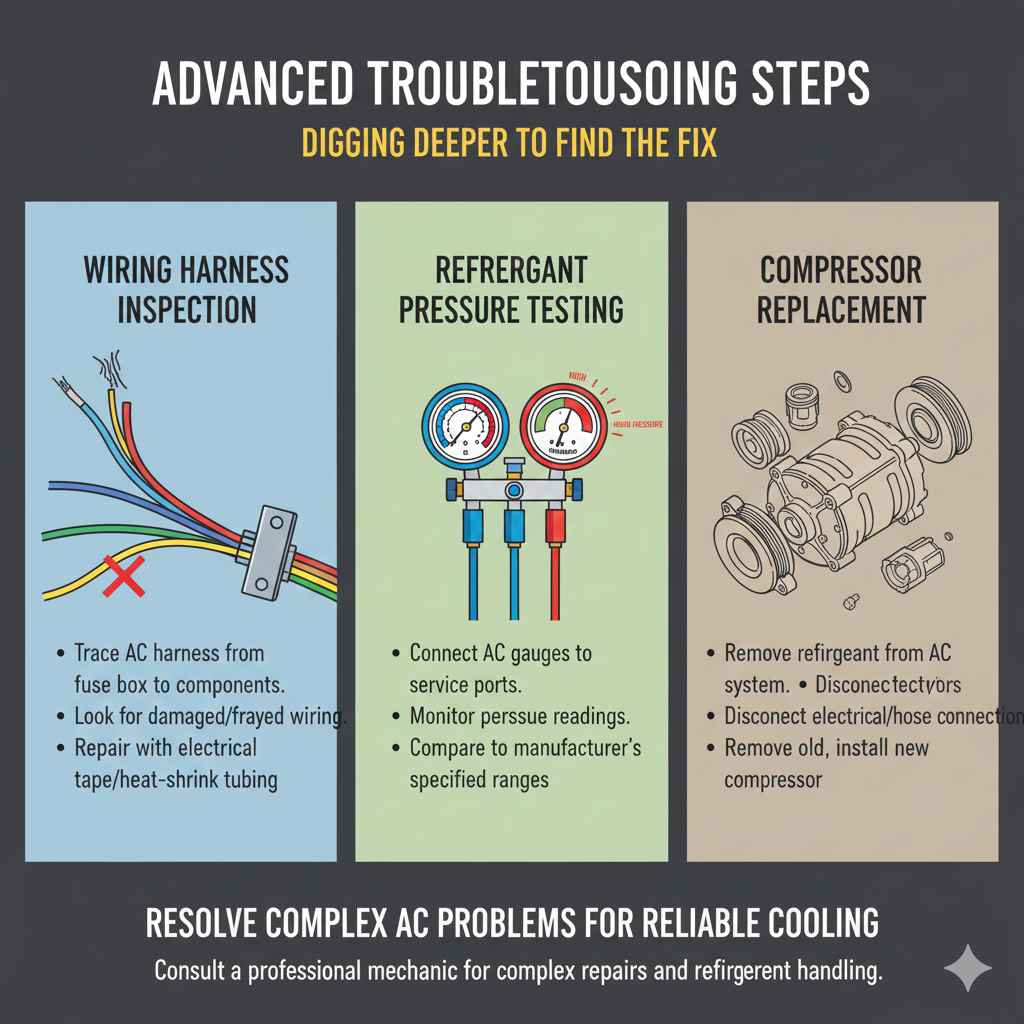
Wiring Harness Inspection
A careful inspection of the wiring harness for the AC system can reveal hidden problems. Wires can wear out, be damaged, or develop shorts that are hard to spot. Examine the wiring from the AC fuse, the AC compressor, the condenser, and any other AC components. Look for signs of damage, such as frayed wires, cuts, or melted insulation.
Sometimes, wires rub against metal parts and wear down the insulation, causing a short. If any damage is found, you should repair the affected wires. Use electrical tape or heat-shrink tubing to protect the repaired wires. Correctly routing the wires and securing them with clamps or ties can help stop damage. Even small defects can cause the fuse to fail and lead to major AC system problems. Careful, complete inspection is often critical.
- Trace the AC wiring harness from the fuse box to the compressor and other components.
- Look for any signs of damaged or frayed wiring.
- Repair any damaged wiring using electrical tape or heat-shrink tubing.
Here’s an example: A car owner’s AC fuse was blowing sporadically. They found that a section of the wiring harness had been routed too close to the exhaust manifold. Over time, the heat from the exhaust had damaged the wire insulation, leading to a short. After repairing the damaged wiring and rerouting the harness away from the exhaust, the fuse stopped blowing.
Consider a situation where a car was driven through a lot of snow. During an inspection, the owner found that the wiring harness had been damaged due to road salt exposure. The salts caused corrosion that lead to electrical shorts, and the fuse kept blowing. Cleaning and protecting the harness resolved the issue.
Refrigerant Pressure Testing
An AC system with too much or too little refrigerant can create problems that blow the fuse. Too much refrigerant increases the pressure, which makes the compressor work harder. Too little refrigerant can cause the compressor to cycle on and off rapidly, which could also cause a fuse failure. Use AC gauges to measure the refrigerant pressures. Connect the gauges to the low-side and high-side service ports of the AC system.
Turn on the AC and monitor the pressure readings. The readings should be within the ranges specified by your car’s manufacturer. If the pressures are outside the specified range, the AC system needs to be serviced. This includes checking for leaks, and recharging with the right amount of refrigerant. Safety is crucial when working with refrigerant. Always wear safety glasses and gloves, and follow the manufacturer’s directions.
- Connect AC gauges to the low-side and high-side service ports of the AC system.
- Turn on the AC and observe the pressure readings on the gauges.
- Compare the readings to the manufacturer’s specified pressure ranges.
Consider this situation: After having their AC recharged, a car owner’s fuse kept blowing. The gauge readings were much higher than the specified range. The AC system had been overcharged. The excess pressure caused the compressor to overwork and blow the fuse. Once the excess refrigerant was removed and the pressure was brought back to normal, the fuse stopped blowing.
Here’s another case. A car owner noticed their AC was not cooling correctly. When they tested the pressures, the system was undercharged. Low refrigerant made the compressor work improperly, and repeatedly blew the fuse. Correcting the refrigerant level fixed the issue. These examples show how measuring pressure is a vital part of finding the problem.
Compressor Replacement
If you’ve checked all the previous steps and the fuse still blows, the AC compressor could be the problem. A failing compressor can draw too much current. This could be due to an internal short or mechanical seizure. Replacing the compressor is often the solution in these cases. The first step in this case is to remove the refrigerant from the system. Then, disconnect the electrical connectors and hoses attached to the compressor. Remove the compressor and
- Remove the refrigerant from the AC system using a recovery machine.
- Disconnect the electrical connectors and hoses from the compressor.
- Remove the old compressor and install a new one.
Here’s an example: After numerous attempts to fix the AC system, a car owner discovered the compressor’s internal components had failed. They replaced the compressor, including the receiver-drier and the system operated correctly. A car owner experienced the same issue, as their AC fuse kept blowing and other checks failed. They replaced the compressor, receiver-drier, and other components as suggested. The system now functioned properly. These case studies highlight the importance of thorough maintenance.
Frequently Asked Questions
Question: Why do car fuses blow?
Answer: Car fuses blow to protect electrical circuits from too much current. When a circuit overloads or shorts, the fuse melts, cutting off the power and preventing damage to the components.
Question: Can I use a fuse with a higher amperage?
Answer: No, it’s not safe to use a fuse with a higher amperage than what’s specified. A higher-rated fuse won’t blow as easily, and this could cause the wiring or components to overheat and possibly catch fire.
Question: How can I tell if my AC compressor is bad?
Answer: Common signs of a bad AC compressor include a lack of cold air, unusual noises like grinding or knocking, and the AC fuse blowing. It may also have trouble turning by hand.
Question: What’s the role of the AC relay?
Answer: The AC relay acts as an electronic switch to control power to the AC compressor. If it fails, the compressor may not work or the fuse could blow.
Question: Can low refrigerant cause a fuse to blow?
Answer: In some cases, low refrigerant can cause the AC compressor to cycle on and off frequently, which could cause a fuse to blow. It’s often associated with higher pressure problems.
Final Thoughts
Solving the problem of Why Does My Car’s AC Fuse Keep Blowing? does not have to be difficult. You can start with basic checks like the fuse and the relay, and move on to inspecting wiring and the compressor. Remember to check all the components, from wiring and the relay to the compressor.
Always ensure you are using the correct fuse and never skip any safety precautions when working with the electrical components of your car. By going through these steps, you’ll be on your way to a working air conditioning system again. With patience and a little bit of effort, you can fix the issue and stay comfortable on the road. If the issues persist, seek help from a qualified car mechanic.