Will Duct Tape Take Off Car Paint? Essential Guide
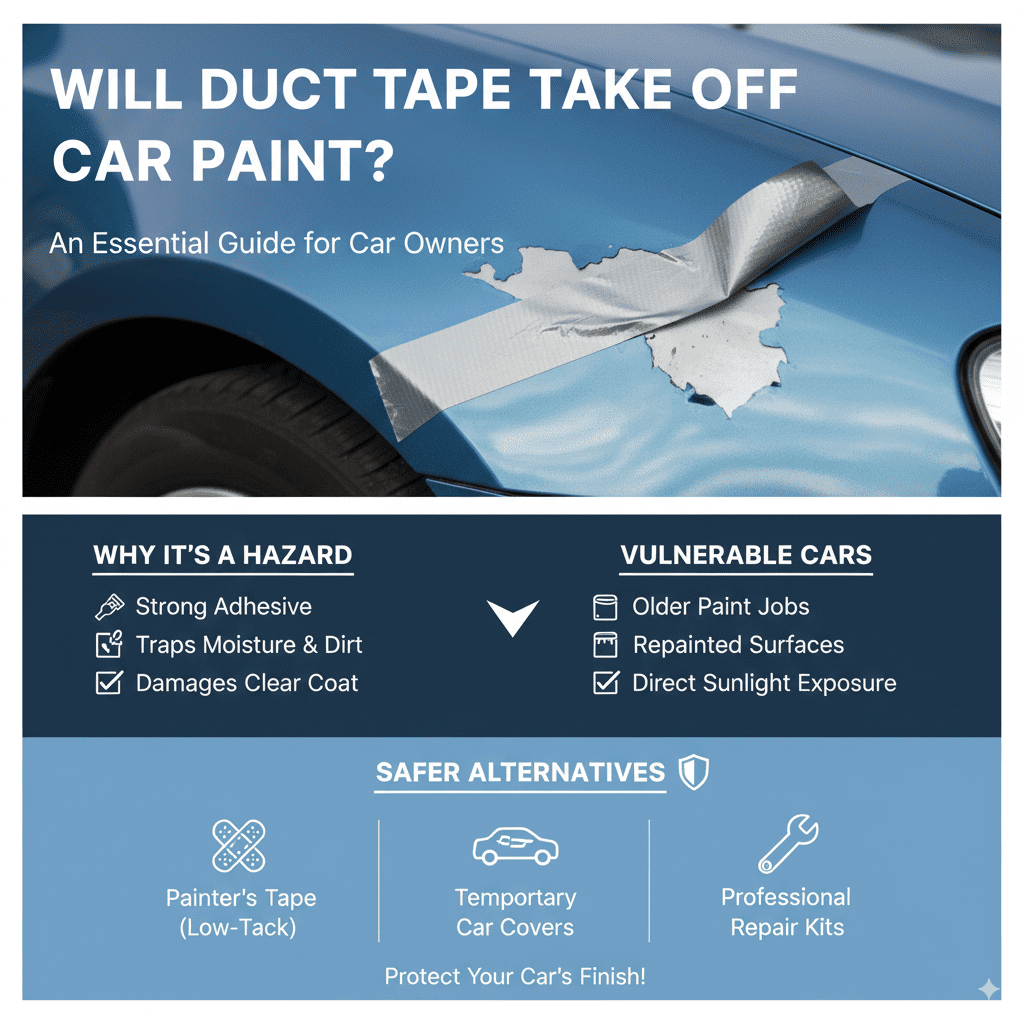
Yes, under certain conditions, duct tape can absolutely take off car paint, especially older, faded, or weakened paint. The strong adhesive and forceful removal can lift or chip the paint. Always test in an inconspicuous area first and avoid using it on your car’s exterior if at all possible.
Will Duct Tape Take Off Car Paint? An Essential Guide for Car Owners
We’ve all been there. A small scratch needs covering, a temporary fix is required, or a minor repair needs securing on your car. Your mind immediately goes to that trusty roll of duct tape in the garage. It’s strong, versatile, and seems like a quick solution. But a burning question often pops up: will duct tape take off car paint? This is a really common concern, and for good reason! Nobody wants to accidentally strip the beautiful paint job on their vehicle. This guide will break it all down in a way that’s easy to understand, so you can make informed decisions and keep your car looking its best.
We’ll cover exactly why duct tape can be a paint hazard, what makes some cars more vulnerable than others, and, most importantly, safer alternatives to keep your car’s finish pristine. Let’s dive in and ensure you know the best way to handle temporary fixes without causing permanent damage.
Understanding Duct Tape and Car Paint: The Sticky Situation
Duct tape, also known as duck tape, is famous for its incredible strength. It’s made of three main layers: a cloth backing (which gives it its strength and makes it tearable by hand), a rubber-based or synthetic adhesive (the sticky part), and a polyethylene or vinyl coating for waterproofing. It’s this powerful adhesive that causes the concern for your car’s paint.
Car paint, on the other hand, is a complex system. It’s not just one layer. Typically, it consists of:
- E-coat (Electrocoat): The very first protective layer applied directly to the metal.
- Primer: Provides adhesion for subsequent layers and helps prevent corrosion.
- Basecoat: This is the color layer.
- Clearcoat: The final, transparent layer that adds gloss, UV protection, and guards against scratches and environmental damage. This is the layer you see and interact with most.
The strength of the bond between these layers and between the clearcoat and primer is crucial. When you apply duct tape and then peel it off, you’re essentially testing the strength of this paint-to-metal bond or, more commonly, the bond between the clearcoat and the layers beneath it. If the adhesive on the duct tape is stronger than these bonds, or if certain layers of paint are already weakened, the tape can pull them away.
Factors That Increase the Risk of Paint Damage
Not all cars or all situations are created equal when it comes to duct tape and paint. Several factors can make your car’s paint more susceptible to damage:
- Age and Condition of the Paint: Older paint that has been exposed to the sun, weather, and time can become brittle, faded, and oxidized. The clearcoat might be a significant contributor to this degradation. This makes it much weaker and easier for an adhesive to lift it. A brand new, factory-fresh paint job will always be more resilient.
- Type of Paint: While most modern cars use durable automotive-grade paints, some older vehicles or custom jobs might have different formulations that are more delicate.
- Environmental Factors: If the car has been exposed to extreme heat (which can soften adhesives and paint) or cold (which can make paint brittle), the paint’s integrity can be compromised.
- Previous Damage or Repairs: Areas that have been repainted or touched up might have weaker adhesion than the original factory finish. Small chips or scratches can create weak points.
- The Specific Duct Tape: Not all duct tapes are manufactured with the same adhesive strength. Some heavy-duty tapes are designed for extreme holding power and are far more likely to cause damage than a standard household variety. A quick search for “duct tape adhesive strength” on a site like NIST (National Institute of Standards and Technology) shows the science behind how forces are measured, giving you an idea of the power involved.
- Application and Removal Technique: Applying duct tape firmly presses the adhesive into any imperfections in the paint. Ripping it off quickly and aggressively, especially against the grain of the paint’s orientation, significantly increases the chance of peeling. Allowing the tape to sit for a long time, especially in heat, can also allow the adhesive to bond more strongly with the paint surface.
Think of it like peeling a sticker off a delicate wall versus a piece of cardboard. The sticker might come off cleanly from the cardboard but could easily peel away paint from the wall. Your car’s paint behaves much more like that delicate wall.
The “Will Duct Tape Take Off Car Paint?” Test: What to Look For
If you find yourself in a situation where you absolutely must use duct tape on your car’s exterior (and believe me, there are usually better options), you need to proceed with extreme caution. The best way to find out if it will damage your car’s paint is to perform a test. This is not a foolproof method, but it can give you a good indication.
How to Perform a Test Patch
- Choose an Inconspicuous Area: Look for a spot that’s not easily visible, like the lower part of a door sill, a section of the bumper that’s rarely seen, or the inside edge of a door jam. These areas sometimes have different paint characteristics or are less exposed to the elements.
- Clean the Area: Gently wash and dry the chosen spot. You want a clean surface so that any adhesion issues are due to the paint itself, not dirt or grime.
- Cut a Small Piece of Tape: Use a small square of the duct tape you plan to use, maybe about 1-2 inches by 1-2 inches.
- Apply the Tape Firmly but Gently: Press the tape down onto the test area. Don’t rub it excessively, just ensure it has good contact.
- Let it Sit (Briefly): For a quick test, let it sit for just a few minutes. For a more realistic test of how it might adhere over time, leave it for an hour or even a few hours, but avoid leaving it for days.
- The Careful Removal: This is the crucial step. Slowly and gently peel the tape back at a very low angle (almost parallel to the surface). Try to peel it back onto itself, rather than pulling it straight up. Watch closely and feel for any resistance or tearing.
-
Inspect the Tape and the Paint:
- If the tape comes off cleanly with no paint residue on the adhesive and the paint beneath looks undisturbed, you might be okay for a very temporary, low-risk application.
- If you see any flecks of paint on the tape adhesive, or if you notice any dulling or subtle change in the paint finish where the tape was, do not use duct tape on the visible parts of your car.
- If the tape pulls away any visible piece of paint, consider it a definitive “no.”
This test can save you from a much larger, more expensive repair. If the test fails, it means the adhesive on that particular duct tape is stronger than the bond of your car’s paint in that area.
When Duct Tape is a No-Go: High-Risk Scenarios
Based on what we’ve discussed, here are the scenarios where using duct tape on your car’s exterior paint is almost guaranteed to cause problems:
1. On Glossy or New Paint Finishes
Modern cars with a strong, well-maintained clearcoat and basecoat are designed to be durable. Applying duct tape can compromise this smooth finish. The adhesive can stick to the microscopic imperfections in the clearcoat, and when removed, it can take a layer of the clearcoat with it, leaving a dull, patchy, or even chipped area.
2. On Older, Faded, or Chalky Paint
As paint ages, it oxidizes and loses its protective clearcoat integrity. The color layer underneath can become exposed and weakened. In these cases, the paint is already failing, and the aggressive adhesive of duct tape will easily lift it off. You’re essentially pulling away paint that’s already on its way out.
3. In Hot or Humid Environments
Heat can make both the duct tape’s adhesive and the car’s paint (especially older finishes) softer and more pliable. This can lead to a stronger, more damaging bond. Humidity can also sometimes affect adhesive performance.
4. For Long-Term Applications
Even if you get away with a short-term fix, leaving duct tape on for more than a few hours, or certainly for days or weeks, is asking for trouble. The adhesive can leach into the paint, and the tape’s backing can degrade, making it even harder to remove without damage. A quick search online for “automotive paint damage from tape” will readily show images of the aftermath, reinforcing this point.
5. Over Existing Damage or Repairs
Areas that already have minor chips, scratches, or have been repainted are inherently weaker. Duct tape can easily catch on the edges of these imperfections and peel back paint much further than the original damage.
Safer Alternatives to Duct Tape for Your Car
So, if duct tape is generally a bad idea for car exteriors, what should you use? Fortunately, there are several better, paint-safe alternatives:
1. Automotive Painter’s Tape (Masking Tape)
This is the gold standard for temporary adhesion on car paint. Automotive painter’s tape is specifically designed for this purpose. It uses a low-tack adhesive that sticks well enough to prevent paint bleed-through during painting but is formulated to remove cleanly from automotive finishes without lifting or damaging the paint. It’s available in various widths and adhesion levels (e.g., 1-day, 3-day, 14-day tapes, depending on how long you need it to stay on). You can find excellent quality versions from brands like 3M or FrogTape, which are trusted by professionals.
Pros:
- Designed for automotive paint
- Removes cleanly
- Prevents paint bleed
- Available in different adhesion levels
Cons:
- Not as strong for structural holding as duct tape
- Can be more expensive than standard duct tape
2. Automotive-Specific Adhesives and Tapes
For more robust temporary holding needs, consider specialized automotive tapes. These might include:
- 3M VHB (Very High Bond) Tapes: While these are meant for permanent bonding, there are specific removable versions or temporary holding tapes designed for automotive applications. Always read the product specs carefully.
- Temporary Auto Body Protection Films: These are often clear plastic films applied with low-tack adhesive to protect surfaces during transport or work, and they won’t harm paint.
3. Zip Ties and Bungee Cords (for mechanical parts, not paint)
If you need to temporarily secure a loose bumper cover, a piece of trim, or other non-painted mechanical parts, zip ties or bungee cords are far better options. They don’t contact the paint surface directly if used correctly.
4. Painters’ Pyramids or Stands
If you’re doing minor paint touch-ups and need to prop something up or prevent it from sticking to a surface, use automotive-grade painter’s pyramids or small stands. These are designed to lift objects slightly off a surface. A quick search for “automotive painting supports” will give you ideas. Some DIYers also use small plastic blocks or even clean, dry sponges for this purpose.
5. Professional Repair
For anything beyond a very minor, temporary cosmetic fix, it’s always best to consult a professional. Auto body shops have the tools and expertise to make repairs that are both functional and aesthetically pleasing without causing further damage.
When is Duct Tape Truly Acceptable on a Car?
There are very few situations where applying duct tape directly to the painted exterior of a car is advisable or safe. However, here are a couple of minor exceptions:
- On Glass: Duct tape can usually be applied to car windows (glass) without causing permanent damage. It might leave a sticky residue that needs cleaning, but it’s unlikely to scratch or chip the glass.
- On Plastic Trim (Carefully): Some plastic trim pieces on cars are more resilient. However, heavily textured, matte, or painted plastic trim can still be damaged. Always test on an inconspicuous area of the plastic first.
- Interior Use: For temporary fixes inside the car (e.g., holding down a floor mat, securing a minor interior panel that isn’t visible), duct tape is generally less risky, though it can still leave sticky residue on plastics and fabrics.
- Very Short-Term, Low-Stress Exterior Fixes (Extreme Caution): If you have a tiny piece of non-painted trim flapping slightly, and you need to secure it only for a very short drive (e.g., to the nearest repair shop, a few miles away), and you apply the tape very carefully to an area that is 100% certain to be resilient (like a rubber seal, NOT paint) for the absolute minimum time necessary. Even then, it’s a gamble.
The key takeaway is to avoid the painted surfaces at all costs. The finish of your car is a significant part of its value and aesthetic. Sacrificing it for a cheap, temporary fix isn’t usually worth it in the long run.
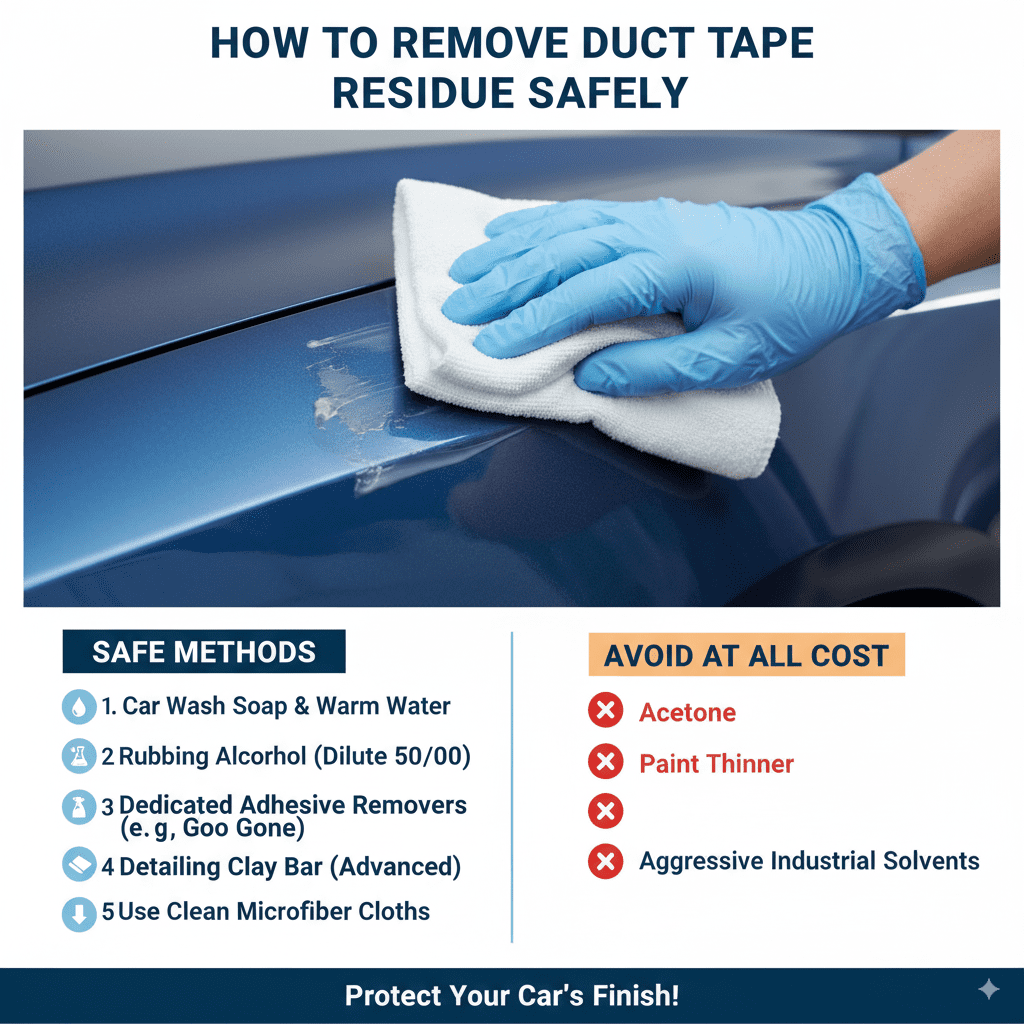
How to Remove Duct Tape Residue Safely
If you’ve used duct tape (hopefully not on paint!) and are left with sticky residue, don’t panic. Here’s how to tackle it:
- Start Simple: Often, a good quality car wash soap and warm water are enough to loosen mild residue.
- Rubbing Alcohol (Isopropyl Alcohol): This is a go-to for many detailing shops. Dilute it with water (50/50 solution) for painted surfaces, or use it undiluted on glass and most plastics. Apply to a microfiber cloth and gently rub the residue. Rinse thoroughly afterward. Always test in an inconspicuous area first.
- Dedicated Adhesive Removers: Products like Goo Gone or 3M Adhesive Remover are specifically designed for this task. Follow the product instructions precisely, and again, test in a hidden spot.
- Detailing Clay Bar: For stubborn residue that’s embedded in the clearcoat, a clay bar used with a proper clay lubricant can lift it. This is a more advanced detailing technique.
- Avoid Harsh Solvents: Never use acetone, paint thinner, or aggressive industrial solvents on your car’s paint, as these will definitely remove paint and damage the finish.
Always use a clean microfiber cloth to avoid scratching the surface as you work.
FAQs: Your Duct Tape and Car Paint Questions Answered
Let’s tackle some of the most common questions beginner car owners have about duct tape and car paint.
Q1: Can duct tape ruin my car’s clearcoat?
A: Yes, absolutely. The strong adhesive in duct tape can bond to the clearcoat. When you peel the tape off, especially if done too quickly or aggressively, it can lift and remove a layer of the clearcoat, leaving a dull or damaged spot.
Q2: What kind of car paint is most at risk from duct tape?
A: Older, faded, oxidized, or chalky paint is the most at risk. This type of paint has a weakened molecular structure and is already compromised, making it easy for duct tape adhesive to pull it away.
Q3: I need to hold a loose bumper temporarily. Is duct tape okay?
A: It’s best to avoid duct tape on visible painted areas of a bumper. Consider using zip ties, bungee cords, or specialized automotive repair tape that is designed to be safe for paint if the attachment point is on plastic trim. If you must use tape, and the bumper is painted, test in a tiny, inconspicuous spot first.
Q4: Will leaving duct tape on my car paint overnight cause damage?
A: Leaving duct tape on for extended periods dramatically increases the risk of damage. The adhesive can break down, leach into the paint, and bond more tenaciously. Overnight is generally too long and poses a significant risk to your car’s finish.
Q5: What’s the safest tape to use on car paint?
A: Automotive painter’s tape (also known as car masking tape) is specifically designed for use on car paint. It offers clean removal without lifting the paint, making it the safest choice for masking during repairs or paint jobs.