Best Car Safety Features for Seniors: What Matters Most
The best car safety features for seniors match the driver’s weak spot: blind-spot warning for limited neck turn, automatic emergency braking for slower reaction, rear cross-traffic alert for backing vision, and lane-keeping assist for drift. Buy by feature count alone, and you can end up paying for tech that never stops the crash most likely to happen. This guide ranks the most useful safety features by the problem they solve and helps buyers choose for new or used cars.
What car safety features help seniors most?
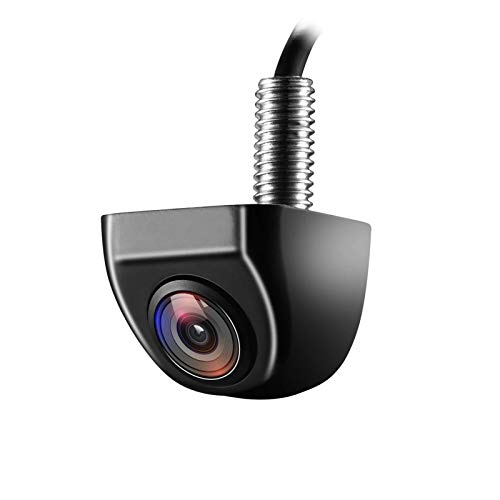

The right senior safety features solve a specific driving problem, not a guess. Limited neck rotation calls for rearview cameras and blind-spot monitoring; slower reaction time points to automatic emergency braking; reduced night vision pushes buyers toward stronger headlights, clear displays, and parking aids. One long options list can still miss the main weakness.
Separate must-have tech from nice-to-have extras
Some features earn their keep fast. Automatic emergency braking, blind-spot monitoring, lane departure warning, rearview camera, and parking sensors do the heavy lifting because they address common mistakes: missed vehicles, drifting, and low-speed bumps.
Nice-to-have features come after the basics are covered. Adaptive cruise control, voice command infotainment, and more advanced convenience tech cut fatigue on long drives, but they do not replace the core crash-avoidance tools.
Why one long options list can still miss the point
A buyer can end up with a feature-rich car that still fits poorly. A sedan with advanced driver aids but a low seat and tight doorway may be harder for an older driver to enter than a simpler crossover with a better seating position. The limitation matters more than the brochure.
According to Best 2025 Cars for Seniors: Safe, Comfortable, and Easy to… — to look for a 5-star safety rating.
Which features matter most for limited neck rotation and rear visibility?
For limited neck rotation, helpful features reduce how far the driver has to turn to check behind and to the sides. Rearview camera, blind-spot monitoring, rear cross-traffic alert, and parking sensors all help most here, especially when paired with properly adjusted mirrors and a seat set high enough to see clearly.
Rearview camera
A rearview camera is a major help for backing into spaces and checking behind the vehicle without twisting the neck. It matters even more for drivers with stiff shoulders, fused necks, or arthritis that makes repeated shoulder checks painful.
It is not perfect. Glare on the screen, dirt on the lens, and a small display can make the image harder to trust. Still, for many seniors, it is the single most useful reverse-view tool.
Blind-spot monitoring and rear cross-traffic alert
Blind-spot monitoring helps detect vehicles in hard-to-see areas, especially during lane changes. It pairs well with mirrors and is most useful when the driver cannot comfortably turn far enough to scan over the shoulder.
Rear cross-traffic alert matters in parking lots and driveways. It can catch traffic that moves behind the car while the driver is backing out, which can help with a common low-speed mistake. Sensor blindness is possible in heavy rain, slush, or when the system is dirty, so it should be backup help, not the only check.
Parking sensors for tight spaces
Parking sensors give close-range audible warnings when the car gets near an object. They are useful when turning into a garage, backing near a wall, or easing into a narrow space where mirrors do not tell the whole story.
They can false-alert at very low speed around curbs, snow banks, or tall grass. Even then, they are still helpful for drivers who want a clear sound cue before contact happens.
How mirrors and seating position still matter
Technology works better when the basics are right. Large mirrors, properly aimed side mirrors, and a seat adjusted high enough to give a clear rearward view can make blind-spot monitoring and cameras easier to use. A bad seating position can beat good tech.
Which features matter most for slower reaction time and city traffic?
Slower reaction time is where automatic emergency braking earns its keep. Add pedestrian detection for city use, then consider adaptive cruise control for longer drives and lane departure warning for suburban and highway drift. These features help most when traffic changes fast and the driver has less time to react.
Automatic emergency braking
Automatic emergency braking is one of the most important senior safety systems because it can reduce crash severity when a driver does not brake in time. It is often useful at city speeds, where quick stops and short following gaps can come up.
Look for front-collision mitigation with pedestrian detection if possible. That combination is stronger than a basic warning-only system. Availability varies by trim and package, and on used cars it is often the first feature to disappear from lower trims.
Lane departure warning
Lane departure warning alerts the driver when the car starts drifting out of its lane. It is common on many ADAS-equipped vehicles and can fit well with highway and suburban driving, where long stretches may lead to inattention or fatigue.
Many cars bundle it with lane keep assist. That pairing can help, but the system may tug at the wheel in ways some older drivers dislike. A test drive should show whether the steering feel is comfortable or distracting.
Adaptive cruise control
Adaptive cruise control keeps a set following distance and cuts fatigue on longer drives. Stop-and-go versions are useful in traffic because they can slow and resume with less pedal work.
It helps most on open roads and congested commuter routes. It does not replace attentive driving, and it can feel jerky if the calibration is aggressive. Older drivers should check how smoothly the car tracks slower traffic before assuming the feature will feel relaxing.
Use this senior-driving safety matrix before you shop
This matrix keeps the buying process focused on the limitation, not the trim brochure. Match the problem first, then verify whether the feature is standard, optional, or buried in a package.
| Senior driving limitation | Best-fit features | Common failure cases | Best use case |
|---|---|---|---|
| Limited neck rotation | Rearview camera, blind-spot monitoring, rear cross-traffic alert, parking sensors | Dirty camera lens, sensor blindness in weather, alerts ignored when mirrors are poor | Backing, lane changes, parking lot maneuvers |
| Reduced night vision | Clear headlight beams, larger displays, simple menus, parking sensors | Glare from bright screens, washed-out camera images, poor contrast at night | Night parking, low-light maneuvering, dim garages |
| Slower reaction time | Automatic emergency braking, pedestrian detection, adaptive cruise control | Late detection in bad weather, false alerts at low speed, driver overreliance | City traffic, stop-and-go driving, surprise braking events |
| Reduced dexterity | Voice command infotainment, large buttons, simple menus, adjustable seats, tilt-and-telescoping steering column | Small touch targets, layered menus, stiff controls, awkward reach | Daily driving, climate and audio changes, comfort setup |
How do comfort and control features affect safe driving?
Comfort features matter because pain, fatigue, and awkward reach change judgment. Spacious interiors, easier entry and exit, adjustable seats, and a tilt-and-telescoping steering column help the driver sit upright, see out better, and avoid strained movements. Those changes often improve control more than another screen or extra mode.
Spacious interior and easier entry and exit
A spacious interior reduces the awkward twist needed to get in and out. That matters for seniors who use a cane, walker, or brace, because repeated climbing and twisting can leave them sore before the drive even starts.
Room for mobility aids should be checked in real life. A brochure may say “ample cargo room,” but the opening height, seat height, and door width are what decide whether the car actually fits the person.
Adjustable seats and tilt-and-telescoping steering column
Adjustable seats help the driver reach the pedals without stretching. A tilt-and-telescoping steering column lets the wheel come to the driver instead of forcing the driver forward.
That lowers shoulder strain and supports a better posture, which often improves mirror use, pedal control, and overall alertness. Adjustable pedals and hand controls may be worth considering when leg reach or lower-limb strength is limited.
Voice command infotainment and simple menus
Voice command infotainment can cut distraction if the system is easy to understand. Large buttons, simple menus, and clear labels matter more than a high feature count.
Hard-to-read touchscreens can slow older drivers down. If the screen buries climate, audio, or navigation behind multiple taps, it is a bad fit. The best systems reduce hand movement without asking for a long learning curve.
What should you check on new versus used cars?
New cars are easier for safety shopping because equipment lists are clearer, but used cars can still be smart buys if the right package is present. The key is to check standard equipment versus optional packages, then confirm which trim actually includes the features that solve the driver’s limitation.
Standard equipment versus optional packages
Automatic emergency braking may be standard on one trim and optional on another. The same is true for blind-spot monitoring, rear cross-traffic alert, and adaptive cruise control. On used cars, the window sticker is gone, so the buyer needs to confirm equipment by VIN, trim, or on-screen menus.
That difference changes value fast. A lower-priced car can become expensive if the missing package is the one feature the driver needs most.
What to verify during a test drive
- Check seat height, pedal reach, and steering wheel range.
- Confirm the rearview camera image is clear in daylight and shade.
- Test blind-spot alerts during a lane change.
- See whether parking sensors are audible without being harsh.
- Try the menu structure, button size, and voice commands.
- Ask whether lane departure warning, automatic emergency braking, and adaptive cruise control are standard or package-only.
When aftermarket add-ons make sense
Aftermarket devices can help when a used vehicle is otherwise right but missing one low-cost aid, such as parking sensors or a simple backup camera upgrade. They make less sense for safety systems that need factory calibration, like automatic emergency braking or blind-spot monitoring.
If the car needs too many add-ons, the buyer is often better off moving to a different trim or a different vehicle. Cheap equipment can become expensive when installation and troubleshooting are added.
Which cars are easiest and safest for seniors to drive?
The easiest and safest cars for seniors are the ones that combine a strong crash score, easy entry, clear outward visibility, and the right driver-assist features. A 5-star safety rating should be checked alongside the tech list, not instead of it, and the best choice is often a model with generous standard equipment on lower trims.
Common senior-friendly models often include options like Honda Accord, Toyota Camry, and Subaru Outback because they tend to balance safety, comfort, and reliability. Even so, trim level matters more than badge alone. One trim may include the needed aids while another leaves them optional.
How to rank a candidate car quickly
Start with crashworthiness, then look at the features that match the driver’s limitation. A tall seat, good door opening, clear camera display, and easy controls can beat a fancier car that is harder to use every day.
What is the safest car for senior citizens?
The safest car for senior citizens is the one that best matches the driver’s needs, has strong crash test results, and includes the right driver-assist features as standard equipment or in the correct package. For many older drivers, that means a car with a 5-star safety rating, automatic emergency braking, blind-spot monitoring, rearview camera, and parking sensors.
There is no single model that wins for every senior. A driver with neck stiffness needs a different setup than one with night vision trouble or weak grip. The safest choice is the car that covers the biggest weakness without creating new ones through awkward controls or poor seating.
Frequently asked questions
What car safety features are most important for seniors?
The most important features are automatic emergency braking, blind-spot monitoring, rearview camera, lane departure warning, and parking sensors. Those systems address the mistakes older drivers are most likely to face: missed vehicles, drift, slow braking, and low-speed backing errors. Comfort features matter after those are in place.
Is blind spot monitoring worth it for older drivers?
Yes, especially for drivers with limited neck rotation or reduced flexibility. Blind-spot monitoring helps detect vehicles in hard-to-see areas during lane changes and works well with good mirrors. It is not perfect in bad weather or when sensors are dirty, so it should back up mirror checks.
Does automatic emergency braking help senior drivers?
Yes. Automatic emergency braking is one of the most useful systems for slower reaction time because it can reduce crash severity when the driver does not brake quickly enough. It is strongest when paired with pedestrian detection and used in city traffic, where surprise stops happen often.
Should seniors prioritize rearview cameras or parking sensors?
Both help, but the rearview camera usually comes first for limited neck mobility because it gives a clear image when backing. Parking sensors are especially useful in tight spaces and for audible distance cues. The best setup is camera plus sensors, not one in place of the other.
What safety features help with limited mobility or visibility?
For limited mobility, look for spacious interiors, adjustable seats, a tilt-and-telescoping steering column, and easier entry and exit. For reduced visibility, rearview cameras, blind-spot monitoring, parking sensors, and simple voice-command infotainment can cut strain and distraction while driving or parking.
Do voice command and simple infotainment systems matter for older drivers?
Yes, because hard-to-read menus and small touch targets can distract a driver who already needs more time to process tasks. Voice command is most helpful when the system has large buttons and simple menus. If the screen is cluttered, it may create more stress than it saves.
Products related to this article
Sponsored / affiliate links. As an Amazon Associate I earn from qualifying purchases. I may earn additional commission from eligible campaigns.
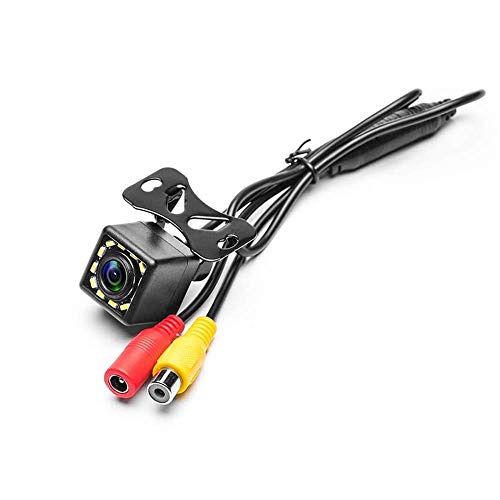 Camecho Vehicle Backup Camera Waterproof Car Rear View Camera 170° Wide Angle 12 LED Night Visions Backup Reversing Parking Cameras
 Edinstry Car Backup Camera,HD Night Vision Rear View Camera, License Plate Camera with 9 LED Lights Rear Camera, Wide View Angle, IP69K Waterproof Reverse Vehicle Camera for Cars, SUV, Trucks