BlackVue Dash Cam Review: Which Model Fits Your Car?
BlackVue earns its premium when you need parking protection that keeps working, cloud alerts you can trust, or fleet oversight that saves time. For plain commuting, a lower-cost dual-channel dash cam usually does the same job. Budget cameras often miss plates, fail after a dead battery event, and leave you with no theft clip once the car is parked. This guide breaks down BlackVue for commuting, street parking, rideshare, and fleet use so you can pick the right model for the way you drive.
This guide is part of our Car accessories guide series.
Verdict


From the spec sheet and owner reports, the DR970X Plus is the benchmark: 4K UHD, the 8MP Sony STARVIS 2 IMX 678 sensor, the newly upgraded F/1.7 lens, built-in dual-band Wi-Fi and GPS, and support for up to 512 GB storage. The price only works when those features solve a real problem. If they do, BlackVue is easy to justify. If they do not, the bill climbs fast.
Specs at a glance
| Item | BlackVue DR970X Plus |
|---|---|
| Front video | 4K UHD |
| Front sensor | 8MP Sony STARVIS 2 IMX 678 |
| Lens | Newly upgraded F/1.7 lens |
| Variant options | 1-channel, 2-channel, IR, LTE, and Box versions |
| Storage support | Up to 512 GB |
| Wireless and GPS | Built-in dual-band Wi-Fi and GPS |
| Parking support | Extended parking mode buffer with a built-in voltage monitor |
| Box contents | 64GB microSD card; 3-wire hardwiring cable |
Pros and cons
Pros
- Strong low-light image quality for night driving and curbside parking.
- Discreet front-camera design that hides behind the rearview mirror.
- Parking mode and voltage monitoring are more serious than the usual budget setup.
- Cloud and LTE options matter for remote checking and fleet work.
- Dual-band Wi-Fi and GPS help with app pairing, file transfer, and location stamping.
Cons
- Higher price than budget dash cams.
- 2-channel installs take more time because of rear cable routing.
- Cloud value drops fast without a compatible LTE setup, a usable signal, and patience during setup.
- Parking mode can create battery-drain concerns if the vehicle sits often.
- High-resolution recording needs more storage discipline and more card care.
Who it is for
BlackVue fits drivers who care about events after the car is parked: street-parking owners, rideshare drivers, and fleet operators. It also suits commuters who want a hidden front camera and clean app access. It is a poor match for buyers who want the cheapest simple recorder and do not need parking monitoring or remote features.
The best use case is not bragging about 4K. It is solving a problem that starts after the engine is off. That is where BlackVue earns its keep.
What works

Video quality and the sensor upgrade
BlackVue builds the DR970X Plus around 4K UHD and Cloud convenience, and the image stack matters more than the headline alone. The 8MP Sony STARVIS 2 IMX 678 sensor matters because low-light capture is where a lot of dash cams fall apart. Plates that look clear in daylight can turn into noise at night.
The F/1.7 lens helps in the real world. It does not turn midnight into noon, but it gives the sensor more light to work with. In practice, that can mean a clearer car color, better curb detail, and fewer unreadable frames when a streetlight is doing most of the work.
Heat matters too. A camera parked through summer windshield heat needs more than a sharp spec sheet. Owners buy BlackVue for night footage, but the premium also depends on whether the unit keeps recording cleanly after a long hot soak.
Parking mode, Cloud, and LTE
Parking mode is one of the few BlackVue features that justifies the cost for many owners. The extended parking mode buffer and built-in voltage monitor help the camera stay alert without flattening the car battery too quickly. That only works when the camera is hardwired correctly.
Cloud is useful when the car lives outdoors, sits in a risky area, or carries work value. Remote access, alerts, and security monitoring can be genuinely helpful. But BlackVue Cloud is not magic; it depends on a compatible LTE setup or the CM100G LTE Module, plus a signal that is actually there when something happens.
Built-in LTE makes the case stronger for users who want live access without extra clutter. For others, the CM100G LTE Module is the bridge to remote features. If the vehicle parks in a weak-signal garage or in an area with poor coverage, the feature set can shrink to a local camera with a subscription-shaped bill attached.
Hardware that stays out of the way
The standard front camera is designed to stay hidden behind the rearview mirror. That matters for daily use. Good dash cams disappear. Bad ones become a nuisance every time the driver reaches for the mirror or peels the unit off the glass in heat.
Dual-band Wi-Fi and GPS are not flashy, but they are practical. Wi-Fi helps with pairing and file transfers. GPS stamps location data onto clips, which can matter in disputes, fleet review, and rideshare protection. A camera with good video and weak connectivity feels half-finished.
Why 4K is not the whole story
4K UHD is good, but not automatically best in every situation. Plate capture depends on exposure, lens behavior, contrast, and motion, not only pixel count. A bright headlight reflection can wipe out a plate even on an expensive unit. That is why sensor class and lens speed matter so much here.
At night, the STARVIS 2 sensor is the bigger story than the 4K badge. In street parking, darkness and angle often decide what gets captured. In moving traffic, glare and speed are the usual enemies. BlackVue improves the odds, but it does not beat physics.
What does not
BlackVue is not cheap, and the cost does not stop at the camera. Storage, hardwiring, and sometimes LTE access add more money. If the car only needs simple daily incident recording, the premium can feel hard to defend.
The second weak spot is setup friction. Cloud features, app pairing, rear-camera routing, and parking-mode configuration all create more points of failure than a basic camera. When the owner wants “set it and forget it,” BlackVue asks for a little more patience than many buyers expect.
Card wear is another real issue. High-resolution recording writes a lot of data, and parking mode can keep the camera busy for long stretches. A cheap card may work at first and then throw file errors later. That is not a camera fault, but it becomes the owner’s headache.
Which BlackVue model fits your use case?
| Product | Badge | Best for | Price | ||
|---|---|---|---|---|---|
|
BlackVue Elite 9, 4K+2K Dash Cam Front and Rear, STARVIS 2,Blackvue | Our pick | 4K+2K dual-cam with ultra-fast boot | $424.99
Price as of 7 Oct 2026
|
View |
 |
BlackVue DR970X LTE Plus II, 4K Dash Cam Front and RearBlackvue | Upgrade pick | 4K LTE dash cam with cloud access | $540.99
Price as of 7 Oct 2026
|
View |
| Scenario | Best BlackVue variant | Setup complexity | Storage needs | Tradeoffs |
|---|---|---|---|---|
| Commuter | 1-channel DR970X Plus | Low | Moderate | Lowest install effort, but no rear coverage if someone backs into the car or follows too closely. |
| Street-parking owner | LTE or Box variant, depending on wiring comfort | Medium to high | Higher | Cloud and parking alerts are useful, but only if the car has a good signal and the owner accepts more setup work. |
| Rideshare driver | IR or 2-channel model | Medium | Higher | IR helps inside the cabin, while rear coverage can catch tailgaters and rear impacts; both raise install and storage demands. |
| Fleet user | LTE or Box variant with hardwire setup | High | High | Best for remote checking and event review, but it only pays off when the operator will manage cards, alerts, and connectivity. |
Choose 1-channel if the front view is the only thing that matters. Choose 2-channel if rear coverage matters enough to justify the extra cable routing. Choose IR for interior monitoring. Choose LTE when remote access will be used often enough to justify the setup work. Choose Box when hardwiring and parking-mode reliability matter most.
Who it is for
For commuters, the 1-channel BlackVue is the cleanest fit if the goal is a hidden front camera with strong image quality. For street parking, the 2-channel or LTE-capable setup is the smarter move because the risk often comes after the driver walks away. For rideshare and fleet work, the extra spend can make sense because incident evidence has direct value.
Who should skip it? Drivers who park in a garage, rarely leave the car unattended, and only want basic crash evidence. They can buy a simpler camera and spend less. BlackVue earns its price when the owner actually uses parking mode, remote alerts, or rear coverage.
What should you know before buying and installing?
Storage is where many first-time buyers go wrong. The stock card was upgraded from 32GB to 64GB, and the box includes a 64GB microSD card. That is a better starting point, but it is still only a starting point for high-bitrate recording and parking mode. BlackVue also supports up to 512 GB, which is the safer ceiling for buyers who record a lot.
Card endurance matters more than card size alone. Dash cams loop-record constantly, so the card must tolerate repeated overwrite behavior. A card that is fine in a phone can fail early in a camera. Format it on schedule, and expect that higher-resolution recording shortens the time before you need to check file health.
Recording hours vary with mode, resolution, and event load, so no honest guide should pretend there is one universal number. As a rough shop rule, a 64GB card is for light users, while 128GB or larger makes more sense for most drivers who want a useful buffer and fewer overwrite surprises.
Installation is straightforward only in the 1-channel form. A 2-channel setup adds rear camera cable routing, and that usually means more trim removal and more time spent hiding wire. The 3-wire hardwiring cable in the box is useful for parking mode, but hardwiring should be done with proper voltage cutoff settings so the vehicle still starts when needed.
Dual-band Wi-Fi and GPS are worth using, not skipping. Wi-Fi is for pairing and moving clips without fighting the card slot every time. GPS is for location stamping and route context. If the app is unstable, check firmware, signal strength, and whether the phone is fighting another remembered connection first.
What comes in the box
Keep the box contents practical in mind. The relevant pieces are the camera body, the mounting hardware, power accessories, the rear camera where applicable, the 3-wire hardwiring cable, and the included 64GB microSD card. LTE-related setups may also need compatible hardware or a CM100G LTE Module, depending on the model chosen.
Alternatives
If the buyer does not need parking mode, cloud alerts, or hidden installation, a simpler camera can save money and time. BlackVue still leads when discretion, remote access, and serious parking security are part of the brief.
BlackVue Elite 9 is the cleaner pick for drivers who want true front-and-rear recording without paying for LTE hardware they may never use. Based on the spec sheet and owner feedback, its instant-readiness angle and ultra-low-power parking mode are attractive for street parking. The drawback is that it still asks for a proper install and storage discipline, so it is not a low-effort bargain choice.
BlackVue DR970X LTE Plus II is the better fit for buyers who know they will use remote live view and cloud access often. Built-in LTE keeps the setup cleaner than add-on modules, and the STARVIS 2 plus HDR package is aimed at low-light work. The tradeoff is price and dependence on a usable LTE signal, which makes it less appealing for cars that live in weak-coverage areas.
Should you buy it
Buy BlackVue if the car needs parking surveillance, remote checking, or fleet oversight often enough to justify the premium. Skip it if you only want basic crash recording and do not care about app access, rear coverage, or night footage beyond the minimum. That is the real split.
For daily use, the safest advice is simple. Choose 1-channel if the rear does not matter, 2-channel if it does, LTE if remote access will be used, and Box if hardwiring and parking mode are part of the plan. BlackVue is expensive, but the right buyer gets real value back from it.
Frequently asked questions
is blackvue the best dashcam
BlackVue is one of the best choices for buyers who care about parking mode, discreet mounting, and cloud access. It is not the best value for everyone. If the car only needs basic incident recording, a simpler and cheaper model can be enough.
Which BlackVue model is best for daily driving?
For most daily drivers, the 1-channel DR970X Plus is the easiest fit because it stays hidden and keeps install effort down. If rear impacts or tailgating are a concern, the 2-channel version is worth the extra wiring and storage load.
Is a BlackVue dash cam worth the price?
It is worth the price when the owner will use parking mode, cloud alerts, or fleet visibility. If those features stay unused, the premium is hard to justify. The camera is better than budget units, but only when the extra capability solves a real problem.
What’s the difference between BlackVue 1-channel and 2-channel models?
1-channel models record only the front view, which keeps installation simple and tidy. 2-channel models add rear coverage, but that means more cable routing and more time spent hiding wires. The rear camera matters most for street parking, rear-end claims, and rideshare work.
Does BlackVue parking mode work well?
Yes, when it is hardwired correctly and the voltage monitor is set with the car battery in mind. The system is built for security use, but battery drain can still become a problem if the vehicle sits often or if the owner ignores cutoff settings.
How much storage do I need for a BlackVue dash cam?
The included 64GB card is enough to start, but many buyers will want more if they record in 4K and use parking mode. BlackVue supports up to 512 GB, which gives more room before overwrite cycles become a daily issue. Higher capacity is the safer buy for heavy use.
Products related to this article
Sponsored / affiliate links. As an Amazon Associate I earn from qualifying purchases. I may earn additional commission from eligible campaigns.
 Motorsi 3.16" Dash Cam Front and Inside Car Dash Mount Camera HD Screen DVR Video Recorder Driving Recorder Support Night Vision Parking Monitoring Exposure Compensation 64GB TF Card
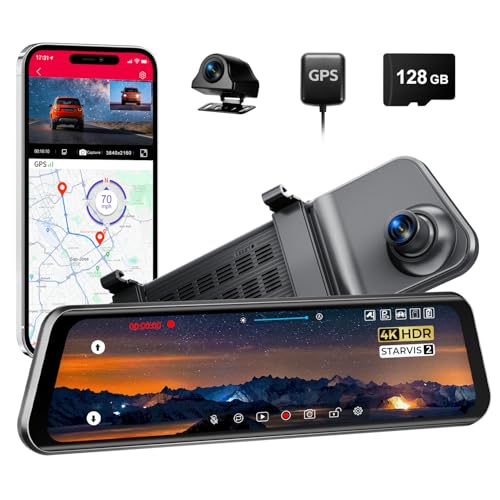 LD4K Max Mirror Dash Cam with 4K Front and 2.5K Rear Camera, STARVIS 2 Sensor, with ADAS BSD LCA Smart Mode, GPS, G-Sensor, Loop Recording, Parking Monitor, Voice Control, 5.8GHz WiFi,128GB Card