Can Dealerships Find Cars For You: Essential Guide
Yes, dealerships absolutely can find cars for you, especially if you’re looking for a specific make, model, or even a rare configuration. They have a vast network to source vehicles, saving you time and effort in your search.
Shopping for a car can feel like a treasure hunt. Sometimes, the exact car you dream of – the perfect color, the right trim, or even a specific package – isn’t sitting on the lot. It can be frustrating when you know what you want, but it’s just not there. You might wonder, “Can dealerships actually help me find that car?” The good news is, they often can! Think of them as your personal car scouts. They have tools and connections that go way beyond what you see on their parking lot. Let’s explore how they do it and how you can get them to work for you.
Navigating the Car Hunt: Can Dealerships Find Cars For You?
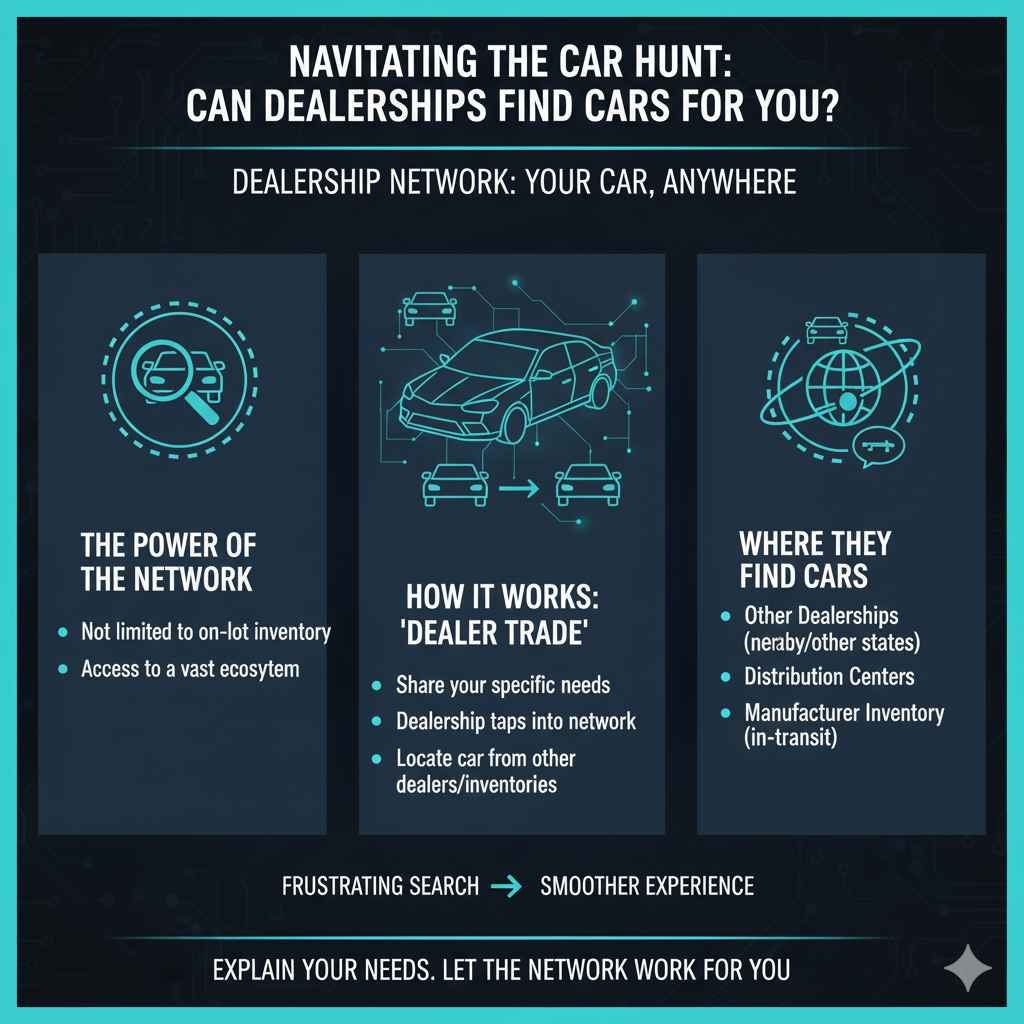
The short answer is a resounding yes! Dealerships aren’t just limited to selling cars that are physically present at their location. They are part of a much larger automotive ecosystem that allows them to locate vehicles from other dealerships, distribution centers, and even manufacturer inventories. This capability is incredibly useful for buyers who have a very specific set of requirements or are looking for a car that might be in high demand and short supply.
This service is often part of what’s known as the “dealer trade” or “in-transit” order process. When you explain your needs to a dealership, they can tap into their network. This means the car you’re after might be at a dealership across town, in another state, or even just built and on its way to port. Understanding this process can turn a frustrating car search into a much smoother and more successful experience.
How Dealerships Locate Vehicles: The Behind-the-Scenes Magic
Dealerships have several powerful tools and methods at their disposal to find the car you want. It’s not just guesswork; it’s a systematic approach driven by technology and industry relationships.
1. Dealer Network and Trades
This is perhaps the most common way dealerships find specific vehicles. When one dealership doesn’t have what a customer wants, they’ll reach out to other dealerships within their brand’s network. They might offer a trade for a car they have on their lot that the other dealership’s customer desires, or simply offer to purchase the car outright.
The Dealer Trade Process Explained
- Initial Inquiry: You tell your salesperson exactly what you’re looking for – make, model, year, trim, color, specific features, and even condition (new or used).
- Network Search: The salesperson uses internal systems or contacts regional contacts to see which other dealerships have a similar vehicle in stock.
- Negotiation: If a match is found, the dealerships will negotiate a trade price. Your dealership wants to buy the car for less than they can sell it to you for, factoring in transport costs.
- Transportation: Once terms are agreed upon, the car is transported from the selling dealership to your dealership. This can involve a drive-away exchange or a car carrier.
- Preparation: Upon arrival, the car is inspected, detailed, and any necessary reconditioning is done before it’s presented to you.
2. Manufacturer Inventory Systems
Manufacturers maintain vast databases of all vehicles produced and allocated. Dealerships can often access these real-time systems (within certain limitations) to see what’s available. This includes:
- Vehicles in Production: Cars that have been ordered and are currently being built.
- In-Transit Vehicles: Cars that have completed production and are on their way to dealerships.
- Dealer Stock: Cars physically located at other dealerships across the country.
This system is incredibly valuable for finding brand-new vehicles that haven’t yet been delivered. It allows dealerships to pre-sell or locate a car that’s already built but might be a few states away.
3. Special Orders and Factory Orders
For brand-new vehicles, many manufacturers allow dealerships to place direct factory orders for custom configurations. This is ideal if you want something truly unique or have very specific requirements not typically found in standard stock. There might be a waiting period for factory-built cars, as they are produced in line with manufacturing schedules.
This process is becoming more common as consumers want more personalized vehicles, and manufacturers are adapting to offer greater customization. It’s important to note that not all models or trims may be available for factory order, and some options might be limited based on production constraints.
4. Used Car Locating Services
When you’re looking for a specific used car, dealerships have resources that go beyond their own lot’s inventory. Many dealership groups own multiple dealerships, and they can easily search the inventory of all their affiliated locations. Beyond that, they often have access to:
- Auction Services: Dealerships frequently participate in wholesale auto auctions where they can bid on and purchase used vehicles. They can sometimes use these services to find a specific car for a client.
- Trade-In Networks: When a customer trades in a vehicle, the dealership might be able to find a buyer for it through their network before it even hits their own used car lot.
When Dealerships Can (and Can’t) Find Cars For You
While dealerships are powerful allies in your car search, there are nuances and limitations to their car-finding abilities. Understanding these will help manage expectations and make the process smoother.
Factors That Help Dealerships Find Cars:
- Specific Make & Model: If you’re looking for a well-known model from a major manufacturer, the chances of it being found are very high.
- Common Configurations: Standard trims, popular colors, and widely available options are much easier to locate.
- New Vehicles: Dealerships often have better access to locate brand-new cars that are still in production or transit.
- Regional Availability: If the car is available within a reasonable driving distance or a common shipping route, it’s more feasible.
- Manufacturer Incentives: Sometimes, manufacturers will offer incentives for dealerships to move specific inventory, making it easier to facilitate trades.
When It Might Be Challenging:
- Rare or Discontinued Models: If a car is out of production, particularly a niche model, finding one in excellent condition can be very difficult.
- Highly Specific or Uncommon Options: A unique combination of rare options, colors, and packages might not exist anywhere in the current inventory.
- Very Old Used Cars: Finding a specific, older used car with low mileage and in pristine condition is like finding a needle in a haystack.
- Geographic Limitations: Transporting a car from a distant state can be expensive, and dealerships may be reluctant to do it unless there’s significant profit or a very committed buyer.
- Market Demand: In times of high demand and low supply (like recent automotive chip shortages), finding any car, let alone a specific one, can be extremely challenging. For example, during such periods, finding a specific trim of a popular SUV might be nearly impossible elsewhere.
Your Role: How to Make Dealerships Work for You
You’re not just a passive observer in this process. Your communication and clear understanding of what you want are crucial. Here’s how to partner effectively with your dealership:
1. Be Crystal Clear About Your Needs
The more specific you are, the easier it is for them to search. Don’t just say “a red SUV.” Say “a 2023 Toyota RAV4 Hybrid, XLE trim, in Magnetic Gray, with the Premium Package, and all-weather floor mats.” Note down every single feature or detail that’s important to you.
2. Understand Timelines and Costs
If the car needs to be transported from another state, there will be a cost associated with that. Ask about it upfront. Factory orders also come with waiting times, which can range from a few weeks to several months. Be patient and inquire about expected delivery dates.
3. Work with a Trusted Salesperson
Build a good rapport with your salesperson. A motivated and honest salesperson will be more inclined to go the extra mile to find your car. Ask them how they plan to search and what their process is.
4. Be Realistic and Flexible
If your dream car is proving impossible to find, be open to slight variations. Would a different color work? Is a similar trim level acceptable? Sometimes, a small compromise can lead to finding a car much faster.
5. Consider a “Sold Order” or “Pre-Order”
For new cars, many dealerships allow you to place a “sold order.” This means you commit to buying a car that is either in transit or being built specifically for you. This guarantees you get the car with your exact specifications. You can find more information about ordering vehicles from manufacturers on their official websites, such as Ford’s ordering page or similar resources from other brands.
6. Negotiate Wisely
If the car is coming from another dealership, your salesperson might have more negotiating power, as they’re essentially completing a wholesale transaction. However, they will still factor in transport costs. Understand if the price they give you includes these logistics.
Pros and Cons of Having Dealerships Find Your Car
Using a dealership’s network to find your car has several advantages, but it’s also good to be aware of potential downsides.
The Upsides:
- Convenience: You save a tremendous amount of time and effort. Instead of searching multiple websites and dealerships yourself, you have a professional doing the legwork.
- Access to a Wider Inventory: Dealerships can access vehicles that aren’t publicly advertised or easily found.
- Expertise: Salespeople are experienced in the car market and know how to navigate these systems.
- Peace of Mind (for New Cars): Ordering a new car ensures you get exactly what you want, built to factory standards.
- Potential for Better Deals: Sometimes, a dealer trade can result in a better overall deal if the dealerships are motivated to make the exchange happen.
The Downsides:
- Potential Extra Costs: Transport fees for bringing a car from another location can be added to the price.
- Waiting Times: Locating and transporting a car, or waiting for a factory order, can take weeks or even months.
- Compromises May Be Needed: If the exact car isn’t available, you might need to settle for something close, or wait indefinitely.
- Less Control Over Condition (for Used Cars): While dealerships inspect used cars, you still rely on their assessment and reconditioning, rather than inspecting every detail yourself.
- Pressure to Buy: Some dealerships might pressure you to accept a car that’s “close enough” to what you want, rather than continuing the search.
When to Consider Alternative Search Methods
While dealerships are your primary resource for finding a specific car, there are times when branching out might be beneficial.
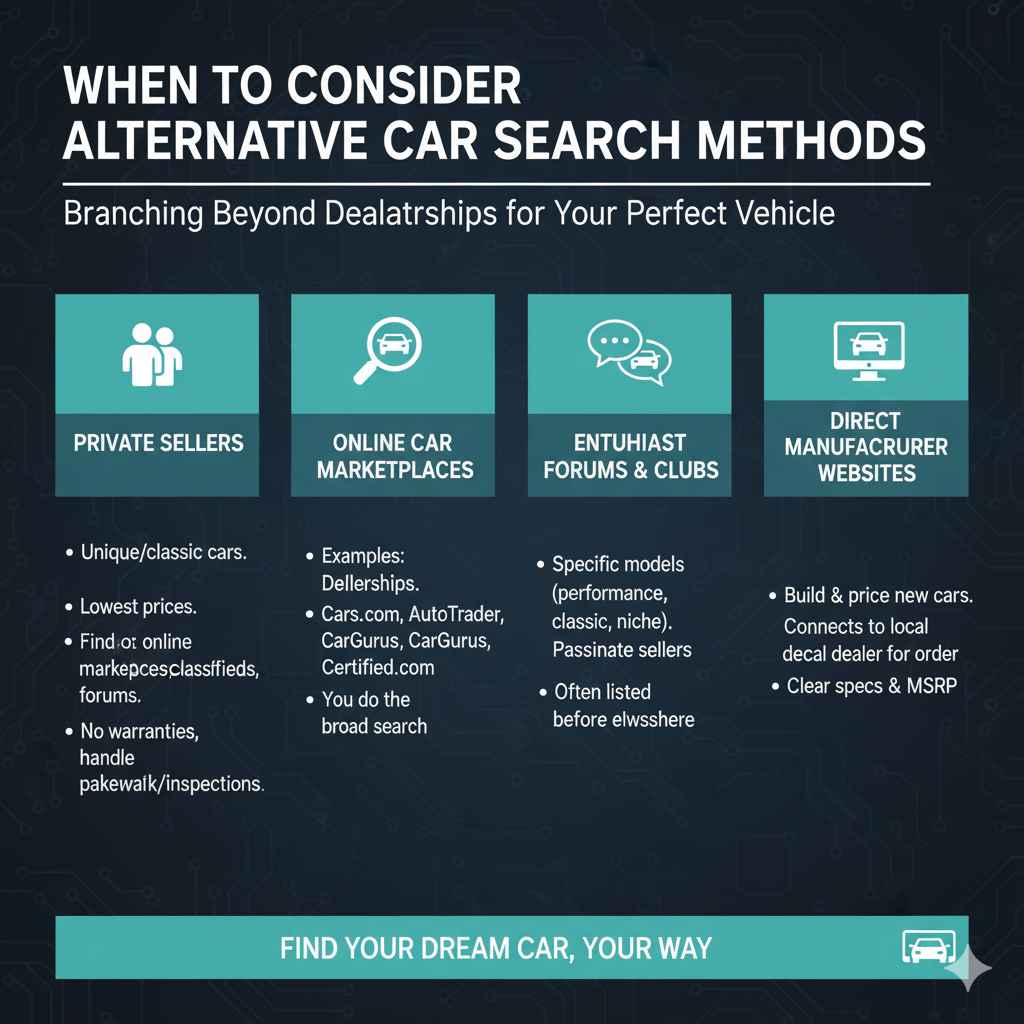
1. Private Sellers
For unique or classic cars, or if you’re looking for a specific used vehicle at the absolute lowest price, private sellers can be a good option. You can find them through online marketplaces, classifieds, or enthusiast forums. However, be aware that private sales offer no warranties or recourse if something goes wrong, and you’ll need to handle all inspections and paperwork yourself.
2. Online Car Marketplaces & Aggregators
Websites like Cars.com, AutoTrader, CarGurus, and specific brand used car sites (e.g., Certified.com for certified pre-owned) allow you to search inventory from many dealerships simultaneously. While the dealership still finds the car, you are doing the initial broad search yourself.
3. Enthusiast Forums and Clubs
If you’re after a specific model, especially a performance car, classic, or niche vehicle, dedicated online forums and owner’s clubs are goldmines. Members often list their vehicles for sale there before advertising elsewhere, and they can be passionate about finding the right home for their car.
4. Direct Manufacturer Websites
Many manufacturers now have tools on their websites that allow you to build and price your desired car, and then connect you with a local dealer to initiate the order process. This is great for new cars and gives you a clear idea of exact specifications and MSRP.
Frequently Asked Questions (FAQs)
Q1: Can a dealership find a car that is not currently in their inventory?
A1: Absolutely! They have access to dealer networks, manufacturer systems, and auction services to locate vehicles not physically on their lot.
Q2: What if I want a car that’s no longer being made? Can dealerships still find it?
A2: It’s much harder, but possible, especially for used models. They might find one at another dealership’s inventory, at auction, or through a private seller network. However, options can be very limited, and condition is a major factor.
Q3: How long does it typically take for a dealership to find a car for me?
A3: It varies greatly. If it’s a simple dealer trade within your state, it could be a few days. A factory order can take weeks to months. Finding a rare used car could take an indefinite amount of time.
Q4: Are there extra fees when a dealership finds a car from another location?
A4: Often, yes. Expect transportation or “re-location” fees. Always clarify what these fees cover and confirm them before agreeing to the purchase.
Q5: What is a “sold order” or “pre-order” and how does it work?
A5: This is when you specifically order a new car with your desired configuration directly through the manufacturer via the dealership. You commit to buying it, and the factory builds it for you, or they locate one in transit for you. It’s the best way to guarantee you get exactly what you want in a new vehicle.
Q6: Can dealerships find specific trim levels or rare color options?
A6: Yes, to a degree. Standard trim levels and popular colors are much easier to find. Very rare colors or highly specific option packages might be difficult or impossible to locate.
Q7: Should I negotiate the price of a car that the dealership has to find for me?
A7: Yes, you can and should negotiate. However, be aware that the dealership will have costs associated with acquiring the car (like transport), which they may try to recoup. Discuss flexibility on the final price.
Conclusion
So, can dealerships find cars for you? Without a doubt. They are equipped with sophisticated tools, extensive networks, and decades of experience to hunt down that perfect vehicle you’re looking for. Whether it’s a brand-new ride with a specific set of features or a hard-to-find pre-owned model, your local dealership can be your most valuable asset in the search. By being clear, communicative, and realistic, you can leverage their capabilities to save yourself time, reduce stress, and drive away in the exact car that makes you happy. Don’t be afraid to ask, explain your needs in detail, and work collaboratively with your sales team – they’re there to help you find your next set of wheels.