Can Jumping Off A Car Cause Damage? Essential Guide
Yes, jumping off a car can absolutely cause damage, both to the vehicle and potentially to yourself. Even short drops can strain suspension, dent panels, and damage tires. This guide explains the risks and outlines why it’s best to avoid this action entirely.
Hey there, car friends! Md Meraj here, ready to help you understand your vehicle better. Ever seen someone jump off the hood or roof of a car in a movie and wondered if it’s a good idea? Many of us have, and it’s a common question that pops up, especially when there’s a bit of excitement or a dare. But here’s the straight talk: jumping off a car isn’t just a silly stunt; it can lead to real, tangible damage to the vehicle. More importantly, it’s incredibly risky for your safety too. Let’s dive into why this seemingly minor action can have significant consequences for your car and, more importantly, for you. We’ll break down exactly what can go wrong, so you know what to avoid, keeping your car and yourself in great shape.
Understanding the Forces Involved When Jumping Off A Car
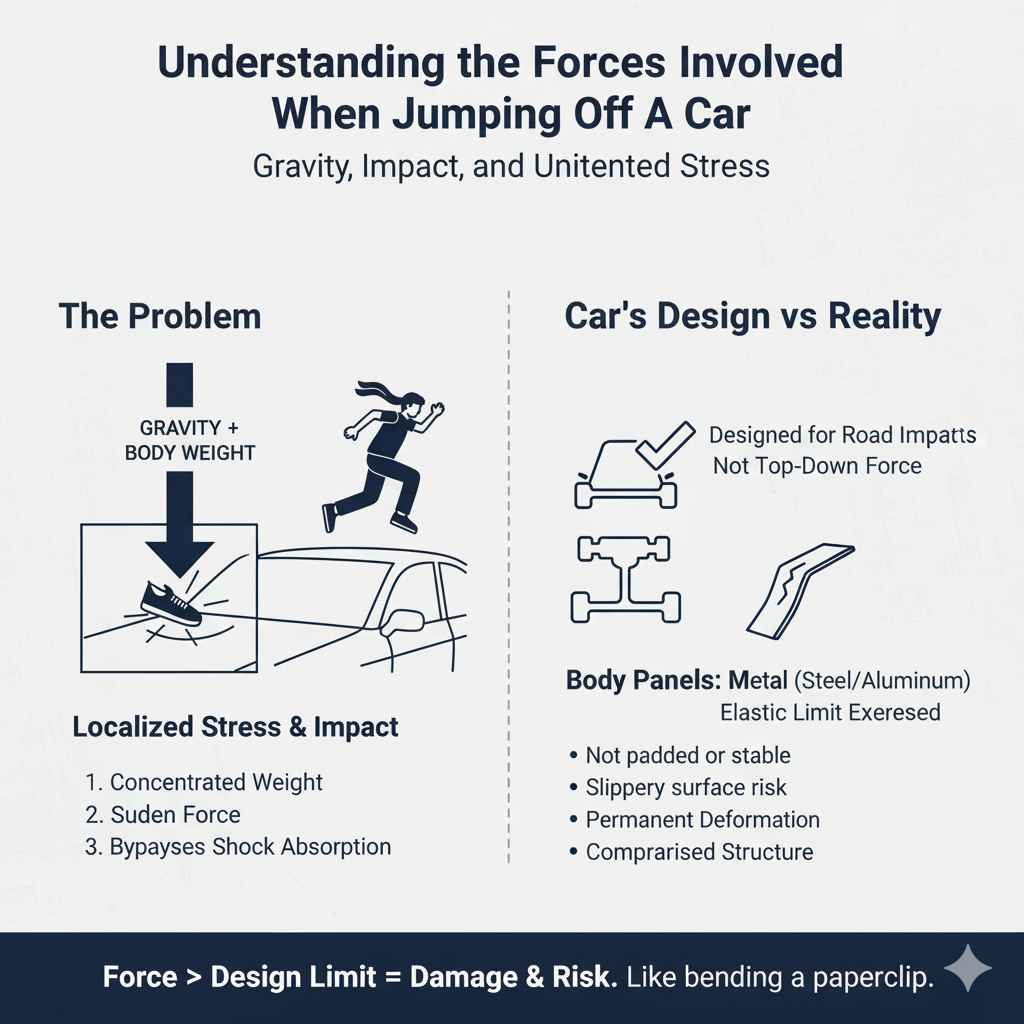
When you think about jumping off a car, you might imagine it as a simple leap from a slightly elevated surface. However, the reality involves forces that your car isn’t designed to handle in that way. Gravity plays a big role, pulling you down, and when you land, your body’s weight is concentrated on a small area of the car’s surface. This impact creates localized stress. Imagine dropping a heavy stone on a sheet of paper – it makes a dent, right? A car’s body and structure are similar, though much stronger, but they still have limits!
The car’s body panels, like the roof or hood, are made of metal, often steel or aluminum, and they are designed to withstand the elements, minor bumps, and the weight of things like snow or luggage. They are not engineered to absorb the impact of a falling person’s weight, especially when that weight is suddenly applied. Think about the shock absorbers in your car – they are designed for the wheels to absorb road impacts. Jumping off from a higher point bypasses all of that intended shock absorption and directly impacts the car’s skin and frame.
Furthermore, the car isn’t a stable, padded platform. Its surface can be slippery, especially if it’s wet or dirty, increasing the risk of a fall. Even if you land perfectly, the force is transmitted through the metal. This force can exceed the material’s elastic limit, causing it to deform permanently. We aren’t just talking about minor dents; in extreme cases, or with repeated actions, the structural integrity can be compromised. It’s a bit like bending a paperclip back and forth – it gets weaker with each bend.
Specific Areas of Your Car That Can Be Damaged
When someone jumps off a car, different parts are at risk. It’s not just about a single dent; it’s a chain reaction of potential damage.
Body Panels: Dents, Scratches, and Worse
The most obvious damage occurs to the body panels. The roof and hood are common landing spots. These panels, while appearing robust, are relatively thin sheets of metal. A person’s weight, concentrated upon landing, can easily cause:
- Dents: This is the most frequent outcome. The metal is pushed inward, creating an unsightly depression. The size and depth of the dent depend on the force of the jump and the person’s weight.
- Scratches and Paint Damage: Shoes, especially those with rough soles or containing debris like gravel, can easily scratch the paint. This not only ruins the car’s finish but also exposes the underlying metal to rust over time.
- Creases and Warping: A hard landing can cause the metal to crease or warp, especially along the edges of panels or near structural supports. This type of damage is harder to repair than a simple dent.
- Weakened Structure: Repeated stress from impacts can weaken the metal over time, making it more susceptible to damage from everyday wear and tear.
Consider the roof of your car. It’s designed to support the weight of things like roof racks or even rollovers in some safety designs, but that strength comes from its shape and internal bracing. A direct, localized impact from a jump doesn’t utilize this structural strength effectively and can deform the panel.
Glass: Windshield and Windows
While less common than body panel damage, jumping off a car can pose a risk to its glass components. A misstep, a slip, or landing awkwardly could cause a foot or knee to impact the windshield or side windows. Modern car glass is laminated and tempered for safety, but it’s still not impervious to sharp impacts. A hard enough blow could lead to:
- Cracks: A direct impact can cause the glass to crack, potentially spreading over time, compromising visibility and requiring replacement.
- Shattering: Though modern automotive glass is designed not to shatter into dangerous shards like household glass, a sufficiently forceful impact could theoretically cause it to break.
The windshield, in particular, is a critical structural component of the car’s cabin. Damage to it can impact its ability to support the roof in a rollover accident, according to safety standards like those from the National Highway Traffic Safety Administration (NHTSA).
Tires and Wheels
Even though you’re jumping off the car, the impact can still affect the tires and wheels, especially if the car is moving slightly at the time of the jump or landing. If the landing is uneven, or if the car shifts, there’s a chance someone could land in a way that puts undue stress on the tires and rims:
- Tire Sidewall Damage: The sidewall of the tire is more vulnerable to punctures or tears than the tread. An awkward landing or a sharp object present on the car’s surface could damage it.
- Wheel Rim Damage: While less likely from just jumping off, if the landing is very hard on a specific point of the tire that then transfers force to the rim, it could potentially lead to bending or cracking of the wheel rim, especially if the rims are made of lighter alloys.
Suspension System
The car’s suspension is designed to absorb impacts from the road through the wheels. When you jump off the car, you’re essentially adding an external impact that the suspension system isn’t meant to handle. While a single jump might not cause catastrophic failure, repeated actions or a particularly heavy landing could:
- Strain Shock Absorbers and Struts: These components absorb jolts. An unexpected, heavy downward force could over-compress them, potentially damaging seals or internal mechanisms.
- Impact Springs: The springs compress and extend to absorb road unevenness. A sudden, heavy impact could over-stress them.
- Damage Bushings: Rubber bushings in the suspension help dampen vibrations. A sharp impact can tear or crush these.
Over time, these stresses can lead to reduced performance, a rougher ride, and premature wear on suspension parts. Fixing suspension components can be costly.
Undercarriage and Frame
Less direct, but still a possibility, is damage to the undercarriage. If the person landing puts their weight down unevenly, or if they slide off, there’s a remote chance they could snag or strike underbody components. While the frame itself is robust, connections and components attached to it could be vulnerable. Extreme impacts, though, can transfer forces to the frame, potentially causing microscopic fractures or warping that are extremely difficult and expensive to detect and repair. This is usually seen in severe accidents, but the principle of force transfer is the same, just on a smaller scale.
The Risk to Yourself: More Than Just a Scraped Knee
It’s crucial to remember that jumping off a car isn’t just about the vehicle; it’s about your personal safety. The risks to your own body are significant and can be far more serious than any car repair bill.
Impact Injuries
When you jump, your body experiences the force of gravity accelerating you downwards. Upon landing, this momentum needs to be absorbed by your body and the surface you land on. Cars, especially their roofs and hoods, are hard, unforgiving surfaces. This can lead to a variety of impact injuries:
- Sprains and Fractures: Landing awkwardly can easily twist an ankle, knee, or wrist, leading to sprains or even fractures. The impact force on your legs and feet can also cause foot fractures, shin splints, or knee injuries.
- Bruises and Contusions: Direct impact will cause bruising, which can be painful and unsightly.
- Back and Neck Injuries: Landing improperly, especially if your body twists or you land hard on your back, can cause serious damage to your spine, potentially leading to severe pain or even paralysis. The sudden stop can jolt your entire skeletal system.
- Head Injuries: If you lose your balance or slip during the jump or landing, you could hit your head on the car or the ground, leading to concussions or more severe traumatic brain injuries.
Slipping and Falling
Car surfaces are often smooth and can become incredibly slippery, especially if they are wet from rain, dew, or even condensation. Dirt, oil, or road grime can also make the surface slick. This significantly increases the chance of slipping during the jump or, more commonly, during the landing. A slip can turn a controlled descent into an uncontrolled fall, drastically increasing the risk of hitting dangerous parts of the car or the ground with significant force.
Damage to Clothing and Personal Items
While this is a minor concern compared to physical injury, your clothes can also suffer. Rough edges of the car, exposed metal, or even just the friction of sliding can rip or tear your clothing. Any personal items you might be carrying – like phones or keys – are also at high risk of being dropped, damaged, or lost.
How to Safely Get In and Out of Your Car
Given the risks, it’s clear that jumping off a car is never a good idea. The safest way to interact with your vehicle is through its intended design – using the doors!
- Open the Door: Reach for the door handle and open the door smoothly.
- Step Down Carefully: Place one foot firmly on the ground. Use the door frame or any grab handles provided to support yourself.
- Swing Your Legs Out: Clear your legs from the car’s interior.
- Step Down Fully: Once your first leg is stable on the ground, bring your other leg down, ensuring both feet are flat on a stable surface.
- Close the Door: Hold the door handle or frame and gently close the door.
Similarly, when getting into your car, use the doors, grab handles, and the seat to lower yourself in safely. This method ensures all forces are distributed normally and minimizes the risk of injury or damage.
Can Jumping Off A Car Damage Yours? A Comparative Look
To help understand the potential damage, let’s compare the intended load-bearing capabilities of a car with the forces involved in jumping. This isn’t an exact science because every jump varies, but it illustrates the point.
| Scenario | Approximate Force/Impact | Effect on Car |
|---|---|---|
| A person sitting in a car seat (driver/passenger) | Weight evenly distributed over seat and floor structure. Absorbed by designed seating system. | Negligible. Designed to handle this. |
| A person standing on the roof (static load) | Weight concentrated on a few square feet. Primarily stresses the roof panel itself. | Minor flex of the roof panel; potential for very subtle deformation over time with repeated, heavy loads in one spot. |
| A person jumping off the car (e.g., from roof to ground) | Dynamic impact. Force is the person’s weight PLUS the deceleration force upon landing. Concentrated on a small area (feet/body). Can be 1.5 to 3 times the person’s weight or more, depending on the fall. | High localized stress leading to dents, scratches, paint damage. Potential strain on internal roof structure, risk to glass if landed upon. |
| Driving over a pothole | Impact force is transferred through the tire/wheel assembly to the suspension. Designed to absorb and distribute this force. | Minor shock absorbed by suspension. Significant potholes can cause tire/wheel damage or suspension component stress over time. |
As you can see, the dynamic, concentrated impact of a jump far exceeds the forces the car’s surface panels are designed to handle. While suspension is built for impacts, those impacts come from the wheels, not from a person landing on the bodywork.
Factors Influencing the Severity of Damage
Not every jump off a car results in the same level of damage. Several factors play a role:
- Height of the Jump: A jump from the roof will generally carry more force than a jump from the hood, due to a longer fall.
- Weight of the Person: A heavier person will exert more force on impact.
- Landing Surface: Landing on the narrow edge of a panel, or on a point where there is less underlying support, can increase the likelihood and severity of damage.
- Condition of the Car: Older cars or cars with already-compromised panels or paint may be more susceptible to damage.
- Surface of the Car: A wet, icy, or dirty surface increases the risk of slipping, leading to uncontrolled landings and potentially more severe damage or injury.
- Speed of the Car (if moving): If the car is moving, even slowly, the dynamic forces and the risk of sliding upon landing dramatically increase the potential for damage and injury.
What to Do If Damage Occurs
If you or someone else has jumped off your car and caused damage, or if you’ve accidentally caused damage:
- Assess the Damage: Carefully inspect all areas for dents, scratches, cracks, or deformations.
- Document: Take clear photos of the damage, noting the location and extent. This can be useful for insurance or repair quotes.
- Clean the Area: Wash the affected parts of the car to get a clear view of the damage and to remove any debris that could cause further scratches.
- Consult a Professional: For dents, paint repair, or any suspected structural issues, it’s best to talk to a reputable auto body shop. They can assess the damage and provide repair options. Minor scratches might be fixable with DIY kits, but deeper dents or paint damage often require professional attention.
- Prioritize Physical Health: If anyone was injured, seek medical attention immediately.
For minor dents, there are techniques like Paintless Dent Repair (PDR) which specialized shops can perform, often making the repair virtually invisible. You can learn more about PDR and its benefits from resources like I-CAR, a non-profit organization dedicated to improving the quality, safety, and efficiency of collision repair.
Your Car’s Well-being and Your Safety Above All
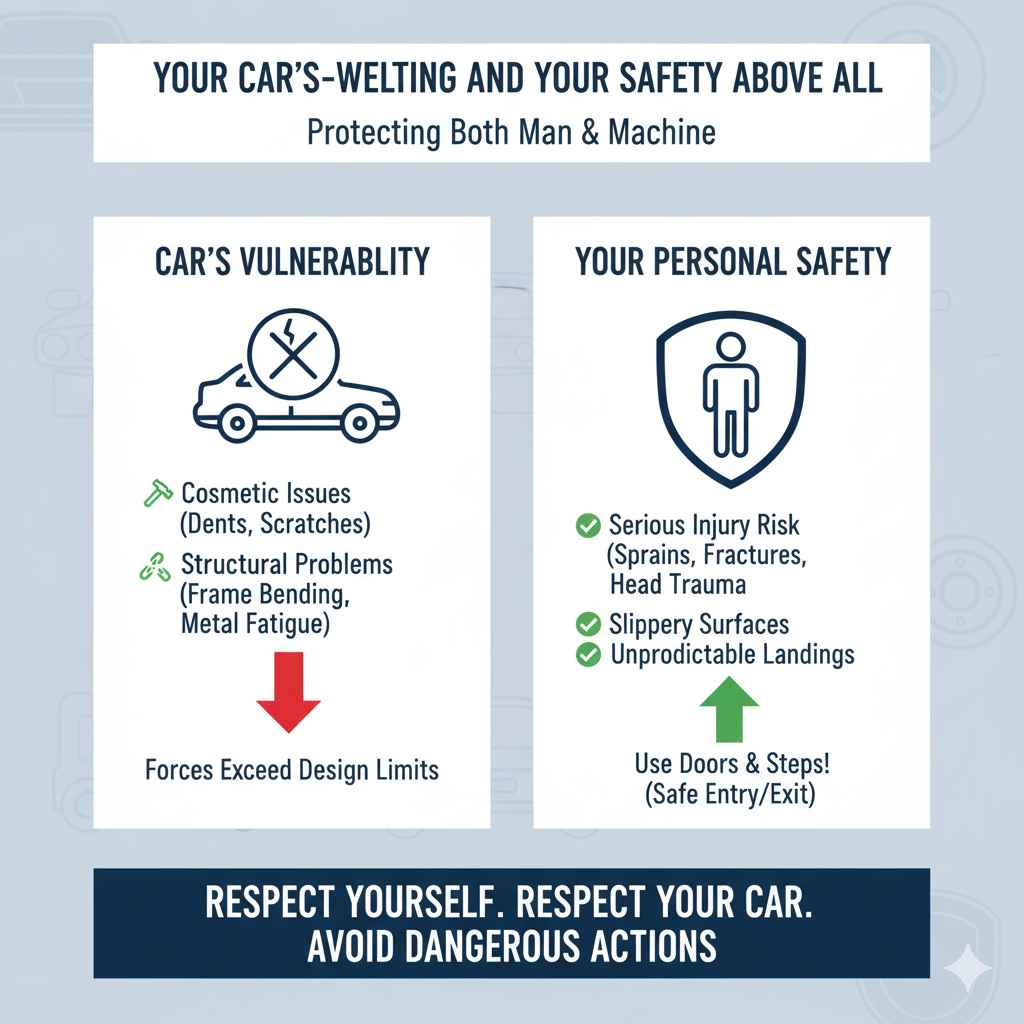
At the end of the day, your car is a machine designed for transportation and reliability. It has specific points of strength and areas that are more vulnerable. Jumping off it introduces forces it was never meant to contend with, leading to damage that can range from cosmetic issues to more significant structural problems. More importantly, your personal safety is paramount.
The risks of serious injury – sprains, fractures, head trauma, or worse – far outweigh any perceived thrill or dare. Treating your car with respect, and more importantly, treating yourself with respect by avoiding dangerous actions, is the best approach. Always use the doors and steps provided to get in and out of your vehicle. This keeps your car looking great and, most importantly, keeps you safe and sound.
Frequently Asked Questions (FAQ)
Q1: Can a small jump off a car cause any real damage?
A: Yes, even a small jump can cause damage. The impact force, though less than a large jump, can still cause minor dents, scratches, or chip the paint, especially if landed on a weaker spot or with rough-soled shoes. Repeated small jumps can worsen these issues over time.
Q2: Is jumping off a car more dangerous than jumping off something else of similar height?
A: Yes, it can be. A car’s surface is hard and often slippery. Unlike a safe landing zone on the ground, a car offers fewer stable points and is prone to shifting slightly. The car itself can also have sharp edges or protruding parts that increase the risk of injury.