Can Tow Companies Go Inside Your Car: ESSENTIAL Guide
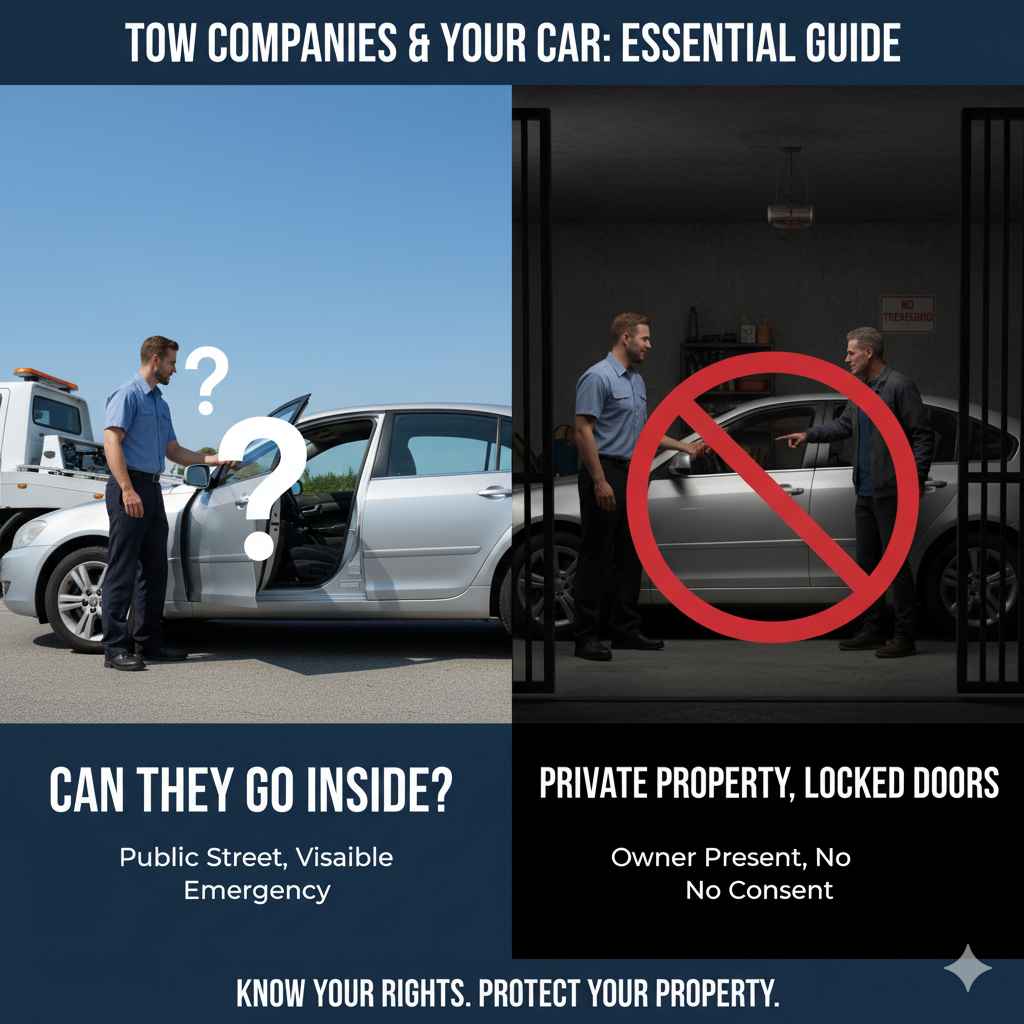
Yes, in certain situations and with your permission, tow companies can go inside your car to release the parking brake or move it. However, they generally avoid entering your vehicle unless absolutely necessary for safe towing.
Getting your car towed can be a stressful experience. You might be wondering about the details of the process, especially when it comes to the tow truck driver interacting with your vehicle. A common question that pops up is: “Can tow companies go inside my car?” It’s a valid concern, and the answer isn’t always a simple yes or no. In this guide, we’ll break down exactly when and why a tow truck operator might need to enter your car for towing purposes. We’ll also cover what you can expect and how to prepare for a towing situation, all explained in easy-to-understand terms.
Why Would a Tow Driver Need to Enter Your Car?
Most of the time, a tow truck driver can hook up your vehicle and tow it without ever stepping into your car. They typically attach cables or wheel-lift mechanisms from the outside. However, there are specific scenarios where entering your car becomes necessary for them to do their job safely and effectively.
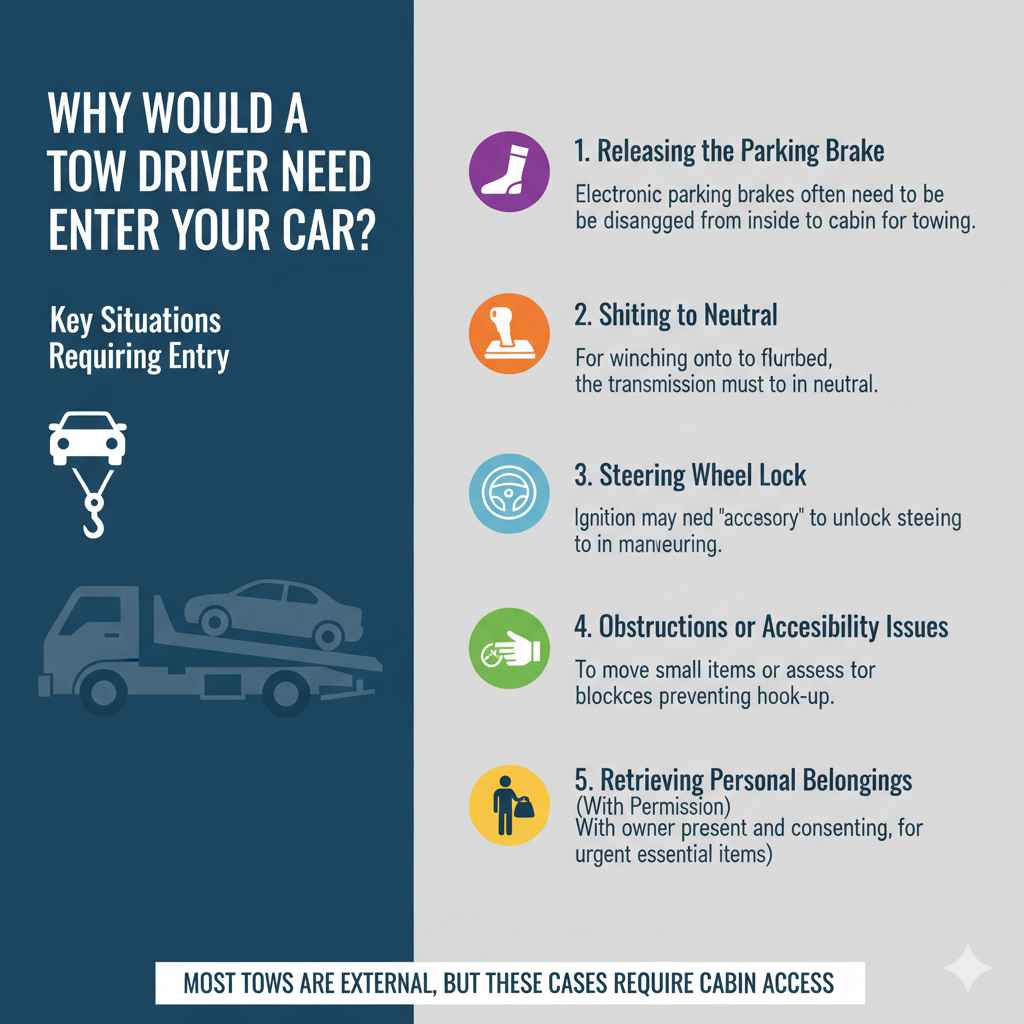
Key Situations Requiring Entry:
- Releasing the Parking Brake: Many modern cars have electronic parking brakes that activate automatically when the engine is off. If the car is in a position where the wheels need to roll freely for towing (especially for flatbed towing), the parking brake must be disengaged. The electronic button or lever is usually inside the cabin.
- Shifting to Neutral: For certain towing methods, particularly if the car needs to be winched onto a flatbed truck, the transmission needs to be in neutral. The gear selector is located inside the car.
- Steering Wheel Lock: Some vehicles have steering wheel locks that engage when the ignition is off. To allow the car to be steered smoothly onto a tow truck or trailer, the ignition might need to be turned to the “accessory” or “on” position (without starting the engine), which requires access to the ignition key or start button.
- Obstructions or Accessibility Issues: In rare cases, there might be an external obstruction preventing the tow truck from properly attaching its equipment. The driver might need to enter the car to move small items or assess the situation more closely.
- Retrieving Personal Belongings (with explicit permission): While not a standard part of towing, if there’s an urgent need to retrieve essential items like medication or a phone, and the owner is present and consents, a tow driver may assist. However, this is not their primary job.
Your Permission is Key
It’s crucial to understand that in most cases, a tow truck driver will not enter your car without your explicit permission. You, as the vehicle owner or authorized representative, have the right to know what’s happening with your vehicle.
When to Expect Them to Ask:
- When they need to disengage the parking brake.
- When they need to put the car in neutral.
- When they need access to the ignition for steering.
If a tow operator attempts to enter your vehicle without explaining why or asking your permission, it’s perfectly reasonable to question them. Transparency is important in these situations. Reputable towing companies prioritize clear communication. For more insights on towing services and consumer rights, you can refer to resources like your local Department of Motor Vehicles (DMV) or consumer protection agencies.
What You Can Expect During a Tow
When a tow truck arrives, the process should be straightforward. The driver will assess your vehicle and the situation to determine the best towing method. Here’s a general breakdown of what happens:
The Towing Process:
- Arrival and Assessment: The tow truck driver arrives at your location. They’ll survey your car and the surroundings to plan the best approach.
- Hook-up: Using specialized equipment, they’ll attach the tow truck to your vehicle. This can involve chains, straps, or wheel lifts attached to the frame or wheels. For flatbed towing, they’ll drive your car onto the truck bed or winch it up.
- Operational Checks: This is where they might need to enter your car. As mentioned, they might ask to disengage the parking brake, shift to neutral, or turn the ignition. They will communicate these needs to you.
- Securing the Vehicle: Once hooked up and any necessary in-car actions are taken, they will secure your vehicle to the tow truck to ensure it doesn’t move during transit.
- Towing to Destination: Your vehicle is then transported to the agreed-upon destination, whether it’s a repair shop, your home, or a storage facility.
Preparing Your Car for a Tow (to Minimize Entry)
You can make the towing process smoother and reduce the need for the driver to enter your car by taking a few simple preparatory steps:
Before the Tow Truck Arrives:
- Ensure Keys are Accessible: If you’re present, have your car keys ready. This allows quick access if the driver needs to turn the ignition.
- Clear Around Your Vehicle: Move any obstacles like other parked cars, garbage cans, or debris that might be around your car. This makes it easier for the tow truck to maneuver and attach its equipment.
- Secure Loose Items: If possible, secure or remove any loose large items from outside the vehicle that could be a hazard during towing.
- Gather Essential Information: Have your destination address and any relevant information about car trouble ready for the driver.
Understanding Towing Methods and Entry Needs
The method used for towing can influence whether a tow truck driver needs to enter your car. Knowing the basic types of towing can help you anticipate these needs.
| Towing Method | Brief Description | Likelihood of Driver Entering Car | Reasons for Entry (if applicable) |
|---|---|---|---|
| Hook and Chain Towing (Two-Wheeled Tow) | The tow truck uses a hook and chain system under the front or rear bumper to lift two wheels off the ground, while the other two wheels remain on the road. | Moderate to High | Often requires shifting transmission to neutral and releasing parking brake. May need ignition on for steering lock. |
| Wheel-Lift Towing | A metal yoke is placed under the wheels to lift them off the ground. Similar to hook and chain, but uses a yoke instead. | Moderate to High | Same as hook and chain: neutral, parking brake release, and potentially ignition access. |
| Flatbed Towing | The entire vehicle is loaded onto a flat, bed-like platform on the back of the tow truck. | Low to Moderate | Less often, but may be needed to engage neutral or release parking brake if the car cannot be rolled onto the bed easily or needs to be winched. |
Flatbed towing is generally considered the safest method for transporting vehicles, as it minimizes wear and tear on the tires, suspension, and drivetrain. However, even with flatbed towing, the need to disengage a parking brake or shift into neutral can still require the driver to enter the cabin. For a deeper dive into safe towing practices, consult the materials provided by organizations like the National Highway Traffic Safety Administration (NHTSA).
Safety and Your Vehicle During Towing
Your car’s safety is paramount. Tow companies are trained professionals, but understanding potential risks can give you more peace of mind.
Factors to Consider for Vehicle Safety:
- Proper Hook-Up: Ensure the tow operator is using the correct attachment points on your vehicle. They should know where to safely hook their equipment to avoid damaging your car’s frame or body.
- Correct Towing Method: The chosen towing method should be appropriate for your vehicle type (e.g., front-wheel drive, rear-wheel drive, all-wheel drive, electric vehicle). Improper towing can cause significant damage. For instance, many All-Wheel Drive (AWD) vehicles cannot be towed with just two wheels off the ground; they require flatbed towing or special dollies.
- Manual Transmission: If your car has a manual transmission, it’s usually recommended to leave it in neutral with the parking brake off. If it has a steering wheel lock, the ignition may need to be turned to the accessory position.
- Automatic Transmission: For most automatic transmissions, towing with the driven wheels off the ground (flatbed or wheel-lift on the non-driven axle) and the gear selector in Park is standard. However, electronic parking brakes and situations requiring rolling the vehicle onto a flatbed can necessitate placing it in neutral.
- Electric Vehicles (EVs) and Hybrids: These vehicles often have unique towing requirements due to their complex drivetrains and battery systems. Always confirm with the tow company or your car’s manual about the approved towing method for EVs and hybrids, as incorrect towing can be very expensive. EV drivers can find helpful general guidelines on charging and maintenance from sources like the U.S. Department of Energy’s Alternative Fuels Data Center.
Never hesitate to ask the tow truck driver about their plan and why they might need to enter your car. A professional will be happy to explain.
When Access Might Be Restricted
While tow drivers may need to enter your car in certain situations, there are also times when access might be impossible or inadvisable:
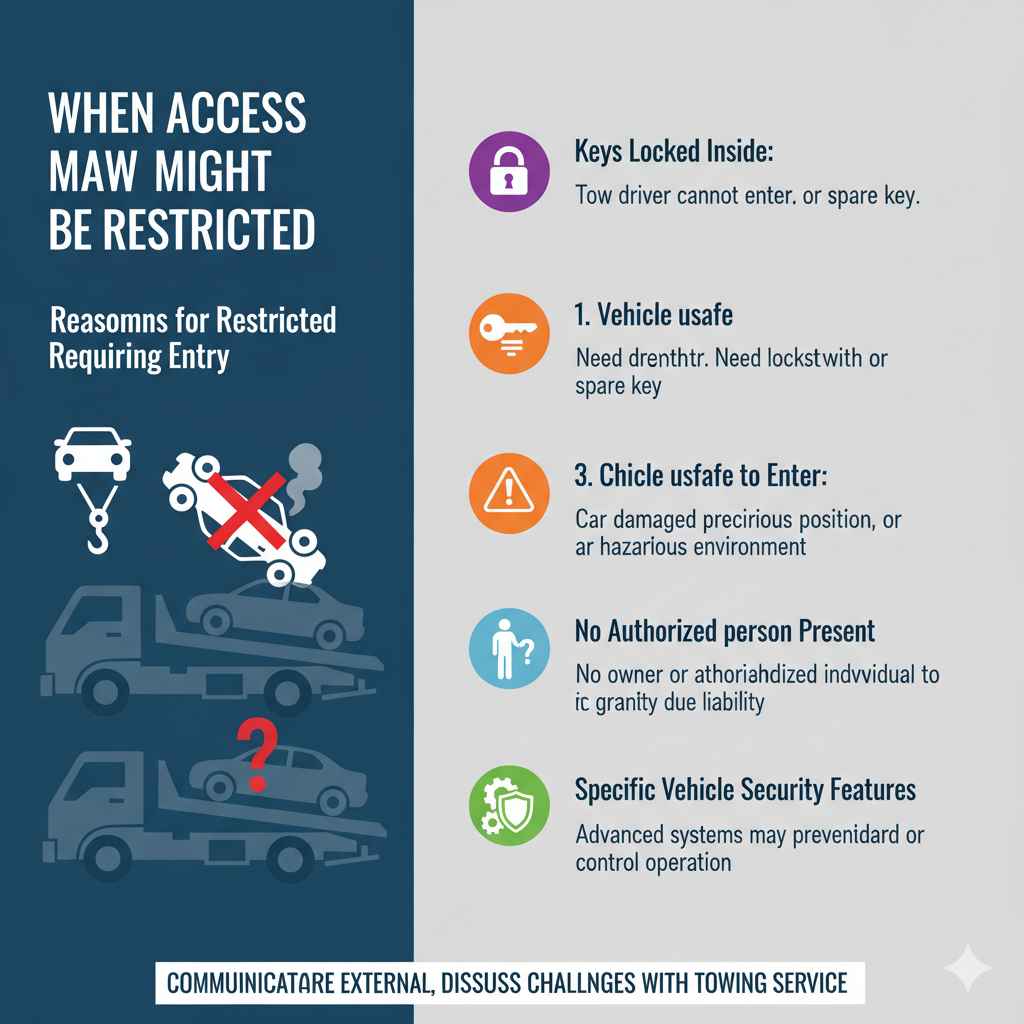
Reasons for Restricted Access:
- Keys Locked Inside: If your keys are locked inside the car, the tow driver usually cannot enter. You would need to arrange for a locksmith or have a spare key.
- Vehicle Unsafe to Enter: If the car is in a precarious position, heavily damaged, or surrounded by hazards, the tow driver’s priority is safety and they may deem entry too risky.
- No Authorized Person Present: If you are not present and have not authorized someone else to grant access, the tow driver will typically avoid entering the vehicle to prevent liability issues.
- Specific Vehicle Security Features: Some advanced security systems or modifications might prevent standard entry or operation of controls.
In these restricted scenarios, the tow company will work with you to find alternative solutions, such as using specialized equipment to access the parking brake mechanism or lift the vehicle without full entry. Communication is key – discuss these challenges with the towing service.
Frequently Asked Questions (FAQ)
Q1: Will a tow truck driver always ask permission before entering my car?
A: Yes, in almost all reputable towing services, the driver will seek your explicit permission before entering your vehicle. They should explain why entry is necessary.
Q2: What if I don’t want the tow driver to enter my car?
A: If you are uncomfortable with the driver entering your car, discuss alternative solutions. They might be able to tow it safely without entry, depending on the situation and your vehicle’s mechanics. However, certain actions like releasing the parking brake might be impossible without their entry, so there could be limitations.
Q3: Can tow companies enter my car if I’m not there?
A: Generally, no. Reputable tow companies will not enter a vehicle if the owner or an authorized representative is not present to grant permission. This is to prevent unauthorized access and potential liability issues.
Q4: What if my keys are locked inside my car during a tow?
A: If your keys are locked inside, the tow driver typically cannot enter your car. You’ll need to arrange for a locksmith to open the vehicle, or if you have a spare key, you’ll need to provide it. The tow may be delayed until access is gained.
Q5: Do tow drivers check for personal items inside my car?
A: No, it is not part of a tow driver’s job to catalog or secure personal items inside your vehicle. They are focused on safely towing the car. It’s your responsibility to secure or remove any valuables before a tow.
Q6: What should I do if I suspect damage after a tow, and they entered my car?
A: Document any damage immediately with photos and videos. Note the time and circumstances. Contact the towing company to report the damage and refer to their company policy or your towing contract regarding liability. You may also need to contact your insurance company.
Q7: Are electric vehicles towed differently, and do tow drivers enter them?
A: Yes, EVs often require specific towing methods, usually flatbed towing, to prevent damage to the electric drivetrain. While they might need to be placed in neutral or have their parking brake disengaged, drivers will still seek your permission and may need specific knowledge or tools for EV models.
Conclusion: Peace of Mind in Towing
Understanding whether tow companies can go inside your car is essential for feeling informed and in control during a potentially stressful event. As we’ve explored, while tow operators are equipped to handle most situations from the outside, there are common and necessary reasons why they might need your permission to enter your vehicle – most often to release the parking brake or shift the transmission into neutral for safe towing. Reputable companies prioritize clear communication, ensuring you understand every step of the process and always seeking your consent.
By preparing your car, knowing the different towing methods, and understanding your rights, you can help ensure a smooth and safe towing experience. Remember, the goal is always the secure transport of your vehicle. Don’t hesitate to ask questions and confirm details with your tow provider. With this knowledge, you can approach towing situations with greater confidence, knowing that your car is in capable hands.