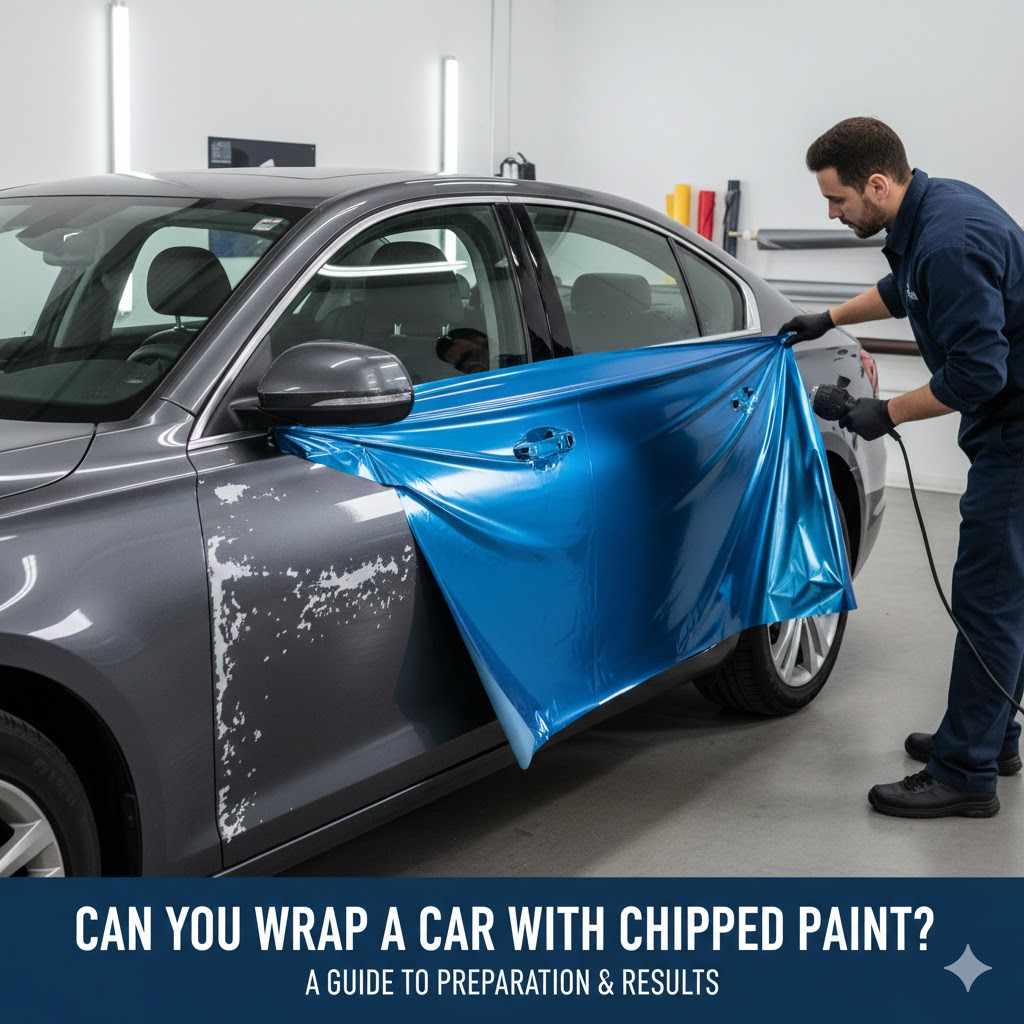
Can You Wrap a Car With Chipped Paint? A Guide
Thinking about a car wrap but worried about those little chips in your paint? You’re not alone! Many folks ask, Can You Wrap a Car With Chipped Paint? It’s a common question, especially for those new to vehicle wraps. The answer isn’t always a simple yes or no, but don’t worry, we’ll break it down for you. This guide will walk you through everything, making the process easy to follow. Let’s get started!
Evaluating Your Car’s Paint Condition for Wrapping
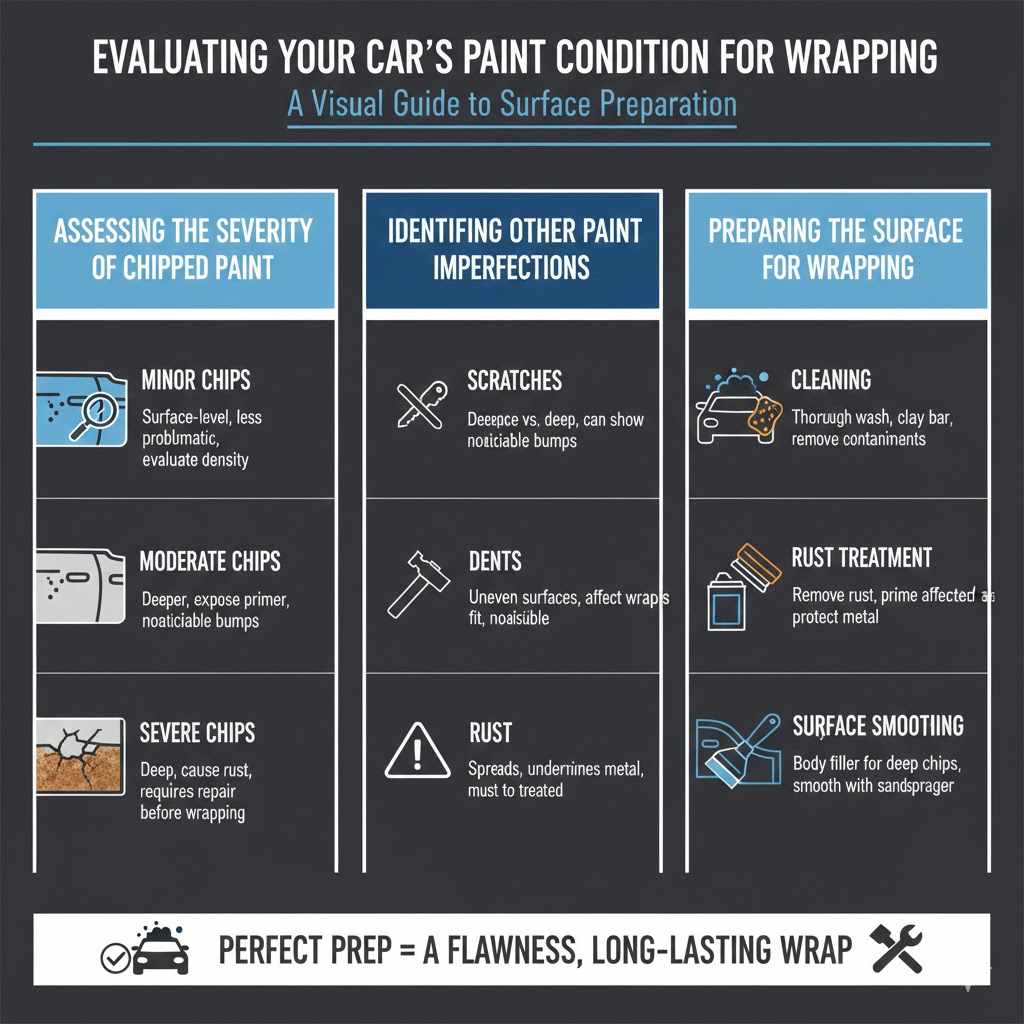
Before you consider wrapping your car, checking the paint’s condition is essential. A wrap acts like a second skin, conforming to the surface it covers. Any imperfections in the original paint, like chips, cracks, or rust, can show through and impact the wrap’s appearance and longevity. This section will help you explore what to search for. You need to know what you are looking for.
Assessing the Severity of Chipped Paint
The severity of the chipped paint is a major factor. Minor chips, like tiny flecks from road debris, might be less problematic than larger, deeper chips. Consider the location and number of chips, as they can cause bigger problems. Areas with more chips or significant damage might require more preparation or alternative solutions. Inspect the car thoroughly, paying close attention to areas like the front bumper, hood, and side mirrors, where chips often occur. Also, consider the color of your car. Lighter colors can make defects more noticeable, and it’s best to be as thorough as possible.
- Minor Chips: These are surface-level imperfections that don’t penetrate the paint layers significantly. In many cases, these chips are small enough that the wrap can conform over them without a major issue. However, you should evaluate the number and density of the chips.
- Moderate Chips: These chips go deeper, potentially exposing the primer or even the bare metal. They are more likely to impact the appearance of the wrap, causing noticeable bumps or irregularities. With a lot of them, the outcome might be questionable.
- Severe Chips: These are deep chips or areas where the paint is missing. These situations can lead to rust and compromise the wrap’s adhesion and durability. These areas will most likely need repair before wrapping.
Identifying Other Paint Imperfections
Besides chipped paint, other paint imperfections can affect the wrap. These include scratches, dents, and rust. Scratches, like chips, can range from surface-level to deep. Dents can create uneven surfaces that the wrap will struggle to cover smoothly. Rust is particularly important, as it will spread and undermine the integrity of the vehicle’s metal. Consider these imperfections carefully to make informed decisions about your car’s wrap.
- Scratches: Surface scratches might be less of a problem than deep ones. You might see the scratches show through, depending on their depth. Some light scratches might be mitigated, while others might cause a rough surface.
- Dents: Dents create uneven surfaces that can cause issues with the wrap’s fit. If they are large or deep, they might be noticeable. Small dents might not be as bad, but it is still worth checking.
- Rust: Rust is a serious problem because it spreads and can cause the metal to deteriorate. Rust can also affect how well the wrap sticks. Rust should be handled before a wrap.
Preparing the Surface for Wrapping
Preparation is key to a good car wrap. This means a thorough cleaning to remove dirt, grease, and other contaminants. For chipped paint, surface preparation includes addressing any rust spots or loose paint flakes. Applying a primer and potentially smoothing the surface will create an even surface for the wrap to adhere to. You want a great bond to ensure the wrap lasts as long as it should.
- Cleaning: Wash the car thoroughly with a car soap to remove any dirt or grime. Clean the car’s surface to help the wrap stick and look good. Consider using a clay bar to remove any embedded contaminants from the paint surface.
- Rust Treatment: If any rust is present, remove it using a rust remover. Prime the affected areas. Consider rust removal and a primer coat to protect the metal and create a suitable surface for the wrap.
- Surface Smoothing: The next step is to get the surface as smooth as possible. You may need body filler to address deeper chips or imperfections. After you apply the filler, smooth it with sandpaper.
Can You Wrap a Car With Chipped Paint: The Practical Application
Now, let’s explore how a car wrap interacts with chipped paint. The impact depends on the chip’s size and severity. Small chips might be less of a concern than larger, deeper ones. We’ll look at techniques used to manage the chips.
Wrapping Techniques for Chipped Areas
Applying the wrap over chipped areas requires skill and attention. The goal is to make the wrap look as smooth as possible. There are a few approaches you can use. You can use heat to help the wrap conform to the surface. You may need to fill the chips before applying the wrap to get the best result. Consider what is necessary to get the best outcome for your project.
- Heat Application: Using heat during the wrap installation process can help the vinyl conform to the surface. Applying heat, especially to areas with minor chips, can help the vinyl stretch and settle. This can also allow the wrap to fill smaller gaps.
- Primer and Adhesion Promoters: Primer and adhesion promoters can help the wrap stick to the surface. Primers help the wrap adhere to the surface, especially in areas with chips. Use an adhesion promoter for better bonding.
- Panel
Managing Expectations for Wrapping Over Imperfections
It’s important to have realistic expectations for wrapping a car with chipped paint. The wrap will not magically erase the imperfections, especially if the chips are deep. Understanding the limits of the wrap and being prepared for some visible imperfections is key. This helps with managing the outcome of the final result.
- Appearance: Wrapping over chipped paint may result in some visible imperfections. The wrap might not look perfect. The amount visible will vary.
- Durability: The durability of the wrap can be affected by the presence of chips. Chips can create weak points where the wrap might peel or lift over time. You may see the chips over time.
- Longevity: The wrap’s lifespan may be shortened by wrapping over damaged paint. Proper surface preparation will help the wrap last longer. The wrap may not last as long.
The Role of Professional Installers
Hiring a professional installer can make a big difference in the outcome. Professionals have the experience and skills needed to manage the challenges of wrapping over chipped paint. They can assess the paint condition, prepare the surface properly, and use the appropriate techniques for the best results. Professionals also offer a warranty on their work. A professional can help you through this process. You can discuss the issues you are seeing.
- Expert Assessment: Professional installers can assess the car’s paint condition and provide advice. They can let you know the best way to handle your issues. They can also explain what the process will look like.
- Proper Surface Preparation: Professionals know how to prep the surface to make it good for the wrap. The preparation is key to a long-lasting wrap. They also know what products work well.
- Quality Installation: Professional installers use skills and techniques to apply the wrap. They know how to handle tricky spots and ensure the best outcome. They can manage the installation for you.
Addressing Common Problems with Chipped Paint and Wraps
Problems with a car wrap over chipped paint are common. The most frequent issues are bubbles, peeling, and the chips showing through. Understanding what causes these problems helps you to prepare and handle them. This can help with the outcome. Take precautions.
Dealing with Bubbles and Imperfections
Bubbles can be a sign that the wrap is not adhering correctly to the surface. Air trapped under the wrap is often the reason. It is more common with chipped paint because the chips make an uneven surface. Knowing how to fix this is important.
- Causes of Bubbles: Bubbles occur when air gets trapped between the wrap and the surface. This happens if the surface isn’t smooth. It also happens when the wrap doesn’t stick well. Bubbles can come from chips, dirt, or improper installation.
- Fixing Bubbles: If you find bubbles, you can try to push them out with a heat gun. You can also use a small needle to release the air. Fixing bubbles is important. It is necessary to avoid other problems.
- Preventing Bubbles: Preventing bubbles starts with cleaning and smoothing the surface. Also, ensure the wrap is installed correctly. Using a professional is the best way to avoid bubbles.
Preventing Peeling and Lifting
Peeling is when the edges of the wrap start to lift from the surface. This is more likely with chipped paint because the wrap does not bond well to the uneven surface. Preventing peeling involves good preparation and careful installation. You can do some things to help. You need to make sure the wrap will last.
- Causes of Peeling: Peeling is caused by the wrap not sticking to the surface. It can be due to poor surface prep, chips, or bad installation. Also, extreme weather and cleaning can also be a cause.
- Preventing Peeling: Clean the surface. Repair the chips. You must make sure to handle all of the paint imperfections before you begin. Also, pick a professional to do the job.
- Repairing Peeling: If peeling occurs, you can try to re-adhere the wrap with heat and an adhesive. The best approach is to remove the affected area and re-apply it. Consider removing the wrap.
Choosing the Right Wrap Material
The type of wrap material you pick can also make a big difference. Some wraps are better at conforming to uneven surfaces than others. Thicker wraps or those with air-release channels can help with chips. Explore the various options.
- Vinyl Wrap Types: Vinyl wraps come in different thicknesses and types. Choose a wrap designed for vehicle use. There is a lot to consider. The wrap has to be what you need.
- Air-Release Technology: Air-release vinyl has channels that help air escape during installation. These channels can help prevent bubbles. Air-release makes installation easier.
- Durability and Thickness: Thicker wraps offer more protection and can better hide imperfections. They also have a longer life. If your car has a lot of chips, consider a thicker wrap.
According to a survey, approximately 35% of vehicle owners are considering wrapping their vehicles to improve their appearance. Another study reveals that professional-grade car wraps typically last 5–7 years, while DIY wraps may have a shorter lifespan. A third statistic shows that prepping the vehicle’s surface accounts for almost 40% of the total installation time when wrapping a car. These numbers prove the importance of preparation.
Alternatives and Additional Solutions
If you decide wrapping over chipped paint isn’t the best choice, consider alternatives. Sometimes, a full wrap isn’t the only option. Sometimes, a different approach is necessary for the best results. Explore what works best for your needs.
Spot Repairs and Paint Matching
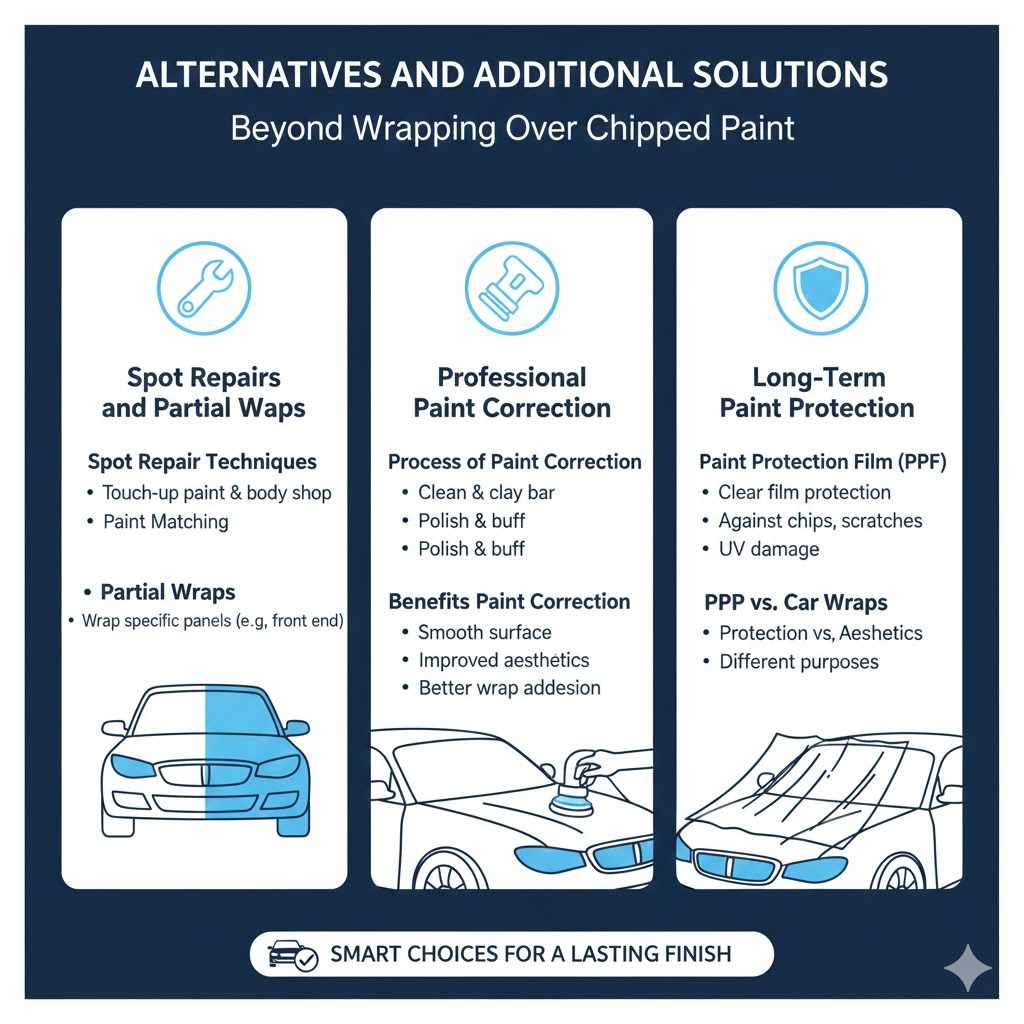
For small areas of chipped paint, spot repairs might be best. This means fixing the chipped areas and then wrapping the car. This can save you money. It will also help the wrap to last longer. You can look into the best way to handle this.
- Spot Repair Techniques: Spot repairs can be done with touch-up paint or by having a body shop fix the areas. It depends on the size and number of the chips. You want the best possible result.
- Paint Matching: When using spot repairs, you need to match the paint. Matching the paint ensures the repair looks good. Try to match the paint as closely as possible.
- Partial Wraps: Instead of wrapping the entire car, you could wrap specific panels or sections. If the damage is in the front, you can wrap the front end. This can keep the costs lower.
Professional Paint Correction
If the paint is in bad shape, you might want to look at professional paint correction. This is when a professional removes scratches and swirls to make the paint look its best. Paint correction can get your car ready for a wrap. You will need to consider this option.
- Process of Paint Correction: Paint correction involves a few steps. First, the car is cleaned and clay barred. The car then gets polished and buffed. This removes imperfections.
- Benefits of Paint Correction: Paint correction gives a smooth surface for the wrap to stick to. It improves the look of your car. It will give you a better result.
- Costs of Paint Correction: The costs depend on the car’s condition and the professional’s rates. Paint correction can be expensive. Think about how the correction will help the outcome.
Long-Term Paint Protection
If you want to protect your car’s paint in the future, consider a paint protection film (PPF). PPF is a clear film. PPF protects the paint from chips and scratches. It can make your car last longer. PPF will make your paint last.
- Paint Protection Film (PPF): PPF is a clear film that protects your car’s paint from scratches and chips. It’s a great option. It’s a good choice to protect your car.
- Benefits of PPF: PPF protects against chips, scratches, and UV damage. It is a great investment. It also makes your car easier to clean.
- PPF vs. Car Wraps: PPF is more about protection, while wraps are about changing the look. Each has a different purpose. You need to consider what you need.
Frequently Asked Questions
Question: Can I wrap a car with lots of rust?
Answer: No, it is not recommended to wrap a car with rust. Rust can spread under the wrap and cause further damage to the metal. You need to deal with the rust before you wrap.
Question: Will the car wrap hide the chipped paint?
Answer: A car wrap can make chips less visible, but it won’t hide them completely. Minor chips might be less noticeable, while deeper chips might still be visible.
Question: How long does a car wrap last over chipped paint?
Answer: The lifespan of a wrap over chipped paint can be shorter than a wrap over a smooth surface. This is because the chips can cause issues with adhesion and durability.
Question: Is it better to wrap or repaint a car with chipped paint?
Answer: The best option depends on the condition of the paint and your budget. Repainting provides a smooth surface, but wrapping is less expensive. Wrapping might be a good choice.
Question: Can I do a car wrap myself if the paint is chipped?
Answer: You can try a DIY wrap, but you may get better results by working with a professional. The pros have the experience and the equipment to deal with the problem areas.
Final Thoughts
So, Can You Wrap a Car With Chipped Paint? The answer depends on a few things. Small chips may be OK, but deeper chips can cause problems. It is key to check your car’s paint before you start. You may need to repair your paint first. Think about the size and number of the chips. You must also consider what kind of look you want to get.
It is important to know the steps to prep the surface. If you aren’t sure, a professional installer can make things easier. Ultimately, the success of your wrap relies on your preparation and your expectations. By knowing what to look for, you can make a choice that will make you happy! Good luck with your wrap project!