Car Battery Replacement Cost / Price / How Much
A typical car battery replacement costs roughly $150 to $400 installed; start/stop AGM batteries often run about $250 to $600, with labor adding about $20 to $100. A weak battery can leave you stuck, add a tow bill, or trigger a no-start at the worst time. This guide breaks down battery price, labor, mobile service, AGM and start/stop premiums, and the extra electrical checks that can change the final bill.
Battery cost breakdown table
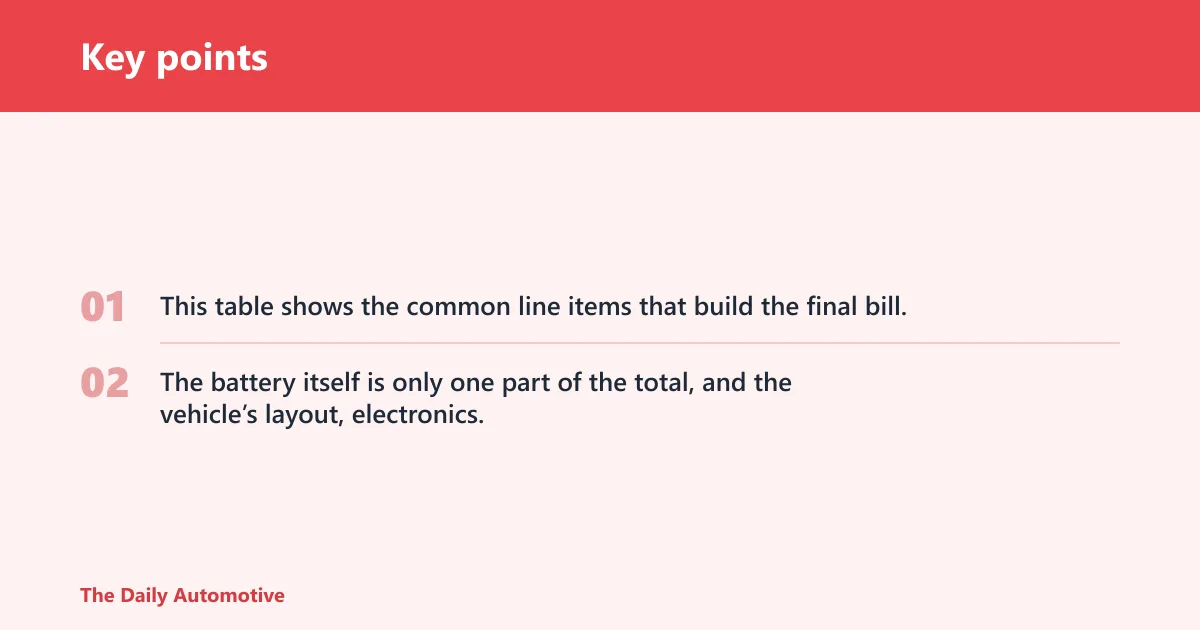


This table shows the common line items that build the final bill. The battery itself is only one part of the total, and the vehicle’s layout, electronics, and service method can add separate charges.
| Line item | Typical price range | When it commonly appears |
|---|---|---|
| Battery price | $120 to $180 for a regular car battery; $150 to $250 for a standard battery; $200 to $1000 for premium batteries | Always |
| Installation labor | $20 to $100 | Workshop fitting, difficult access, or vehicles that need more time to replace |
| Diagnostic test | Free at some stores; otherwise may be charged separately | Before replacement, or when the starting fault may not be the battery |
| Terminal or cable replacement | Varies by vehicle and parts needed | When terminals are worn, corroded, or cables are damaged |
| Mobile callout | Often higher than shop replacement | Roadside, driveway, or emergency replacement |
How much does a car battery replacement cost?
A car battery replacement in Australia often lands between $150 and $400 installed, with some start/stop AGM jobs higher. The battery price, labor, testing, and any added electrical work all sit in different parts of the bill. Urb’s Garage says most battery replacement prices fall between 100 and 300 dollars.
Battery-only cost versus fitted price
The battery-only price is the retail cost of the part. The fitted price adds removal of the old unit, installation of the new one, and sometimes testing or a basic inspection. Marshall Batteries says its range starts from $181 and includes delivery, fitting, and warranty.
A regular car battery averages around $120 to $180 in Australia. That is the basic replacement category, not the final fitted bill. If the shop bundles fitting, the total rises. If the vehicle needs more time, specialty parts, or roadside service, the total rises again.
What pushes the bill higher
Vehicle type matters. A small hatchback with easy battery access usually costs less than a 4WD, hybrid, or start/stop vehicle. Larger batteries take more space, more time, or both. Start/stop systems also need a different battery design, which changes the price before labor is added.
One common first-timer mistake is assuming the cheapest battery is the cheapest fix. A budget unit can suit a basic commuter car, but a vehicle with heavier electrical demand may need a different type. If the wrong battery is fitted, you can end up paying again when it fails early and has to be replaced.
What is included in the service?
A professional battery replacement service usually includes battery testing and inspection, removal of the old battery, and installation of the new battery. Some stores also handle disposal. If the vehicle needs a coding or reset procedure, or if terminals and cables are damaged, those tasks can add to the bill.
Removal and fitting
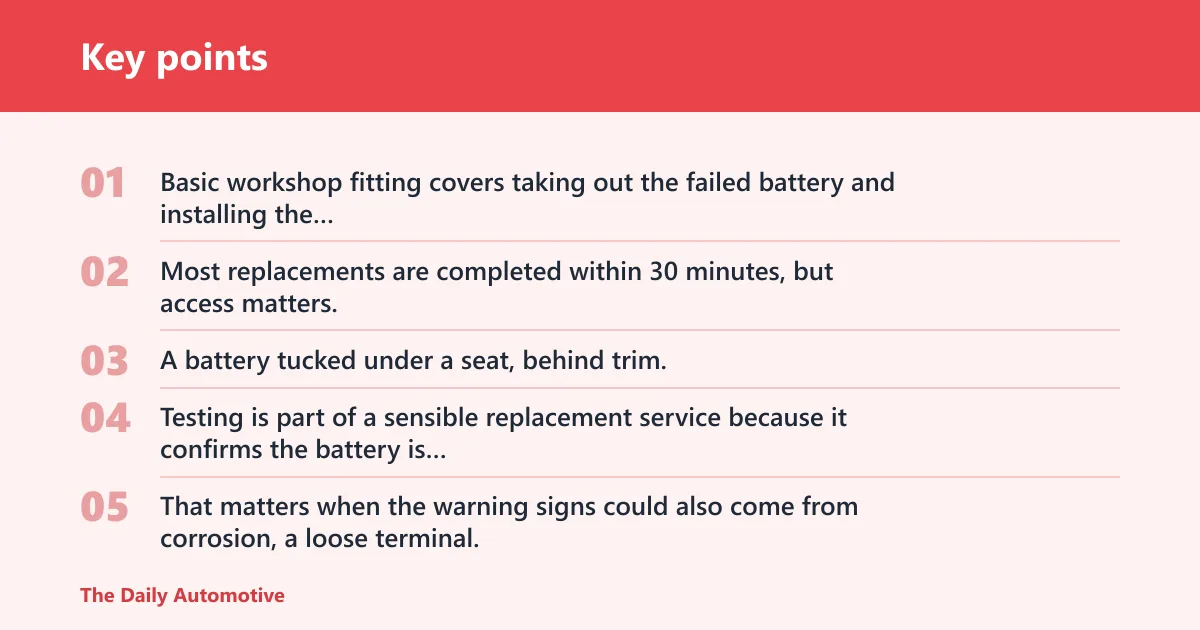
Basic workshop fitting covers taking out the failed battery and installing the replacement. Most replacements are completed within 30 minutes, but access matters. A battery tucked under a seat, behind trim, or in a tight engine bay may take longer and cost more in labor.
Test and verification
Testing is part of a sensible replacement service because it confirms the battery is actually the problem. Some stores test for free. That matters when the warning signs could also come from corrosion, a loose terminal, or another electrical fault that makes the battery look weak.
Disposal and reset work
Old batteries need proper disposal, and some vehicles need a reset after replacement. That can include memory-saving steps or vehicle system registration, especially on models with more advanced electrical management. If a shop lists the replacement as a package, ask whether those items are included or billed separately.
When extra parts are added
Terminal replacement may be required if the posts are worn or heavily corroded. Cable replacement may also be necessary to restore proper electrical flow. Those are separate from the battery itself, and they change the final price because the fault is no longer limited to one part.
Why do some cars cost more?
Some cars cost more because the battery is harder to reach, the system is more complex, or the required battery is more expensive. Hatchbacks usually sit at the lower end. 4WDs, hybrids, and start/stop vehicles often need larger or more specialized batteries, plus more labor to fit them.
Small car versus larger vehicle fitment
A small hatchback with a front-mounted battery and clear access is usually the cheapest case. A 4WD may use a larger battery and have tighter packaging around the bay. That means more time, more effort, and sometimes a higher labor charge even before the battery price changes.
Hybrid and start/stop differences
Hybrid and start/stop systems use batteries that do more work than a basic lead-acid unit. Start/Stop batteries are designed for repeated high-discharges. That design requirement raises the price, and it is one reason a vehicle with this system can cost well above a standard replacement.
Say your compact SUV has a start/stop system and the battery sits under a trim panel. The part itself may cost more, and the extra trim removal adds labor. The bill climbs from two directions at once, even though the symptom may still look like a simple slow start.
Difficult access and added labor
Labor and installation can increase battery replacement price when the battery is buried under seats, inside the cabin, or under plastic covers that take time to remove. Some shops fold this into the price. Others list it as a separate charge, especially when access is awkward.
Battery types and price ranges
Battery type is one of the biggest price drivers. A standard battery suits many normal vehicles, while premium, AGM, and start/stop batteries cost more because they are built for higher demand or a different charging pattern. The right choice depends on the car, not just the sticker price.
Regular car battery
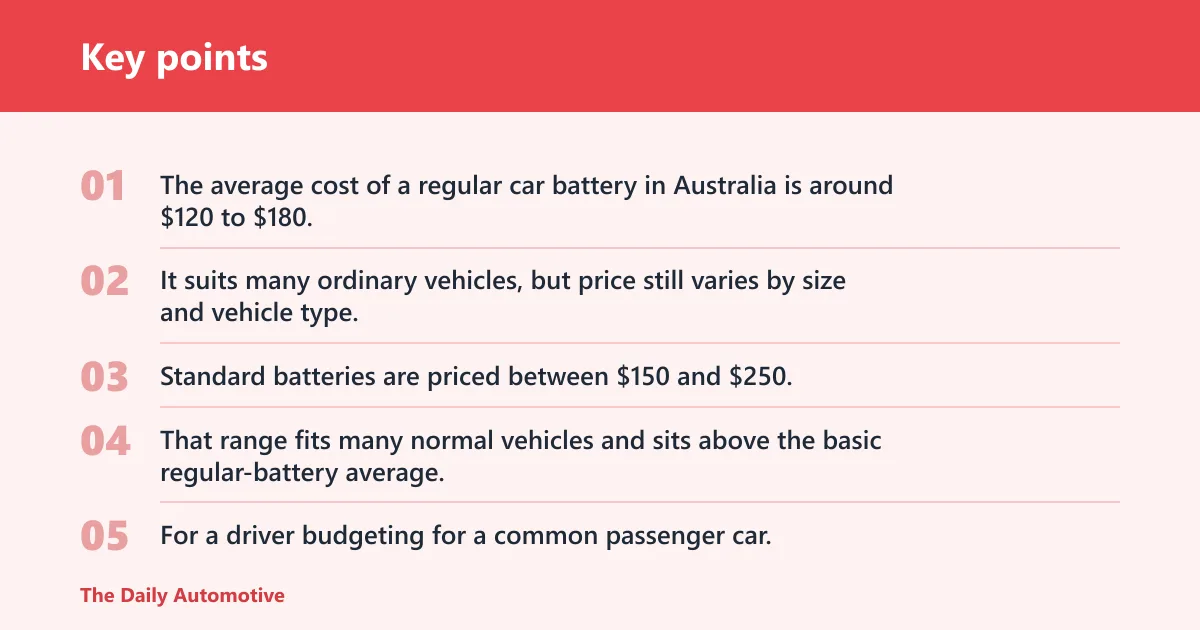
The average cost of a regular car battery in Australia is around $120 to $180. This is the basic replacement category. It suits many ordinary vehicles, but price still varies by size and vehicle type, so a compact car and a larger sedan may not land on the same figure.
Standard battery
Standard batteries are priced between $150 and $250. That range fits many normal vehicles and sits above the basic regular-battery average. For a driver budgeting for a common passenger car, this is the most practical reference point for a straightforward replacement without special electrical needs.
Premium battery
Premium batteries can range from $200 to $1000. They may be required by some vehicles, especially those with higher electrical demand or manufacturer-specific requirements. They generally offer longer life, but the bigger price only makes sense when the vehicle actually needs that level of performance.
AGM and Start/Stop batteries
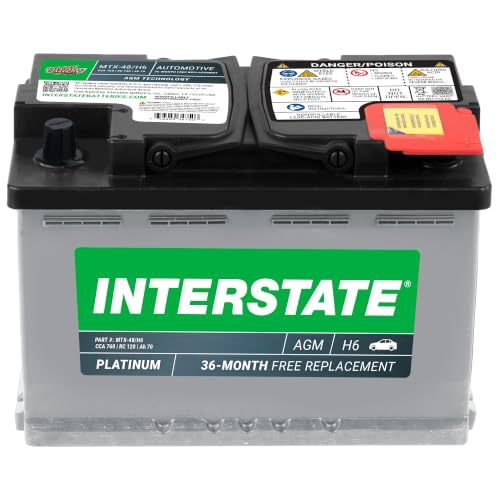
AGM batteries are higher-cost units used in vehicles with advanced electronics, and they are more performance-oriented than standard lead-acid batteries. Start/Stop batteries are designed for repeated high-discharges. Both are more expensive than a normal battery because they are built for heavier cycling and tighter electrical demands.
Picture a late-model sedan with a stop-start system and a long list of electrical loads. A standard lead-acid battery might be cheaper upfront, but it is not the right match. Paying for the correct AGM or Start/Stop unit is often better than saving a little now and replacing it too soon.
When does diagnosis add to the bill?
Diagnosis can add to the bill when the battery is not the real fault. Testing before replacement helps confirm the cause and can prevent paying for a new battery that will not fix the problem. A simple test may be free; a deeper diagnostic check may be charged separately.
Battery testing before replacement
Battery testing is sensible after about three years of use. The same source recommends testing after three years of use, and an average car battery should last between 3 and 5 years. That makes testing a good budgeting step before the battery fails completely.
Free tests versus paid diagnostics
Some stores test batteries for free, which is useful when you are trying to confirm failure before spending on a replacement. If the fault points to a more complex issue, the shop may need to charge for diagnosis. That charge can be worthwhile when it avoids replacing the wrong part.
When the battery is not the fault
A weak crank or no-start condition does not always mean the battery has failed. Corroded terminals, damaged cables, or another electrical issue can create the same symptom. In those cases, the battery price is only one part of the repair, and terminal or cable work may be needed too.
What signs mean the battery is failing?
Slow cranking, dim lights, warning lamps, and repeated jump-starts are common signs that the battery is near the end of its life. If the battery is around 3 to 5 years old, the odds of replacement go up. Testing confirms whether the battery is actually the cause.
Slow starts and dim lights
Slow starting is one of the clearest clues. If the engine turns over more slowly than usual, the battery may be losing capacity. Dim headlights or an interior light that seems weak can point in the same direction, especially if the problem shows up after the car sits overnight.
Warning lamps and electrical glitches
Battery or charging warning lamps can appear when voltage is low. Some vehicles also show odd electrical behavior, such as flickering displays or intermittent accessories. Those symptoms do not prove the battery is dead, but they do justify testing before the problem grows into a no-start situation.
Battery age and replacement timing
An average car battery should last between 3 and 5 years. After about three years, testing becomes a sensible budget move rather than a wait-and-see gamble. That is especially true if the car is used for short trips, sits for long periods, or powers more electronics than a basic commuter.
Frequently asked questions
How much does it cost to replace a car battery?
A car battery replacement often costs roughly $150 to $400 installed in Australia. The battery price, labor, and any diagnostic or electrical work set the total. Start/stop AGM vehicles are usually higher, while a simple workshop swap for a standard car can sit closer to the lower end.
What is included in a car battery replacement service?
A replacement service usually includes testing and inspection, removal of the old battery, installation of the new battery, and sometimes disposal. Some vehicles also need a reset or registration step after fitting. If terminals or cables are damaged, those parts can be billed separately.
Why does car battery replacement cost more for some vehicles?
Cost rises when the battery is harder to access, the vehicle needs a larger or specialty battery, or the electrical system demands extra setup. Hatchbacks are often cheaper than 4WDs, hybrids, or start/stop models because those vehicles may need AGM or other higher-cost batteries.
How much does a standard car battery cost?
Standard batteries are priced between $150 and $250. That range suits many normal vehicles and sits above the basic regular-battery average. The final price still depends on size, brand, and whether the car needs a more advanced battery type for its electrical system.
What makes AGM or premium batteries more expensive?
AGM and premium batteries cost more because they are built for higher electrical demand, repeated cycling, or vehicle-specific requirements. Premium batteries can range from $200 to $1000, while AGM units are common in vehicles with advanced electronics and start/stop systems.
How long should a car battery last before replacement?
An average car battery should last between 3 and 5 years. After about three years, testing is a smart step because capacity can fall before the battery dies outright. Short trips, high electrical load, and hot conditions can shorten service life.
Products related to this article
Sponsored / affiliate links. As an Amazon Associate I earn from qualifying purchases. I may earn additional commission from eligible campaigns.