Car Seat Travel Vest Review: Is It Worth It for Kids?
A car seat travel vest makes sense for older, belt-positioned kids who travel often in rideshares, taxis, or secondary cars. If you need full child restraint, buy a booster or car seat instead. Used badly, it can create belt-fit mistakes or waste money on gear that slows you down. This review covers fit, safety limits, setup time, and when the vest beats a booster on actual travel friction.
Vest Mechanics, Weight Limits, and Where It Works Best
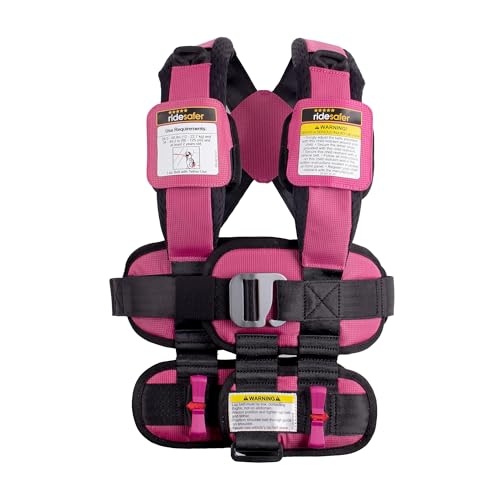


A RideSafer-style travel vest is a portable child restraint that uses the vehicle seat belt, not a built-in restraint or shell. It is light and compact enough for a diaper bag, but it is not a universal replacement for a car seat. Its value is highest when you need restraint in more than one vehicle and want less bulk.
RideSafer Travel Vest basics
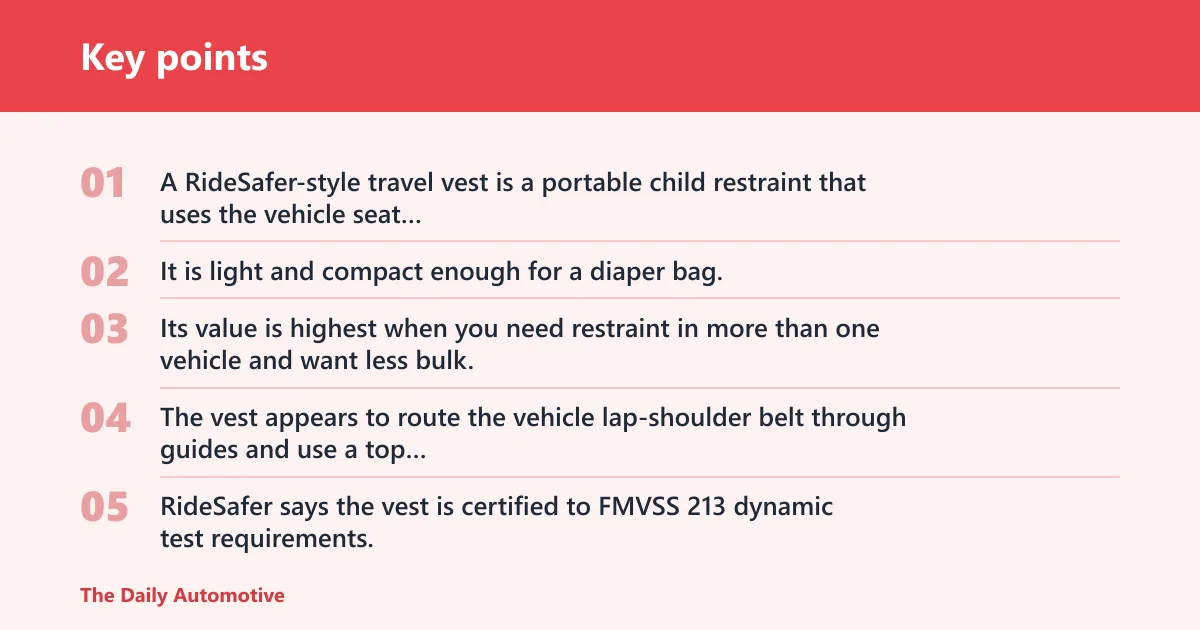
The vest appears to route the vehicle lap-shoulder belt through guides and use a top tether. RideSafer says the vest is certified to FMVSS 213 dynamic test requirements, and the review says it weighs about 1.5 lb. That matters for airport bags, rental cars, and quick swaps between vehicles.
Size bands, Gen 5 vs. Gen 6, and weight ranges
The review lists four sizes, with weight ranges that vary by generation. Gen 5 and Gen 6 are not only labels; they point to different fit bands, so you need to check the exact model before buying. The XL 80-110 lb size appears to be outside FMVSS 213B scope, so certification scope may not be the same across every size.
Who it is for: travel, taxis, and secondary cars
This product fits older children who still need a belt-positioning restraint but travel in awkward situations: airport transfers, ride-hailing, grandparent cars, or a second vehicle used only part of the week. It is less useful for a child who still needs rear-facing use or a full seat with a built-in restraint.
📊 RideSafer says the travel vest is certified to FMVSS 213 dynamic test requirements. Source: RideSafer Travel Vest Review 2026: Portable Restraint Guide.
Is RideSafer certified for car travel?
Yes, RideSafer says the vest is certified to FMVSS 213 dynamic test requirements, which is the federal child restraint standard used in the United States. That certification matters, but it does not mean every size has the same scope or that every vehicle and child will get a good fit.
What FMVSS 213 covers
FMVSS 213 is a federal standard for child restraint systems. Its certification is based on dynamic testing, not a promise that the vest will work the same in every seat position, with every belt geometry, or for every body shape. Certification shows compliance with the standard’s test requirements.
What certification does not guarantee
Certification does not fix poor belt fit, awkward vehicle seat shapes, or missing tether anchors. It also does not turn a travel vest into a rear-facing seat or a restraint for younger children. A certified vest can still be the wrong tool if the vehicle layout makes the belt ride badly.
Why state law language still matters
State child restraint law wording may differ from federal certification language. That matters because some laws use booster-specific terms, age cutoffs, or wording that local enforcement or courts may read differently. Federal certification and state legality are related, but they are not the same question.
How the vest works with the vehicle belt
The vest depends on correct belt routing. The lap-shoulder belt passes through guides on the vest, which changes how the belt sits on the child’s body compared with a standard booster, but it still depends on the vehicle belt to do the restraint work. Fit is the whole point.
Lap-shoulder belt routing and fit
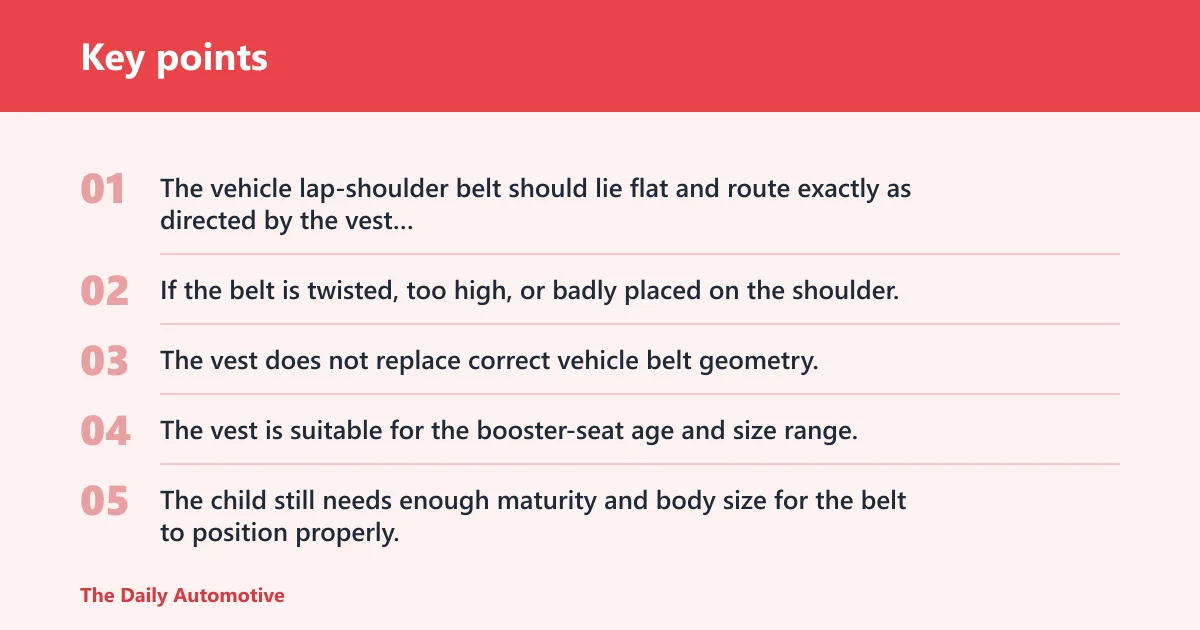
The vehicle lap-shoulder belt should lie flat and route exactly as directed by the vest instructions. If the belt is twisted, too high, or badly placed on the shoulder, the system loses value fast. The vest does not replace correct vehicle belt geometry.
Why the vest depends on correct positioning
The vest is suitable for the booster-seat age and size range, but that range is only part of the answer. The child still needs enough maturity and body size for the belt to position properly. If the lap belt rides on the abdomen or the shoulder belt slips off the shoulder, the setup is not a good match.
How it differs from a built-in restraint seat
A traditional car seat is designed for rear-facing use or forward-facing restraint use, depending on the model and child size. A travel vest is not a restraint seat. It is a belt-positioning device, so it relies on the vehicle belt and proper fit in a way a built-in restraint seat does not.
Do you need a top tether with a travel vest?
A top tether is part of the vest’s setup and can reduce forward movement. RideSafer says the top tether is required with a lap-only belt, and it is also used with lap-and-shoulder belts. If a vehicle lacks an accessible tether anchor, the vest may be harder to use well.
When a top tether anchor helps
The top tether may limit forward pitch in a crash and help stabilize the restraint. That is especially useful in vehicles with a seat position that otherwise allows more movement. It also adds another step, which is why this vest is not always the fastest option in daily use.
What changes with lap-only belts
Lap-only belts make the tether requirement more important, not less. If the vehicle has a lap-only belt in the intended seating position, you need a usable tether anchor for the vest setup to be appropriate. Without that anchor, the fit question changes immediately.
Vehicles that make setup harder
Some back seats have awkward belt paths, shallow seat cushions, or hard-to-reach tether anchors. In those cases, a travel vest can stop being the convenient choice and become the fiddly one. A regular booster or dedicated car seat may be easier if the vehicle belt and anchors are a poor match.
How does a travel vest compare with a regular car seat?
The core trade-off is simple: the vest cuts bulk and travel friction, but a regular car seat usually gives clearer installation, more support for younger children, and less chance of belt-routing mistakes. For daily use, a car seat or booster often has better value. For travel, the vest can win on portability.
| Criteria | Travel vest | Booster seat | Traditional car seat |
|---|---|---|---|
| Portability | Very high; about 1.5 lb | Moderate to low | Low |
| Travel packing | Compact enough for a diaper bag | Too bulky for most carry-ons | Large footprint |
| Belt dependence | High; uses belt guides and tether | High; depends on belt fit | Lower; the built-in restraint handles fit better |
| Best use | Travel between cars | Everyday belt-positioning | Young children, rear-facing or restraint use |
| Setup friction | Moderate | Low to moderate | Moderate to high |
Space, weight, and packing size
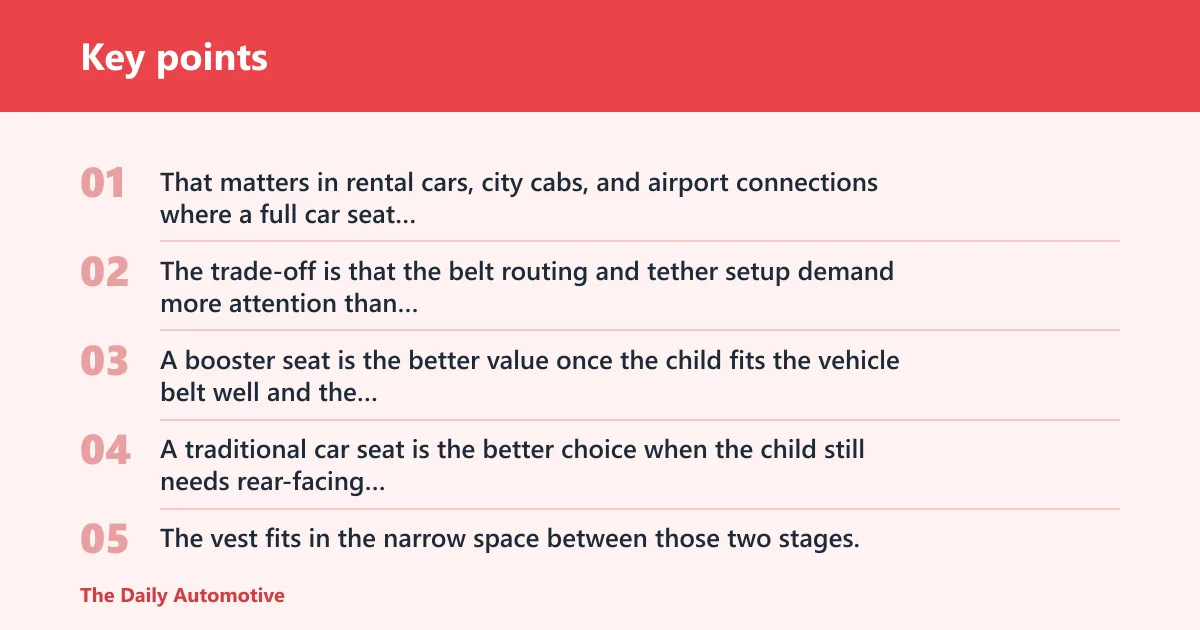
The vest wins on size. That matters in rental cars, city cabs, and airport connections where a full car seat becomes baggage of its own. The trade-off is that the belt routing and tether setup demand more attention than simply dropping a child into a booster.
Age and size transition points
A booster seat is the better value once the child fits the vehicle belt well and the family wants a low-cost, low-fuss option. A traditional car seat is the better choice when the child still needs rear-facing protection or a built-in restraint seat. The vest fits in the narrow space between those two stages.
Scenario examples
Suppose a child around 42 lb flies with one parent, lands late in the evening, and needs a rideshare to a hotel. A vest can cut the luggage burden sharply. If the same child rides to school every day in one family SUV, a booster usually makes more sense.
A common first-timer mistake is buying the vest for a child who still slumps in the seat belt. In that case, the belt slides off position, setup gets frustrating, and the family ends up using another restraint anyway.
What are the downsides of using a car seat safety vest?
The downsides are setup friction, tether dependence, and limited value for daily use. It can be awkward in some vehicles, and correct belt routing matters more than many buyers expect. It is also not for every child, even within the stated size range, because fit still determines whether it is a good match.
Failure cases to watch for
Poor belt fit is the main failure mode. Missing tether anchors make some vehicles a bad match. Short trips do not fix a poor installation, and long trips do not make the setup easier. If the child cannot sit correctly or the belt rides wrong, the vest is the wrong answer.
Weekly daycare swaps and short local trips
For repeated short transfers between homes, the vest may be useful if a second restraint would sit unused most of the week. But if the trip is only five minutes and the vehicle never changes, a booster or spare car seat may be the better value because setup is simpler.
Choose a travel vest if… / choose a booster or car seat if…
Choose a travel vest if portability matters more than quick setup, and if the child is already in the booster-seat age and size range. Choose a booster or car seat if you want lower cost, faster routine use, or better support for a younger child who still needs a restraint seat or rear-facing mode.
Choose a travel vest if…
- You move the child between cars often.
- You need something small enough for luggage or a diaper bag.
- The vehicle has a usable lap-shoulder belt and tether anchor.
- The child already fits a belt-positioning restraint well.
Choose a booster or car seat if…
- You want the lowest cost per trip.
- You need a simpler everyday setup.
- The child still needs rear-facing or a restraint seat.
- The vehicle has awkward belt geometry or no easy tether access.
Scenario table: when the vest is worth it
The vest is worth it when it saves enough time, luggage space, or transfer hassle to justify the extra setup steps. If it does not beat a cheap booster or spare car seat on actual friction, it is the wrong buy. That is the decision rule.
| Use case | Setup time | Vehicle compatibility | Best value choice |
|---|---|---|---|
| Airport travel | Moderate; belt routing and tether check needed | Good in many lap-shoulder seating positions | Travel vest if you want to avoid carrying a full seat |
| Rideshares and taxis | Moderate to high, depending on belt access | Mixed; tether access can be limited | Travel vest if the child rides often; otherwise booster |
| Multi-car households | Moderate | Best in vehicles with easy belt routing | Booster if the child rides daily; vest if the child swaps cars often |
| Weekly daycare swaps | Moderate | Depends on tether anchor and seat layout | Booster or spare car seat if use is routine; vest if packing space is tight |
Frequently asked questions
Is a car seat travel vest worth it?
It is worth it when the child already fits a belt-positioning restraint and the main problem is moving between vehicles. It is usually not worth it for daily use in one car, because a booster or car seat is simpler, cheaper per trip, and less dependent on careful routing.
What age and weight is a car seat travel vest for?
RideSafer describes the vest as suitable for the booster-seat age and size range, but buyers should check the exact generation and size band. Gen 5 and Gen 6 use different weight ranges, and the XL 80-110 lb size is outside FMVSS 213B scope.
Can a travel vest replace a booster seat?
Sometimes, but not always. It can fill the same general belt-positioning role for a child who fits the size range, yet a booster is often cheaper and simpler for everyday use. If the belt fits well in a booster, that is usually the lower-friction choice.
Products related to this article
Sponsored / affiliate links. As an Amazon Associate I earn from qualifying purchases. I may earn additional commission from eligible campaigns.