Car Theft Recovery Tracker Review: Is It Worth It?
Car Theft Recovery Tracker is worth it only if it stays hidden, sends theft alerts fast, and keeps reporting after a vehicle is moved or parked underground. Otherwise, skip it. Weak recovery hardware costs time, misses location updates, and lowers the chance of getting the car back before it is stripped or shipped.
Verdict
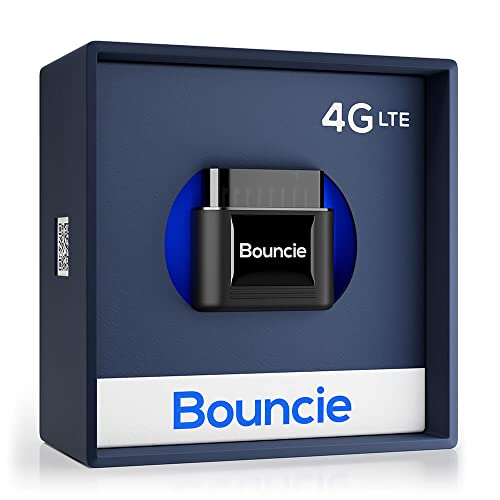
Based on the manufacturer specs and published product details, Bouncie GPS Tracker for Vehicles is the stronger pick for theft recovery readiness because it updates location every 5 seconds, supports geo-fencing, and includes accident notifications. The tradeoff is direct: you pay a subscription cost for live reporting, so it fits buyers who value recovery support more than the lowest ownership cost.
Specs at a glance
| Spec | Bouncie GPS Tracker | SxingUxing GPS Tracker |
|---|---|---|
| Location reporting | Real-time location with updates every 5 seconds | Works with Apple Find My app |
| Alerts and geofencing | Geo-fence and accident notifications | No monthly fee listed |
| Power and subscription details | Subscription required; no contracts, and it can be canceled anytime | No SIM card and no subscription |
| Installation and concealment | OBD plug-in form factor; check your vehicle layout for concealment limits | Charging-port design for hidden plug-and-play use |
| Best recovery fit | Drivers who want faster theft alerts and live recovery help | Apple users who want a lower ongoing cost |
GPS trackers can show a vehicle’s location, but recovery value depends on speed, concealment, and whether the tracker still reports when the car is moved. A parked-car alert that reaches you too late helps less than one that fires at the first unexpected movement. The better tool shortens the gap between theft and police handoff.
Who it
If your car spends nights in a driveway, lot, or street parking, a tracker makes more sense than if you only want a simple location label. It helps most when you care about recovery support, not just last-seen location. If theft risk is low and you already use a loud alarm and a steering-wheel lock, the upgrade may be optional.
Say your sedan is parked outside an apartment building at 1 a.m. and an alert arrives the moment it rolls off the curb. A tracker with fast updates can point police toward the route, while a slow one may only show where the car was after thieves reached a garage or shipping container.
A common buyer mistake is assuming the tracker will work anywhere, without checking whether the vehicle has a steady signal, the app supports the phone, or the battery life matches how often the car sits unused. If you need a set-it-and-forget-it tool, compare the ongoing bill against the value of faster recovery alerts before you buy.
Daily-driver owners
For a daily driver, the best case is a tracker that can send movement alerts, show exact location in real time, and set a geofence around home or office. LandAirSea describes trackers as providing exact location in real time, sending instant movement alerts when a parked car begins to move, and setting geofences around home or office. Those are the features that matter when the car is gone, not just when it is parked.
Parked-vehicle and storage use
If the car sits for weeks at a time, battery life and low-draw reporting matter more than flashy app features. Battery-powered trackers need lasting power for days or months, and faster update frequency can shorten that run time. The right choice depends on whether you need frequent updates during theft or longer standby time between trips.
Higher-risk theft areas
In higher-risk areas, look for hidden-install flexibility and a plan for what happens if GPS or cellular service is jammed. Dedicated stolen-vehicle recovery systems can be more useful than consumer GPS units because they may add VHF tracking, which can help when GPS/GSM is blocked. That matters if the car is moved underground or pushed into a metal container.
What works
The basics are straightforward: a GPS car tracker can show the car’s location, send movement alerts, and create geofences around a home or storage location. That combination gives you a chance to spot theft early, before the vehicle disappears into a warehouse, tow truck, or enclosed lot.
Real-time location and movement alerts
The same source says trackers can report exact location in real time and send instant movement alerts when a parked car starts moving. That is the core theft-recovery advantage. The sooner you know the vehicle moved, the sooner you can contact police and avoid chasing the car yourself.
Geofence alerts for parked cars
A geofence is a custom safe area around a home, office, or storage spot. If the vehicle exits that zone, you get an alert. This helps with parked-vehicle monitoring and theft recovery, especially when the car should not move at all. It also catches towing and unauthorized borrowing.
Hidden installation and recovery support
Hidden placement improves recovery odds because thieves are less likely to find and remove the tracker right away. The same source recommends places like a bumper or wheel well and warns against a completely enclosed metal box. Other common hiding spots include the frame, under a seat, behind plastic paneling, and under the dashboard, but you should keep the unit out of airbag zones and the driver’s view.
Follow the vehicle and product manual, never work under a vehicle supported only by a jack, never exceed the vehicle’s rated roof, hitch, tow, or payload limit, keep items out of airbag zones and the driver’s view, and check local laws.
Theft recovery decision table
This table compares tracker types by the tradeoffs that matter after a theft. Read it as a recovery checklist, not a feature beauty contest. The strongest entry is the one that still helps after the car has moved, the battery is low, or the signal is being blocked.
| Tracker type | Battery life | Update cadence | Hidden-install flexibility | Jamming resistance | Police handoff usefulness | Subscription burden | Best-fit use case |
|---|---|---|---|---|---|---|---|
| Consumer GPS tracker with app reporting | Usually better for plug-in or vehicle-powered use than long unattended storage | Can be frequent, but faster reporting often costs battery life | Good if the device is small and can be concealed near power | Weak if it relies on GPS and cellular alone | Useful for live location, less useful if the signal drops | Often a recurring app or platform cost | Drivers who want normal location tracking with some theft support |
| Battery-powered tracker | Better for temporary hiding, but battery must last through the theft window | Can be tuned for longer standby or faster alerts | Very flexible because it does not need constant vehicle power | Still vulnerable if it depends on GPS and cellular only | Good when it keeps reporting after the vehicle is moved | May still require a service plan | Cars parked for long stretches or stored away from outlets |
| Dedicated stolen-vehicle recovery system with VHF tracking | Designed for recovery duty, not casual monitoring | Depends on the system, but the key value is finding the car after jamming | Often installed out of sight with professional support | Stronger when GPS or GSM is jammed | Usually the best option for police handoff and hidden-location recovery | Typically the highest ownership burden | High-risk vehicles, expensive cars, and owners who want recovery support first |
Do GPS trackers help police recover stolen cars? Yes, but only when you hand off clean location data quickly and let officers handle the recovery. Tracker says it has been protecting customers for over 30 years, offers 24-hour theft support, 365 days a year, and says its VHF technology can overcome GPS/GSM jamming. It also says it has formal partnerships across all UK police forces. Those are recovery-oriented features, not a guarantee of getting the car back.
What does not?
A tracker is not magic. It can fail if the battery dies, if thieves use GPS jamming, if the car is stored underground, or if the device is hidden inside a metal enclosure that blocks signal. A completely enclosed metal box is a bad hiding place because it can weaken reception enough to make the tracker less useful when you need it most.
Battery limits and update tradeoffs
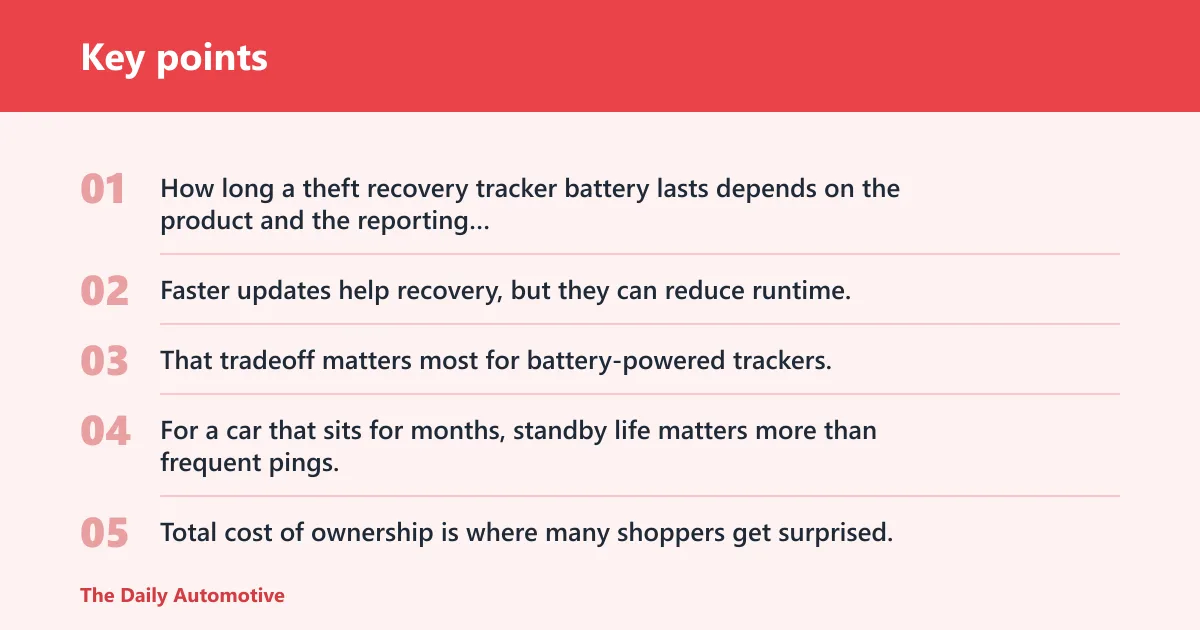
How long a theft recovery tracker battery lasts depends on the product and the reporting rate. Faster updates help recovery, but they can reduce runtime. That tradeoff matters most for battery-powered trackers, where a short battery window can end before police arrive. For a car that sits for months, standby life matters more than frequent pings.
Subscription burden
Total cost of ownership is where many shoppers get surprised. A low hardware price can come with a recurring plan, while a no-monthly-fee tracker may limit platform features or depend on a specific phone ecosystem. The cheap-looking option is not always cheaper after a year or two.
Recovery limits without police support
Do not confront thieves. Contact police and give them the tracker’s live location, last movement time, and any geofence alerts. Recovery support helps when it is a handoff tool, not a solo rescue plan. Insurance discounts may be available, but they vary by provider and often depend on whether the device qualifies as an approved anti-theft system.
Suppose a vehicle is parked in a concrete underground garage and the tracker stops updating once it is inside. That is the kind of failure case you need to think about before buying. In that setting, a unit with VHF recovery support has a better chance of being found than a consumer GPS device that depends on open-sky reception.
Should you buy it?
Buy a tracker if your main goal is theft recovery and you want faster alerts, better concealment, and police-friendly location data. Skip it if you only want a basic locator and do not want an ongoing subscription, or if your parking situation and theft risk are already covered well by an alarm and a steering-wheel lock.
For this review, Bouncie GPS Tracker is the better overall fit because it combines real-time reporting, 5-second updates, geofencing, and no-contract service. SxingUxing GPS Tracker is the lower-cost alternative for Apple users who want no monthly fee, but its recovery value depends more on the Apple Find My ecosystem than on dedicated theft-recovery features.
Before you install any tracker, confirm that you own the vehicle or have permission to track it, that local tracking laws allow the setup, and that your recovery plan goes through law enforcement rather than direct confrontation. If the tracker will sit near dash trim, airbags, or glass, keep it out of the driver’s view and follow the vehicle manual.
Alternatives

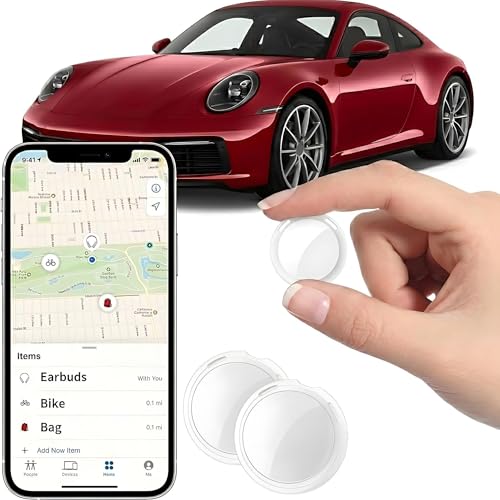
SxingUxing GPS Tracker Devices for Vehicles with Charging Port is the alternative for buyers who want no monthly fee, no SIM card, and Apple Find My support. Its hidden charging-port design makes it easier to tuck away than some bulkier units. The drawback is that it is iOS only, so it is a poor fit for mixed-device households or buyers who want broader app flexibility.
Frequently asked questions
Is Car Theft Recovery Tracker worth it for my car?
It is worth it when your car is a realistic theft target and you want recovery support, not just a map pin. The best case is a hidden device that sends quick alerts, keeps reporting after movement, and gives police usable location data. If that does not matter to you, alarms and locks may be enough.
How does a theft recovery tracker work after my car is stolen?
After theft, the tracker keeps reporting its location through GPS, cellular, or a dedicated recovery network, then sends alerts when the vehicle moves or leaves a geofence. You then share the live data with police. The faster the updates, the more useful the handoff is before the car changes hands or disappears.
Do GPS trackers help police recover stolen cars?
Yes, but only when the tracker is still transmitting and you report the theft quickly. Police can use live location, movement alerts, and last-known route data to narrow the search. They cannot recover a car from a dead tracker, a jammed signal, or a vehicle hidden where the device cannot reach out.
Will a car tracker still work if thieves use GPS jamming?
Not every tracker will. Basic GPS and cellular units can fail under jamming, which is why VHF tracking matters in dedicated recovery systems. Tracker says its VHF technology can overcome GPS/GSM jamming. If jamming is a real concern, that type of system is safer than a consumer locator alone.
How long does a theft recovery tracker battery last?
There is no single answer because battery life depends on the device and how often it reports. Faster updates usually shorten runtime, while slower reporting can extend standby time. For battery-powered trackers, choose the longest practical runtime that still gives you theft alerts early enough to matter.
Where should I install a theft recovery tracker in my car?
Common hiding spots include a bumper, wheel well, frame, under a seat, behind plastic paneling, and under the dashboard. Choose a location that balances concealment with reception. Avoid a completely enclosed metal box, and keep the unit out of airbag zones and the driver’s view.
Products related to this article
Sponsored / affiliate links. As an Amazon Associate I earn from qualifying purchases. I may earn additional commission from eligible campaigns.