Dashboard Camera vs Mirror Dash Cam
Dashboard Camera vs Mirror Dash Cam: choose a traditional dash cam for the cleanest evidence capture, or pick a mirror dash cam if you want a rear-camera display and less windshield clutter. Choose wrong, and you can end up with blocked views, weaker footage, or a screen that is hard to read when you need it. This guide compares image quality, placement, wiring, rear-view benefits, and the trade-offs that matter before you buy.
| Decision factor | Dashboard Camera | Mirror Dash Cam | Winner |
|---|---|---|---|
| Evidence quality | Usually the better pick for a clean forward view and fewer obstructions in the image | Can record front and rear, with some models offering 4K front video | Dashboard Camera |
| Windshield clutter | Mounts on the windshield or dashboard, so it adds a separate device in view | Overlays or replaces the mirror, which can reduce extra hardware on the glass | Mirror Dash Cam |
| Rear visibility | Usually needs a separate rear camera or a separate display setup | Built around a rear camera feed shown on the mirror screen | Mirror Dash Cam |
| Night driving | Strong if the front camera and sensor are a good match for low light | Good for rear display use, but tinted glass, wet roads, and backlit plates can still limit clarity | Dashboard Camera |
| Parking help | Can add a rear camera, but parking aid is less central to the design | Often includes parking assist and reverse guidelines | Mirror Dash Cam |
| Installation difficulty | Often simpler if you use a 12V socket; hardwire is more involved | Strap-on models are straightforward, but fuse-box installs and full replacements take more effort | Dashboard Camera |
| Vehicle compatibility | Fits a wider range of cabins and mirror shapes | Can be awkward on narrow mirrors, auto-dimming mirrors, or cars with built-in safety tech | Dashboard Camera |
| Budget vs premium fit | Usually the easier low-cost route if you only need front recording | Often makes more sense when you want a rear display and more integrated features | Tie |
Practical differences compared
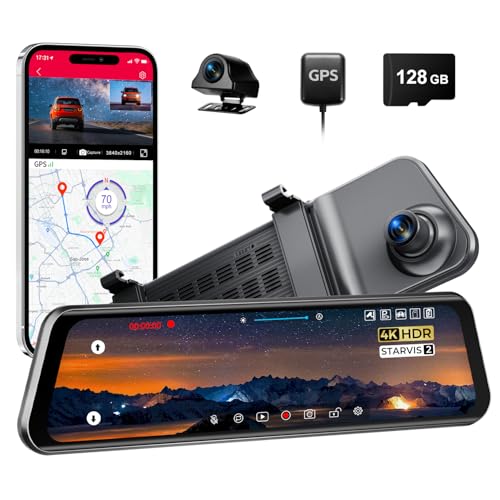
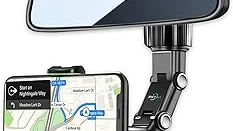
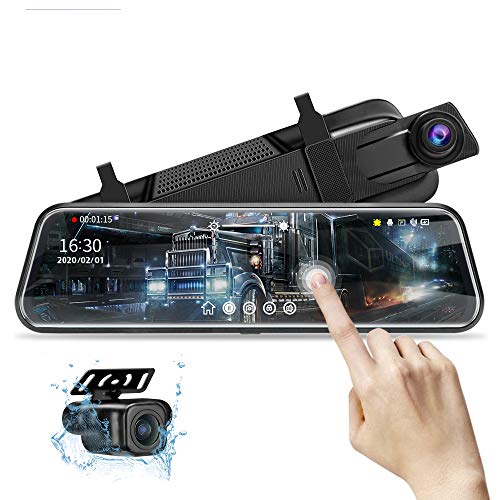
A traditional dashboard camera is a separate front-facing unit mounted on the windshield or dashboard. A mirror dash cam combines recording with the rearview mirror area, either by strapping over the mirror or replacing it, and often adds a touchscreen display plus front and rear camera support.
The choice is practical, not cosmetic. If you want the cleanest evidence capture, the dashboard camera usually has the edge. If you want a rear-camera display and less windshield clutter, the mirror dash cam is the better fit.
Evidence quality
Dashboard cameras usually win here because the front lens can be positioned for a direct road view without the mirror housing taking up screen space. That matters when you want a clear view of lane markings, traffic signals, and the car ahead.
Mirror dash cams can still record sharply, and some premium examples list 4K for the front camera. But the rear-camera focus and mirror-based layout can make them a better fit for drivers who care about seeing behind the car at a glance, not only about front footage.
Windshield clutter
A dashboard camera adds another device to the glass or dash. That is fine in many cars, but it can feel busy if you already have toll tags, driver aids, or a compact windshield.
A mirror dash cam reduces that separate-device look because it sits on or in place of the mirror. For drivers who dislike extra hardware in the windshield area, that can be the deciding factor.
Rear visibility
Mirror dash cams are built around rear visibility. The mirror display can show the rear camera feed continuously, which helps when a tall cargo area, passengers, or a small rear window makes the standard mirror less useful.
That is different from a dashboard camera, where rear coverage often means adding a second camera and then checking footage later. A mirror screen puts the live rear view where your eyes already go.
Dash cam comparison table
The table below uses manufacturer specs, listing details, and published buyer feedback. It separates feature claims from the actual job each device does in a car.
| Scenario | Dashboard Camera | Mirror Dash Cam | Better fit |
|---|---|---|---|
| Evidence quality | Best when you want a simple, forward-focused evidence file | Can do front and rear, with premium front resolution on some models | Dashboard Camera |
| Windshield clutter | Separate device on the glass or dash | Uses the mirror area instead of adding another visible box | Mirror Dash Cam |
| Rear visibility | Often needs an added rear camera and a separate viewing method | Built to show the rear feed on the mirror display | Mirror Dash Cam |
| Night driving | Better if the front sensor and lens are the priority | Useful, but rear-window tint, wet roads, and backlit plates can reduce clarity | Dashboard Camera |
| Parking help | Possible, but usually secondary to recording | Often includes parking assist and reverse guidelines | Mirror Dash Cam |
| Installation difficulty | Usually simpler with a 12V socket | Strap-on is easy; fuse-box or full replacement is more involved | Dashboard Camera |
| Vehicle compatibility | Works in most cabins without mirror shape concerns | Can be awkward with narrow mirrors or auto-dimming mirrors | Dashboard Camera |
| Budget vs premium buyers | Better for basic front recording on a tighter budget | Better if you want a more integrated display and rear-camera function | Tie |
Evidence quality: dashboard cameras are the safer
Dashboard cameras are the safer bet when the main goal is clear evidence. Loop recording is common on many units, and a G-sensor can lock footage after an impact so it is less likely to get overwritten.
Mirror dash cams can be strong too, especially when the front camera uses 4K or a 1440p sensor with HDR. Still, rear-camera footage is often the weaker link, and a rear camera may be limited to 1080p in common kits.
Windshield clutter: if the glass already feels
If the glass already feels crowded, a mirror dash cam usually looks cleaner. It takes advantage of the mirror that is already there, which can matter in compact cabins or cars with a short windshield band.
Say your car already has a toll tag, lane camera bracket, and sunshade tint strip. A separate dashboard camera may be one device too many, while a mirror dash cam keeps the recording hardware in one place.
Rear visibility: mirror dash cams win
Mirror dash cams win when you want a live rear display. That can help taller drivers, anyone with a full cargo area, and anyone who wants a wide rear view without turning around.
Picture a hatchback with the back seat folded down and a stack of boxes near the rear window. A mirror dash cam can keep the rear camera feed visible even when the mirror itself would be blocked.
Night driving
Night performance depends on more than resolution. Sensor quality, lens design, and the rear window all affect what you can read on the screen, especially on wet roads or with headlights flaring off plates.
A 1440p front camera with HDR can be a strong spec on a mirror dash cam, and a Sony IMX335 Sensor is often presented as a sign that the listing is aimed at clearer footage. But no spec removes glare from a rain-slick road or a badly backlit plate.
Parking help
Mirror dash cams tend to be better for parking because the display and reverse view live together. Many kits add reverse guidelines, which is useful when you are backing into a tight space.
A rear camera can do more than record. It can also act as a parking aid, and on some mirror dash cams the display switches automatically when reverse gear is engaged.
Installation difficulty
A basic dashboard camera often plugs into a 12V socket for simpler installation. Hardwiring takes more work, but it keeps the cabin neater and can support parking mode.
Mirror dash cams vary more. Some strap over the existing mirror, others replace it, and some connect directly to the fuse box. Check the vehicle manual before you route power, and follow the product manual for the exact wiring path.
Vehicle compatibility
Dashboard cameras fit more cars because they do not depend on mirror shape. That matters if the mirror is narrow, auto-dimming, or already tied into built-in safety tech.
Mirror dash cams need more checking before you buy. If the mirror area is small or the car already uses a complicated mirror assembly, the installation can be awkward or simply a poor fit.
Budget vs premium buyers
Budget buyers often do best with a straightforward dashboard camera. If you only need front recording and loop recording, the simpler setup usually makes more sense.
Premium buyers are more likely to value a mirror dash cam because the extra screen, rear feed, GPS data, and parking help can justify the added complexity.
Which gives better evidence capture?
A traditional dashboard camera usually gives the cleaner evidence file because its job is narrow: record the road ahead without turning the mirror into a display. That makes it easier to aim, easier to hide from view, and less likely to steal attention from the windshield.
Mirror dash cams can still record well, especially when the front camera is 4K or 1440p with HDR. The trade-off is that the same unit is also trying to serve as a mirror display, so the design favors convenience and rear visibility as much as raw forward capture.
How resolution labels fit into the choice
Resolution helps, but it is not the whole story.
For license plates, the real question is whether the camera can hold detail under glare, motion, and low light. That is why sensor quality matters, and why a Sony IMX335 Sensor stands out in a listing more than a big number alone.
When rear footage matters more
If your main risk is tailgating, parking bumps, or backing into tight spaces, the mirror dash cam starts to make more sense. Its rear camera is part of the package, not an afterthought.
That said, rear footage is still only as useful as the rear camera and the glass behind it. Tinted rear windows, rain, and night glare can all weaken the view.
What changes for rear visibility and parking?
Rear visibility is the strongest reason to buy a mirror dash cam. It places a live rear-camera feed where the mirror already sits, which can help when a headrest, cargo, or passengers make the normal mirror less useful.
It also improves parking help. Many mirror dash cams add reverse guidelines, and some switch to the rear view automatically when reverse gear is engaged.
Backup camera use versus recording use
A rear camera can serve two jobs at once. It records for evidence, and it can also help you judge distance while reversing.
Those jobs are related, but not identical. Recording needs stable image detail, while backup use needs a clear display and guidelines you can trust. A mirror dash cam usually handles the second job better.
When a mirror screen helps more than a separate display
A mirror screen helps most when you want the rear view in your natural line of sight. That can be easier than looking down at a separate monitor or tapping through another menu.
It is also helpful in vehicles where the standard mirror view is poor. A common first-timer mistake is buying a rear camera system for a tall SUV, then realizing the cargo area blocks the glass view on the first day.
How hard is each one to install?
Dashboard cameras are usually the easier install if you are using a 12V socket. Hardwiring adds effort, but it is still a familiar path for a basic front camera.
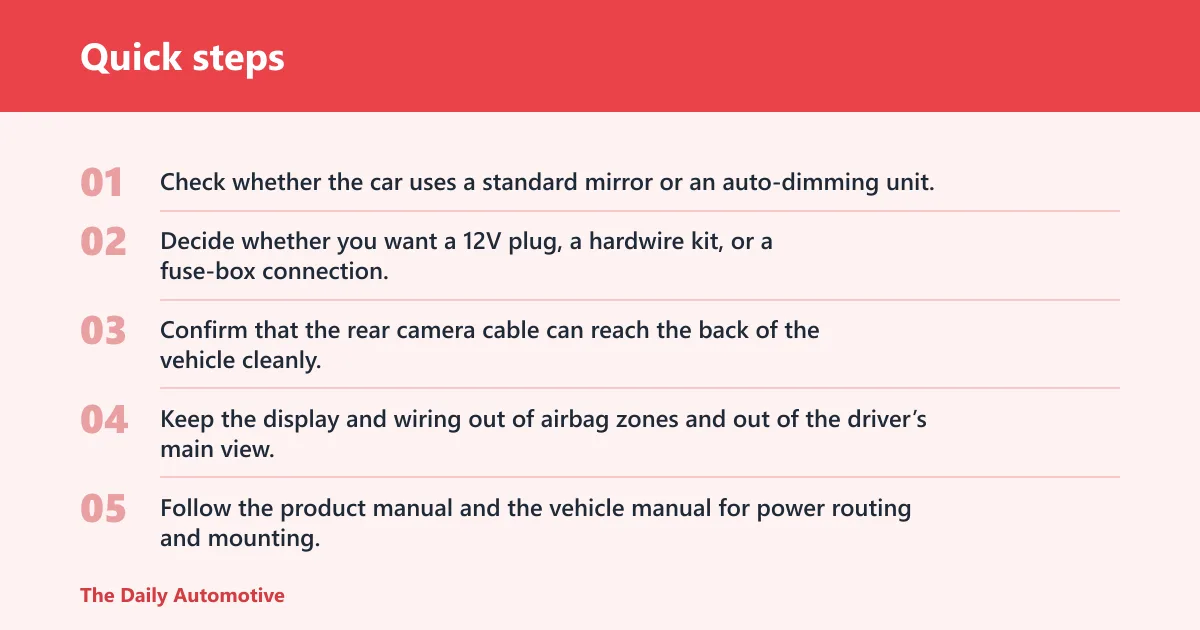
Mirror dash cams range from easy to involved. Strap-on models are quick, but fuse-box wiring and full mirror replacement need more care, especially around the vehicle’s existing mirror hardware and safety systems.
- Check whether the car uses a standard mirror or an auto-dimming unit.
- Decide whether you want a 12V plug, a hardwire kit, or a fuse-box connection.
- Confirm that the rear camera cable can reach the back of the vehicle cleanly.
- Keep the display and wiring out of airbag zones and out of the driver’s main view.
- Follow the product manual and the vehicle manual for power routing and mounting.
12V socket versus hardwire versus fuse box
A 12V socket is the simplest power source. It is easy, but the cable can be visible.
Hardwiring and fuse-box power clean up the cabin and can support parking mode, yet they add installation steps. The Auto-Vox V5 Pro connects directly to the car’s fuse box, which is the kind of detail that matters if you want a built-in look.
Strap-on mirror fit versus full replacement
Some mirror dash cams strap over the existing mirror. The Pelsee P12 Pro mounts on top of the existing mirror with straps, and it is not a full rearview mirror replacement.
Other models replace the mirror itself. That can look cleaner, but it also means more fit checks before you buy, especially in cars with unusual mirror bases or built-in electronics.
Choose Dashboard Camera if… / Choose Mirror Dash Cam if…
Choose Dashboard Camera if… you want the cleanest evidence capture, you want the easiest path to a basic front-camera install, you drive a vehicle with a narrow or auto-dimming mirror, or you do not want the mirror area turned into a display.
Choose Mirror Dash Cam if… you want rear visibility on the mirror itself, you want parking assist and reverse guidelines, you want less windshield clutter, or you are willing to check mirror fit and wiring before purchase.
For budget buyers, the dashboard camera is usually the simpler answer. For premium buyers who want a front-and-rear package with GPS data, loop recording, and a built-in display, the mirror dash cam is often the better match.

What features should you check before buying?
Loop recording and a G-sensor belong on the short list for both device types. Loop recording overwrites old clips automatically, while the G-sensor locks important footage after impact.
GPS is also useful, because it can add route and speed metadata. Some kits use an external GPS antenna or separate module, and placement can affect precision more than many buyers expect.
Loop recording and G-sensor
These two features protect the clips you are most likely to need. Loop recording keeps the card from filling up, and the G-sensor helps preserve impact footage.
That matters more than a flashy app menu. A camera that records cleanly and keeps the right clip after a bump is more useful than one with extra features you will never touch.
GPS antenna and route data
A GPS antenna can add route and speed metadata, which helps show where and how fast the car was moving. Some systems use a separate module, and some require manual placement.
Do not assume the reading will be perfect. Positioning matters, and a badly placed antenna can be less precise than the listing suggests.
Front and rear camera support
Front-and-rear support matters if you want both evidence and rear visibility. A mirror dash cam usually gives you that in one package, while a dashboard camera may need a separate rear camera add-on.
When comparing specs, check the front resolution and the rear resolution separately. A model may advertise 4K up front and still use Full HD or 1080p out back.
Frequently asked questions
What is the difference between a dashboard camera and a mirror dash cam?
A dashboard camera is a separate unit mounted on the windshield or dashboard and aimed forward. A mirror dash cam combines recording with the mirror area, often adds a touchscreen display, and usually supports front and rear cameras. The first favors evidence capture; the second favors rear visibility and reduced windshield clutter.
Is a mirror dash cam better than a regular dash cam?
Not in every case. A mirror dash cam is better if you want a rear feed, parking help, and a cleaner-looking windshield. A regular dash cam is better if your main goal is the clearest forward evidence, simpler installation, or a car with mirror fit issues.
Do mirror dash cams replace the rearview mirror?
Some do, and some do not. The Pelsee P12 Pro mounts on top of the existing mirror with straps and is not a full rearview mirror replacement. That is why you should check whether a model overlays the mirror or replaces it before you buy.
Can a mirror dash cam record front and rear?
Yes. Front-and-rear support is one of the main reasons people choose a mirror dash cam. In a common setup, the front camera handles the road ahead while the rear camera records behind the vehicle and can also feed the mirror display.
Are mirror dash cams good at night?
They can be, but the result depends on the sensor, lens, and rear-window conditions. A 1440p model with HDR can help, and a Sony IMX335 Sensor is a useful listing detail, but tinted glass, wet roads, and backlit plates can still reduce clarity.
How hard is it to install a mirror dash cam?
It ranges from easy to fairly involved. Strap-on models are quicker, while fuse-box wiring or full mirror replacement takes more time and care. Before you buy, check whether your mirror shape, wiring path, and vehicle safety features leave enough room for the unit.
Are mirror dash cams worth it?
They are worth it when rear visibility matters as much as recording. If you want parking assist, reverse guidelines, and a live rear view in the mirror area, the extra complexity can pay off. If you only want front evidence, a traditional dash cam is usually the better buy.
Products related to this article
Sponsored / affiliate links. As an Amazon Associate I earn from qualifying purchases. I may earn additional commission from eligible campaigns.