
Does Filing a Claim Raise Your Car Insurance Rates?
Yes, filing an at-fault claim can raise your premium. If the expected surcharge plus your deductible is close to the repair bill, paying out of pocket is usually cheaper. Miss that math and you can spend more over the policy term than the repair actually costs. This guide shows a break-even way to compare deductible, likely renewal surcharge, and repair cost before you file.
This guide is part of our Car Dealer Money Guide: Negotiating, Financing, Leasing, Trading In and Selling series.
Does filing a claim raise your rates?
Sometimes. Insurers price auto policies from claims history, fault, claim type, and claim amount, so a single claim may have no effect, a small effect, or a meaningful one. The biggest premium pressure usually comes from at-fault losses, especially when damage is large or injuries are involved.
What insurers look at when pricing a renewal
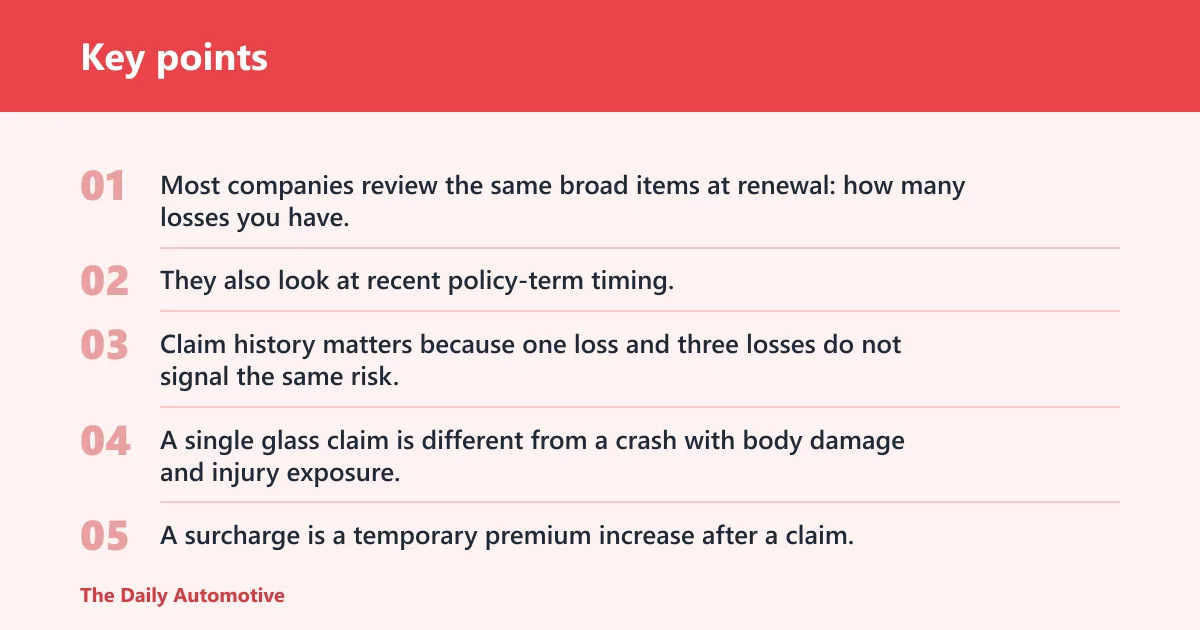
Most companies review the same broad items at renewal: how many losses you have, whether you were at fault, how large the payment was, and whether the loss was collision, comprehensive, or liability. They also look at recent policy-term timing, since a claim filed near renewal may show up faster than one filed early in the term.
Claim history matters because one loss and three losses do not signal the same risk. A single glass claim is different from a crash with body damage and injury exposure.
When a claim is more likely to trigger a surcharge
A surcharge is a temporary premium increase after a claim. It is more likely after an at-fault accident, a collision claim with sizable repairs, or a liability claim that created payment to another person. Depending on the insurer and state, the surcharge can last for multiple policy periods.
Not every claim leads to an immediate midterm price change. Many drivers see the effect at renewal instead, when the carrier recalculates the premium using the updated loss record.
Why one claim is different from repeated claims
One claim may be manageable. Multiple claims in a short span are harder to ignore because they change the loss record insurers use to price future coverage. Even when each claim is small, several losses can weigh more than one larger claim.
At-fault claims and premium increases
At-fault accidents are the main reason premiums rise after a claim. When the policyholder caused the loss, the insurer usually sees higher future risk, especially if the crash involved another vehicle, property damage, or bodily injury. That is why fault matters more than the repair bill alone.
Why fault matters most
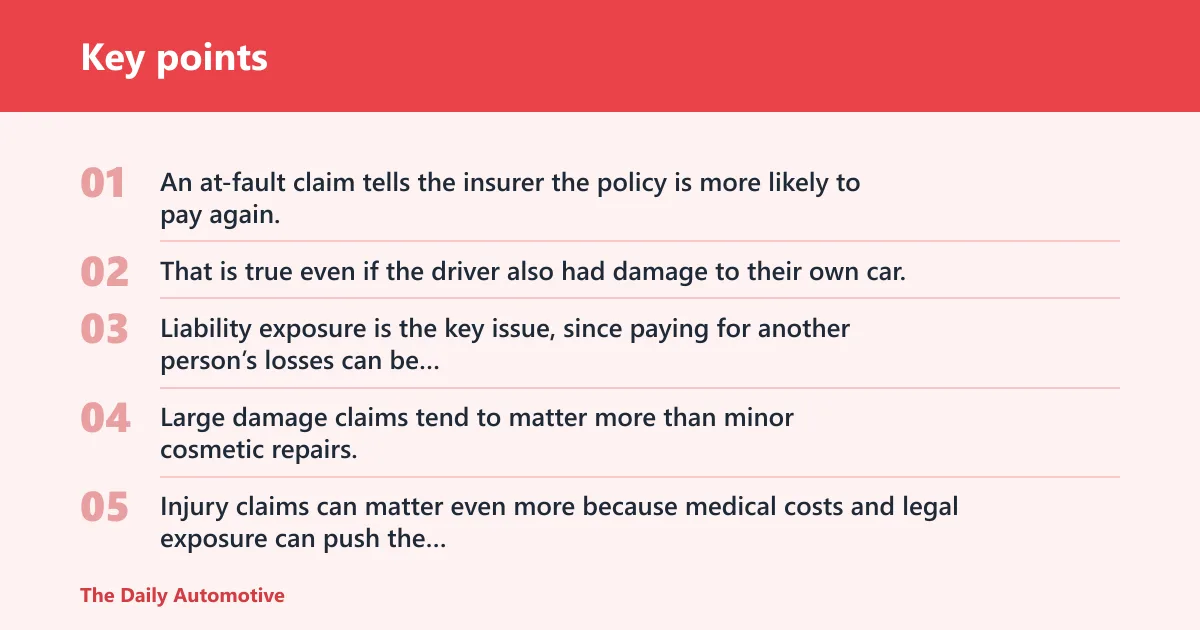
An at-fault claim tells the insurer the policy is more likely to pay again. That is true even if the driver also had damage to their own car. Liability exposure is the key issue, since paying for another person’s losses can be more expensive than fixing one vehicle.
Damage size, injuries, and liability exposure
Large damage claims tend to matter more than minor cosmetic repairs. Injury claims can matter even more because medical costs and legal exposure can push the total loss much higher. In a serious crash, the premium effect often reflects that larger risk, not just the visible repair bill.
Say your bumper repair is about $1,200 and your collision deductible is about $1,000. If a surcharge adds about $250 a year for three years, filing could cost roughly $1,750 out of pocket over time, before any claim handling effects. In that case, paying the repair bill yourself may be the cheaper path.
How loss history can affect future pricing
Insurers typically review a lookback period rather than a lifetime record, but that period varies by carrier and state. A recent at-fault claim can matter more than an older one. Two claims within the lookback window usually weigh more than one claim, even if one is small.
Not-at-fault claims and rate impact
Not-at-fault claims are often treated differently, but they are not invisible. Some insurers and some states may still rate for certain losses, especially if the claim is frequent, large, or handled under collision coverage rather than being paid by another driver’s liability policy.
Why some insurers treat these differently
If another driver caused the loss and their insurer pays, the policyholder’s own loss record may look better than it would after an at-fault claim. Still, a not-at-fault claim can stay in the record file and be used in future underwriting decisions. That is why “not at fault” does not mean “never affects rates.”
State and insurer variation
Rules vary by state and by insurer. Some companies are more willing to price around a not-at-fault loss, while others still factor the event into renewal pricing. That difference matters most when the claim is repeated or when the loss pattern suggests a higher chance of another payment.
How to document a clean claims record
Keep the claim number, accident date, repair estimate, and who paid the loss. If the claim was not at fault, keep the police report, photos, and the other driver’s insurer details. Good records help when you compare renewal offers or question a rating change.
Comprehensive, collision, and liability claims
Claim type matters because insurers do not treat every loss the same way. Comprehensive claims are often handled differently from collision claims, and liability claims can carry their own pricing effect because they involve damage to other people or property. The coverage line tells you more than the word “claim” alone.
Comprehensive coverage: theft, vandalism, weather, and animal strikes
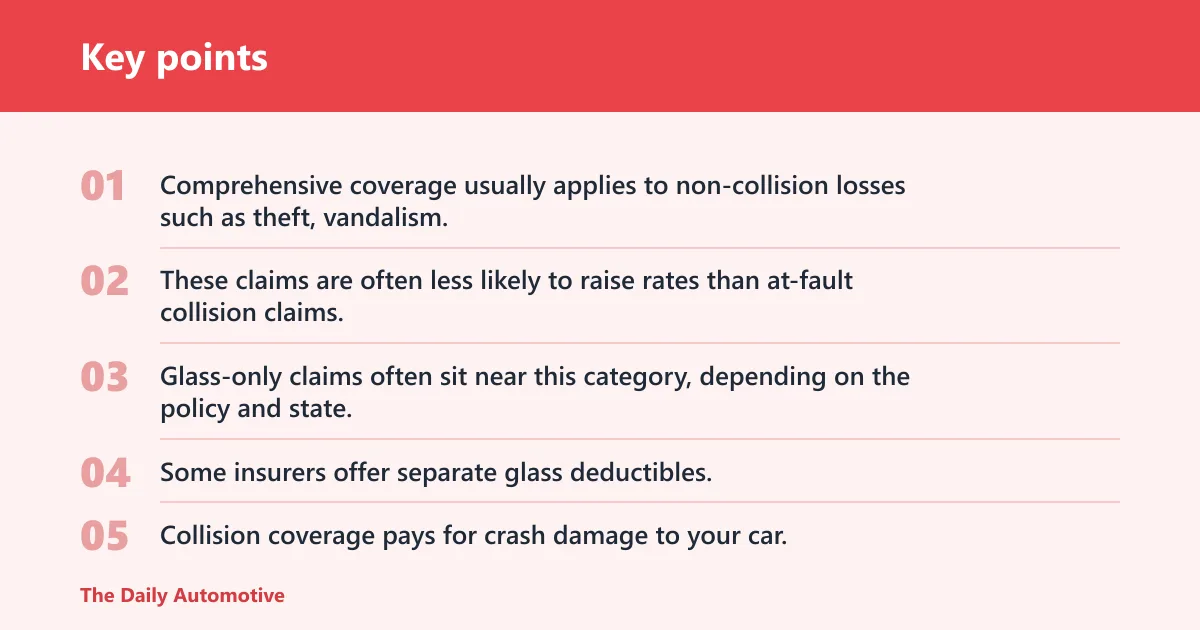
Comprehensive coverage usually applies to non-collision losses such as theft, vandalism, hail, flooding, falling objects, and animal strikes. These claims are often less likely to raise rates than at-fault collision claims, but they can still matter if the loss is large or repeated. A deductible still applies.
Glass-only claims often sit near this category, depending on the policy and state. Some insurers offer separate glass deductibles, which can make filing a small windshield claim more practical than filing a larger body-damage loss.
Collision coverage: crash damage with a deductible
Collision coverage pays for crash damage to your car, whether or not another driver is identified. It usually comes with a deductible. If you were at fault, collision claims are more likely than comprehensive claims to affect pricing because they point to driving risk rather than outside damage.
Liability claims and when they affect your policy
Liability claims pay others for injury or property damage you caused. They are often the most serious claim type from a pricing standpoint because they can involve large payments and injury exposure. A liability claim can influence future rates even when your own car is not repaired under the policy.
When paying out of pocket makes sense
Paying out of pocket makes sense when the repair bill is near your deductible and the likely surcharge would erase the value of filing. In plain terms, if the policy payment would be small and the future premium increase is likely to be larger, filing is often the worse deal.
The deductible first rule
Start with the deductible. If the repair cost is below or only slightly above it, a claim usually offers little benefit. Remember that the deductible is what you pay before insurance contributes to the covered loss.
Small repair bills and likely premium impact
For small dents, scuffed bumpers, broken mirrors, or a single cracked windshield, the future premium increase can outweigh the claim payment. That is especially true when the claim is likely to affect renewal pricing for more than one policy period.
Suppose a hail loss leaves $900 in damage and you carry a $500 comprehensive deductible. If your insurer is unlikely to surcharge a one-time weather claim, filing may still make sense. If the premium effect is uncertain and the repair shop can fix it for $700, paying out of pocket may be simpler and cheaper.
When a claim is worth filing anyway
File when the damage is much higher than your deductible, when liability exposure is possible, or when the repair bill could grow after teardown. File also when another driver is clearly at fault and their insurer may owe you for the loss. Those situations can justify the paperwork.
Claim decision worksheet
Use this worksheet to compare the repair bill, deductible, and expected premium increase before you file. The go/no-go rule is simple: if your deductible plus expected premium increase is more than the repair cost, paying out of pocket usually wins.
| Claim type | Estimated repair cost | Deductible | Expected premium increase range | Simple rule |
|---|---|---|---|---|
| Comprehensive: broken windshield | $650 | $250 | $0 to $150 per year | File only if the repair cost is well above the deductible or glass coverage is favorable. |
| Comprehensive: hail damage | $2,400 | $500 | $0 to $200 per year | File if repair cost far exceeds the deductible. |
| Collision: at-fault bumper and quarter panel | $1,800 | $1,000 | $200 to $600 per year | Pay out of pocket if the total future cost looks close to or above the repair bill. |
| Liability: damage to another car | $3,500 | $0 for liability payment | $250 to $800 per year | File when another person’s loss is significant or injury exposure exists. |
| Not-at-fault collision: rear-end damage | $1,200 | $500 | $0 to $200 per year | Check whether the other insurer will pay before using your own coverage. |
- Estimate the repair cost from a shop or adjuster.
- Subtract your deductible from the covered portion.
- Estimate the likely surcharge over the next one to three policy periods.
- Add deductible plus expected surcharge.
- If that total is higher than the repair cost, skip the claim and pay out of pocket.
How long can a claim affect rates?
A claim can affect rates at the next renewal, and sometimes sooner if the insurer changes pricing midterm for a new underwriting event. More often, the impact shows up when the policy renews. The length of the surcharge depends on the insurer, the state, and the type of claim.
Renewal timing versus midterm pricing
Renewal pricing is the most common point of change because the insurer has a fresh chance to re-rate the policy. Midterm changes can happen, but they are less common for a standard claim than a renewal adjustment. That timing matters if you are trying to compare a current repair bill against future premium cost.
How long surcharges can last?
A surcharge may last multiple policy periods, especially after an at-fault claim. Some carriers reduce or remove the surcharge after a set number of years if there are no new losses. Others keep the claim visible longer in underwriting even after the rate effect fades.
Why multiple claims matter more than one
One small claim might barely move the premium. Multiple claims tell a different story. Frequent losses can lead to higher renewal pricing, tighter policy terms, or in some cases nonrenewal risk if the record suggests repeated payments.
Frequently asked questions
Will filing a car insurance claim raise my rates?
It can, especially if the claim is at fault, involves collision damage, or creates a large payment. Not every claim raises rates, though. Comprehensive losses and not-at-fault claims are often treated differently, and the result depends on the insurer, state rules, claim amount, and how many prior losses appear on your record.
Will my car insurance rates go up if I file a claim?
Possibly, but the answer depends on claim type and fault. A liability or at-fault collision claim is more likely to raise rates than a small comprehensive claim. The change often appears at renewal, not right away, and repeated claims usually matter more than a single loss.
Which claims are most likely to affect my premium?
At-fault collision claims and liability claims are usually the most likely to affect price because they suggest higher future risk and greater payment exposure. Comprehensive claims such as theft, vandalism, weather, and animal strikes are often treated more gently, though they can still matter if they are frequent or costly.
How long does a claim affect my insurance rates?
That depends on the insurer and state, but a claim can influence renewal pricing for multiple policy periods. Some surcharges last a set number of years, while the claim itself may remain in underwriting records longer. Multiple claims within the lookback window usually have a bigger effect than one claim.
Does filing an insurance claim raise rates?
Not always. Insurers use claims history when pricing auto insurance, but they also weigh fault, claim size, and claim type. A not-at-fault glass claim may have little or no effect, while an at-fault accident with injury exposure is much more likely to raise the premium.
Will my car insurance go up if I file a claim?
It might, especially if the claim is for collision damage you caused. If the repair cost is only a little above your deductible, the future surcharge can make filing a poor financial move. Compare deductible plus expected premium increase against the repair bill before you decide.
Products related to this article
Sponsored / affiliate links. As an Amazon Associate I earn from qualifying purchases. I may earn additional commission from eligible campaigns.
 Auto Car Dent Repair Puller Head Paintless-Dent Repair Removal Kit for Slide Hammer Pulling Tab Adapter Pulling Tabs Car Aluminum-alloy Puller Head Adapter Screw Glue-tabs for Slide Hammer and
 Kalttoy Car Dent Repair Body Damage Fix Tool Pulling Bridge Puller Dent Removal Glues Tabs Hand Repair Tools Car Puller Auto Body Kit Glues Sticks Suction Cup Metalhammers T-bar