How Many Electric Cars Are in the World? (~80 Million)
Almost 80 million electric cars are on the road worldwide today, per the IEA’s Global EV Outlook 2026 — up from just 26 million in 2022. Electric models now make up roughly 5% of the global car fleet, and China alone accounts for about 44 million of that total, more than half the world’s EVs. This guide breaks down the current global count, country-by-country ownership, and how fast the fleet is projected to grow through 2035.
Quick Answer
Almost 80 million electric cars (battery-electric and plug-in hybrid) are in use worldwide as of the IEA’s Global EV Outlook 2026, up from 26 million in 2022. That’s about 5% of the world’s cars. China owns roughly 44 million of them — over half the global total — followed by Europe and the United States.
What Counts as an “Electric Car” in These Statistics?
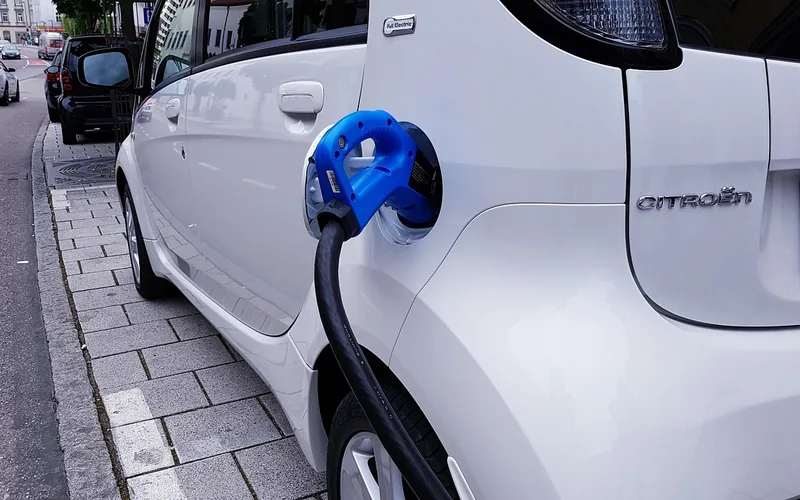
An electric car in global EV statistics is a passenger vehicle that plugs in to recharge — either a battery-electric vehicle (BEV), which runs only on a battery, or a plug-in hybrid (PHEV), which combines a smaller battery with a gas engine. Neither term includes a conventional (non-plug-in) hybrid like a standard Toyota Prius, since that vehicle never plugs in and isn’t counted as “electric” in IEA, national, or automaker sales data.
This distinction matters because older reporting on this topic often blurs the line between the two categories, inflating the perceived EV count by folding in regular hybrids. The figures in this guide refer specifically to BEVs and PHEVs, matching how the IEA, national transport agencies, and automakers themselves report EV adoption.
Global Electric Car Statistics
The global electric car fleet has nearly tripled in just three years — from 26 million in 2022 to almost 80 million today. Electric models now represent about 5% of the roughly 1.47 billion cars on the road worldwide (see our full breakdown of how many cars are in the world for the total-fleet context). That share is still small in absolute terms, but the growth rate is what matters: three years ago electric cars barely registered above 2% of the global fleet.
📊 The global electric car fleet reached almost 80 million vehicles, up from 26 million in 2022, with EVs now about 5% of all cars on the road. — Source: Our World in Data, citing IEA Global EV Outlook 2026
Electric Car Sales vs. Total Fleet: What’s the Difference?
Two different numbers get mixed up constantly in EV coverage, and it causes real confusion: annual sales (how many EVs were bought new in a single year) and total fleet (the cumulative number of EVs still on the road from every year combined). The 80 million figure above is a fleet number. The 20.7 million EVs sold in 2025 is a sales number — those cars are part of the fleet total, not a separate count.
| Metric | What It Measures | 2025 Figure |
|---|---|---|
| Total fleet (stock) | Every electric car still in use, from any purchase year | ~80 million worldwide |
| Annual sales | New electric cars sold in a single calendar year | 20.7 million sold in 2025 |
| Sales share | Percent of new cars sold that were electric | 25% of new cars globally |
| Fleet share | Percent of the total car fleet that is electric | ~5% of all cars worldwide |
Top Countries For Electric Cars
China dominates global EV ownership by a wide margin. An estimated 44 million electric cars were on Chinese roads at the end of 2025 — about 13% of China’s entire car fleet, up from 1 in 10 just a year earlier. Chinese automakers also supplied roughly 60% of all electric cars sold worldwide in 2025, a dominance we cover in more depth in what Chinese cars are sold in America.
Europe and the United States trail well behind China in both ownership and new sales. Europe sold about 4.2 million electric cars in 2025, while the U.S. sold roughly 1.5 million — with EV adoption in the U.S. varying enormously by state (see what percent of cars in California are electric for the country’s most EV-heavy market).
| Country / Region | 2025 New EV Sales | Share of New Car Sales |
|---|---|---|
| China | ~13 million | ~45% |
| Europe | ~4.2 million | ~25% |
| United States | ~1.5 million | ~11% |
How Fast Is the Global EV Market Growing?
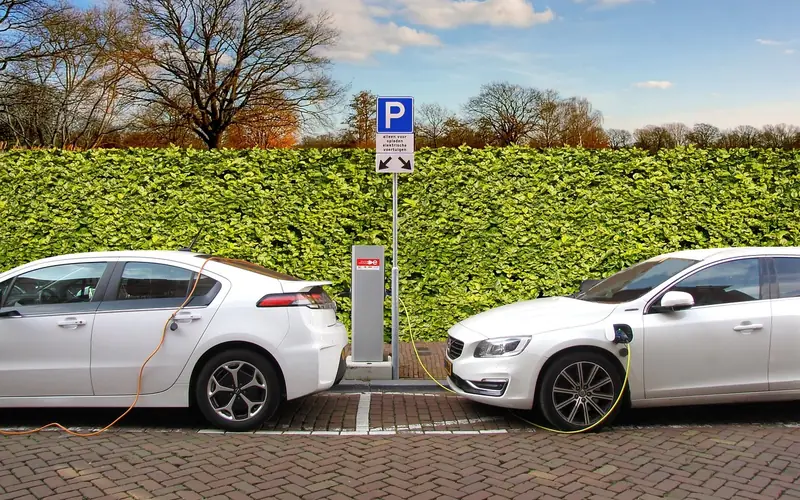
Electric car sales grew 20% year-over-year in 2025, reaching more than 20 million units — the first time EVs crossed the 20-million-sales mark in a single year. That pushed the global new-car sales share for EVs to about 25%, up from 21% in 2024. The IEA forecasts sales will climb further to 23 million in 2026, or close to 28% of every new car sold worldwide.
📊 Electric car sales grew 20% globally in 2025 to exceed 20 million units, meaning one-quarter of all new cars sold that year were electric. — Source: IEA Global EV Outlook 2026
“Electric car sales set new records in close to 100 countries last year. The growing popularity of EVs has marked a major shift for car markets and the energy system as a whole.”
— Fatih Birol, Executive Director, International Energy Agency, May 2026
Government Policies And Incentives
Many countries offer tax benefits for electric car buyers, including deductions, credits, and exemptions that lower the overall cost of ownership. Direct subsidies work the same way from a different angle — some governments pay buyers back after purchase, while others cut the price at the point of sale so the discount is immediate rather than something to claim later.
Local policy plays a role too. Some cities offer dedicated EV lanes, free or discounted parking, and exemptions from congestion charges. These smaller, city-level incentives often move adoption faster than national tax policy alone, especially in dense urban markets where EV lanes and parking perks are highly visible day to day.
Challenges In Electric Vehicle Adoption
Charging infrastructure remains the biggest practical hurdle. Many rural areas still lack public chargers, which makes long trips harder to plan and feeds range anxiety — the fear of running out of charge with nowhere nearby to plug in. Charging at home isn’t universal either; renters and apartment dwellers without dedicated parking often can’t install a home charger at all.
Upfront price and battery longevity are the other two recurring concerns. Battery packs are the single most expensive component in an EV, so buyers worry about replacement cost once the pack degrades. Maintenance is also different from a gas car — not every independent mechanic is equipped or trained to service an EV’s battery and electric drivetrain yet.
Future Projections For Electric Cars
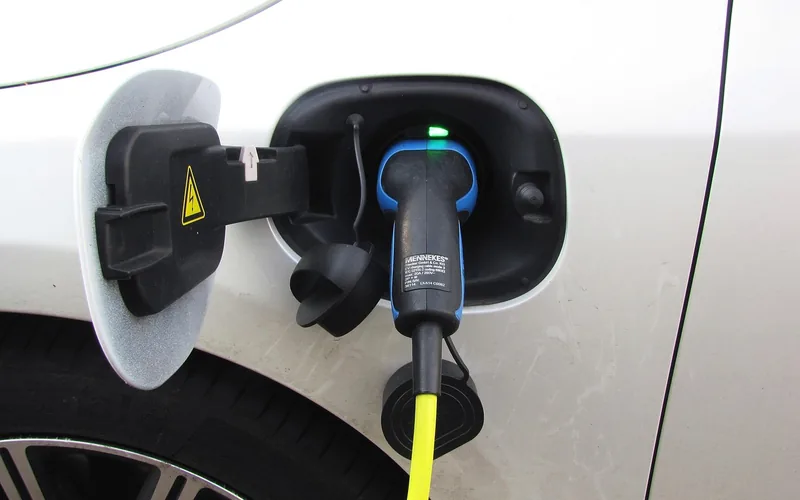
The IEA projects the global EV fleet will grow more than sixfold from 2025 levels by 2035, reaching as many as 510 million electric cars — not counting electric two- or three-wheelers. That growth is expected to continue even without any new government policy support, driven mainly by falling battery prices and a widening range of affordable models.
Battery technology is the biggest lever behind that forecast. Newer batteries last longer, charge faster, and cost less per kilowatt-hour to produce than they did even three years ago, which is steadily narrowing the price gap between electric and gas-powered cars in most major markets.
Impact On The Environment
Electric cars produce zero tailpipe emissions, which means cleaner air in the cities and neighborhoods where they’re driven. Over a car’s full lifetime, EVs also tend to produce fewer total greenhouse gas emissions than comparable gas cars, even after accounting for the electricity used to charge them — though the exact margin depends heavily on how clean the local power grid is.
The tradeoff is on the materials side. EV batteries require mined materials like lithium, cobalt, and nickel, and that mining carries its own environmental cost. Battery recycling programs are still maturing, which is why efficient recycling and materials recovery are an active area of research rather than a solved problem.
Role Of Major Automakers
BYD, the Chinese automaker, has overtaken Tesla as the world’s largest EV seller by volume, a shift driven largely by BYD’s lower-cost lineup and China’s dominant share of global EV manufacturing (we cover BYD’s U.S. market status separately in are BYD cars sold in the US). Tesla remains the top-selling EV brand in North America and much of Europe, with the Model Y and Model 3 among the best-selling electric cars worldwide.
Legacy automakers are catching up on volume. Volkswagen, BMW, and Nissan all field multiple EV models today, while newer entrants like Rivian and Lucid Motors compete in narrower premium segments. Government tax rebates continue to play a real role in EV affordability across nearly every major market covered above.
Frequently Asked Questions
How Many Electric Cars Are There In The World?
Almost 80 million electric cars (battery-electric and plug-in hybrid) are on the road worldwide, according to the IEA’s Global EV Outlook 2026, up from 26 million in 2022.
Which Country Has The Most Electric Cars?
China has by far the most electric cars, with an estimated 44 million on the road at the end of 2025 – about 13% of the country’s entire car fleet and more than half of the global EV total.
How Fast Is The Electric Car Market Growing?
Global EV sales grew 20% year-over-year in 2025 to exceed 20 million units, pushing EVs to about 25% of all new car sales worldwide. The IEA expects sales to reach 23 million in 2026.
What Are The Benefits Of Electric Cars?
Electric cars produce zero tailpipe emissions, cost less to fuel than gas cars in most markets, and often qualify for tax credits or rebates. They also tend to need less routine maintenance since they have far fewer moving parts than a gas engine.
Do Electric Car Counts Include Regular Hybrid Cars?
No. Global EV statistics count only battery-electric vehicles (BEVs) and plug-in hybrids (PHEVs) – vehicles that plug in to recharge. A conventional hybrid that never plugs in, like a standard Toyota Prius, is not counted as an electric car in these figures.
How Many Electric Cars Will There Be By 2035?
The IEA projects the global electric car fleet will grow more than sixfold from 2025 levels by 2035, reaching as many as 510 million vehicles, even without any new government policy support.
What Percentage Of New Cars Sold Worldwide Are Electric?
About 25% of new cars sold globally in 2025 were electric, up from 21% in 2024. The IEA forecasts that share will climb to close to 28% of all new cars sold in 2026.
Conclusion
Electric cars have gone from a niche curiosity to nearly 5% of the world’s car fleet in a little over a decade, with almost 80 million now on the road and China responsible for more than half that total. Battery costs keep falling, charging networks keep expanding, and the IEA expects the fleet to grow sixfold again by 2035 — even without any new policy support driving that growth.
Products related to this article
Sponsored / affiliate links. As an Amazon Associate I earn from qualifying purchases. I may earn additional commission from eligible campaigns.