How Many Gallons Of Gas Does A Car Hold: Essential Guide
Most cars hold between 10 to 20 gallons of gas, but the exact size varies greatly by make, model, and year. Knowing your car’s fuel tank capacity is key to understanding your range and planning refueling stops.
Ever been on a road trip, staring at the fuel gauge with a little knot of worry? Or maybe you’re just curious about what your car’s ‘magic number’ for fuel is. It’s a common question: “How many gallons of gas does a car hold?” You’re not alone if you’ve felt a bit lost when it comes to this piece of practical car knowledge. Knowing your car’s fuel tank size is super helpful. It helps you plan when to stop for gas, estimate how far you can go, and even understand your fuel efficiency better.
Think of it as unlocking a small but mighty piece of your car’s puzzle. We’ll break down exactly where to find this information and what influences your car’s particular fuel tank size, making car care a little bit easier and a lot less mysterious.
Understanding Your Car’s Fuel Tank Capacity
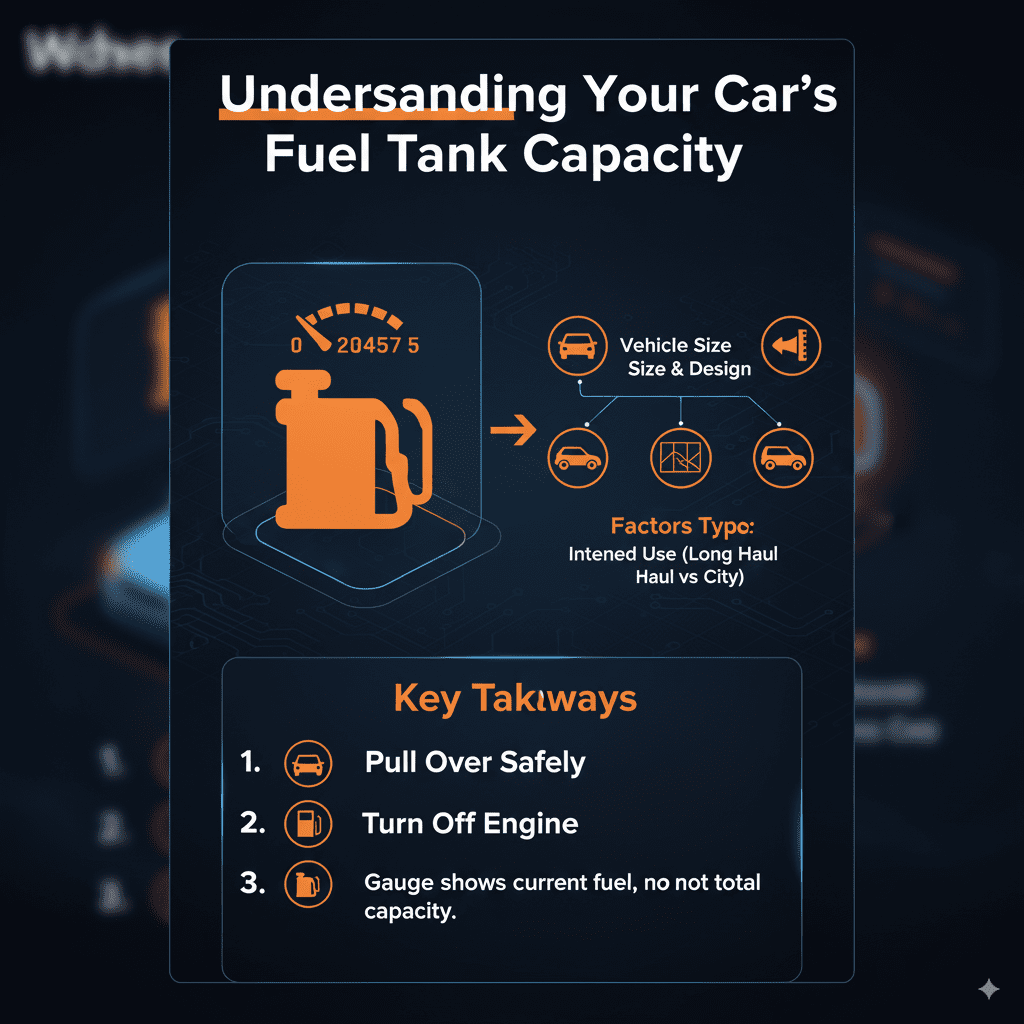
Your car’s fuel tank is like its personal energy storage unit. The amount of fuel it can hold, known as its fuel tank capacity, is designed to give you a decent driving range between fill-ups. This capacity isn’t a one-size-fits-all number; it’s carefully calculated by the car manufacturer based on several factors. These factors include the type of vehicle, its intended use, and even its overall size and design. For example, a large SUV that’s built for long hauls will typically have a bigger gas tank than a small, city-focused compact car.
When you pull up to the gas pump, the number of gallons you see on the display is the amount of fuel you’ve added. The total number your car can hold is its maximum capacity. Most modern cars have digital displays that can show you how many gallons are left, but they usually don’t show the total capacity unless you know where to look. This guide is all about demystifying that number and making sure you’re always in the know about your car’s fuel needs.

Why Does Fuel Tank Size Matter?
Knowing how many gallons of gas your car holds is more than just a random fact; it has practical benefits for every driver. Here’s why it’s important:
- Range Estimation: The most obvious reason is understanding your driving range. If you know your tank holds 15 gallons and you get 30 miles per gallon, you can roughly estimate you can drive 450 miles on a full tank. This helps immensely when planning long trips or navigating areas with fewer gas stations.
- Fuel Efficiency Calculations: To accurately calculate your car’s miles per gallon (MPG), you need to know how much fuel you’ve used. Filling your tank completely and then tracking how many gallons it takes to fill it again after using a certain amount of miles is the best way.
- Avoiding Run-Outs: Nobody wants to be stranded on the side of the road. Knowing your tank size and your car’s typical MPG helps you know when to get gas before the needle hits empty.
- Informed Purchasing Decisions: When you’re looking at buying a new or used car, fuel tank capacity is a spec that can influence your decision, especially if you prioritize fewer stops for gas on long journeys.
- Understanding Fuel Gauge Accuracy: Sometimes, fuel gauges can be a bit mysterious. Knowing your tank’s true capacity can help you gauge how reliable your fuel gauge might be, especially as the car ages.
Average Fuel Tank Capacities by Vehicle Type
The size of a fuel tank can vary quite a bit. Here’s a general idea of what you might expect for different types of vehicles. Keep in mind these are averages, and specific models can fall outside these ranges.
| Vehicle Type | Typical Gallon Range (Approximate) | Common Uses & Notes |
|---|---|---|
| Compact Cars (e.g., Honda Civic, Toyota Corolla) | 10 – 14 gallons | Ideal for city driving, fuel efficiency is a priority. Smaller tanks mean more frequent stops on long trips but less weight to carry around. |
| Mid-Size Sedans (e.g., Toyota Camry, Honda Accord) | 14 – 18 gallons | A good balance of range and efficiency for daily commutes and medium-length trips. |
| Full-Size Sedans (e.g., Chevrolet Impala, Ford Taurus – older models) | 16 – 20 gallons | Offer a longer driving range, suitable for highway cruising. Can be less fuel-efficient. |
| SUVs (Compact & Mid-Size) (e.g., Toyota RAV4, Honda CR-V) | 13 – 17 gallons | Vary widely, but generally aim for a decent range for varied use, including family trips. |
| Full-Size SUVs & Trucks (e.g., Chevrolet Tahoe, Ford F-150) | 18 – 35 gallons | Designed for towing, hauling, and long-distance travel. Larger tanks are necessary due to lower fuel efficiency. Some heavy-duty trucks can have even larger tanks. |
| Sports Cars (e.g., Ford Mustang, Chevrolet Camaro) | 12 – 18 gallons | Often prioritize performance over maximum range, but still need adequate capacity for spirited driving and some travel. |
| Hybrids & Electric Vehicles (Range Extenders) | 7 – 12 gallons | Smaller tanks are common because the electric motor assists or primary power source, reducing reliance on gasoline. (Note: Full EVs have no gas tank). |
How Many Gallons of Gas Does My Car Hold? Finding the Exact Number
So, you know the averages, but you want to know the precise number for your specific ride. Don’t worry, it’s usually quite straightforward to find out. Here are the most common and reliable places to check:
1. Your Car’s Owner’s Manual
This is the gold standard. Your owner’s manual is packed with information specific to your car, and the fuel tank capacity is almost always listed. If you have a physical copy, flip through the index or the section on specifications or maintenance. If you’ve gone digital (which many manufacturers now offer), you can often search or find a PDF version of your manual on the automaker’s website.
Where to Look:
- Specifications Section: This is the most common place.
- Maintenance Section: Sometimes it’s grouped with other fluid capacities.
- General Information: It might be at the very beginning or end of the manual.
2. The Fuel Door or Dashboard
While less common for displaying the total capacity, some cars might have subtle indicators. You might find a small sticker on the inside of the fuel filler door that provides general information about fuel type or octane rating. Occasionally, a model might have a symbol on the dashboard reminding you of the fuel type. The total tank size is rarely printed here, but it’s always worth a quick peek.
3. Manufacturer’s Website
Most car manufacturers have excellent online resources. If you go to the official website for your car’s brand (e.g., Ford.com, Toyota.com), you can usually navigate to a “Owners” or “Support” section. From there, you can often find:
- Vehicle Specifications: Enter your car’s year, make, and model, and you’ll often get a detailed list of specs, including fuel tank capacity.
- Digital Owner’s Manuals: As mentioned before, you can often download a PDF of your owner’s manual here.
This pathway is especially helpful if you’ve lost your physical manual. For instance, Edmunds and Kelley Blue Book (KBB) are reputable sites that also provide detailed specifications for many vehicles, which can be a quick way to check if you don’t want to navigate the manufacturer’s site directly.
4. Vehicle Identification Number (VIN) Decoder
Every car has a unique VIN. While VIN decoders are primarily used to determine a car’s history, manufacturing details, and sometimes its original factory options, they can occasionally be used to glean specific data like fuel tank size. You can find VIN decoders online. However, this method might be less direct for fuel tank capacity compared to the owner’s manual or specifications page. It’s more of a backup option.
5. Online Automotive Databases and Forums
Websites dedicated to car reviews, specifications, and owner communities are fantastic resources. We’ve already mentioned Edmunds and KBB. Other popular sites include:
- Car and Driver: Known for in-depth reviews and often lists key specs.
- MotorTrend: Similar to Car and Driver, offering vast amounts of vehicle data.
- Dedicated Model Forums: If you own, say, a BMW 3-series, there’s likely a forum dedicated to that car. Owners often share detailed technical information, including fuel tank sizes, and can answer specific questions.
When looking at forums, remember to cross-reference information if possible, as user-submitted data can sometimes be based on memory rather than exact data. However, for simple specs like fuel tank size, it’s usually reliable.
Factors Influencing Fuel Tank Size
Beyond just the “type” of car, several design and engineering considerations go into determining how much fuel a vehicle can carry. These factors help explain why two cars that look similar might have different tank capacities.
- Vehicle Size and Chassis: Larger vehicles, like full-size SUVs and trucks, naturally have more space available for a bigger fuel tank. The chassis (the vehicle’s frame or basic structure) often dictates how much room can be allocated for the tank.
- Engine Size and Fuel Consumption: Cars with larger, more powerful engines that consume more fuel typically need larger tanks to provide a reasonable driving range. A high-performance V8 engine will drink gas much faster than an efficient 4-cylinder, thus requiring a bigger reservoir.
- Intended Use: A vehicle designed for long-distance highway travel or off-roading will likely have a larger tank than a car made primarily for short city commutes. Manufacturers consider how the target audience uses the vehicle. For example, a truck meant for towing long distances needs a substantial fuel supply.
- Weight Distribution and Cargo Space: Fuel tanks are strategically placed within the vehicle’s structure for safety and to optimize weight distribution. The size and shape of the tank are also influenced by the need to maintain adequate cargo space and passenger room. Manufacturers try to balance fuel capacity with the vehicle’s primary function.
- Emissions Regulations and Technology: While not directly dictating tank size, modern emissions regulations and evolving fuel systems (like those with evaporative emission control systems) can influence the design and placement of fuel tanks. Some advanced systems might require specific tank geometries.
How to Know When Your Car is Almost Empty
Understanding your fuel tank capacity also helps you interpret your fuel gauge. Most modern cars have a low fuel warning light that comes on when you have a certain amount of fuel left, typically around 1-2 gallons. However, this isn’t an exact science, and fuel gauges can vary in their precision.
Here’s what to look for:
- Fuel Gauge Needle: Pay attention to where the needle sits when the low fuel light turns on for your specific car. Over time, you’ll learn how much “reserve” you typically have.
- Distance to Empty (DTE) Display: Many cars show an estimated distance to empty. This calculation is based on your recent fuel economy. It’s a good indicator but can fluctuate based on driving conditions (e.g., traffic, hills).
- “Empty” is for Emergencies, Not Routine: It’s generally not recommended to regularly run your car down to the last drop. The fuel pump often relies on the fuel in the tank to stay cool. Running too low can put extra strain on the pump and potentially lead to premature failure. Experts at FuelEconomy.gov recommend refueling when you’re around a quarter tank to ensure optimal performance and longevity of your fuel system components.
What Happens if You Run Out of Gas?
Running out of gas can be more than just an inconvenience; it can sometimes cause mechanical issues. The primary concern is the fuel pump. Most modern cars have electric fuel pumps that are submerged in the fuel tank. The gasoline helps to cool and lubricate the pump. When the tank is empty, the pump can overheat and potentially get damaged, leading to an expensive repair. Some cars might also experience issues with the fuel system trying to re-prime itself after running dry, which could require a mechanic to help get the car running again.
If you do run out, here’s what to do:
- Pull Over Safely: If you’re moving, try to coast to the side of the road or a safe pull-off area, far from traffic.
- Turn Off the Engine: Conserve any remaining fuel or battery power.
- Call for Assistance: Contact a roadside assistance service (like AAA), a friend, or family member. You’ll need them to bring you enough gasoline to get to a station.
- Be Prepared: Many roadside services carry a small amount of fuel for such emergencies.
Frequently Asked Questions (FAQs)
Q1: How many gallons of gas does most cars hold on average?
A1: Most passenger cars, like sedans and hatchbacks, typically hold between 10 to 18 gallons of gasoline. Larger vehicles like SUVs and trucks will hold more, often ranging from 18 to over 30 gallons.
Q2: Can I fit more gas in my tank than its stated capacity?
A2: While you might be able to squeeze a little extra gas past the advertised capacity by topping off, it’s not recommended. The stated capacity allows room for fuel expansion due to temperature changes and ensures the evaporative emissions system functions correctly. Overfilling can damage your car’s emissions system and fuel pump.
Q3: My fuel gauge is broken. How can I know how much gas I have?
A3: If your fuel gauge is unreliable, you’ll need to rely on other methods. You can estimate by filling your tank completely, recording the number of gallons added, and then tracking your mileage until the low fuel light comes on. Knowing your car’s MPG helps you estimate how much fuel you’ve used. However, a broken fuel gauge should be a priority for repair, as running out of gas can cause further damage.
Q4: Do electric cars have a “gas tank”?
A4: Electric cars (EVs) do not have a gasoline engine or a gas tank. They run solely on electricity stored in a large battery pack. Plug-in hybrid electric vehicles (PHEVs) do have a smaller gas tank, as they can run on both electricity and gasoline.
Q5: How often should I fill my gas tank?
A5: It’s a good practice to refuel when your tank is around a quarter full. This is often referred to as the “quarter tank rule.” Running the tank too low repeatedly can strain your fuel pump because the fuel helps cool it. It also ensures you’re never caught off guard by unexpected traffic or a need to drive further than planned.
Q6: Is there a difference between “gallons” and “liters” for fuel tank capacity?
A6: Yes, gallons and liters are different units of volume. In the United States, fuel capacity is almost always measured in gallons. In many other parts of the world, it is measured in liters. One US gallon is approximately 3.785 liters. You’ll find the capacity listed in the unit appropriate for your region, usually within the owner’s manual.
Q7: Does mileage affect my car’s fuel tank size?
A7: Mileage (the number of miles your car has driven) does not change the physical size of your fuel tank. The fuel tank size is a design specification determined by the manufacturer when the car was built. However, as cars age and accumulate mileage, their fuel efficiency can change, meaning the range from a full tank might decrease even if the tank capacity remains the same.