How Much Does A Bottle Of Coolant Cost? Price Breakdown
It’s that sinking feeling. You pop the hood, maybe for a routine check, or perhaps a weird light just flickered on. Then you see it: the coolant reservoir looks a little low.
Suddenly, a simple question pops into your head: “How much does a bottle of coolant cost?” It feels like a small thing, but these unexpected car expenses can pile up. We get it. You just want to know the price so you can get back on the road without a surprise bill.
Finding the right coolant and knowing its price is important. It keeps your engine from overheating in the summer and freezing in the winter. Plus, using the wrong kind can cause serious damage.
So, let’s break down the cost. We’ll look at why prices change and what you can expect to pay. This way, you’ll feel confident making your next purchase.
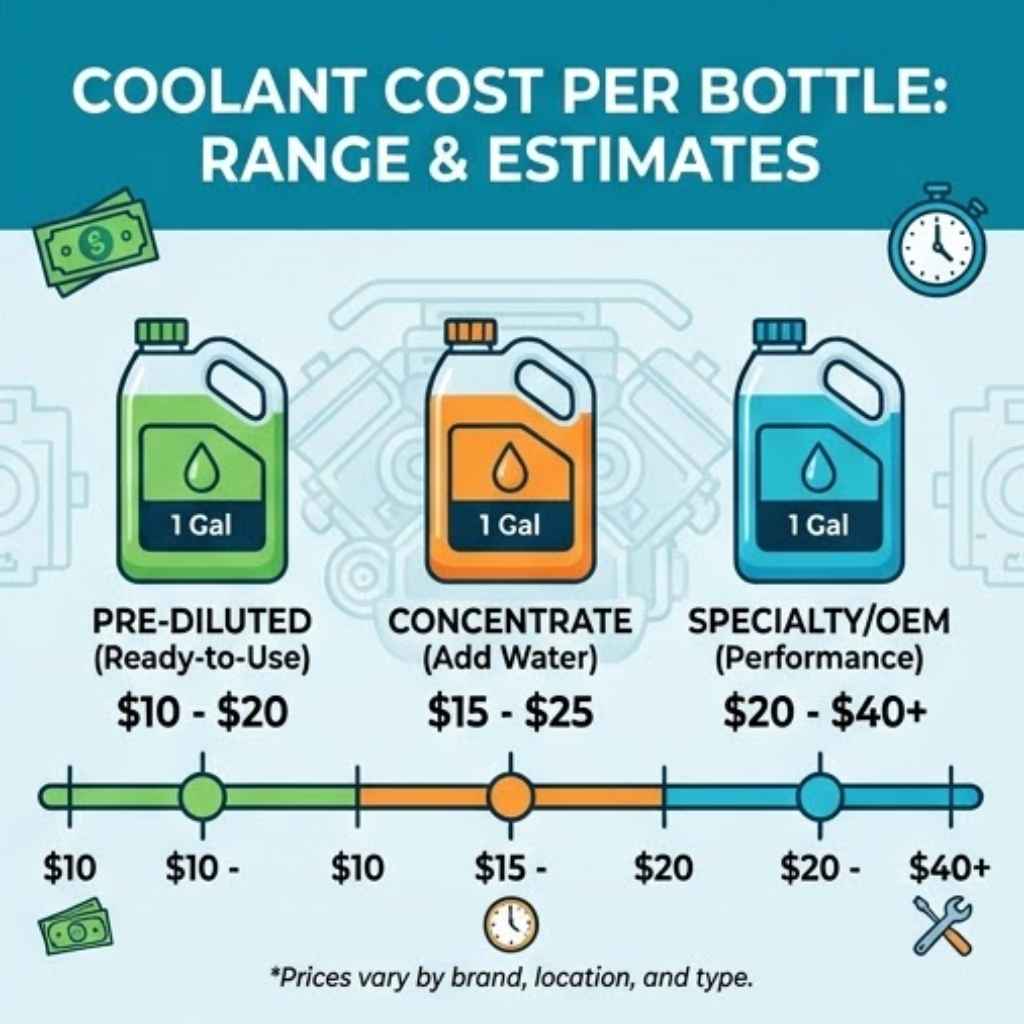
The average cost for a gallon of automotive coolant ranges from $10 to $30. This price depends on the type of coolant, brand, and where you buy it. For a standard 50/50 pre-mixed coolant, expect to pay around $15 to $25 per gallon.
Concentrated coolant, which needs to be mixed with distilled water, can be slightly cheaper per gallon but requires buying water separately.
Understanding Coolant Pricing
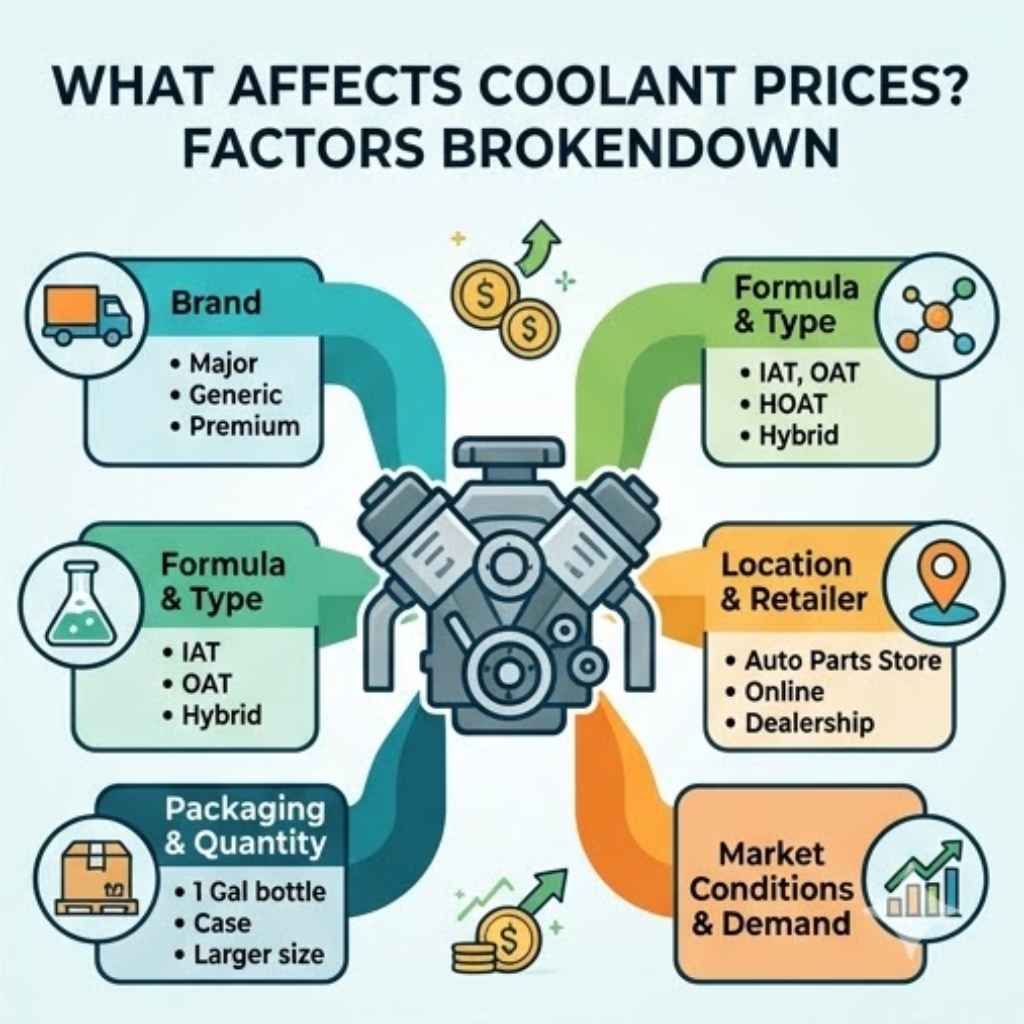
So, what makes one bottle of coolant cost more than another? It’s not just a random number. Several things play a big role.
Think of it like buying milk. A basic gallon is one price, but organic, lactose-free, or almond milk will cost more. Car coolant is similar.
The base product is antifreeze, but additives and formulas change the price.
The type of coolant is a major factor. Cars use different kinds. Older cars might use an older green coolant.
Newer cars often use orange, pink, or even blue coolants. These are called OAT (Organic Acid Technology) or HOAT (Hybrid Organic Acid Technology) coolants. They are designed for specific engine metals and seals.
They last longer and protect better. But they usually cost more.
Brand names also matter. A well-known brand like Prestone or Peak might cost a bit more. This is because people trust them.
They have a long history. They invest in marketing. Store brands, like those from AutoZone, O’Reilly, or even Walmart, can be cheaper.
They still meet industry standards. But they might not have the same name recognition.
Where you buy it makes a difference too. Dealerships usually have the highest prices. They sell parts made specifically for your car.
Auto parts stores fall in the middle. Grocery stores or big box stores might have the lowest prices. But they might have a smaller selection.
Buying in bulk can also save you money. If you have multiple cars or plan to do a lot of maintenance, a 5-gallon jug might be a better deal.
Finally, consider if you buy it pre-mixed or concentrated. Pre-mixed coolant is ready to pour. It’s a 50/50 mix of antifreeze and distilled water.
This is convenient. But you pay for the convenience. Concentrated coolant is just the antifreeze.
You have to add distilled water yourself. This is usually cheaper overall. But you need to buy distilled water.
Make sure you use distilled water. Tap water has minerals. These can clog your cooling system.
A Look at Coolant Types and Their Costs
Let’s dive deeper into the different types of coolant. This will help you understand why prices vary so much. It’s like knowing the difference between a basic cola and a craft soda.
Both quench thirst, but one has a premium price.
Traditional Green Coolant (IAT): This is the old school stuff. It’s usually ethylene glycol-based. It’s often a bright green color.
It works by inhibiting corrosion. But it doesn’t last as long as newer types. It needs to be replaced more often, usually every 2 years or 30,000 miles.
Because it’s a basic formula, it’s often the cheapest. A gallon might cost between $10 and $15.
Orange/Yellow Coolant (OAT): This is for many newer American cars, especially Chrysler, Dodge, and Jeep models. It uses organic acid technology. This means it has longer-lasting corrosion inhibitors.
It can last up to 5 years or 100,000 miles. Because of the advanced formula and longer service life, it typically costs more. Expect to pay around $15 to $25 per gallon.
Pink/Red Coolant (HOAT): Many Asian car manufacturers use this. It’s a hybrid formula. It mixes inorganic additives with organic acids.
This gives you good protection and a longer lifespan. It’s often found in Toyotas, Hondas, and Nissans. The price is similar to OAT coolants, running about $15 to $25 per gallon.
Some versions are specifically for European cars and may have different color codes (like blue).
Specialty Coolants: You’ll find coolants for specific European cars, like BMW or Volkswagen. These might be purple, blue, or yellow. They have very specific formulas to protect the aluminum and exotic metals used in those engines.
They often come with a higher price tag, sometimes $25 to $35 per gallon. Always check your owner’s manual for the correct type.
Universal Coolants: Some brands offer “universal” coolants. They claim to work in most cars. These are often a mix of different technologies.
They can be a good option if you’re unsure. But they might not offer the absolute best protection for a specific car. Their price is usually in the middle range, around $15 to $20 per gallon.
The key takeaway here is that the more specialized the formula or the longer the service interval, the higher the potential cost. But remember to factor in how often you’ll need to change it. A more expensive coolant that lasts twice as long might actually save you money in the long run.
Coolant Buying Guide: What to Look For
Vehicle Type: Always check your car’s manual. It specifies the exact coolant type needed. Using the wrong one can cause serious engine damage.
Concentrated vs. Pre-Mixed: Concentrated is cheaper if you have distilled water. Pre-mixed is convenient but costs more.
Brand Reputation: Stick to known brands or those recommended by your car manufacturer.
Gallon Size: Buying larger jugs (like 5 gallons) is usually more cost-effective for topping off or flushing.
Color Isn’t Everything: While colors can indicate type, always verify with the product description or your manual. Colors can vary by manufacturer.
The Cost of Not Using Enough Coolant
Now, let’s talk about the dark side: the cost of neglecting your coolant level. You might think, “I’ll just top it off with water for now.” Or, “It’s just a little low, it’ll be fine.” That’s a common thought. But it can lead to much bigger, and much more expensive, problems down the road.
It’s like ignoring a small leak in your roof. It seems minor at first.
Your engine generates a lot of heat. Coolant is what manages that heat. If the level is too low, the system can’t circulate properly.
This means parts of your engine won’t get cooled. They can overheat. Overheating can warp engine heads.
It can blow head gaskets. These are very expensive repairs. We’re talking thousands of dollars.
A blown head gasket is a nightmare. It means coolant can leak into your oil. Or oil can leak into your coolant.
It can also leak into the combustion chambers. Symptoms include white smoke from the exhaust, milky oil, or constant overheating. Fixing this often involves taking the engine apart.
It’s a major job.
Corrosion is another big issue. Coolant doesn’t just cool. It also contains special chemicals that prevent rust and corrosion.
These chemicals break down over time. If your coolant level is low, these chemicals are less concentrated. Rust can start to form inside your engine block and radiator.
This rust can break off. It can clog small passages in the radiator. It can damage the water pump.
A clogged radiator won’t cool effectively. This leads to more overheating. A damaged water pump might leak or stop working altogether.
This means no coolant circulation. The engine will overheat very quickly. Replacing a water pump is usually a few hundred dollars.
But if it fails and causes severe overheating, the damage can be much worse.
Freezing is another danger, especially in colder climates. If you don’t have enough coolant, or if the mix is wrong (too much water), your coolant can freeze. When water freezes, it expands.
This expansion can crack your engine block. It can crack your radiator. It can burst hoses.
These are all catastrophic failures. Repairing a cracked engine block can cost thousands, or it might mean replacing the whole engine.
So, that $15 bottle of coolant seems pretty cheap when you think about the potential costs of not keeping your system full and protected. It’s an investment in your car’s long-term health. It’s preventative maintenance that pays off.
Personal Experience: The Day I Learned My Lesson
I remember it vividly. It was a sweltering August afternoon. I was on my way to a client meeting, driving my trusty old sedan.
The AC was blasting, the radio was on, and I felt pretty good. Then, a little red light blinked on the dashboard. It was the temperature warning light.
My stomach dropped. I glanced at the temp gauge. It was creeping up.
Way up.
I immediately pulled over. The engine was making a weird ticking sound. I popped the hood, and a cloud of steam billowed out.
It smelled hot and slightly sweet. Panic started to set in. I looked at the coolant reservoir.
It was practically empty. Just a little bit sloshing at the very bottom. I’d been topping it off with just water for a few months, thinking it was no big deal.
I’d noticed the level dropping, but I was busy. I just kept adding water.
That day, my car refused to start after sitting for an hour. It turned out the engine had seriously overheated. The mechanic found a cracked overflow tank and a warped thermostat housing.
The bill? A few hundred dollars just for the parts and labor on those fixes. He also told me, sternly, that if I had waited any longer, I could have been looking at a blown head gasket or worse.
He showed me some rust flakes in the old coolant. That was from the corrosion that had started setting in. It was a stark reminder.
That cheap habit of just adding water had almost cost me dearly. I learned that day that coolant is not just a fluid. It’s a vital protector.
Quick Scan: Coolant vs. Water
| Feature | Coolant (50/50 Mix) | Water Only |
|---|---|---|
| Boiling Point | Higher (approx. 223°F / 106°C) | Lower (212°F / 100°C at sea level) |
| Freezing Point | Much Lower (approx. -34°F / -37°C) | Higher (32°F / 0°C) |
| Corrosion Protection | Excellent | None / Poor |
| Lubrication | Provides some for water pump | None |
| Cost Effectiveness | Long-term savings through protection | Cheaper upfront, very costly long-term |
Real-World Context: Where and When Coolant Costs Add Up
You might be wondering where these price differences really show up in your life. It’s not just about the sticker price of the bottle. Several real-world factors influence how much you spend on coolant over time.
Climate Zones: If you live in a place with extreme temperatures, like Arizona with its scorching summers or Minnesota with its brutal winters, you need a robust coolant mix. This means using a proper antifreeze/water blend. In these climates, the cost of having the right coolant is much higher than the upfront price of a bottle.
A failure could be disastrous. If you’re in a milder climate, you might get away with less frequent changes or a slightly less potent mix, potentially saving a bit.
Vehicle Age and Type: As we talked about, newer cars often require more expensive, specialized coolants. If you have a garage full of modern vehicles, the cumulative cost of keeping them topped up and changed can be significant. Older vehicles might be more forgiving with cheaper coolant, but they might also be more prone to leaks, requiring more frequent top-offs.
A classic car owner might spend more on premium coolant to protect an antique engine.
Maintenance Habits: This is huge. People who regularly check their coolant levels and get their systems flushed according to the manufacturer’s schedule tend to avoid costly emergency repairs. They buy coolant when it’s on sale.
They might buy a concentrated jug and mix it themselves. They are controlling the cost. On the other hand, someone who waits for a warning light or a breakdown will likely pay more.
They’ll pay for emergency service, potentially premium-priced parts, and the cost of lost time and inconvenience.
DIY vs. Mechanic: Doing it yourself will almost always be cheaper. Buying a bottle of coolant for $15 and topping it off yourself costs less than a shop charging $60 for the same task, plus labor.
Even a full coolant flush is cheaper if you do it yourself. Shops charge for their time, their tools, and their overhead. If you’re comfortable getting your hands dirty, you save money.
If you prefer to have a professional handle it, you’ll pay a premium for that service.
Location and Local Prices: Prices can vary significantly by region. Gas prices affect shipping costs. Local competition between auto parts stores also plays a role.
A small town might have only one auto parts store, leading to higher prices. A large city with several competing chains might offer better deals. Even within a city, one chain might have a sale that another doesn’t.
So, while the price of a bottle of coolant is a starting point, the total cost can really depend on your circumstances, your car, and your habits. Thinking about these factors can help you budget better.
What This Means for You: Normal vs. Concerning Coolant Levels
Knowing the price is one thing, but understanding when you actually need to buy it is key. Most people don’t think about their coolant until there’s a problem. But a little awareness can save you a lot of headaches and money.
Let’s look at what’s normal and what should make you pause.
Normal: The “Add” or “Min” Line: Most coolant reservoirs have markings. There’s usually a “MIN” or “ADD” line and a “MAX” or “FULL” line. When your engine is cold, the coolant level should be at or slightly above the “MIN” line.
It might even be just below the “MAX” line. This is perfectly normal. The coolant expands when hot, so it’s supposed to be higher then.
Concerning: Below the “MIN” Line: If, when the engine is completely cold, the coolant level is below the “MIN” or “ADD” line, you have a problem. It’s low. This means you need to add coolant.
It’s also a sign that you might have a leak somewhere. You should investigate this. Don’t just keep adding coolant without checking for leaks.
Concerning: Empty Reservoir: If the reservoir is bone dry, or has only a tiny bit of liquid, that’s a serious issue. Your engine is at high risk of overheating. You should add coolant immediately, but also get your cooling system inspected by a mechanic as soon as possible.
This level of depletion usually means a significant leak.
Concerning: Strange Colors or Smells: Coolant has a distinct, often sweet smell. If it smells burnt, oily, or like exhaust fumes, something is wrong. The color should be consistent with what’s in your system (green, orange, pink, etc.).
If you see dark brown, rusty colors, or if there are oily slicks floating on top, these are signs of contamination. This can happen with a blown head gasket or a corroded cooling system.
Concerning: Coolant Leaks Under the Car: If you see puddles of colored liquid under your car when it’s parked, it’s likely a coolant leak. The color will match your coolant. Small drips might be manageable for a short time, but consistent puddles mean you need repairs.
This is not something to ignore, especially if it’s a major leak.
Concerning: Overheating Gauge Reading High: If your temperature gauge is consistently in the red zone, or the warning light comes on, your engine is overheating. This is an emergency. Pull over safely.
Turn off the engine. Do NOT open the radiator cap when the engine is hot. Wait for it to cool completely before checking the level or adding coolant.
Driving an overheating car can cause irreversible damage.
Paying attention to these signs means you can catch problems early. Early detection usually means cheaper repairs. It also means you’re less likely to experience a breakdown.
A quick check of your coolant level before a long trip can be a lifesaver.
Simple Coolant Checks You Can Do
Check When Cold: Always check the coolant level when the engine is completely cool. This is crucial for safety and accuracy.
Locate the Reservoir: Find the translucent plastic reservoir under the hood. It’s usually connected to the radiator.
Observe the Level: Look for the MIN/ADD and MAX/FULL lines. Is the level within this range?
Inspect for Leaks: Look around the reservoir, hoses, and under the car for any signs of colored liquid.
Note the Color and Smell: Ensure the coolant looks clean and has its usual smell. No dark colors, rust, or oily residue.
Quick Tips for Managing Coolant Costs
You don’t have to break the bank to keep your car’s cooling system healthy. There are smart ways to manage your coolant needs and save money. These tips are about being savvy and proactive.
Buy Concentrated and Mix Your Own: If you have access to distilled water (you can buy it at drugstores or supermarkets), buying concentrated antifreeze and mixing it yourself is almost always cheaper than buying pre-mixed. You control the ratio. This is important for proper freeze and boil protection.
A common mix is 50/50, but your climate might require more antifreeze.
Look for Sales and Coupons: Auto parts stores often have sales on maintenance fluids. Keep an eye out for deals, especially around holidays. Many stores offer coupon codes or loyalty programs that can give you discounts.
Buy in Larger Quantities (If You Have Multiple Cars or Plan Ahead): A 1-gallon jug is convenient for a single top-off. But if you have multiple cars or know you’ll need a full flush and refill soon, buying a 5-gallon jug of concentrate or pre-mixed coolant is usually much more cost-effective per gallon.
Stick to Recommended Types, but Explore Brands: While it’s crucial to use the correct type of coolant for your vehicle (check your owner’s manual!), you don’t always have to buy the most expensive brand. Store brands or reputable mid-range brands often provide excellent quality at a lower price. Just ensure they meet the required specifications (e.g., ASTM D3306 for ethylene glycol-based antifreeze).
Learn Basic Maintenance: Simply checking your coolant level regularly and topping it off yourself can prevent minor issues from becoming major repairs. This simple habit saves you the labor cost of a mechanic visit for a small top-off.
Consider a System Flush Kit: If your car needs a coolant flush, buying a DIY flush kit and doing it yourself can save a significant amount compared to a shop. You’ll need to dispose of the old coolant properly, but it’s a doable task for many DIYers.
Being smart about buying and maintaining your coolant can lead to real savings. It’s about making informed choices and staying on top of your car’s needs.
Frequently Asked Questions About Coolant Costs
How much does a gallon of coolant cost at Walmart?
At Walmart, a 1-gallon jug of Super Tech Antifreeze/Coolant (a common store brand) typically ranges from $10 to $15 for the concentrate or pre-mixed varieties. Prices can vary slightly based on your location and specific product type (e.g., for Asian vehicles, European vehicles, or universal).
Is it cheaper to buy concentrated coolant or pre-mixed?
Generally, concentrated coolant is cheaper per gallon of pure antifreeze. However, you must add distilled water yourself, which adds to the overall cost. If you have access to distilled water and are willing to mix it, concentrated is usually the more economical choice.
Pre-mixed is more convenient but carries a higher price tag due to the added water and mixing labor.
How much does a coolant flush cost at a mechanic?
A coolant flush service at a mechanic can range from $80 to $150 or more. This price typically includes the labor, the cost of the coolant itself (which can be marked up), and sometimes a system inspection. Doing it yourself will significantly reduce this cost, mainly limited to the price of the coolant and distilled water.
What is the most expensive type of coolant?
Specialty coolants designed for specific European luxury vehicles (like BMW, Mercedes-Benz, Audi, or Volkswagen) are often the most expensive. These coolants have unique formulations to protect exotic engine materials and can cost $25 to $35 or even more per gallon. Universal coolants and those for common American or Asian vehicles are generally less costly.
Can I use any color coolant in my car?
No, you should never use any color coolant. Coolant colors can indicate the type of chemical additives used, which are designed for specific engine materials and lifespans. Using the wrong type can cause corrosion, damage seals, and lead to expensive repairs.
Always refer to your vehicle’s owner’s manual to determine the correct coolant type and color for your car.
Does the price of coolant change based on the season?
Coolant prices themselves don’t typically fluctuate seasonally like gasoline might. However, demand can increase in late fall as people prepare for winter and want to ensure their antifreeze protection is adequate. You might find more sales or promotions during common car maintenance periods rather than specific seasons.
The Bottom Line on Coolant Costs
Understanding the cost of a bottle of coolant is more than just knowing a price tag. It’s about appreciating the value it provides. From protecting your engine against extreme temperatures to preventing rust, coolant is essential.
Prices vary widely, but a little knowledge can help you make the best choice for your vehicle and your wallet.
Remember, the cheapest option isn’t always the best. Investing a bit more in the correct type of coolant, or being smart about how you buy and use it, can save you a lot of money and hassle in the long run. Keep an eye on your coolant level, use the right stuff, and your car will thank you for it.
Products related to this article
Sponsored / affiliate links. As an Amazon Associate I earn from qualifying purchases. I may earn additional commission from eligible campaigns.