How to Wash a Car Properly: Step-by-Step Guide
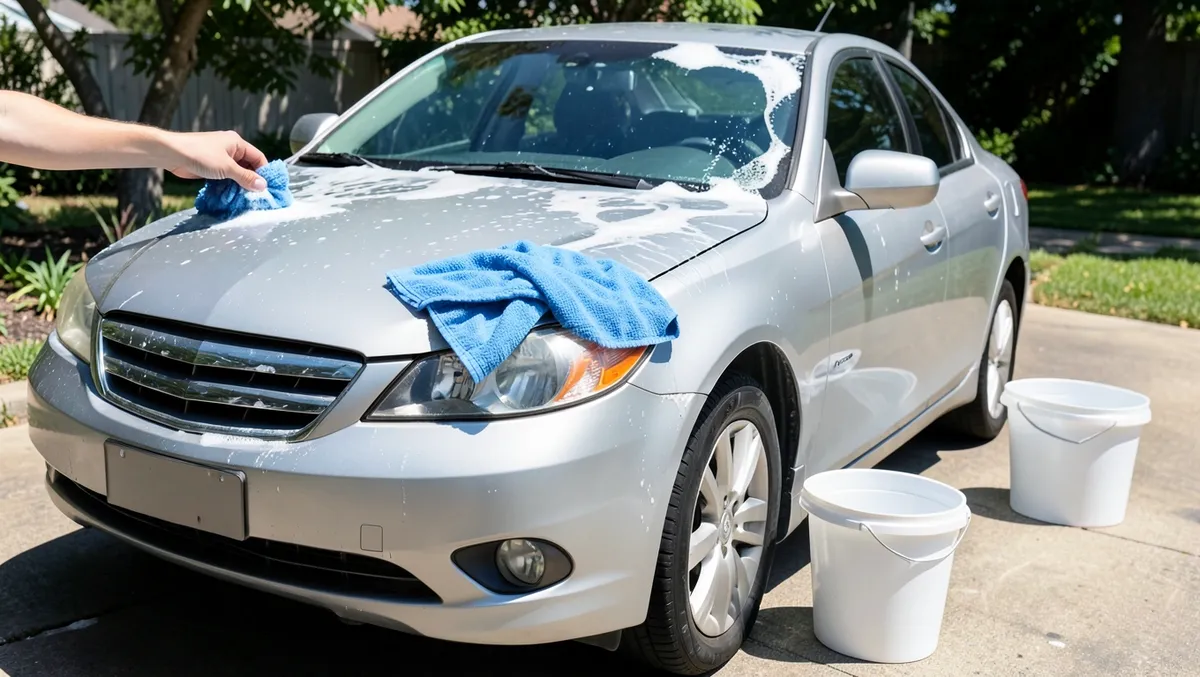
To wash a car properly, rinse off loose dirt first, then wash from top to bottom with the two-bucket method – one bucket for soapy water, one for rinsing your mitt – using a pH-balanced car shampoo, never dish soap. Rinse all the suds off, then dry immediately with a clean microfiber towel to stop water spots from forming.
Most people wash a car the same way they’d wash dishes: one sponge, one bucket, scrub until it looks clean. That’s exactly how swirl marks and fine scratches end up baked into the paint. The technique below is the same method detailers use – it takes about 20–30 minutes and needs nothing you can’t buy at any auto parts store.
Quick Answer
Rinse the car first, wash top-to-bottom with the two-bucket method and a pH-balanced car shampoo, rinse the soap off completely, then dry right away with a microfiber towel. Never wash a hot car in direct sun – the soap dries before you can rinse it, leaving spots and streaks.
What You Need Before You Start
Complete Two-Bucket Wash Kit
 |
Chemical Guys Two-Bucket Car Wash Kit – $89.20 Everything the two-bucket method below calls for arrives in one box: two buckets, a grit guard-style dirt trap, wash mitt, drying towels, and pH-balanced soap.
|
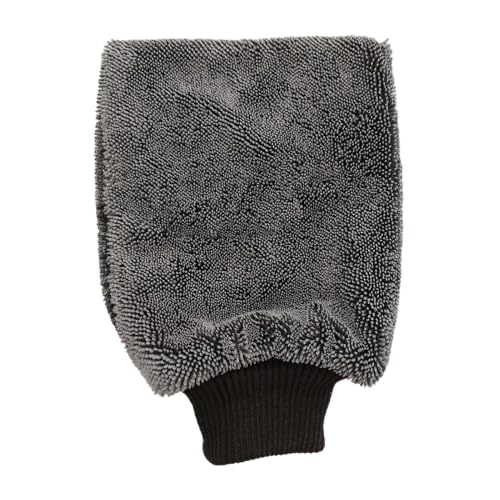
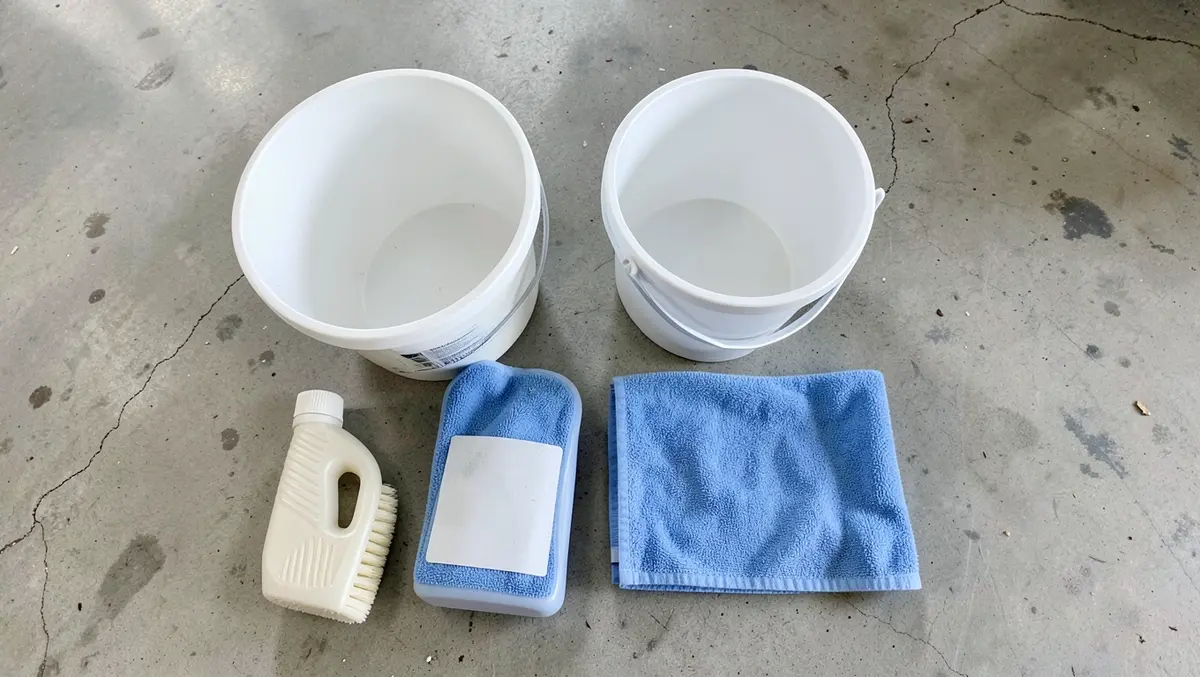
A soft microfiber wash mitt holds far more suds than a sponge and traps grit inside its fibers instead of dragging it across the paint – that’s the single biggest upgrade you can make over a kitchen sponge. You’ll also want two buckets (one for soapy water, one for rinsing the mitt), a pH-balanced car shampoo, a soft-bristle wheel brush, and at least one large microfiber drying towel. Skip dish soap and dedicated household cleaners – they strip wax and leave the clear coat exposed.
How to Wash a Car Properly: Step-by-Step
- Park in the shade and let the car cool down. Washing a hot car in direct sun causes water and soap to evaporate before you can rinse it off, leaving mineral spots and soap streaks baked into the paint.
- Rinse the entire car with a hose first. Work from the roof down. This knocks loose dust, pollen, and grit off the surface before a mitt ever touches the paint – skipping this step is what causes most wash-induced scratches.
- Fill your two buckets – one with car shampoo and water, one with plain rinse water. Dunk the mitt in the rinse bucket every time before reloading it with soap, so dirt stays out of the soap bucket.
- Wash top to bottom in straight, overlapping lines. Start at the roof and work down to the rocker panels and bumpers last, since that’s where the heaviest grime collects. Never scrub in circles, and never let the mitt sit on the ground.
- Rinse all the soap off with a strong, direct stream before it has a chance to dry, working top to bottom again.
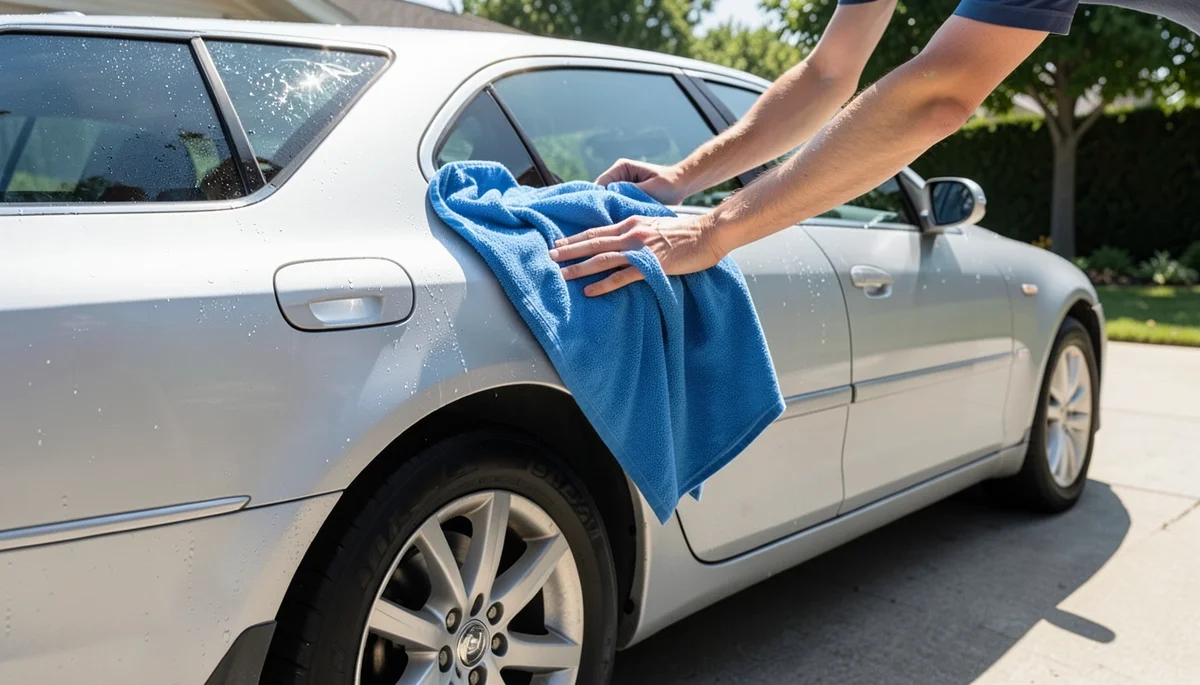
- Dry immediately with a clean microfiber towel, starting at the roof. See the drying section below for the technique that actually prevents water spots.
How to Clean Wheels and Tires
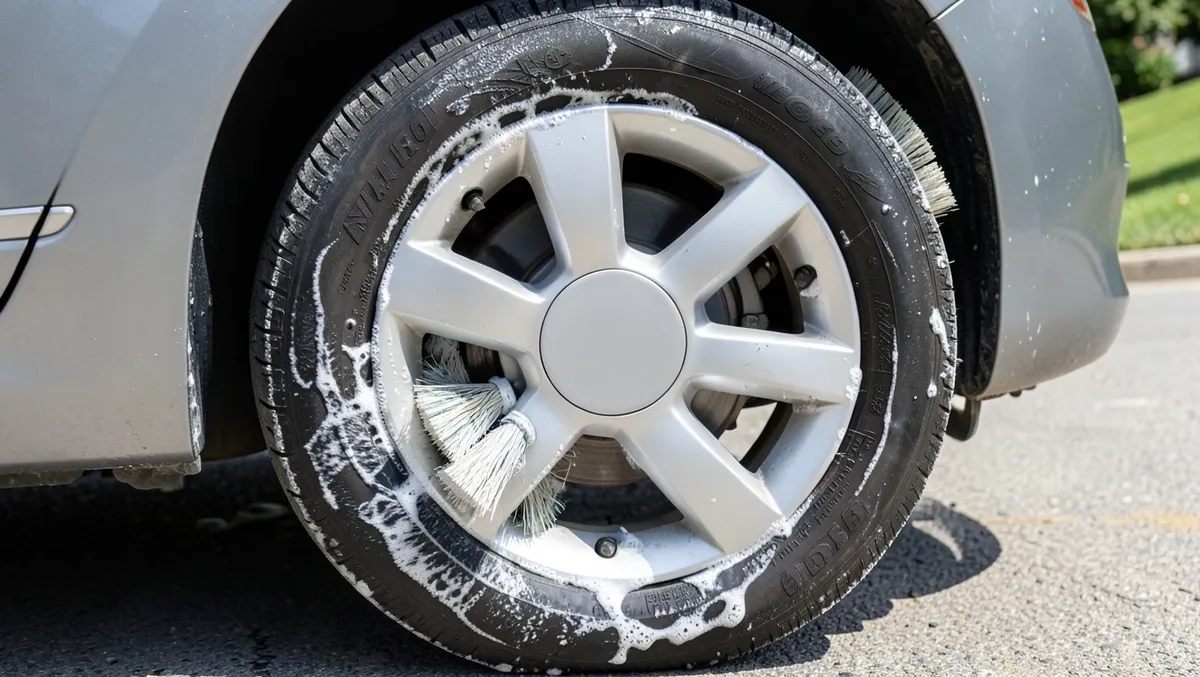
Wheels carry brake dust and road grime that’s far dirtier than anything on the body panels, so clean them first, with their own bucket and brush – never the same mitt or bucket you use on the paint. Spray on a wheel cleaner safe for your wheel finish, let it sit for the time listed on the bottle, then scrub with a soft-bristle brush, working into the spokes and behind the barrel. Rinse thoroughly before the cleaner dries.
For tires, a stiffer brush and plain soap and water usually cuts through built-up grime. Keeping tire pressure at the right level also helps tires wear evenly and last longer, which is worth checking while you’re already down there with a brush in hand.
How to Dry a Car Without Water Spots
Water spots aren’t just water – they’re the minerals left behind once the water itself evaporates, and they can etch into the clear coat if they sit in the sun for too long. A large, clean microfiber drying towel (or a dedicated waffle-weave chamois) absorbs far more water per pass than an old bath towel, which means fewer swipes across the paint and less risk of dragging grit. Start at the roof, lay the towel flat and drag it rather than scrubbing, and wring it out often. Finish with glass and mirrors last, since they show streaks the most.
Should You Wax After Washing?
A wash by itself doesn’t protect the paint – it just removes what’s already on it. A coat of wax or sealant every few months adds a sacrificial layer that makes the next wash easier and helps water bead and roll off instead of sitting and spotting. If the paint needs more attention than a wash and wax can give it, our full guide on detailing a car like a pro walks through the deeper steps.
Common Car Washing Mistakes to Avoid
- Using dish soap or dedicated household cleaners. They’re formulated to strip grease and wax alike, leaving the clear coat unprotected. Stick with a soap made for cars – see our full breakdown of what soap to use on a car for options.
- Washing with one bucket. Without a separate rinse bucket, every pass loads the mitt back up with the grit it just picked up.
- Washing in direct sun or on a hot hood. Soap and water flash-dry before you can rinse, leaving spots and streaks.
- Spraying a pressure washer directly at seals, badges, or trim. High pressure can force water past weatherstripping and lift edges of decals and wraps. If you’re using a pressure washer, check what PSI is actually safe for washing a car before you start.
- Letting soap or water air-dry. This is the most common cause of water spots, and the easiest to avoid – just dry with a towel right after rinsing.
If you’re not sure how often this whole process needs to happen, our guide on how often you should wash your car breaks down a realistic schedule by climate and driving conditions. And if your driveway isn’t an option, here’s how to wash a car on grass safely without runoff pooling around the tires.
Frequently Asked Questions
How Do You Wash Your Car Correctly?
Rinse the car first to remove loose dirt, then wash top to bottom using the two-bucket method with a car-specific soap and a microfiber mitt. Rinse thoroughly to avoid soap residue, then dry immediately with a microfiber towel to prevent water spots. Apply wax every few months for a protective shine.
What Is the Best Way to Clean a Car?
Wash using a pH-balanced car shampoo and a microfiber mitt with the two-bucket method, rinse thoroughly, then dry with a clean microfiber towel. Clean the interior separately with a vacuum and cleaners suited to each surface. Regular washing, roughly every one to two weeks, keeps the paint looking new and prevents contaminants from bonding.
What Is the Best Thing to Wash a Car With?
Use a pH-balanced car wash soap and a microfiber mitt for the best results. Avoid dish soap, since it strips wax and can dry out rubber seals over time. A dedicated car wash mitt helps prevent scratches that a sponge is more likely to cause.
Can You Wash a Car With a Microfiber Cloth Instead of a Mitt?
Yes. A large, clean microfiber cloth works fine for washing as long as it’s kept saturated with soapy water and rinsed often in a separate bucket – the goal either way is keeping grit suspended in the fibers instead of dragged across the paint. A dedicated mitt just holds more suds and is easier to grip.
How Can I Wash My Car by Myself at Home?
Gather a car shampoo, mitt, two buckets, a hose brush, and a microfiber towel. Rinse the car, wash top to bottom with the two-bucket method, rinse the soap off completely, then dry right away with the towel. Clean the wheels last with a separate brush and bucket so brake dust never touches the paint.
Conclusion
Washing a car properly comes down to a handful of habits: rinse first, keep grit out of your wash mitt with two buckets, work top to bottom, and dry before anything has a chance to spot. None of it takes special skill or expensive gear – it just takes doing the steps in the right order.
Products related to this article
Sponsored / affiliate links. As an Amazon Associate I earn from qualifying purchases. I may earn additional commission from eligible campaigns.