Is It Normal For Cars To Vibrate? Proven Guide
Yes, a little bit of vibration is normal for cars, especially at idle. However, noticeable or worsening vibrations can signal real issues with your engine, tires, brakes, or suspension that need attention. This guide helps you understand what’s normal and when to worry.
It’s a common feeling: you’re sitting at a stoplight, and your car gives an unusual shimmy or shake. You might wonder, “Is it normal for cars to vibrate?” This can be a puzzling and sometimes unnerving experience for any driver. Many of us aren’t mechanics, and deciphering strange car behaviors can feel daunting. But don’t worry! Understanding why your car might be vibrating is the first step to peace of mind. This guide will walk you through the common causes of vibrations in your car, whether you’re driving or just idling, and help you figure out if it’s something you need to get checked out. We’ll break down the mystery step-by-step, so you feel more confident about your car’s health.
When a Little Vibration is Okay
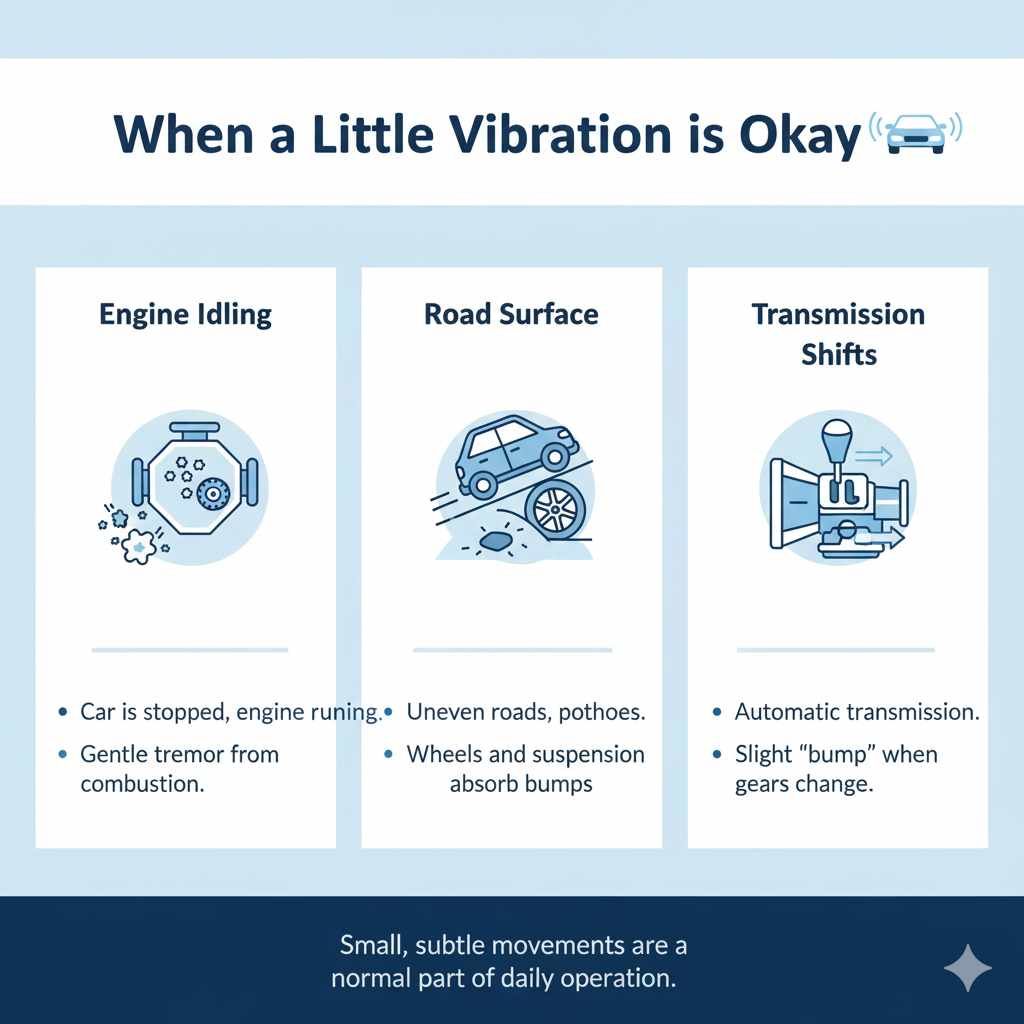
Let’s start with the good news: a small amount of vibration is perfectly normal for most vehicles. Think of it like a human body – there are times it makes noises or feels a bit “off” without being seriously sick. Your car is a complex machine with many moving parts, and some subtle movements are just part of its daily operation.
Engine Idling: When your engine is running but your car isn’t moving (like at a red light), you might feel a slight hum or a gentle tremor. This is often caused by the natural combustion process within the engine. Tiny explosions are happening thousands of times a minute to keep your car running, and these create small vibrations. Modern cars are engineered to minimize this, but some is usually unavoidable.
Road Surface: Driving over uneven surfaces, potholes, or even just slightly bumpy roads can cause your car to vibrate. This is a direct response to what the wheels and suspension are doing to keep the ride as smooth as possible. A bit of jostling here is completely expected.
Transmission Shifts: While not exactly a vibration, you might feel a very slight “bump” or looseness as your automatic transmission shifts gears. This is usually quite subtle and designed to be smooth. If it’s harsh or clunky, that’s a different story.
When Vibrations Signal a Problem
Now, let’s discuss when those vibrations should make you pay closer attention. If the vibration is strong, consistent, worsening, or appears in specific driving situations, it’s a sign that something needs investigating. Ignoring these signs can lead to more significant damage or safety issues down the road.
Here are the most common scenarios and their likely culprits:
Vibrations You Feel While Driving
If your car shakes or shimmies when you’re moving, it’s often linked to issues with the wheels, tires, or drivetrain.
1. Tires and Wheels
This is one of the most frequent causes of vibrations felt while driving. If the shake is noticeable around a certain speed, your tires or wheels might be the problem.
- Unbalanced Tires: Over time, the weight distribution on your tires can become uneven. This is especially true after a tire repair or if you’ve hit a curb. When unbalanced, the heavier spots on the tire will cause vibration as they rotate. This vibration is often felt in the steering wheel and at speeds above 40-50 mph.
- Tire Damage or Wear: Bulges, flat spots, or uneven wear patterns on your tires can create an out-of-round condition, leading to a consistent vibration. Sometimes, tires can develop a “flat spot” if a car sits for too long or after a hard skid.
- Bent Wheel Rim: Hitting a pothole or curb can bend a wheel rim. Even a slight bend can cause a noticeable wobble and vibration as the wheel spins.
- Loose Lug Nuts: This is a critical safety issue! If the nuts holding your wheel onto the car become loose, the wheel can wobble, causing a loud vibration and potentially coming off. Always check lug nuts after a tire change and periodically.
2. Brakes
Your braking system can also cause vibrations, particularly when you apply the brakes.
- Warped Brake Rotors: Brake rotors are the metal discs that your brake pads squeeze to slow down your car. Over time, especially with heavy braking or overheating, these rotors can warp (become uneven). When this happens, you’ll often feel a pulsing vibration in the brake pedal and sometimes the steering wheel when you brake.
- Sticking Brake Caliper: A caliper is the part that houses the brake pads. If a caliper sticks, it can cause constant friction on the rotor, leading to overheating and vibrations, and sometimes a pulling sensation when driving.
3. Wheel Bearings
Wheel bearings are crucial for allowing your wheels to spin freely. When they wear out, they can cause a humming or grinding noise that often gets louder with speed, and can manifest as vibrations.
You can sometimes diagnose a bad wheel bearing by feeling for play in the wheel when the car is jacked up, or by listening for the noise to change when you turn the steering wheel.
4. Drivetrain Issues (Axles, CV Joints, Driveshaft)
The drivetrain is the system that sends power from the engine to the wheels. Problems here can cause vibrations, especially when accelerating or turning.
- Worn CV Joints: Constant Velocity (CV) joints are part of the axle shafts that allow the wheels to turn and absorb suspension movement. When their protective boots tear, grease can escape, and dirt can get in, causing wear. A worn CV joint often causes a clicking noise when turning, and can lead to vibrations, especially during acceleration.
- Damaged Axle Shaft: A bent or damaged axle shaft can cause a severe vibration.
- U-Joints (Universal Joints): In rear-wheel-drive or all-wheel-drive vehicles, U-joints connect the driveshaft segments. Worn U-joints can cause vibrations, particularly when accelerating from a stop or at certain speeds.
5. Suspension Components
The parts that connect your wheels to the car’s body and absorb bumps are the suspension. Worn or damaged suspension parts can lead to clunks and vibrations.
- Worn Ball Joints or Tie Rod Ends: These are critical steering and suspension components. If they wear out, they can cause looseness, vibrations, and steering issues.
- Damaged Control Arms or Bushings: These parts manage the movement of your suspension. If they are bent or their rubber bushings deteriorate, it can lead to vibrations and poor handling.
Vibrations You Feel When the Car is Idling
If your car vibrates noticeably when you’re stopped, it’s often related to the engine’s performance or exhaust system.
1. Engine Misfires
An engine misfire means one or more of your engine’s cylinders aren’t firing correctly. This can be caused by faulty spark plugs, ignition coils, fuel injectors, or vacuum leaks. A misfire will disrupt the smooth rhythm of the engine, causing it to run rough and vibrate. You might also notice a loss of power or the “Check Engine” light coming on.
2. Engine Mounts
Engine mounts are designed to hold your engine in place and, crucially, to absorb the vibrations produced by the engine. They are typically made of rubber and metal. Over time, the rubber can degrade or break, allowing more engine vibration to transfer into the car’s chassis. This often results in a more pronounced vibration when the car is idling, especially when in gear.
3. Transmission Mounts
Similar to engine mounts, transmission mounts secure the transmission and absorb its vibrations. If these mounts fail, you can experience increased vibration, especially when the transmission is under load (like when in gear).
4. Exhaust System Leaks or Damage
Your exhaust system carries harmful gases away from the engine. If there’s a leak (e.g., a cracked pipe or manifold) or a loose component (like a catalytic converter rattling), it can create buzzing or vibrating noises, especially at idle. Sometimes, the vibrations from a damaged exhaust can be felt throughout the car.
5. Idle Air Control (IAC) Valve or Throttle Body Issues
These components help regulate the engine’s idle speed. If they become dirty or malfunction, the engine might struggle to maintain a steady idle, leading to rough idling and vibration.
6. Vacuum Leaks
A vacuum leak means air is getting into the engine system somewhere it shouldn’t be. This disrupts the air-fuel mixture, causing the engine to run poorly and vibrate at idle.
For more on engine diagnostics, the National Institute for Automotive Service Excellence (ASE) offers fantastic resources for understanding vehicle systems: ASE Vehicle Systems.
Vibrations During Acceleration or Deceleration
These vibrations are often linked to the engine’s power delivery or braking systems during these specific actions.
1. Engine Performance
As mentioned with misfires, if your engine isn’t running smoothly, you’ll feel it during acceleration. Issues with fuel delivery, ignition, or air intake can all cause hesitation and vibration.
2. Transmission Issues
Problems with how your transmission engages or shifts gears can cause vibrations, especially as you speed up or slow down. This could be low transmission fluid, worn clutches, or torque converter issues.
3. Worn Drivetrain Components
U-joints, CV joints, and driveshafts are under stress during acceleration and deceleration. If they are worn, they are more likely to cause noticeable vibrations during these times.
4. Brake System (Less Common Here)
While more common during braking, severely warped rotors or a caliper issue could sometimes cause a drag that feels like vibration during deceleration, though this is less typical.
Troubleshooting Vibrations: A Step-by-Step Approach
If you’re experiencing vibrations, don’t panic! Here’s a simple way to start figuring out what might be going on:
Step 1: Pinpoint When the Vibration Occurs
The first and most important step is to note the exact conditions under which you feel the vibration. This is your biggest clue.
- At what speed does it happen? (e.g., only above 50 mph, only at 30 mph, all the time)
- Does it happen only when idling?
- Does it happen only when you are braking?
- Does it happen only when you accelerate?
- Does it happen when you turn?
- Where do you feel the vibration? (e.g., steering wheel, seat, pedals, the whole car)
Step 2: Visual Inspection (Safety First!)
If you feel comfortable and have a safe place to do so, a quick visual check can sometimes reveal obvious issues. Ensure your car is parked on a level surface, the parking brake is engaged, and never get under a car that isn’t properly supported by jack stands.
- Tires: Look for any obvious damage like cuts, bulges, or objects stuck in the tread. Check if they look evenly inflated.
- Wheels: See if any lug nuts are obviously missing or loose (again, only if you feel capable of checking this safely).
- Under the Car (Visual Only): Can you see any exhaust pipes hanging loose or any obvious fluid leaks under the engine or transmission?
Step 3: Simple at-Home Checks (If Applicable)
Some checks are easy and can be done without specialized tools.
- Tire Pressure: Make sure all your tires are inflated to the recommended pressure found on the sticker on your driver’s side doorjamb or in your owner’s manual. An underinflated tire can vibrate.
- Check the “Check Engine” Light: If your “Check Engine” light is on, this is a direct indicator of an engine issue that might cause vibrations. You can often get codes read for free at auto parts stores.
Step 4: Recognizing When to Call a Professional
While some issues are simple, many vibrations point to more complex problems that are best left to a qualified mechanic. If the vibration is severe, is accompanied by strange noises, affects your steering or braking, or if you’re unsure what’s causing it, it’s time to get expert help.
Continuing to drive with certain types of vibrations can be dangerous. For instance, vibration from loose lug nuts or a failing suspension component can lead to accidents. The National Highway Traffic Safety Administration (NHTSA) provides valuable safety information for vehicle owners: NHTSA Official Website.
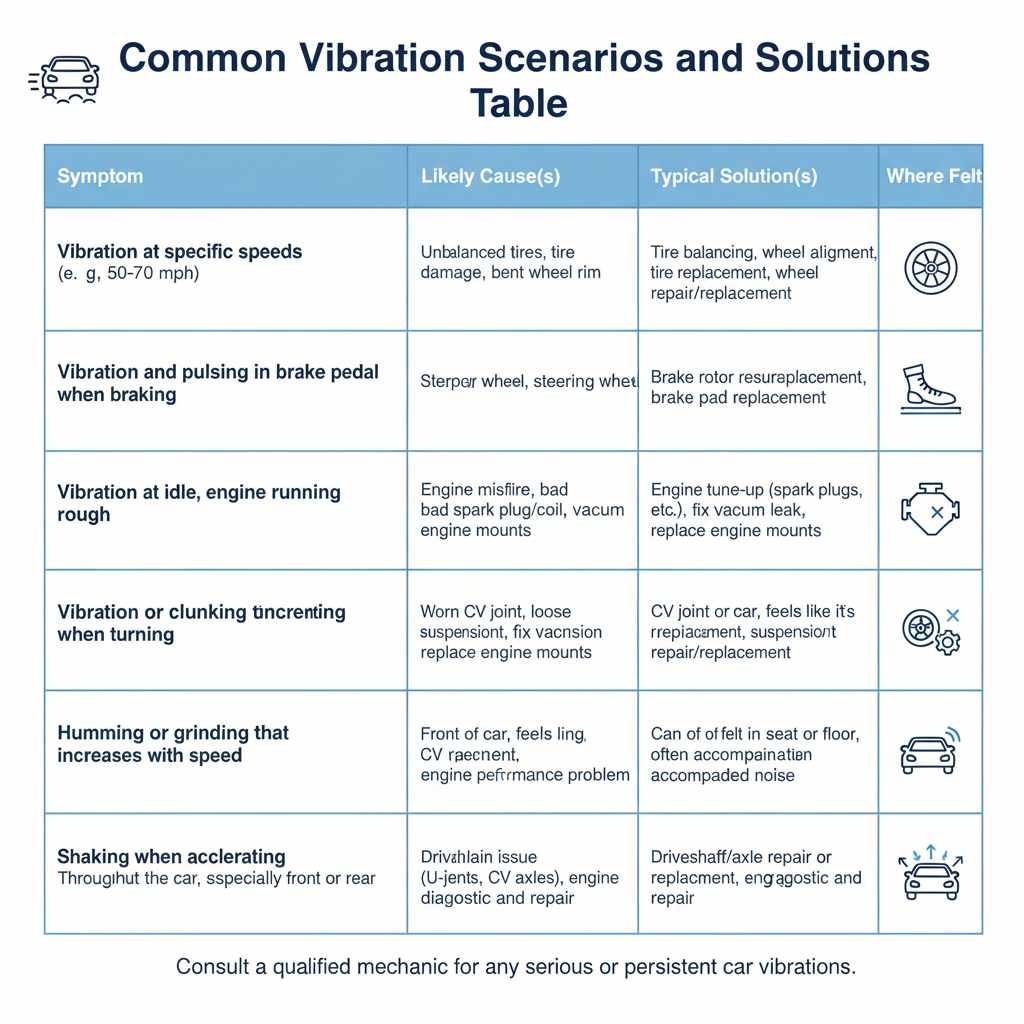
Common Vibration Scenarios and Solutions Table
Here’s a quick reference table to help you match symptoms to potential causes:
| Symptom | Likely Cause(s) | Typical Solution(s) | Where Felt |
|---|---|---|---|
| Vibration at specific speeds (e.g., 50-70 mph) | Unbalanced tires, tire damage, bent wheel rim | Tire balancing, wheel alignment, tire replacement, wheel repair/replacement | Steering wheel, sometimes seat |
| Vibration and pulsing in brake pedal when braking | Warped brake rotors | Brake rotor resurfacing or replacement, brake pad replacement | Brake pedal, steering wheel |
| Vibration at idle, engine running rough | Engine misfire, bad spark plug/coil, vacuum leak, engine mounts | Engine tune-up (spark plugs, etc.), fix vacuum leak, replace engine mounts | Whole car, steering wheel, seat |
| Vibration or clunking when turning | Worn CV joint, loose suspension | CV joint boot repair or replacement, suspension component repair/replacement | Front of car, feels like it’s coming from the wheels |
| Humming or grinding that increases with speed | Worn wheel bearing | Wheel bearing replacement | Can be felt in seat or floor, often accompanied by noise |
| Shaking when accelerating | Drivetrain issue (U-joints, CV axles), engine performance problem | Driveshaft/axle repair or replacement, engine diagnostic and repair | Throughout the car, especially the front or rear |
Frequently Asked Questions (FAQ)
Is it bad if my car vibrates when I turn?
A slight vibration or tightness in the steering wheel when turning very slowly might be normal power steering operation. However, a noticeable shaking, humming, or rattling that occurs when turning, especially at speed or is getting worse, is often a sign of a worn CV joint, damaged suspension components, or a failing wheel bearing. These should be checked by a mechanic.
Why does my car vibrate only when I brake?
This is a very common symptom and usually indicates warped brake rotors. When the flat surface of the rotor becomes uneven, the brake pads grab it in an inconsistent way, causing a juddering or vibrating sensation that you feel in the brake pedal and steering wheel. It can also sometimes be due to issues with the brake calipers.
Can tire pressure cause vibration?
Yes, absolutely. If your tires are significantly underinflated or overinflated, it can affect how they make contact with the road and cause them to wear unevenly or even vibrate. Always make sure your tires are inflated to the recommended pressure listed on your vehicle’s doorjamb sticker.
My car vibrates when idling. Should I be worried?
A very mild, gentle vibration at idle is often considered normal for many cars, especially those with manual transmissions or certain engine types. However, if the vibration is strong, shakes the steering wheel, causes the gear shifter to rattle excessively, or feels like the engine is struggling, it’s a cause for concern. It could indicate engine misfires, worn engine mounts, or exhaust issues.
What speeds are most likely to reveal tire or wheel balance issues?
Tire and wheel balance issues are most commonly felt between 40 to 70 miles per hour (mph). As your speed increases beyond this range, the vibrations might lessen or change character. If you feel a vibration predominantly in the steering wheel at these speeds, it’s highly likely to be related to your front tires or wheels.