Can You Keep a Totaled Car After an Insurance Payout?
Yes, you can often keep a totaled car after an insurance payout if the insurer allows a buyback and the net settlement still works after salvage value, title branding, and repairs. Get the math wrong, and you can lose cash, face a branded title, and pay more later for insurance or financing. This guide explains how buyback works, how to compare the numbers, and when keeping the car is the smarter move.
What it means when a car is totaled
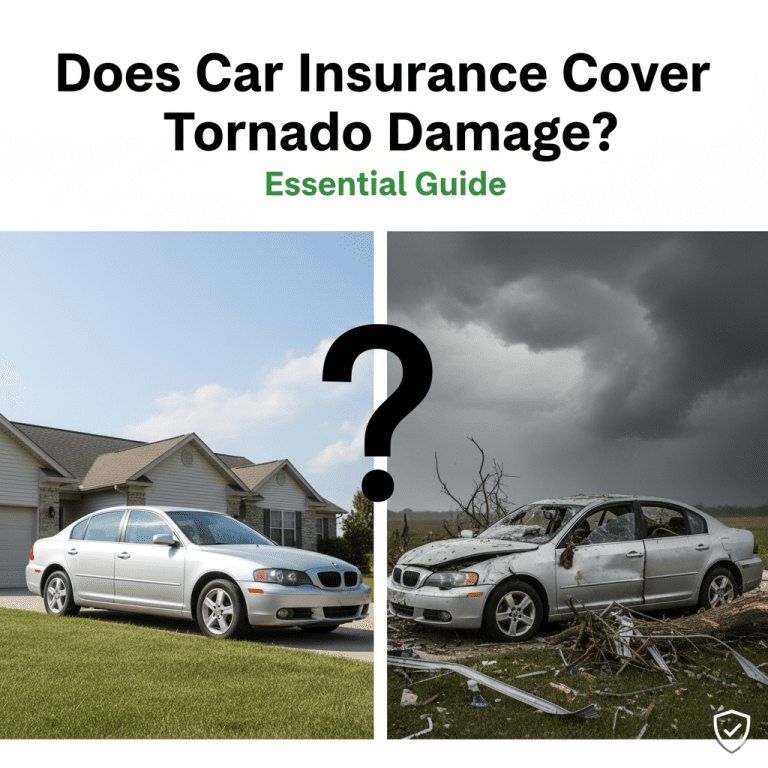
A car is totaled when the insurer decides the repair bill is too close to, or greater than, the vehicle’s actual cash value. Actual cash value, or ACV, is the pre-loss market value basis for the payout, and insurers commonly pay ACV minus the deductible in a first-party claim.
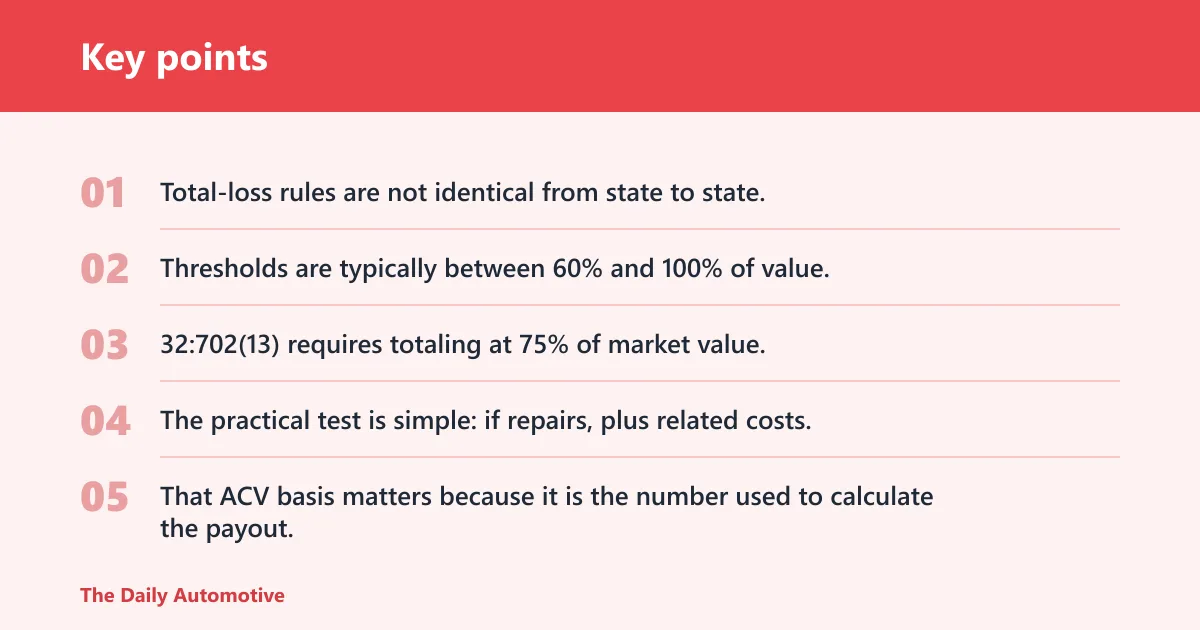
Total-loss rules are not identical from state to state. Thresholds are typically between 60% and 100% of value, and that range changes who gets to declare the vehicle a total loss. Louisiana R.S. 32:702(13) requires totaling at 75% of market value, while Oklahoma uses the nation’s lowest threshold at 60%.
How insurers decide a total loss
The practical test is simple: if repairs, plus related costs, push the claim near the car’s ACV, the insurer may stop the repair path and price the car as a total loss instead. That ACV basis matters because it is the number used to calculate the payout, not replacement cost value.
Say your sedan has a pre-loss market value of $18,000 and damage from a hard rear-end hit. If the repair estimate and related costs clear the state threshold, the insurer may total it even if the car still looks repairable at a glance. The decision is financial, not sentimental.
Can you keep a totaled car?
Most insurers let you keep a totaled vehicle in exchange for a smaller settlement. That is called owner retention or retaining salvage. The insurer deducts salvage value from the settlement if you keep the car, and the remaining check is what you actually receive, subject to any deductible in a first-party claim.
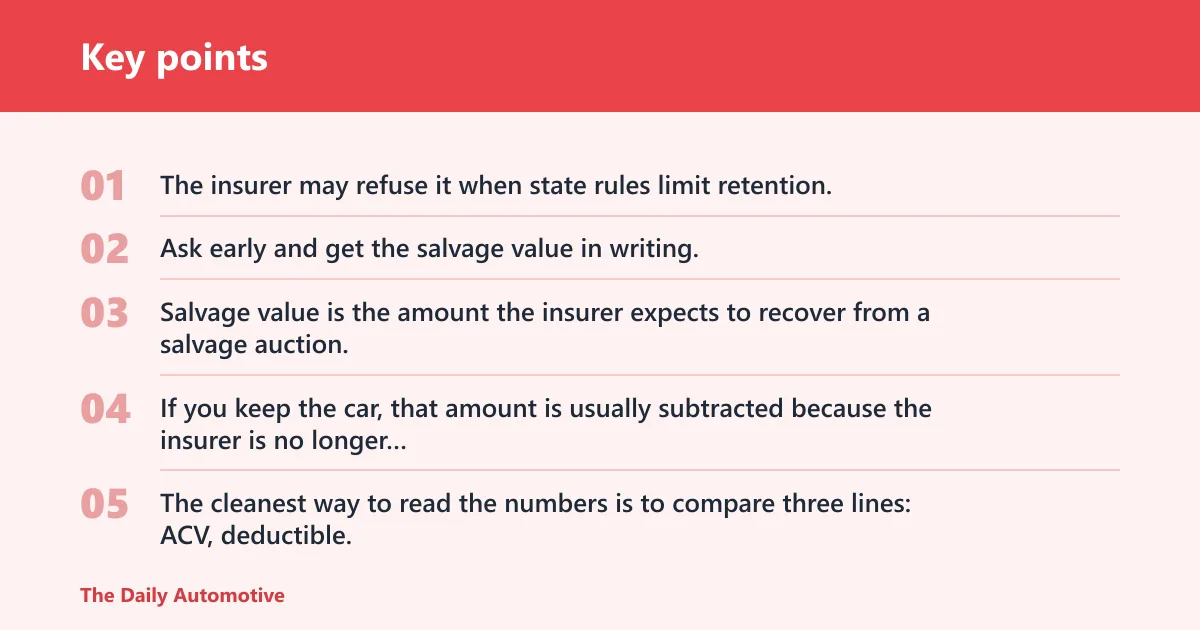
Retention is not automatic. The insurer may refuse it when state rules limit retention, when the vehicle has flood or fire damage, or when the title path leads to a non-repairable or junk status instead of a standard salvage brand. Ask early and get the salvage value in writing.
How salvage value reduces the settlement
Salvage value is the amount the insurer expects to recover from a salvage auction. If you keep the car, that amount is usually subtracted because the insurer is no longer taking the wreck and selling it for parts or scrap.
The cleanest way to read the numbers is to compare three lines: ACV, deductible, and salvage deduction. A sample payout shows ACV of $18,000 and salvage value of $3,200. The example settlement if you keep the vehicle is $14,300.
When an insurer may refuse retention
Some cars are poor candidates for buyback. Flood and fire claims are the biggest problem because some states limit retention for those losses and may issue a non-repairable or junk title instead of allowing a road return path.
Picture a pickup with severe flood exposure and a mold-heavy cabin. Even if the body panels are fixable, the title path may block normal registration. In that case, keeping the vehicle can turn into an expensive parts-only decision, not a road-use decision.
Keep the payout example
A total-loss payout starts with ACV, then subtracts the deductible in a first-party claim. If you keep the car, the insurer also subtracts salvage value. That is why a buyback check is smaller than a standard total-loss check, and why the final number can surprise owners who focus only on the pre-loss value.
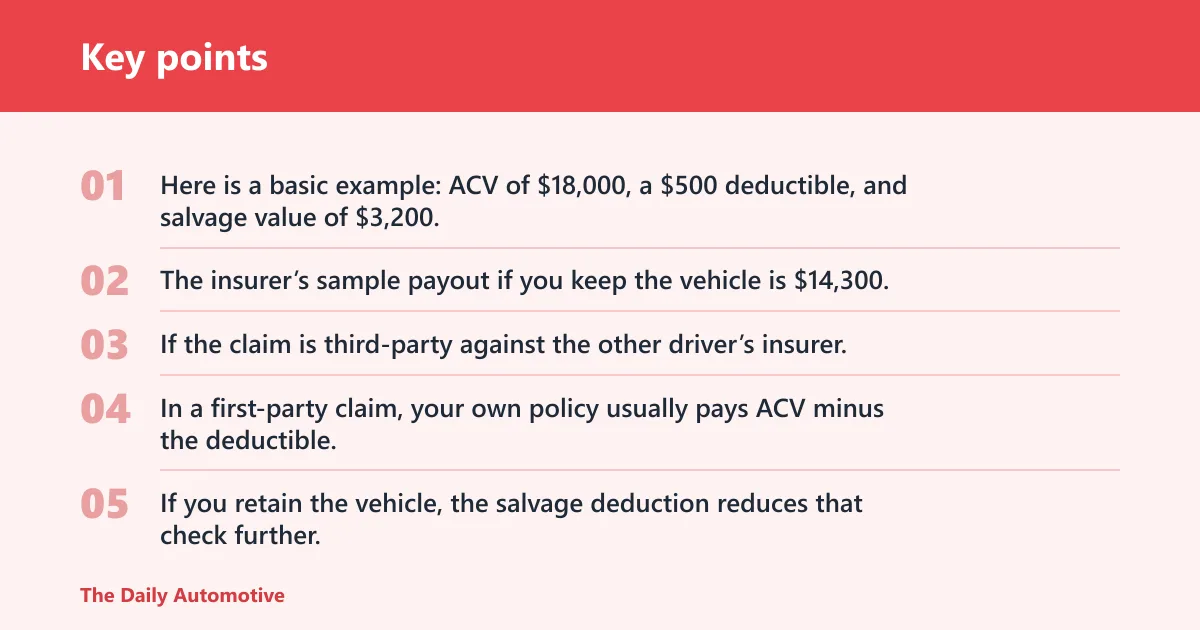
Here is a basic example: ACV of $18,000, a $500 deductible, and salvage value of $3,200. The insurer’s sample payout if you keep the vehicle is $14,300. If the claim is third-party against the other driver’s insurer, the deductible treatment may differ because the claim is not paid under your own collision or comprehensive coverage.
| Claim scenario | ACV | Deductible | Salvage deduction | Estimated repair-to-roadworthy costs | Likely title outcome | Usually rational to keep? |
|---|---|---|---|---|---|---|
| Cosmetic damage | $12,500 | $500 | $1,600 | $2,800 | Salvage title, then rebuilt title after inspection | Yes, if the repair total stays well below post-buyback value |
| High-mileage commuter | $5,800 | $500 | $900 | $3,100 | Salvage title, then rebuilt title after inspection | Sometimes, if the car is mechanically sound and transport needs are urgent |
| Financed vehicle with negative equity | $16,000 | $1,000 | $3,000 | $5,500 | Salvage title, lender approval required before retention | Usually no, unless the lien is satisfied and repair costs are low |
| Flood or fire damage | $9,000 | $500 | $2,000 | $7,500 | Non-repairable or junk title in some states | No, because road use and insurance prospects are often poor |
| Classic or modified vehicle | $28,000 | $500 | $4,500 | $6,000 | Salvage title, then rebuilt title after inspection | Often yes, if the modification or collector value exceeds the buyback cost |
What changes in first-party and third-party claims
In a first-party claim, your own policy usually pays ACV minus the deductible. If you retain the vehicle, the salvage deduction reduces that check further. In a third-party claim, the other driver’s insurer may still total the car, but the payout mechanics and any deductible reimbursement can differ from your own policy.
A common first-timer mistake is assuming the other insurer must mirror your own policy language. It often does not. Get the settlement breakdown in writing before you agree to keep the vehicle, especially if a deductible or lien payoff is involved.
What happens to the title and repairs?
Most states require a totaled vehicle to be titled as salvage. A salvage vehicle generally cannot be registered or driven on public roads until inspected. If the car is repaired and passes state inspection, the title can move to rebuilt in some states. That is a different stage with different limits.
Salvage title branding matters because it follows the car. A rebuilt title can restore some road use, but it usually lowers resale value and may limit insurance coverage. Some insurers will only offer liability coverage on a rebuilt vehicle, and many buyers will discount it heavily later.
Typical title and inspection sequence
- Claim is settled as a total loss.
- Insurer calculates ACV and deducts the salvage value if you keep the car.
- State brands the vehicle as salvage, or as non-repairable or junk in some cases.
- You repair the car to roadworthy condition.
- You complete the state inspection and any paperwork required for a rebuilt title.
- You register the vehicle only after the title status allows it.
Why road use and resale get harder
Once a title is branded, the market changes. Buyers price in the brand, lenders may be cautious, and insurers may restrict coverage. That does not mean the car is worthless, but it does mean the buyback only works if the repaired value and your intended use still beat the extra costs.
Can you keep a totaled car with a loan?
Usually, no one should assume a financed car is automatically eligible for retention. If a vehicle has a loan or lease, the lien usually needs to be satisfied before retention. That matters because the loan balance can exceed the settlement, especially after the salvage deduction and any deductible.
If the payout is too small to cover the payoff, gap insurance may help with the shortfall between payoff and ACV. It does not create extra value for the buyback; it only addresses the loan gap after the claim settles.
Lienholder approval and payoff order
The lender is paid before the owner sees any leftover money, unless the claim and payoff are structured differently by the insurer and lender. If the settlement does not cover the balance, the owner can still owe the difference even after the car is declared a total loss.
That is why retention on a loaned car can be a trap. Suppose the ACV is about $16,000, the loan payoff is about $19,000, and the salvage deduction cuts the settlement further. The owner may still owe money after the insurer closes the claim, and the car may still need repair, inspection, and registration costs.
Lease vehicles and negative equity
Leased vehicles are even stricter. The lessor controls the title interest, so retention often needs direct approval, and the lease contract may prohibit a buyback path entirely. Negative equity raises the risk because the payout may not fully satisfy the lienholder even before repairs begin.
When keeping the car makes sense
Retention can be rational when the repair-to-roadworthy cost is modest relative to the reduced settlement and the car has a useful life left. That is most common with cosmetic damage, a high-mileage commuter that still runs well, or a classic or modified vehicle whose value is not captured well by standard market data.
In those cases, the real question is not “Is it totaled?” It is “After the salvage deduction, inspection fees, towing, storage, and repairs, do you still come out ahead?” If the answer is yes, keeping the car can be the better numbers play.
Common cases that can pencil out
Cosmetic damage can work if the frame, airbags, and core systems are intact and the roadworthy repair bill stays low. High-mileage commuters can also make sense when the ACV is low but the owner needs cheap transportation and can absorb a branded title later.
Classic and modified vehicles are different because the market value may depend on parts, trim, or build quality that a standard valuation misses. In that situation, the insurer’s ACV may look low compared with the car’s real use value to the owner.
When keeping the car is usually a bad idea
Flood and fire damage are the clearest no-go cases. Some states limit retention for those losses and may issue a non-repairable or junk title, which can block normal road use entirely. Even when repair is possible, hidden electrical, corrosion, and smell issues can turn the car into a money sink.
Buyback also carries hidden costs. Tow charges, storage fees, inspection fees, repairs needed to pass inspection, registration work, and tighter insurance choices all eat into the apparent bargain. If those costs erase the payout difference, the retention decision stops making sense fast.
Hidden post-buyback costs to price
- Tow and storage charges before release of the vehicle
- Inspection fees for salvage-to-rebuilt conversion
- Repairs needed to pass lights, brakes, emissions, or safety checks
- Title and registration fees after the brand changes
- Higher insurance premiums or narrower coverage options
How to ask your adjuster for retention
Tell the adjuster early that you want the retention option. Ask for the salvage value in writing, the ACV calculation, the deductible treatment, and the exact settlement if you keep the car. Do not agree in principle until you can compare the net check against the repair, inspection, and title costs.
Before you sign, confirm whether the claim is first-party or third-party, whether the lender must approve the retention, and whether the car will be branded salvage or treated as non-repairable. If any of those answers change the math, stop and recalculate.
What to request before you agree
- The ACV figure used in the settlement.
- The salvage value deducted if you keep the car.
- Whether the deductible is taken from the payout.
- Any lender or lease approval needed before release.
- The title brand the state is likely to issue.
- Any inspection, towing, or storage charges you must pay.
Frequently asked questions
Can you keep a totaled car after the insurance company pays you?
Yes, often you can, if the insurer offers owner retention and state rules allow it. The tradeoff is a smaller settlement because salvage value is deducted. That only makes sense if the reduced payout still leaves enough money to cover repairs, title work, and the future limits tied to a branded title.
How does salvage value affect a total loss payout?
Salvage value is subtracted from the settlement when you keep the vehicle. That lowers the check because the insurer is no longer recovering money by selling the wreck. In a first-party claim, the deductible is usually taken too, so the final number can drop quickly.
Can I keep my totaled car if it still has a loan?
Sometimes, but the lienholder usually has to be paid or approve the retention first. If the settlement does not cover the payoff, you may still owe the lender after the claim closes. Gap insurance can help with that shortfall, but it does not remove the need to satisfy the lien.
What is a salvage title if I keep my totaled car?
A salvage title is the brand most states use after a total loss. It usually means the car cannot be legally driven on public roads until it passes the required inspection and is retitled as rebuilt or a similar status. It also tends to lower resale value and narrow insurance options.
Can I drive a totaled car after the payout?
Usually not right away. A salvage vehicle generally cannot be registered or driven on public roads until it is inspected and retitled under state rules. If the car has flood, fire, or non-repairable damage, the road-use answer may be no even after repairs.
Will insurance cover a rebuilt totaled car later?
Sometimes, but coverage can be limited or more expensive. Some insurers will only offer liability coverage on a rebuilt vehicle, while others may decline full coverage or price it higher. Before you keep the car, ask how the title brand affects future underwriting.
How do I ask my adjuster to let me keep the car?
Say you want the owner-retention option and ask for the salvage value in writing. Also request the ACV, deductible treatment, and expected settlement if you keep the vehicle. Do that before you sign, because the numbers decide whether the buyback is rational or a bad trade.
Can I keep my car if the other driver’s insurance totals it?
Often yes, but the claim is third-party, so the payout rules may differ from your own policy. Ask the other insurer how salvage value, title branding, and any deductible reimbursement are handled. Do not assume the same settlement math applies just because the car was totaled in both cases.
Products related to this article
Sponsored / affiliate links. As an Amazon Associate I earn from qualifying purchases. I may earn additional commission from eligible campaigns.