Leather Cleaner for Cars Cost
Leather cleaner for cars is often priced at about $8 to $20 for a 16-ounce bottle. Cleaner-plus-conditioner kits are often priced at about $15 to $35. Cleaner-only is the better value when the seats are already sealed and only lightly soiled. Buy the wrong type, and you can pay for conditioner you do not need or spend more later fixing dried, stained, or cracked leather. This guide breaks down price by product type, seat condition, and where to buy.
Verdict

Leather cleaner is worth buying when your seats need targeted cleaning and you want less risk than using a general interior chemical. For most sealed car leather, cleaner-only products are the better buy. Kits make more sense when the leather looks dry or you plan to condition after cleaning.
The cheapest bottle is not always the best value. A spray that costs a few dollars less can need more product per seat, while a cleaner with the right finish compatibility can save you from residue, darkening, or extra cleanup on leather and vinyl interiors.
Pros and cons
- Pros: Better fit for finished leather than a harsher general cleaner.
- Pros: Often safe on leather and vinyl interiors when the label says so.
- Pros: Cleaner-only bottles keep the cost down if you already condition separately.
- Cons: Some bottles are small, so the price per ounce can be higher than it looks.
- Cons: Kits cost more upfront, even when you only need cleaning.
- Cons: Heavy dye transfer, ink, or deeply embedded grime may need more than a basic bottle.
Who it’s for
This suits drivers who want a safer cleaner for finished leather seats, leather upholstery, and many leather and vinyl interiors. It is less useful if the seats are only dusty, if the car’s interior is mostly plastic, or if the leather is badly cracked and likely needs repair instead of cleaning.
Leather cleaner cost comparison table
This table shows common buying options by format, size, and what the ownership cost usually looks like once you compare bottle price to full-interior use. The full-detail estimates assume a typical sedan or small SUV interior, not a large three-row vehicle.
| Buying option | Typical bottle size | Estimated cost per ounce | Estimated cost per full interior detail | Best fit |
|---|---|---|---|---|
| Spray cleaner, cleaner-only | 16 oz | $0.50 to $1.25 | $3 to $8 | Light to moderate soil on finished leather |
| Wipes | 25 to 50 wipes | About $0.60 to $1.50 per wipe-equivalent ounce | $6 to $15 | Quick touch-ups, spot cleaning, travel use |
| Gel or thicker cleaner | 8 to 16 oz | $0.75 to $1.75 | $4 to $10 | Vertical surfaces, stubborn grime, controlled application |
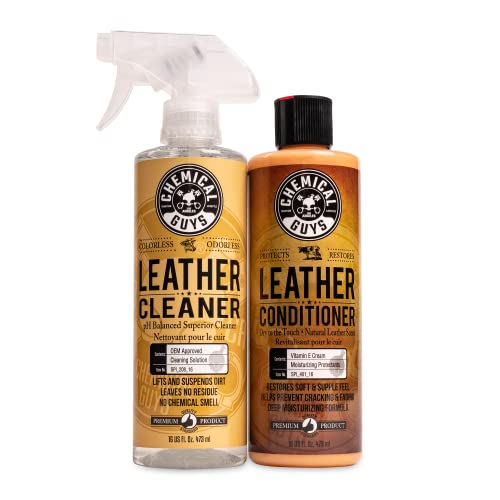
| Cleaner-plus-conditioner kit | Two bottles, often 16 oz each | $0.75 to $1.50 combined | $8 to $18 | Dryer leather, one-step purchase, regular upkeep |
Cleaner-only bottles keep the ownership cost low when the seats are already in decent shape. Kits cost more because you are buying two jobs at once: cleaning and conditioning. That is useful, but only if the leather actually needs both.
How much does leather cleaner for cars cost?
Most leather cleaner for cars costs about $8 to $20 for a standard 16-ounce bottle, with wipes, gels, and bundled kits priced differently. The real cost depends on how much you use per seat, whether the leather is heavily soiled, and whether the package includes conditioner you plan to use.
Price by format
Sprays are usually the lowest-cost format for routine cleaning. Wipes are convenient but often cost more per use, while gels tend to sit in the middle because they are easier to control on seams, bolsters, and vertical panels.
Price by bottle size
Smaller bottles usually carry a higher cost per ounce. A 16-ounce bottle is often the sweet spot for value, while smaller 8-ounce bottles can make sense only if you are trying a new formula or cleaning just one vehicle.
Cost per ounce
Cleaner-only products often land around $0.50 to $1.25 per ounce. Premium or specialty bottles can rise above that, especially when the label promises low residue, fast action, or broader use on leather and vinyl interiors.
What changes the price most?
Seat condition, product format, and the retail channel change the price more than the label claim does. A light cleaner for routine maintenance costs less to use than a product needed for stained, neglected leather, and a bundle can look cheap until you compare the cost per ounce.
Seat condition and soil level
Light dust and body oils are cheap to clean. Heavy soil, dye transfer, or greasy buildup takes more product, more agitation, and sometimes a second pass, which pushes the real cost up even if the bottle price looks modest.
Say your daily driver has tan front seats with mild darkening on the bolster. A 16-ounce spray may handle the job with little product. If the same seats are sticky and heavily soiled, you may go through far more cleaner, and the bottle stops looking like the bargain it first seemed.
Brand and retail channel
Auto detailing retailers often carry a wider range of specialist formulas than a mass-market store. Marketplace listings may be cheaper, but price alone does not tell you whether the cleaner is meant for finished leather, leather and vinyl interiors, or a more delicate surface.
Bundle size and extras
A kit can look like a deal when it includes a towel or conditioner, but extras raise the shelf price. That is fine if you need both products. It is poor value if you only needed a cleaner for a quick interior detail.
Leather cleaner vs APC

Leather cleaner is the safer starting point for finished leather because an all-purpose cleaner can be more aggressive. APCs are useful on many interior surfaces, but they are not the best first choice for delicate leather, especially if the finish is thin, aged, or already dry.
Why APC is more aggressive
An APC is built to cut a wider range of soil across many surfaces. That broader cleaning strength can be useful on plastic, rubber, and some vinyl, but it can also be too strong for leather upholstery if you are trying to preserve the finish and avoid over-cleaning.
When leather cleaner is the safer pick
Choose leather cleaner when the seat is finished leather, lightly to moderately dirty, or part of a mixed leather and vinyl interior that needs a gentler product. It is also the better choice when the label specifically says safe for leather and vinyl interiors.
When a mild interior cleaner is enough
If the surface is mostly plastic trim, vinyl, or lightly soiled dashboard material, a mild interior cleaner can be enough. For leather, though, start with a dedicated leather product unless the label on another cleaner clearly covers that use.
A common first-timer mistake is spraying a strong APC across the whole seat, then letting it sit on perforated leather. That can leave excess moisture in the holes and can be rough on a delicate finish, especially if the seat already has wear at the bolster.
Who should buy leather cleaner?
Leather cleaner makes the most sense for drivers who need regular interior maintenance, want a safer product for finished leather, or plan to clean leather and vinyl interiors with one formula. The value is highest when the seats are worth preserving, not replacing.
Daily drivers
For a daily driver with sealed leather seats, cleaner-only is usually enough. It handles body oils, dust, and everyday grime without adding the cost of conditioner every time you clean.
Luxury vehicles
Luxury vehicles often have nicer leather, tighter stitching, and more visible finish quality. That makes finish compatibility and low residue more important than chasing the cheapest bottle price.
Family cars and high-wear interiors
Family cars often collect snack spills, sunscreen transfer, and frequent contact on the rear bench and door bolsters. In that setting, a cleaner with solid stain removal strength and easy wipe-off is usually better value than a premium kit you use only once in a while.
What to look for before you buy
The best leather cleaner for car seats is the one that matches the seat finish, the level of soil, and how often you clean. Price matters, but compatibility and residue matter more when you are trying to protect the surface.
Safe for finished leather
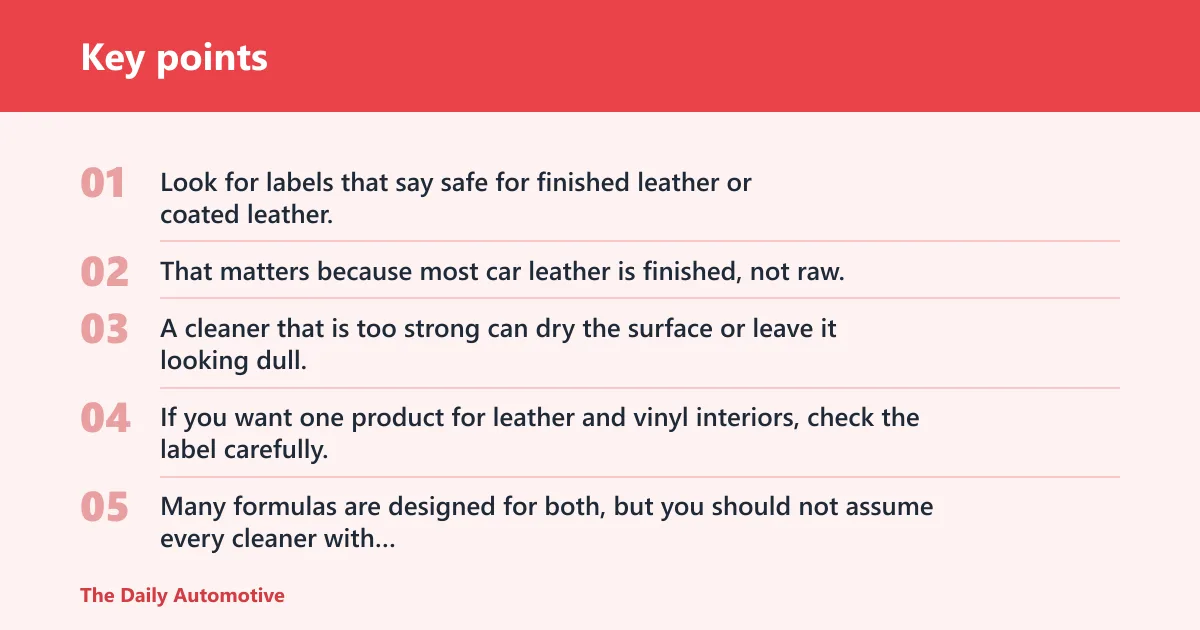
Look for labels that say safe for finished leather or coated leather. That matters because most car leather is finished, not raw. A cleaner that is too strong can dry the surface or leave it looking dull.
Leather and vinyl compatibility
If you want one product for leather and vinyl interiors, check the label carefully. Many formulas are designed for both, but you should not assume every cleaner with leather on the front is also ideal for vinyl trim, bolsters, or armrests.
Stain removal strength
For stubborn marks, look for a product positioned as a fast-acting cleaner with stain removal strength. Meguiar’s D181 Professional Leather Cleaner is described as a fast-acting cleaner for interior leather and vinyl use, non-staining, colorless, and aimed at a like-new look. That kind of positioning fits leather upholstery with tougher soil, not just light dust.
Residue and finish
Low residue matters because leftover film can attract dust or leave the seat looking uneven. If the formula is colorless and non-staining, that reduces the chance of a visible trace on light leather, but it does not replace careful application.
For perforated leather, use less product and a towel rather than soaking the panel. For heavily soiled seats, work in small sections. Do not over-wet the surface, especially around seams and vent holes.
Where to buy leather cleaner for cars
You can buy leather cleaner from auto detailing retailers, marketplace listings, and specialty stores that focus on interior care. Car Supplies Warehouse is one example of a retail channel that organizes products by maintenance category, including leather maintenance, which helps narrow the field faster.
Auto detailing retailers
Detailing retailers are usually the best place to compare dedicated formulas, including cleaner-only bottles and kits. They tend to carry more brand variety and product formats than a general store.
Marketplace options
Marketplaces can be convenient if you already know the product you want. The tradeoff is sorting through mixed sellers, variable bundle sizes, and listings that may not make the finish compatibility obvious.
Car Supplies Warehouse and rewards programs
Car Supplies Warehouse is worth a look if you want a retailer that groups products by interior care and leather maintenance. A rewards program can improve value for repeat buyers, especially if you detail more than one vehicle or restock often.
Start with the mildest useful product, work on one section at a time, and keep moisture under control. For finished leather seats, that usually means vacuuming first, applying cleaner to a towel or brush, and wiping before the product dries on the surface.
- Vacuum loose grit from seams and creases.
- Check the label for finished leather and vinyl compatibility if needed.
- Apply a small amount of cleaner to a microfiber towel or soft brush.
- Work one seat panel at a time.
- Wipe away lifted soil before it dries back onto the leather.
- Let the seat dry fully before conditioning, if the product or the leather calls for it.
Frequently asked questions
How do you clean leather in a car?
Vacuum first, then apply a small amount of cleaner to a towel or soft brush and work in sections. Wipe off loosened soil right away. On perforated or delicate leather, use less product and avoid saturating the surface.
What is the best leather cleaner for car seats?
The best product is the one that matches your seat finish and soil level. For a cleaner-only option, look for safe-for-finished-leather labeling, low residue, and enough stain removal strength for your seats. If the leather is dry, a kit can make more sense.
Is leather cleaner for cars worth buying over an all-purpose cleaner?
Yes, when you are cleaning finished leather or leather and vinyl interiors and want less risk. APC is more aggressive and better reserved for tougher non-leather surfaces. Leather cleaner is the safer default when the seat material matters more than speed.
Can I use a leather cleaner on leather and vinyl?
Often yes, but only if the label says the formula is made for both. Many leather cleaners are positioned for interior leather and vinyl use. Check the instructions before applying it to trim, bolsters, or mixed-material panels.
What should I look for in a good leather cleaner for cars?
Look for compatibility with finished leather, clear leather and vinyl coverage if needed, enough stain removal strength for your seat condition, and low residue after wiping. Also decide whether you want cleaner only or a kit with conditioner included.
Products related to this article
Sponsored / affiliate links. As an Amazon Associate I earn from qualifying purchases. I may earn additional commission from eligible campaigns.