Rock Salt vs Calcium Chloride: Which Is Worse for Your Car?
Calcium chloride is often considered harder on a car than rock salt because it tends to hold moisture, cling to bodywork, and keep corrosion active longer, though both can damage bare metal and wiring. Ignore winter de-icer buildup and you can end up with rusted brake parts, flaky suspension hardware, and higher repair bills. Here’s how the two salts differ on splashback, residue, undercarriage exposure, and which one is the bigger threat in everyday driving.
| Decision factor | Rock Salt | Calcium Chloride | Winner |
|---|---|---|---|
| Cold-weather melting performance | Works to about 15°F and drops off below 20°F on roads | Works to -25°F and stays effective in deeper cold | Calcium Chloride |
| Corrosion risk on car parts | Can corrode steel and other metal parts after repeated exposure | Can also corrode metal, and its moisture-holding residue keeps surfaces wet longer | Rock Salt |
| Residue and cleanup burden | Leaves salt film and grit that still need washing off | Can cling to panels and underbody surfaces as wet brine | Rock Salt |
| Risk near parked cars and curbside exposure | Less aggressive when temperatures are mild enough for it to work well | More likely to keep splashback wet and active around the car | Calcium Chloride |
| Cost and routine use | Cheaper per pound | Usually used when performance matters more than price | Rock Salt |
Cold-weather performance vs car corrosion risks
Rock salt is the cheaper, common winter deicer, but it loses strength as temperatures fall. Calcium chloride costs more, works in colder weather, and melts on contact because it is exothermic, which helps it act faster when roads are near or below the point where rock salt struggles.
For car damage, the trade-off is not simple. Rock salt can leave corrosive residue, but calcium chloride is often worse in real-world exposure because it keeps moisture around longer, spreads as wet brine, and sticks in wheel wells, splash zones, and undercarriage seams.
Cold-weather performance is not the same as car safety
Rock salt is effective to about 15°F, and it becomes much less effective below 20°F on roads. Calcium chloride works down to -25°F, so it is the better performer in a deep freeze. That advantage matters because a failing deicer can leave melt-refreeze cycles in place and raise the risk of black ice.
But faster melting does not mean lower vehicle risk. If calcium chloride keeps working after rock salt quits, it also stays active longer on the body, brakes, and undercarriage unless you rinse it off.
Cost pushes many drivers toward salt alone
Rock salt is cheaper per pound, so it is common for routine winter treatment. That lower price makes sense for moderate cold and short exposure, especially when roads are above rock salt’s weaker range and a full-strength cold-weather product is unnecessary.
Calcium chloride can reduce material use by 30–60% per event, but that does not erase the need to clean the car afterward. Lower application rates help with waste and cost, not with residue left behind on metal.
Rock Salt vs Calcium Chloride table
The biggest car risks come from where the deicer lands, how long it stays wet, and whether the car is moving or parked. Highway spray loads the undercarriage and brake area. Curbside parking leaves the lower body exposed to brine. Driveway parking adds a concrete and freeze-thaw problem near the car.
| Scenario | Rock Salt corrosion risk | Calcium Chloride corrosion risk | Rock Salt residue buildup | Calcium Chloride residue buildup | Undercarriage exposure | Cleanup urgency |
|---|---|---|---|---|---|---|
| Highway driving | Medium | High | Medium | High | High | High |
| Slushy urban streets | Medium | High | Medium | High | Medium | High |
| Parked-by-curb exposure | Medium | High | Low | High | Medium | High |
| Driveway parking | Medium | Medium | Low | Medium | Low | Medium |
Highway driving loads the parts you cannot see
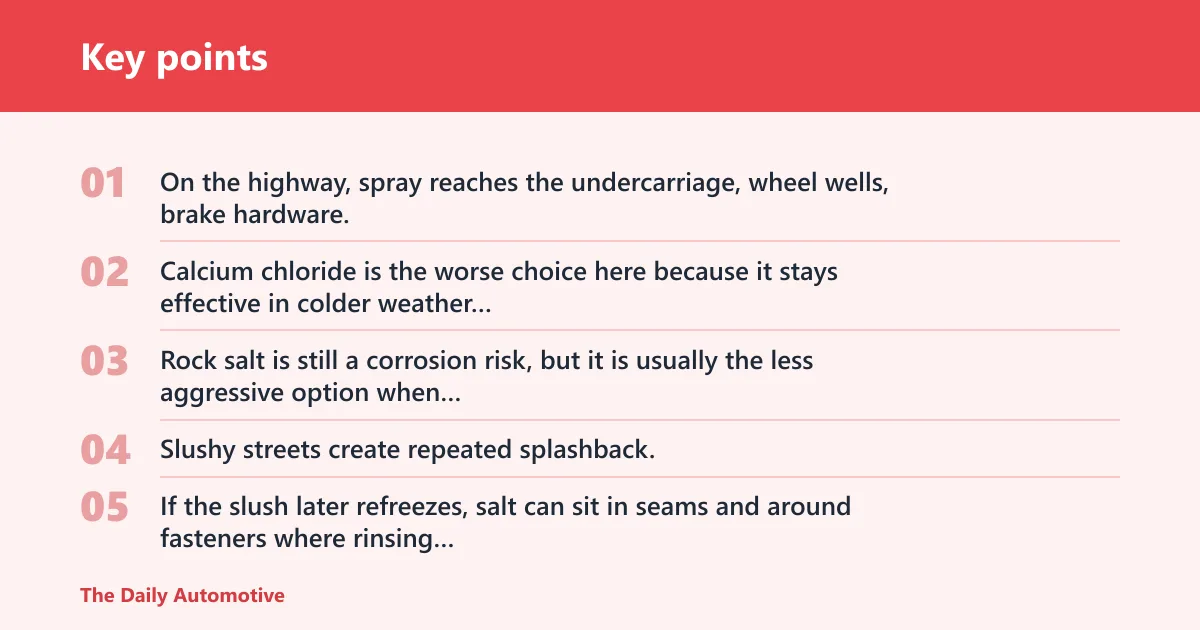
On the highway, spray reaches the undercarriage, wheel wells, brake hardware, and lower body panels. Calcium chloride is the worse choice here because it stays effective in colder weather and can leave wet residue on those same surfaces. Rock salt is still a corrosion risk, but it is usually the less aggressive option when temperatures are not deep into the cold range.
Urban slush keeps salt on the car longer
Slushy streets create repeated splashback, and that means repeated contact with steel fasteners, brake lines, aluminum wheels, and painted panels. If the slush later refreezes, salt can sit in seams and around fasteners where rinsing is harder. That is where chloride corrosion becomes a long-term problem rather than a one-day mess.
Parked-by-curb exposure is easy to overlook
Parked cars near treated curbs catch aerosolized brine and splash from passing traffic. Calcium chloride is worse in that setup because its moisture retention keeps the lower panels damp. A vehicle can look clean from the sidewalk and still carry corrosive residue on the underbody and wheel wells.
Driveway parking shifts part of the risk to the surface
When a car sits on or near treated concrete, the issue is not only the car. Repeated deicer use and repeated thaw-refreeze cycles can break down pavement and concrete edges, especially near garages and driveway aprons. The car still faces splashback and residue, but the ground itself can add more debris and standing moisture.
Say your sedan sits on a curbside street overnight after a snow event. A warm afternoon melts the powder, then the temperature falls again. That melt-refreeze cycle can leave black ice near the tires and a brine film on the rocker panels, which is a stronger cleanup cue than the road may first suggest.
Does calcium chloride cause more corrosion?
Yes. Calcium chloride is often considered the harsher exposure because it is hygroscopic, so it can pull in moisture and keep corrosion active longer after the first melt. Rock salt also corrodes metal, but calcium chloride more often leaves a wet, clingy residue on painted panels, wheel wells, brake hardware, and the undercarriage.
The parts most at risk are steel fasteners, brake lines, suspension hardware, and the edges of aluminum wheels. Paint is less vulnerable than bare metal, but repeated exposure can still stain trim, trap grime at seams, and make cleanup more important after every storm.
Steel fasteners and brake lines are the first trouble spots
Chloride corrosion attacks thin steel parts quickly when residue lingers. Brake lines, clamps, brackets, and exposed fasteners collect slush and brine in hidden pockets, where airflow is low and drying is slow. Once rust begins in those spots, it often spreads before a driver notices anything from the outside.
Aluminum wheels and painted panels still need attention
Aluminum wheels are not immune. Salt residue can pit finishes and build up around lug areas, valve stems, and wheel weights. Painted panels usually hold up better, but chips, scratches, and edge seams let chloride reach metal underneath, which is where corrosion starts to matter.
Why the undercarriage matters more than the hood
The undercarriage traps the worst residue because it takes the spray and dries slowly. Brake components, crossmembers, and suspension hardware sit close to the splash path, so a wash that ignores the underside misses the parts most likely to corrode. That is why rinse timing matters more than simply wiping the body clean.
What temperature changes the answer?
Temperature changes the answer because rock salt loses effectiveness much sooner than calcium chloride. Around 15°F to 20°F, rock salt becomes a weak choice and may leave untreated patches that refreeze. Calcium chloride remains the better-performing option in deep cold, so the trade-off shifts from cost toward usable melting power.
That shift matters for car risk too. When a deicer stops working well, snow and meltwater linger longer, and black ice becomes more likely after refreezing. When a deicer keeps working, it can also keep the surface wet longer, which means more residue on the vehicle if you do not wash it off.
Rock salt stops helping before the deep freeze does
Rock salt is beneficial only after the snow has stopped falling, and its road performance drops sharply as temperatures fall. If the road is colder than its practical range, the salt can sit there with limited effect, leaving more untreated ice and more chance for repeated application.
Calcium chloride keeps working in colder weather
Calcium chloride works in below-freezing temperatures and down to about -25°F. Peters Chemical says it melts up to eight times as much ice as salt alone in the first 30 minutes at 20°F, which explains why it is chosen for cold snaps. That same persistence means more residue can stay on the car if you do not remove it.
Black ice appears when melt and refreeze keep cycling
Black ice often shows up after partial melting followed by a drop in temperature. If the deicer stops working or thins out, the water can refreeze into a slick layer that is hard to see. For drivers, that means the best deicer is not the one that melts first, but the one that fits the temperature and gets cleaned off afterward.
How often should you wash your car after driving on salted roads?
Wash it as soon as practical after exposure, especially if the car was on a highway, in slush, or parked near treated curbs. The goal is to remove chloride residue before it dries in seams, wheel wells, and the undercarriage. Waiting several days gives corrosion more time to keep working.
The undercarriage, wheels, and splash zones should be the first targets. If you only have time for a quick rinse, focus on the lower body, brake-area spray paths, and the back side of the wheel wells, where residue tends to collect and stay wet.
- Rinse the undercarriage first, because that is where spray and brine collect most heavily.
- Wash the wheels and wheel wells next, especially around lug areas and the lower inner surfaces.
- Rinse rocker panels, door bottoms, and splash zones along the lower body.
- Dry or air out the car in a way that does not trap moisture under trim and seams.
A common first-timer mistake is cleaning only the visible paint after a storm. A hatchback can look fine at the door handle level and still carry wet chloride around the lower doors, rear suspension, and brake-area spray zones. Those hidden areas are where repeat exposure turns into real corrosion risk.
Choose Rock Salt if… / Choose Calcium Chloride if…
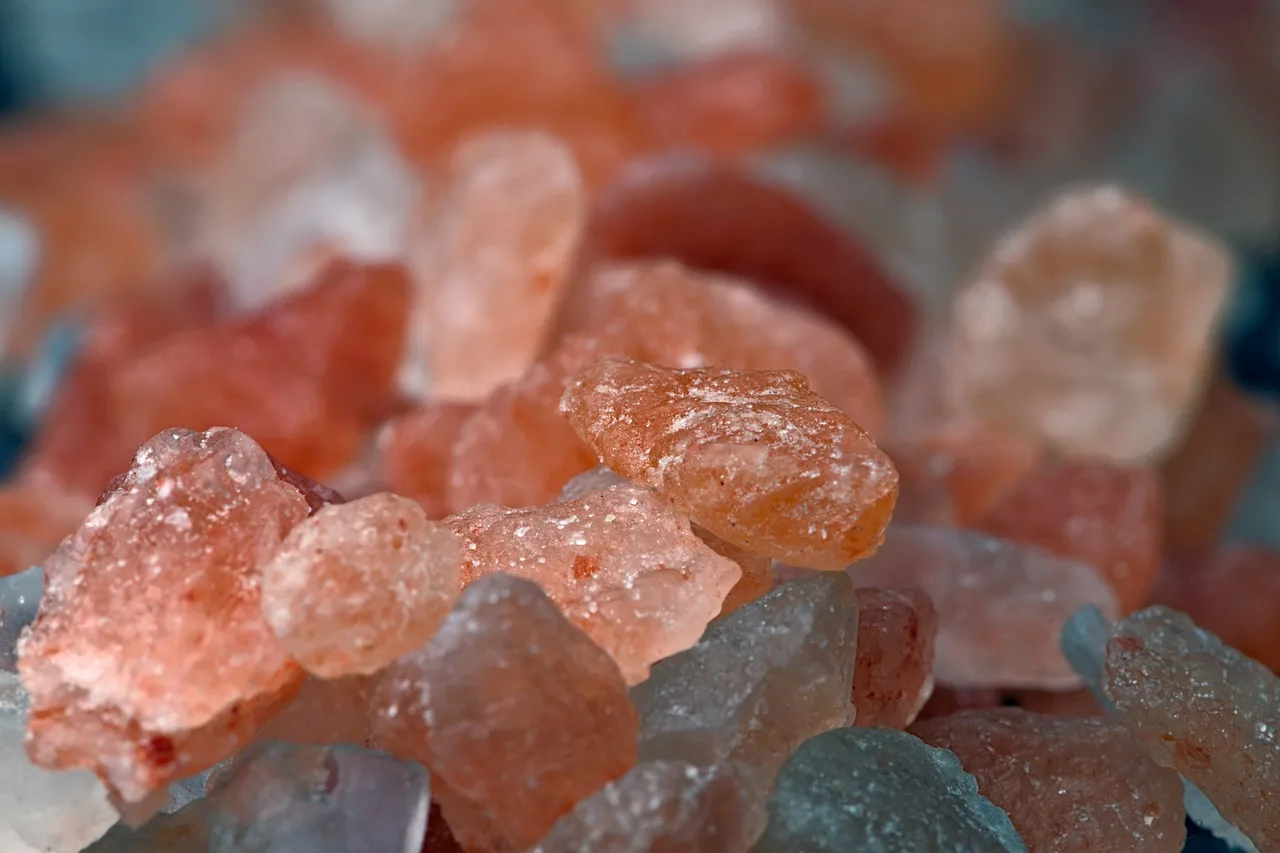
Choose rock salt if the weather is cold but not extreme, you want the lower-cost option, and you can wash the car soon after driving. Choose calcium chloride if temperatures are below rock salt’s practical range, you need faster melting in a deep freeze, or the road surface is likely to stay icy after the first pass.
For most drivers, rock salt is the better budget pick in moderate cold. Calcium chloride is the better performance pick in deeper cold, but it deserves faster cleanup because the residue is more likely to keep moisture on the car and keep corrosion active.
Choose rock salt if…
Choose rock salt if temperatures stay around its workable range, the roads are already being plowed, and you are mainly trying to keep traction on ordinary winter commutes. It is also the better choice when cost matters and you can rinse the car soon after exposure.
Choose calcium chloride if…
Choose calcium chloride if the forecast is deep cold, the roads are likely to be below 15°F, or you need deicer action when rock salt loses effectiveness. It also makes sense when a storm leaves long-lasting ice and refreeze risk, but it should be paired with prompt washing because of the residue it leaves behind.
Where blends make sense
Deicer blends that combine calcium chloride with salt are common when the goal is to improve cold-weather performance without using calcium chloride alone. That can balance cost and effectiveness in a cold snap. It does not remove corrosion risk, so the same wash-and-rinse habit still applies.


What about concrete and freeze-thaw damage?
Both products can hurt concrete and pavement, especially where driveway aprons, garage edges, and parking pads see repeated use. The bigger issue is freeze-thaw damage: water enters the surface, freezes, expands, then breaks material apart over time. Repeated deicer use can make that cycle worse.
Cars parked near treated surfaces still face risk because loose residue, wet brine, and splashback settle on the lower body and undercarriage. Even when the vehicle is parked, nearby treated pavement can keep feeding moisture and chloride onto the car.
Driveways and garage edges need extra attention
Where a driveway meets a garage or sidewalk, repeated thawing and refreezing can chip concrete and leave gritty debris under the car. That debris can hold brine against the underbody and make cleanup more important after parking overnight.
Repeated deicer use raises long-term surface wear
One application is not the whole story. Repeated applications during a season keep chloride in the same areas, which increases wear on concrete and gives the car more chances to collect residue. The longer the residue stays put, the more likely corrosion becomes.
Frequently asked questions
Is rock salt or calcium chloride worse for my car?
Calcium chloride is usually worse for your car because it holds moisture, sticks to surfaces, and keeps corrosion active longer. Rock salt is still corrosive, especially on steel and brake-area parts, but calcium chloride tends to create a wetter, longer-lasting residue that is harder to ignore after driving or parking.
Does calcium chloride cause more corrosion than rock salt?
Usually, yes. Calcium chloride is hygroscopic, so it pulls in moisture and keeps the salty film wet on metal parts. That matters on steel fasteners, brake lines, wheels, and undercarriage surfaces, where lingering brine gives chloride corrosion more time to work.
Can deicer damage paint, wheels, and undercarriage?
Yes. Painted panels can hold residue in chips and seams, wheels can collect salty film around lug areas, and the undercarriage gets the worst splashback. The lower body and brake-area spray path are the places that need the fastest rinse after winter driving.
Which deicer is worse for concrete and car-related surfaces?
Both can damage concrete and driveway surfaces through freeze-thaw wear, but calcium chloride is the harsher choice where moisture retention matters. For car-related surfaces, the main concern is not the pavement itself but the wet residue and splashback that keep reaching the car after parking or driving through slush.
What temperature makes rock salt stop working?
Rock salt is effective to about 15°F and loses effectiveness below 20°F on roads. Below that range, it does a poorer job melting ice, which raises black ice risk after refreezing and makes calcium chloride the better-performing option in deep cold.
How often should I wash my car after driving on salted roads?
Wash it as soon as practical after exposure, especially after highway driving, curbside parking, or heavy slush. Focus first on the undercarriage, wheels, and lower body panels. A fast rinse matters more than waiting for a perfect wash day.
Should I choose a rock salt and calcium chloride blend for winter?
A blend makes sense when you need better cold-weather performance than salt alone can deliver, but do not treat it as a low-risk option for the car. It can improve melting in cold snaps, yet it still leaves chloride residue that should be rinsed off promptly.
Products related to this article
Sponsored / affiliate links. As an Amazon Associate I earn from qualifying purchases. I may earn additional commission from eligible campaigns.