Which Cable Goes on a Car Battery First? Positive, Then Negative
Install a battery positive first and negative last, and remove it in the reverse order: negative off first, positive off last. Jump-starting is a third order, with the last clamp going on bare metal away from the dead battery. AAA, Interstate Batteries and owner’s manuals agree on the logic but differ on small details, so this page shows each source side by side for disconnecting, reconnecting and jump-starting.
What Cable Goes on a Car Battery First? The Quick Answer
Three jobs, three orders. People mix them up because disconnecting a battery and connecting jumper cables run in opposite directions, as Interstate Batteries points out. Find your task in the table, then read the matching section below.
Best Terminal Protection Pick
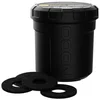 |
NOCO NCP2 B603 Anti-Corrosion Battery Terminal Protector Washers, 50 Count Best for: Protecting clean terminals after you reconnect a battery. Why we picked it: The listing describes 50 felt washers saturated with an oil-based corrosion preventative, enough for 25 batteries, that slip over a top post before the clamp goes on, or lose the inner ring for side posts. Main drawback: It is a 50-count shop pack, more than one car needs, and it does not change the cable order or fix a weak battery. |
As an Amazon Associate we earn from qualifying purchases. Spec-based pick from the listing, not a hands-on test.
| Task | Order | What the source says |
|---|---|---|
| Disconnect a battery | Negative (black) first, positive (red) second | Interstate Batteries: disconnect the black, negative terminal first, then the red, positive terminal. AAA: do not start with the positive, as this could cause a dangerous electrical short. |
| Reconnect or install a battery | Positive first, negative second | AAA: starting with the positive terminal, reattach and tighten, then reattach the negative cable. Interstate: connect the red, positive clamp first. |
| Jump-start a car | Positive on dead battery, positive on donor, negative on donor, last clamp on metal away from the dead battery | Interstate, AAA and the Mazda and Kia manuals all end on a ground point, not on the dead battery’s negative post. |
| Take jumper cables off | Reverse of how they went on | Interstate, AAA, Mazda and Kia all say to reverse the connection order. The ground clamp comes off first. |
Step-by-Step Guide: What Cable Goes on a Car Battery First
This section covers removing and installing a battery. If your goal is only to isolate the electrical system, the removal half is the part that matters. Interstate Batteries strongly recommends visiting a repair shop or an Interstate All Battery Center before disconnecting a battery, and its own steps start with safety glasses, gloves, jewelry off and the ignition off.
Disconnecting: negative first, positive last
- Put on safety glasses and gloves, take off jewelry and make sure the ignition is off (Interstate). AAA adds that headlights and infotainment should be off so nothing draws power.
- Interstate says to connect backup power before disconnecting, because a battery removed without it erases data stored in the car’s computers.
- Loosen the bolt on the black, negative clamp and lift the clamp away. Interstate says this usually takes a 10-millimeter open-end wrench and that the wrench must never touch the other terminal.
- Loosen the red, positive clamp. Interstate says to wrap it in a rag and lift it clear of the battery and any metal; AAA says to secure each cable away from the terminals.
- Remove the hold-down strap or bracket, then lift the battery straight up. Interstate warns not to tip a flooded battery because the electrolyte can spill, and notes that batteries can weigh 40 pounds or more.
- After the battery is out, Interstate says not to turn on or activate any vehicle systems, because that can drain the backup power.
Reconnecting: positive first, negative last
- Clean corrosion from the tray, clamps and battery. Both AAA and Interstate name baking soda and water; Interstate specifies distilled water.
- Set the battery flat in the tray and reinstall the hold-down strap or bracket (AAA).
- Attach the red, positive cable and tighten it (AAA, Interstate).
- Attach the black, negative cable and tighten it (AAA).
- Interstate says reconnecting follows the same steps as disconnecting, except the red, positive clamp goes on first. Keep clamps from touching metal while you work.
For a longer walk-through that includes cleaning and tool choices, see our guide to disconnecting car battery terminals. If you only need to know which cable to take off, which terminal to disconnect first answers that one question, and which terminal to connect first covers the reverse direction.
Jump-Start Order: Positive, Positive, Negative, Then Ground
A jump-start is not the same as installing a battery. The cables go on in a fixed sequence, and the final clamp deliberately avoids the dead battery. The table lines up four sources that each state the order. Where they differ, both versions are shown as written.
| Source | Cables go on | Last clamp goes on | Cables come off |
|---|---|---|---|
| Interstate Batteries (jump-start article, revised Oct 2026) | Red to the dead car’s positive, red to the good car’s positive, black to the good car’s negative | A metal component like a bracket, not the dead battery | Black clamps first, starting with the dead vehicle, then red clamps, starting with the jumped car |
| AAA (jump a battery article) | Red to dead positive, red to donor positive, black to donor negative | A clean, unpainted piece of metal on the car with the dead battery, like a thick bolt on the engine block | Black on the grounding point, black on donor, red on donor, red on the started car |
| Mazda 2016 CX-5 owner’s manual | Positive of discharged battery, positive of booster, negative of booster | The ground point shown in the manual’s illustration, away from the discharged battery | Reverse of the connection order |
| Kia 2025 owner’s manual (hybrid chapter) | Charging terminal in the engine compartment fuse panel, then positive of the assisting vehicle, then negative or chassis ground of the assisting vehicle | A solid, stationary metallic point away from the battery | Exact reverse: your ground first, assisting ground, assisting positive, your jumper terminal last |
Two differences stand out. First, the last clamp location: Interstate says a metal component such as a bracket, AAA a bare engine-block bolt, and the two manuals point to a ground point of their own. Second, some cars do not use the battery terminal at all. Kia’s manual tells you to connect to a jumper terminal in the engine compartment fuse panel, and AAA notes many vehicles with a trunk or wheel-well battery still provide under-hood jump terminals. Always check your own manual for where that point is.

Starting the cars after the clamps are on
Interstate says to start the good car first and, if the dead car does not start at first, give it a few minutes before trying again. AAA gives the donor three to five minutes before the attempt, and a rest of another five minutes if the engine cranks slowly, with a replacement likely needed after a third failed try. Kia’s manual says to start the assisting vehicle and let it run a few minutes. Afterward, AAA suggests a continuous drive of 20 to 30 minutes and a battery test, since a jump-start often does not equal a charged battery. For the full procedure, including what to do when the car stays dead, read how to jump-start a car with a dead battery safely.
Why Does the Order Matter?
The sources give their own reasons, and they are specific rather than general.
- Removing a battery, negative first: AAA says starting with the positive could cause a dangerous electrical short and that a tool touching both posts could electrify the wrench or damage the vehicle and battery. Interstate adds that the negative cable connects to the vehicle frame, and that the positive side is covered because 12 volts can give a spark or a short.
- Installing a battery, positive first: Interstate describes the reconnect as the same steps in the opposite order, with the red clamp first. The sources state the install order without a separate reason; it mirrors the removal order.
- Jump-starting, ground last: Mazda warns that connecting the second cable to the discharged battery’s negative terminal is dangerous because a spark could ignite the gas around the battery. It says hydrogen gas is produced during normal battery operation. AAA says the grounding bolt directs the small final spark away from the battery and any fumes.
- Clamps that touch: Interstate says touching clamps can cause a spark that damages the power control or onboard computers. AAA says it can create a short and damage one or both vehicles.
Which Terminal Is Positive and Which Is Negative?
The order only works if you identify the posts correctly. Interstate says to check the owner’s manual to be sure, because red is only usually positive. The clues it and AAA list are in the table.
| Clue | Positive (+) | Negative (-) | Source |
|---|---|---|---|
| Symbol | Plus sign on the battery case or clamp plastic | Minus sign | AAA, Interstate |
| Color | Red connector, usually | Black connector, usually | AAA, Interstate |
| Cable and clamp size | Larger or thicker, per Interstate | Smaller | Interstate |
| Cover | Usually a plastic or rubber cover | Not described as covered | Interstate |
| Where it goes | Connects to an engine part | Connects to the vehicle frame (ground) | Interstate |
Interstate adds that grime can hide the markings, and a shop rag will wipe them clear enough to read. For more on polarity, see what positive and negative mean on a car battery.
Common Battery Cable Mistakes
| Mistake | Why the source says it matters | Source |
|---|---|---|
| Taking the positive cable off first | Can cause a dangerous electrical short | AAA |
| Letting a wrench touch both terminals | Can electrify the wrench or damage the vehicle and battery | AAA |
| Leaving a loose positive clamp where it can touch metal | Interstate says to wrap it in a rag or cover it with a plastic cup | Interstate |
| Clamping the last jumper cable to the dead battery’s negative post | A spark could ignite gas around the battery | Mazda |
| Letting jumper clamps touch each other | Spark that can damage the power control or onboard computers | Interstate, AAA |
| Routing cables near fans or belts | The cable could get caught when the engine starts | Mazda |
| Disconnecting without backup power | Erases adaptive fuel, diagnostics, radio and idle settings, with possible rough idle or warning lights | Interstate |
| Jump-starting a frozen battery or one with a low fluid level | May rupture or explode | Mazda |
Hybrids, Electric Cars and Battery Memory
Every EV and hybrid has a 12-volt battery that powers accessories and starts the vehicle, in addition to the large traction battery, according to AAA. AAA says to jump-start an EV’s 12-volt battery only with a combustion-engine vehicle or a jumper pack, never with another EV or hybrid, and never to try jumping the main lithium-ion battery. After the car starts, AAA advises running an EV for at least 20 minutes. Kia’s hybrid manual adds a step: press the 12V Battery Reset button before starting the assisting vehicle. For any hybrid or EV, follow the owner’s manual for cable order, terminal locations and what to do before and after disconnecting.
On battery memory, AAA says disconnecting a modern battery may erase radio presets and other settings and the car may need time to relearn driveability settings. Interstate lists backup power, such as a memory saver connected through the cigarette lighter or terminal clamps, as the fix. To see how long a healthy battery runs before you face any of this, read how long a car battery lasts, and for upkeep that avoids dead-battery calls, see how to service a car battery.
When to Stop and See a Professional
- The battery looks swollen, cracked or leaking, or you smell rotten eggs. AAA says to replace a damaged battery rather than jump it, and Interstate lists bulging, warping, cracks and a rotten-egg smell as signs to get a professional.
- The battery is frozen or its fluid is low. Mazda warns jump-starting it can rupture or explode.
- You are unsure about any step. Kia’s manual recommends a competent technician or towing service if in doubt, and Interstate recommends a shop before disconnecting.
- The car still will not start after the attempts the sources describe. AAA suggests a battery test or a call for help rather than repeated tries.
Frequently Asked Questions
What happens if I connect the negative cable first?
The sources describe the risk for removal rather than installation. AAA says starting with the positive when removing a battery could cause a dangerous short, and both AAA and Interstate give positive-first as the install order. Follow that order and keep tools off both posts.
Which cable do you disconnect first on a car battery?
The negative (black) cable. Interstate Batteries and AAA both say to take the negative off first and the positive second.
Which jumper cable goes on last?
The final black clamp goes on a ground point on the dead car, away from the battery. Interstate says a metal component like a bracket, AAA says a clean unpainted piece of metal such as an engine-block bolt, and Mazda says the ground point shown in its manual.
Can I jump-start a hybrid or electric car the same way?
AAA says the process is much the same for an EV’s 12-volt battery, but never use another EV or hybrid as the donor. Kia’s hybrid manual also has a 12V Battery Reset step. Follow your own manual.
Will disconnecting the battery erase my settings?
It can. AAA says radio presets and other memory settings may be erased, and Interstate says unsaved data such as adaptive fuel and idle settings can be lost without backup power.
What This Guide Does Not Cover
- Repair or replacement prices: ask a shop or battery retailer for a quote.
- Vehicle-specific jump points and hold-down layouts: read your owner’s manual.
- High-voltage hybrid or EV battery service: leave it to a qualified shop.
Products related to this article
Sponsored / affiliate links. As an Amazon Associate I earn from qualifying purchases. I may earn additional commission from eligible campaigns.