What Causes Mold in Cars: Proven Solutions
Mold in your car can be caused by moisture trapped inside, often from leaks or humid conditions. Proven solutions involve identifying and fixing the moisture source, thorough cleaning, and using dehumidifying methods to keep your car dry and mold-free.
Finding fuzzy green or black spots inside your car can be pretty unsettling. Mold isn’t just unsightly; it can also affect the air quality in your vehicle and potentially cause health issues. Thankfully, understanding what causes mold in cars is the first step to getting rid of it and preventing it from coming back. You don’t need to be a car expert to tackle this common problem. We’ll walk through the simple reasons mold appears and share effective, easy-to-follow ways to clean and prevent it, so you can enjoy a fresh, healthy car again. Let’s discover how to win the battle against car mold.
Understanding What Causes Mold in Cars
Mold is a type of fungus that thrives in damp, dark, and warm environments. For mold to grow, it primarily needs three things: moisture, a food source (like dust, fabric, or leather), and the right temperature. In a car, any combination of these can create a perfect breeding ground. Let’s break down the most common culprits that introduce and sustain mold growth.
At its core, mold requires moisture to survive and multiply. Without a recurring water source, mold typically won’t establish itself. That initial dampness is the key ingredient that allows those tiny mold spores, which are naturally present everywhere, to settle in and begin their growth cycle. Once they find an inviting, moist surface, it’s a matter of time before you see signs of mold.
1. Leaks and Water Intrusion
One of the most significant causes of mold in cars is water leaking into the cabin. This can happen through various points of entry, often unnoticed until mold becomes visible.
- Worn or Damaged Seals: The rubber seals around doors, windows, and the sunroof are designed to keep water out. Over time, these seals can dry out, crack, or become damaged, creating small gaps where rain or car wash water can seep in. Even a tiny gap can let enough moisture in to start a mold problem, especially if it’s consistently wet.
- Clogged Drain Channels: Cars have a system of drain channels designed to carry water away from areas like the windshield cowl (the area below the windshield wipers) and sunroofs. If these channels become blocked with leaves, dirt, or debris, water can back up and find its way into the car’s interior, often in the footwells or headliner. A common place for these to clog is near the A-pillars or around the engine bay. For more information on how car drainage systems work and what might cause clogs, you can refer to resources on automotive design and maintenance, such as those provided by automotive engineering societies, which often detail the importance of proper water management.
- Cracked Windshields or Windows: A damaged windshield or side window, even with a small chip or crack, can allow water to penetrate the seal between the glass and the car body.
- Body Damage and Rust: Holes or rust spots in the car’s body panels, especially around the floorboards or trunk, can act as direct entry points for water during rain or when driving through puddles.
2. Humid Conditions and Poor Ventilation
Even without direct leaks, high humidity and inadequate ventilation can create enough moisture for mold to form.
- Condensation: This is a very common issue. When the warm, moist air inside your car meets cold surfaces (like windows on a chilly morning or the air conditioning system components), it condenses into water droplets. If this moisture isn’t able to evaporate, it can lead to mold growth. This is particularly prevalent in climates with high natural humidity or during seasonal temperature changes.
- Spills and Wet Items: Leaving wet items in the car, such as gym bags, damp umbrellas, wet shoes, or towels, can significantly increase interior humidity. Spilled drinks that aren’t cleaned up properly also provide a constant moisture source.
- Air Conditioning System Issues: The AC system naturally dehumidifies the air, but if there’s a blockage in the condensate drain tube or if the system isn’t running efficiently, moisture can build up inside the unit and the evaporator coil. This stagnant water can then become a breeding ground for mold and mildew, which can then be blown into the car’s cabin, often causing that musty smell.
- Infrequent Use or Storage: Cars that sit unused for extended periods, especially in humid environments, often develop mold due to lack of airflow. The interior air becomes stagnant, allowing any existing moisture to linger and encourage growth.
3. Contaminated Air and Interior Materials
The materials inside your car can also contribute to mold growth if they become contaminated or hold moisture.
- Fabric and Upholstery: Car seats, carpets, floor mats, and headliners are often made of porous materials that can absorb and retain moisture. Once damp, these materials provide an ideal surface for mold spores to colonize.
- Dust and Debris: Dust, dirt, and food particles can act as a food source for mold. When combined with moisture, these organic materials accelerate mold growth. Regularly cleaning your car’s interior helps remove these potential food sources.
- Previous Mold Growth: If a car has experienced a significant mold issue in the past and it wasn’t completely eradicated, lingering spores can reactivate if moisture returns.
Identifying Mold in Your Car: Common Signs
Spotting mold early is key to preventing a widespread problem. Look out for these common indicators that mold might be taking hold in your vehicle.
The most obvious sign is visible mold growth, which can appear as fuzzy patches of black, green, white, or gray on surfaces like upholstery, carpets, and headliners. However, mold often starts in hidden places, so it’s important to also be aware of other tell-tale signs.
- Musty Odor: This is often the first and most persistent sign of mold. A damp, earthy, or mildewy smell inside the car, especially when the windows are closed or after rain, indicates that mold is likely present, even if not yet visible. The smell tends to be worse in enclosed spaces like the trunk or under the seats.
- Discoloration: Aside from visible mold patches, you might notice unexplained discoloration on fabrics, carpets, or the dashboard. This can be the early stage of mold growth.
- Damp Spots: Feeling dampness or finding wet spots on the floor mats, seats, or headliner, particularly after rain or washing the car, is a strong indicator of a leak or poor drying.
- Peeling or Warping Materials: In severe cases, persistent moisture can cause upholstery or headliner materials to peel away from their backing or the car’s roof.
- Respiratory Symptoms: For individuals sensitive to mold, spending time in an affected car might trigger allergy-like symptoms such as sneezing, coughing, itchy eyes, or a runny nose.
Proven Solutions to Remove and Prevent Car Mold
Tackling mold involves two main strategies: removing the existing mold and eliminating the conditions that allow it to grow. Here’s a step-by-step approach.
Step 1: Identify and Fix the Moisture Source
Before you can effectively clean mold, you must stop more water from getting in. This is the most critical step for long-term prevention.
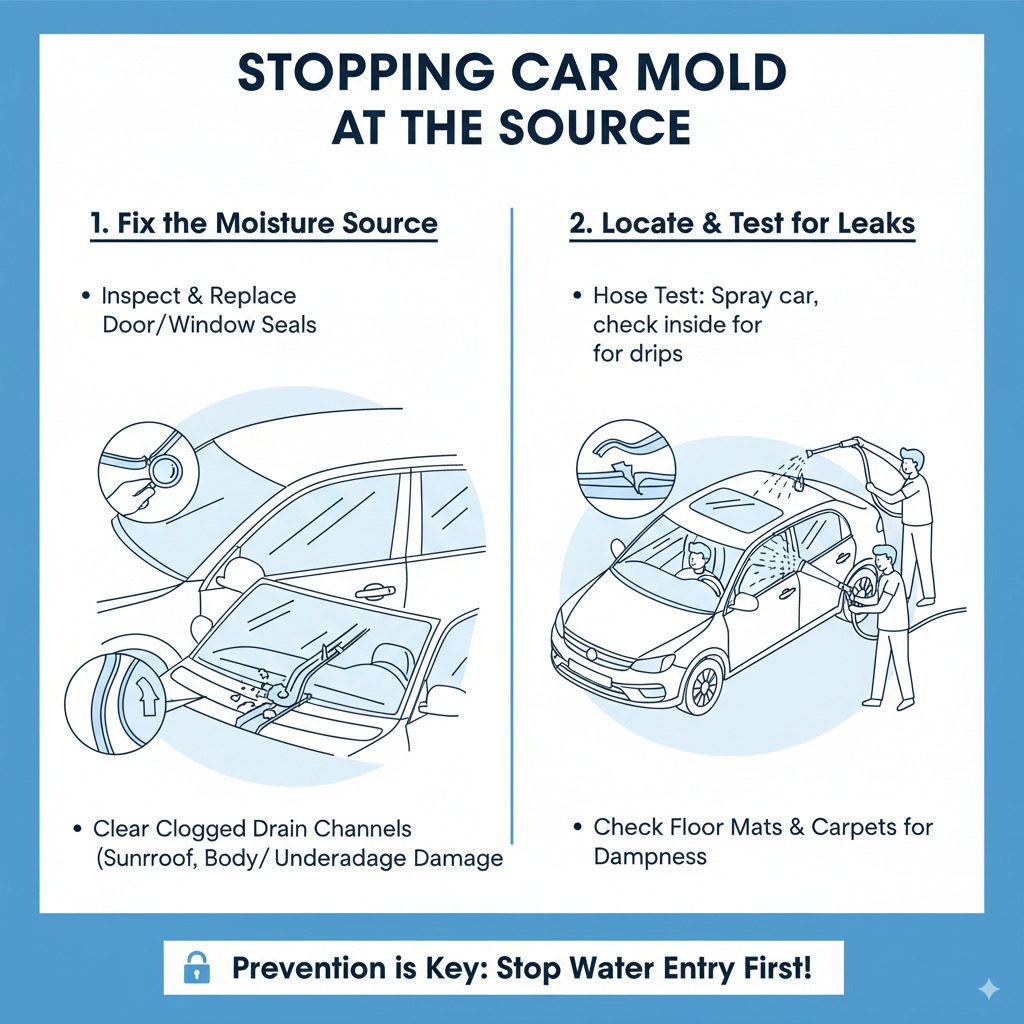
Walk around your car and carefully inspect the areas where you’ve noticed dampness or mold. Pay close attention to rubber seals around doors, windows, and the sunroof. Feel along the edges for any softness or gaps. Check the floor mats and carpets for dampness, especially in the footwells.
- Inspect Seals: Gently push on the rubber seals around all doors, windows, and the trunk. If they feel hard, cracked, or are pulling away from the body, they may need to be replaced. A temporary fix might involve applying a silicone lubricant to dry seals to make them more pliable, but replacement is often the best long-term solution.
- Check Drain Channels: Carefully examine the areas below the windshield wipers and around the sunroof. Use a flashlight to look for any blockage in the visible parts of the drain channels. You can often clear minor debris yourself with a soft brush or a gentle stream of water. For more stubborn clogs, a flexible wire or a compressed air tool might be necessary. If you’re unsure, a mechanic can help clear them.
- Examine the Undercarriage and Trunk: Look for any signs of rust or damage to the car’s body, especially around the floor pans and in the trunk. If you find holes, these will need to be professionally repaired to prevent water ingress.
- Test for Leaks: After addressing potential seal issues, you can perform a simple leak test. Have someone spray the car with a hose while you are inside (or have a helper inside with a flashlight). Start with the windows and doors, then move to the sunroof and trunk area. Look for any drips or water trails.
Step 2: Thoroughly Clean the Affected Areas
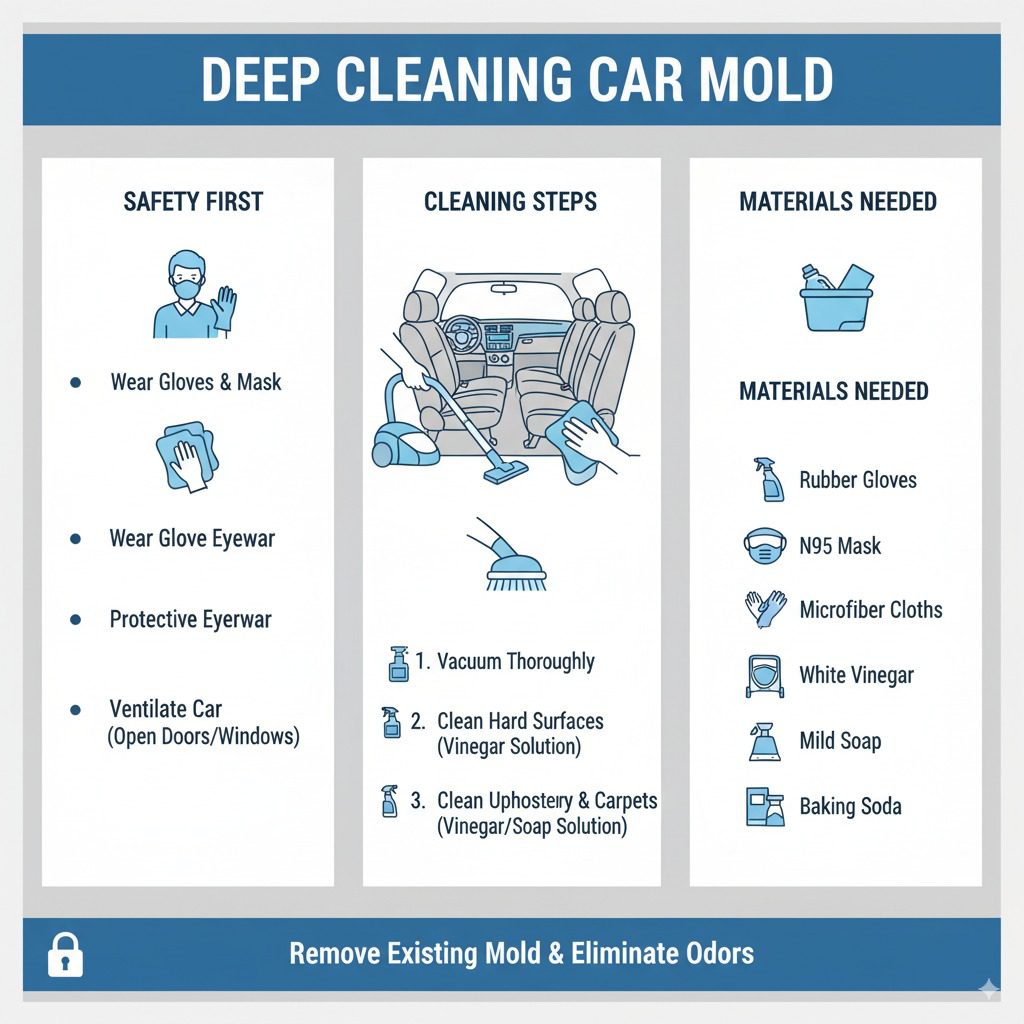
Once you’ve stopped new water from entering, it’s time to tackle the existing mold. Safety first! Always wear gloves and a mask during cleaning to avoid inhaling mold spores or fumes from cleaning solutions.
Materials You Might Need:
- Rubber gloves
- Safety mask (N95 recommended)
- Protective eyewear
- Microfiber cloths or sponges
- Soft-bristled brushes
- Vacuum cleaner with a brush attachment
- Bucket(s)
- White vinegar
- Mild soap or detergent
- Baking soda (optional, for odor)
- Mold and mildew remover specifically for automotive use (optional)
- Leather cleaner and conditioner ( if applicable)
Cleaning Steps:
- Ventilate the Car: Open all doors and windows to allow for maximum airflow.
- Vacuum Thoroughly: Start by vacuuming all surfaces, paying special attention to carpets, floor mats, seats, and the trunk. Use the brush attachment to loosen mold and debris from fabric fibers. Vacuuming first removes loose spores and dust, making the cleaning process more effective.
- Clean Hard Surfaces: For non-porous surfaces like plastic, vinyl, or leather, mix a solution of mild soap and water. Wipe down all affected areas. If mold is present, a solution of 1 part white vinegar to 1 part water is highly effective at killing mold without damaging most surfaces. White vinegar is a natural disinfectant and can kill up to 82% of mold species.
-
Clean Upholstery and Carpets:
- Vinegar Solution: For fabric or carpet, lightly spray the moldy areas with the white vinegar and water solution. Let it sit for about an hour. Then, blot the area with a clean, damp cloth. Avoid saturating the fabric, as this can lead to new moisture issues.
- Soap and Water: Alternatively, you can use a solution of mild soap and water. Gently scrub the moldy areas with a soft brush or cloth.
- Rinsing and Blotting: After cleaning, use a clean cloth dampened with plain water to rinse the area. Blot thoroughly with a dry towel to remove as much moisture as possible.
- Leather: If your car has leather seats, use a dedicated leather cleaner. For mold on leather, a very dilute vinegar solution (1 part vinegar to 10 parts water) can be used cautiously, followed immediately by a leather conditioner to prevent drying. Always test in an inconspicuous area first.
- Clean the Headliner: Headliners are often delicate. Use a slightly damp cloth with a mild soap or cleaner and gently dab the affected area. Avoid harsh scrubbing, as this can damage the fabric or adhesive.
- Address Lingering Odors: If a musty smell remains after cleaning, place an open box of baking soda or a bowl of activated charcoal inside the car overnight to absorb residual odors. You can also sprinkle baking soda on carpets and upholstery, let it sit for a few hours, and then vacuum it up.
Step 3: Dry the Car Completely
This is a crucial step that many people overlook. Any remaining moisture will allow mold to return.
-
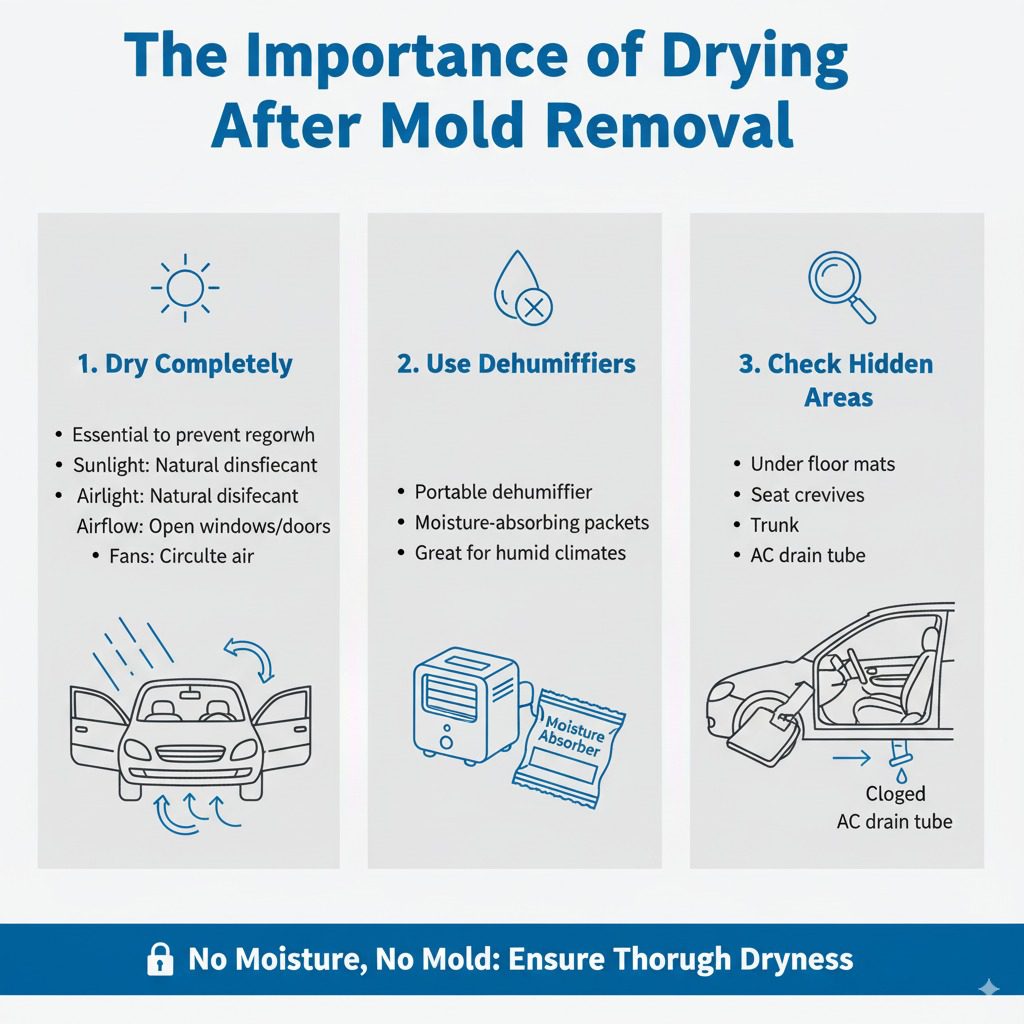
- Sunlight and Airflow: If possible, park your car in direct sunlight with the windows cracked open. Sunlight has natural disinfectant properties, and the open windows allow for drying and ventilation.
- Use Fans: Place portable fans inside the car to circulate air and speed up the drying process.
- Dehumidifier: For persistent dampness, especially in humid climates, a small portable dehumidifier can be a lifesaver. Run it in the car for several hours, making sure to empty the water reservoir regularly.
- Check Hidden Areas: Don’t forget to check and dry under floor mats, in seat crevices, and in the trunk.
Step 4: Prevent Future Mold Growth
Prevention is always better than cure. By taking a few proactive steps, you can significantly reduce the chances of mold returning.
-
-
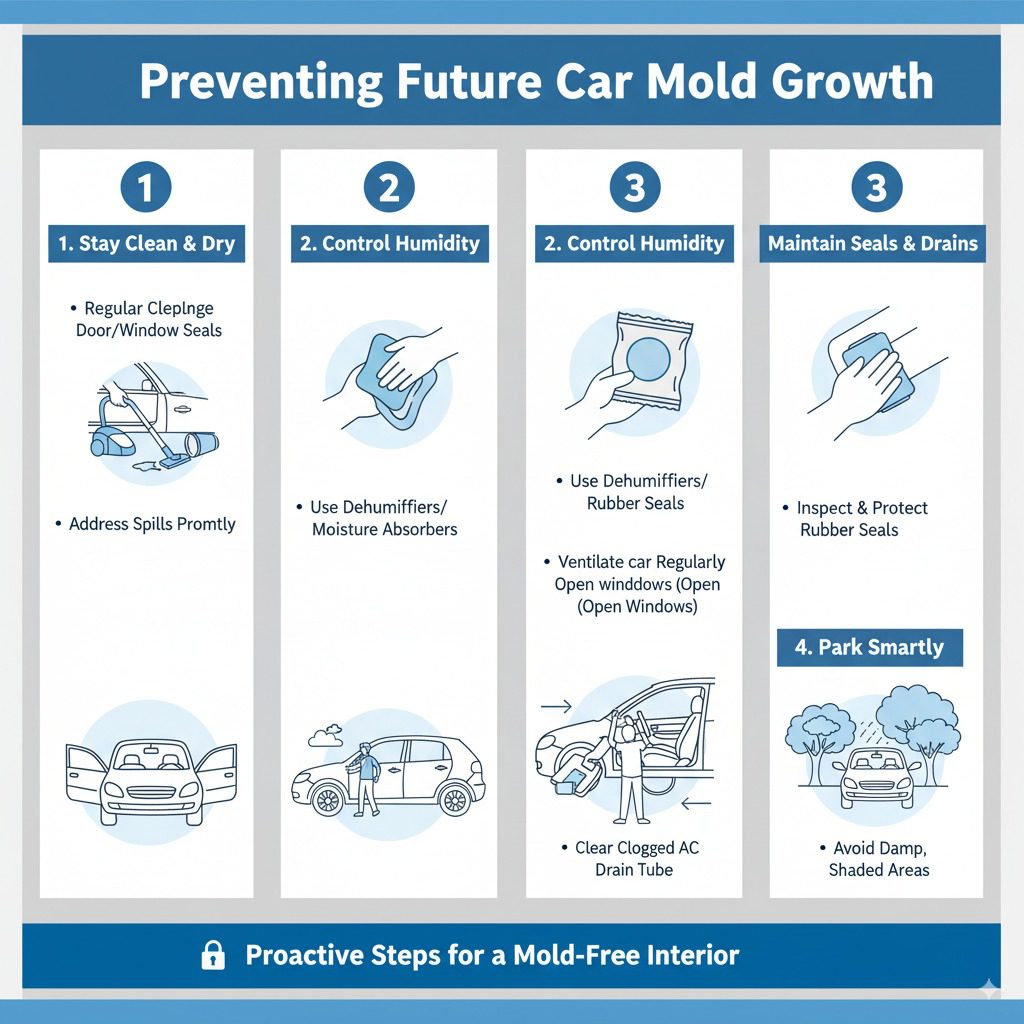
- Regular Cleaning: Vacuum your car interior regularly to remove dust and debris. Clean up spills immediately.
- Control Humidity: Keep a dehumidifier bag or moisture-absorbing packets (available at auto parts stores) in your car, especially during humid seasons or if you live in a damp climate. These are designed to absorb excess moisture from the air.
- Ventilate: Open windows or sunroof occasionally to allow for fresh air circulation, even on dry days. If you use the recirculate option on your AC too often, consider switching to fresh air intake periodically.
- Address Spills Promptly: Never leave wet items like gym clothes, towels, or leaky containers in your car. If something spills, clean and dry it thoroughly as soon as possible.
- Park Smart: If possible, avoid parking in perpetually damp or shaded areas. Parking in sunlight can help keep the interior dry.
- Maintain Seals: Periodically check and clean your car’s rubber seals. Applying a silicone-based protectant can help keep them supple and prevent cracking and leaks.
- Check AC Drain: Ensure your car’s air conditioning drain tube is not clogged. A blocked AC drain is a common source of water pooling inside the car, often under the passenger seat. You can often access this tube underneath the vehicle and clear it with compressed air if needed.
-
Mold Prevention Tips & Best Practices
Here’s a quick reference table summarizing key prevention strategies:
| Prevention Method | Description | Frequency/Notes |
|---|---|---|
| Regular Interior Vacuuming | Removes dust, dirt, and food particles that mold can feed on. | Weekly or bi-weekly. |
| Immediate Spill Cleanup | Prevents moisture from soaking into fabrics and carpets. | As soon as a spill occurs. |
| Humidity Control | Use moisture absorbers (e.g., silica gel packs, charcoal bags) to keep the interior air dry. | Place in strategic locations; replace or recharge as needed. |
| Ventilation | Open windows or sunroof to allow air circulation and release trapped moisture. | Daily for a few minutes, or crack windows when parked in safe areas. |
| Seal Inspection | Check door, window, and sunroof seals for wear and tear. Replace if damaged. | Seasonally, and after heavy rainstorms. |
| Drain Channel Maintenance | Keep drain channels (cowl, sunroof) clear of debris to allow water to flow out. | Check at least twice a year, or after falling leaves season. |
| Avoid Wet Items | Don’t leave damp clothing, umbrellas, or leaky containers in the car. | Always remove wet items after use. |
When to Call a Professional
While many mold issues can be handled with DIY methods, there are times when seeking professional help is the best course of action. If the mold infestation is extensive, covers a large area, or is deeply embedded in foam or insulation, a professional detailer or even a specialized mold remediation service might be necessary. They have industrial-grade equipment and chemical treatments to ensure complete removal and can often identify underlying issues you might have missed. For significant water intrusion or complex leak diagnosis, consulting a mechanic is also advised.
Frequently Asked Questions About Car Mold
Q1: How can I tell if it’s mold or just dirt?
A: Mold often has a fuzzy or powdery appearance and is typically accompanied by a musty odor. Dirt is usually granular and doesn’t produce a smell. If you’re unsure, a small section of the spot can be cleaned. If it returns or smells musty, it’s likely mold.
Q2: Is car mold dangerous to my health?
A: Yes, mold can be harmful. Breathing in mold spores can trigger allergic reactions, asthma attacks, and other respiratory problems, especially in sensitive individuals. It’s important to clean it thoroughly and address its source.
Q3: My car smells musty, but I can’t see any mold. What should I do?
A: A musty smell often indicates mold is present but hidden.