How to Return a Leased Car Without Extra Fees
Return a leased car without extra fees by scheduling the pre-return inspection about 2 to 4 weeks early, fixing minor damage first, staying within the mileage limit, and bringing the required documents. Miss one step, and you can face wear-and-tear bills, excess-mileage charges, lease-end disposition fees, or transfer penalties. This guide lays out the return checklist, inspection timing, mileage and damage checks, and the paperwork that keeps the exit as cheap as possible.
This guide is part of our Car Dealer Money Guide: Negotiating, Financing, Leasing, Trading In and Selling series.
Lease return fee checklist
Start with the lease contract. The fee rules come from that agreement, not a generic checklist, and the return path changes depending on whether you are ending the lease on time or leaving early.
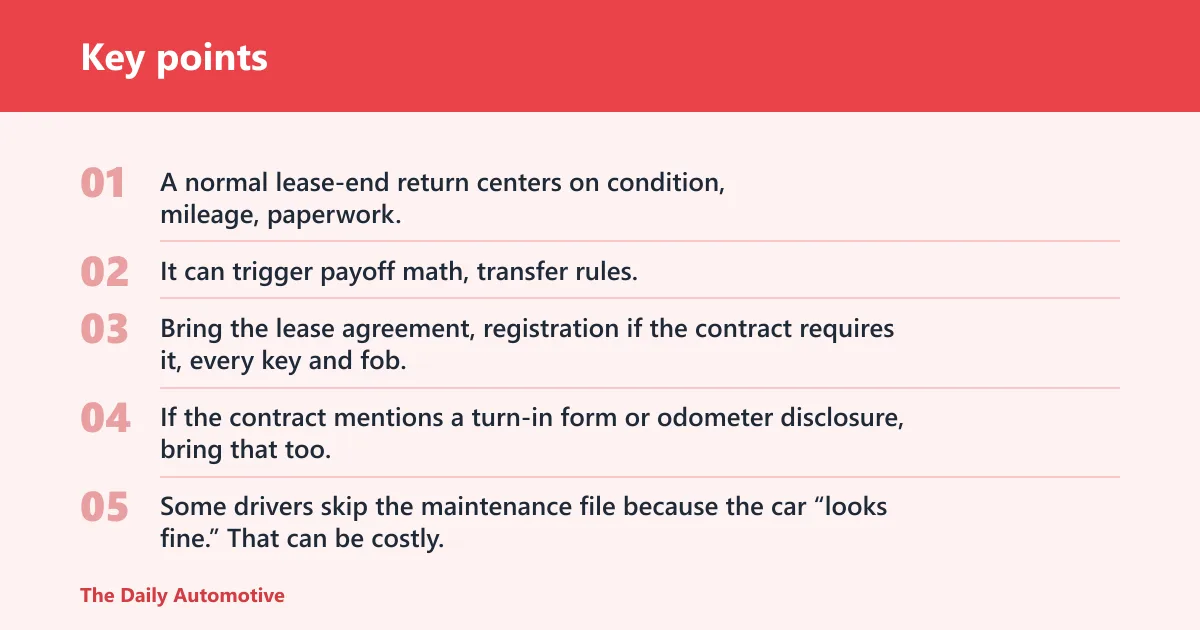
A normal lease-end return centers on condition, mileage, paperwork, and fixed end-of-term charges. Early termination is different. It can trigger payoff math, transfer rules, and a remaining balance that has nothing to do with the standard turn-in appointment.
Lease return fee-avoidance checklist
| Step | What to bring | What to inspect | What to document | Which fee it helps prevent |
|---|---|---|---|---|
| Schedule the pre-return inspection 2 to 4 weeks early | Lease contract, account number, driver’s license | Overall wear, tires, windshield, lights, interior, missing items | Inspection appointment confirmation and written findings | Wear-and-tear charges, avoidable repair disputes |
| Check mileage before the last month of driving | Current odometer reading, contract mileage allowance | Projected miles through return day | Odometer photos with date stamp if possible | Mileage overage charges |
| Fix minor damage before the return | Repair receipts, service orders, paint or glass invoices | Dings, curb rash, cracked glass, torn upholstery, failed bulbs | Before-and-after photos and receipts | Damage and excess wear charges |
| Gather maintenance proof | Oil-change receipts, tire rotations, inspection records | Missed scheduled service, warning lights, overdue maintenance | Service records and dates | Maintenance-related lease-end charges |
| Confirm required accessories are in the car | Keys, key fobs, charging cable, cargo cover, manuals | Spare key, floor mats, tool kit, owner items | Photos of the return package before handoff | Missing-item replacement charges |
| For early exit, ask about transfer or payoff options | Current payoff quote, transfer application, lender contact info | Whether the contract allows assignment or transfer | Written approval, payoff figure, transfer terms | Early termination penalties, remaining balance disputes |
Documents to bring
Bring the lease agreement, registration if the contract requires it, every key and fob, and any inspection paper the lessor sent. Keep service records together in one place. If the contract mentions a turn-in form or odometer disclosure, bring that too.
Some drivers skip the maintenance file because the car “looks fine.” That can be costly. Missing proof of scheduled service can turn into a charge if the contract ties maintenance compliance to return condition.
What to inspect before you hand over the keys
Check the car in daylight and on a dry surface if possible. Look at tires, wheels, glass, mirrors, trim, lights, seat tears, stained upholstery, broken switches, and dashboard warnings. Review the mileage against the contract limit before the final week of driving.
Suppose the contract allows 12,000 miles a year and the odometer is already close to the cap. One extra weekend trip can push the car into overage, and that charge is usually harder to argue than a small cosmetic repair.
What to photograph and keep
Take clear photos of the odometer, each side of the vehicle, the front bumper, rear bumper, wheels, windshield, and any damage spot you may want repaired later. Keep repair receipts, oil-change receipts, and the inspection report. Save everything in one folder.
Those records matter if the final bill includes a charge that does not match the car’s actual condition at return. They also help if the lessor later claims damage that was already repaired.
📊 Car and Driver says a lease’s money factor can be converted to APR by multiplying by 2400. Source: Caranddriver.
What fees are hardest to avoid?
The hardest fees to avoid are the ones written into the contract or tied directly to how the car comes back. Disposition fees are often difficult to avoid at lease end, acquisition fees are usually not avoidable, and mileage, damage, and early termination costs depend on the lease terms you already accepted.
Disposition fee
A disposition fee is charged at lease end to close out the lease. It can run more than $1000. Some lessors waive it only in narrow cases, such as a new lease with the same brand or a special retention offer, but you should not assume it will disappear. (Caranddriver)
Acquisition fee
An acquisition fee is an upfront lease fee that covers bank-related charges. It is usually built into the lease structure and typically cannot be avoided after the contract is signed. You can ask about it before signing, but return day is too late to bargain it away.
Mileage overage and damage charges
Mileage overage and damage charges are contract-based end-of-lease charges. Avoidance depends on following the lease terms. The lessor will check miles, wear, and repairs, then assess charges if the vehicle comes back outside the allowed limits.
Early termination costs
Early termination can be one of the most expensive ways to end the lease. The remaining balance, fees, and possible vehicle value shortfall can add up fast. If the lease is underwater, the gap can be large enough that simple turn-in is the costliest choice.
Can you return a leased car early?
Yes, but early return is not the same as a normal lease-end return. Early termination can trigger payoff charges, fees, and a balance tied to the remaining lease obligation. A lease transfer is often the cleaner exit if the lender allows it and another driver qualifies.
Early termination versus normal lease-end return
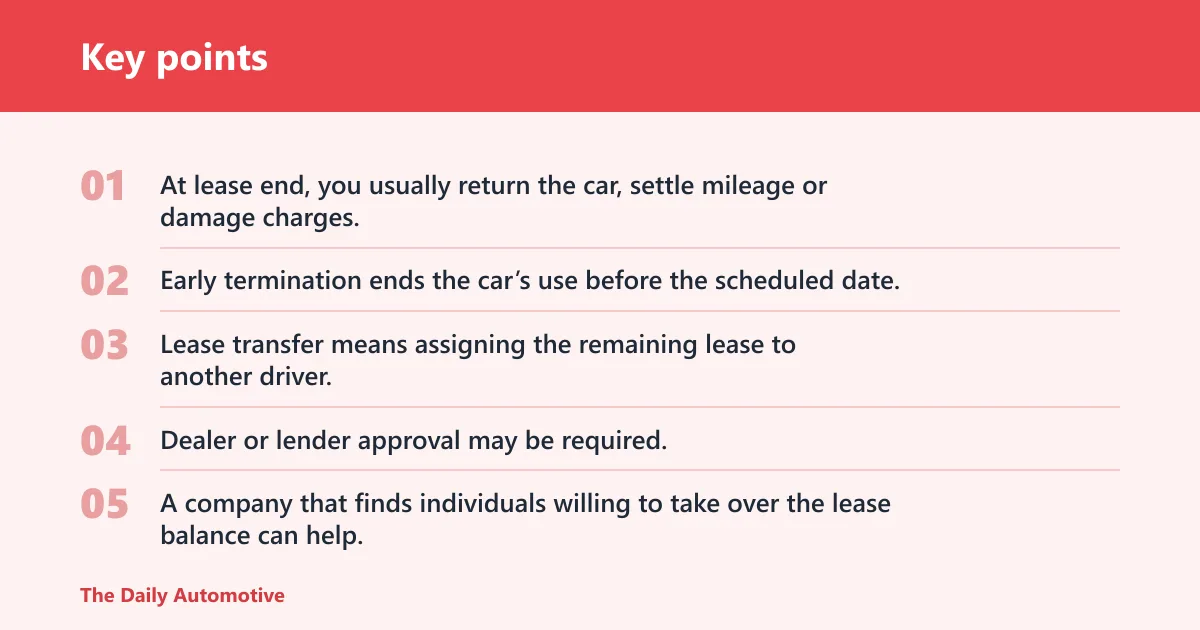
At lease end, you usually return the car, settle mileage or damage charges, and pay any required closing fee. Early termination ends the car’s use before the scheduled date, so the lessor may bill for the remaining lease obligation plus any contractual penalties.
When lease transfer is the better exit
Lease transfer means assigning the remaining lease to another driver. Dealer or lender approval may be required, and some dealers do not allow a transfer at all. A company that finds individuals willing to take over the lease balance can help, but approval rules vary.
State rules and lender rules are separate. Even when a transfer is approved, the original lessee may remain liable until the lease is concluded, and that liability can continue if the new driver misses payments.
What happens if the car is underwater
If the car is worth less than the payoff amount, the gap matters. The lessor may expect the remaining balance, and a transfer or buyout may be cheaper than a straight early return. Ask for a written payoff quote before you decide.
A common first-timer mistake is treating a lease like a rental car. It is a contract with a payoff structure. The lessor can still pursue the remaining amount, even if the vehicle is turned in early.
Lease transfer, buyout, or return?
Choose the exit that matches the math and the contract. Lease transfer can reduce the remaining obligation if another driver and the lender accept it. Buyout can work if the purchase price is close to or below market value. Return is the cleanest route only when the end-of-lease charges are manageable.
Lease transfer approval and liability
Lease transfer is common for early exit, but approval is not automatic. The lender or dealer may review credit, charge a transfer fee, or reject the request. The original lessee may remain liable if the transferee defaults, so you need written confirmation of the handoff terms.
Buyout math when the car is worth less than expected
If the lease is underwater, buying the car can still make sense only when the buyout number is competitive with the market value and your financing terms are acceptable. If not, you may be paying to own negative equity. That is not a return fee, but it can be a costly exit.
Turning the car in and settling the balance
Returning the car puts the vehicle back in the lessor’s hands, then the lender reviews condition, mileage, and missing items. If you still owe money after the return, that balance can remain due. Returning before the lease ends may also send the vehicle to auction.
Money factor and residual value

These lease-cost drivers shape your monthly payment and the risk at return. Money factor is the lease interest-rate equivalent, and Car and Driver says it can be converted to APR by multiplying by 2400. The article also says a dealer can legally write you a higher money factor.
How money factor affects monthly payments
The money factor works like the finance charge in the lease formula. A higher money factor raises the payment. Because dealers may mark it up, it is worth asking what the buy rate is before you sign.
How residual value shapes lease cost
Manufacturers set fixed residual values for every model trim level. Higher residual value usually lowers the monthly payment because the vehicle is expected to be worth more at lease end. That number also affects the buyout figure you may face later.
Net capitalized cost and capitalized cost reduction
Capitalized cost reduction is money taken off the top of a lease. It can include a down payment and incentives. Net capitalized cost is the net price after those reductions, and it is the amount used in the monthly lease calculation with the residual value and money factor.
Dealer contribution and markup
Dealer contribution is an unpublished manufacturer discount that may lower the selling price or MSRP used in the lease deal. Not all dealers have to honor it. If the numbers look off, ask how the cap cost, residual, and money factor were set before you focus on return-day fees.
What happens after you return it?
After return, the dealer or lessor inspects the car, reviews the mileage and condition, and sends a final bill if needed. If the vehicle is returned before the lease ends, the dealer may sell it at auction. Auction proceeds can be lower than retail, and the remaining balance may still be due.
Dealer inspection and charge review
The inspection can confirm damage, missing equipment, or excess wear. Expect the lessor to compare the condition against the contract and the pre-return inspection report. Any mismatch is where disputes usually start, which is why photos and repair records matter.
Auction return process
Sapling says most dealers will sell the car at auction if you break the lease. The dealer reduces the amount by auction proceeds, and the remainder is due from you. That does not guarantee the sale will cover the balance.
Why auction proceeds may not cover the balance
Auction prices can be below retail. If the car brings less than the payoff amount, the shortfall may still be billed to you. That is why early return can be expensive even when the car appears to have decent market value.
Damage, mileage, and maintenance checks
These are the three checks that usually decide whether the return stays close to plan or gets expensive. Excess mileage, wear-and-tear, and damage charges depend on the lease terms, and missed maintenance can weaken your position if the lessor questions the car’s condition at turn-in.
Excess mileage math
Check the contract’s mileage allowance, then subtract your current odometer reading from the return limit to see how much room remains. If you are close, reduce driving before the return date. Mileage overage charges can rise quickly because the rate is fixed by contract.
Wear-and-tear versus damage
Small stone chips, light seat wear, and normal tire use may be treated differently from broken glass, torn upholstery, bent wheels, or body damage. The line depends on the lease. Do not assume the inspector will call everything “normal wear.”
Repair receipts and maintenance proof
Keep receipts for any pre-return repair, plus proof of scheduled maintenance. If the contract asks for service at fixed intervals, bring that proof. A missing oil change or skipped inspection can become a charge or a negotiation problem if the vehicle returns with related issues.
Picture a compact SUV with about 11,700 miles on a 12,000-mile allowance and a cracked tail lamp. A same-week bulb replacement and documented lamp repair are much easier to explain than an unrecorded fix that the inspector cannot verify.
Frequently asked questions
How do I return a leased car without paying extra fees?
Start with the lease contract, then schedule the pre-return inspection 2 to 4 weeks early, repair minor damage, check mileage, and gather receipts and service records. You cannot avoid every fee, but you can reduce the charge bill by documenting condition and meeting the contract terms.
Can I return a leased vehicle early?
Yes, but early return can be expensive. The lessor may charge early termination costs, and the car may be sold at auction with any shortfall billed to you. Ask about transfer, buyout, and payoff options before you hand the car back.
What happens if I return my lease before the term ends?
The lease does not simply disappear. The lender can assess the remaining obligation, fees, and any condition or mileage charges allowed by contract. If the vehicle is sold at auction, the sale proceeds may reduce the balance, but they may not erase it.
Can I transfer my lease to someone else?
Often yes, but approval rules vary by lender and dealer. Some dealers do not allow transfers, and the original lessee may remain liable if the new driver defaults. Get the approval terms in writing before you treat the transfer as complete.
Will the dealer make me pay if the lease car is worth less than expected?
If the vehicle is worth less than the payoff amount, you may still owe the difference depending on the contract and how the lease ends. A return, a buyout, or a transfer can each lead to different costs, so ask for the payoff figure before deciding.
What fees are hardest to avoid when returning a lease?
Disposition fees are often hard to avoid, acquisition fees are usually not avoidable, and mileage or damage charges depend on the car’s condition at return. Early termination costs can be the most painful because they often involve the remaining lease obligation as well as fees.
Products related to this article
Sponsored / affiliate links. As an Amazon Associate I earn from qualifying purchases. I may earn additional commission from eligible campaigns.
 FH Group Car Seat Cover Front Set Striking Striped Car Seat Covers with Front Seat Covers and Rear Split Bench, Universal Fit Interior Accessories for Cars, Trucks, and SUVs – Gray
 Efficient Car Glass Oil Film Cleaner,2025 UpgradeHydrophobic Glass Coating for Windshield Improves Clarity and Visibility,Windshield wiper for all vehicles (1, red)