What Temp Do Cars Have Trouble Starting: Essential Guide
Cars typically start having trouble starting when temperatures drop below 0°F (-18°C). At these frigid conditions, engine oil thickens, the battery weakens, and fuel can struggle to ignite, making your car reluctant to turn over. Understanding these limits helps you prepare and avoid being stranded.
Is your car giving you the cold shoulder when the temperature plummets? It’s a common frustration, but don’t worry! Many drivers find themselves wondering, “What temp do cars have trouble starting?” The answer often lies in the simple physics of cold weather affecting your vehicle’s core components. When the mercury drops, even reliable cars can become hesitant. This guide will break down exactly what happens when it gets too cold, what temperatures are most problematic, and what you can do to ensure your car starts smoothly, no matter the weather.
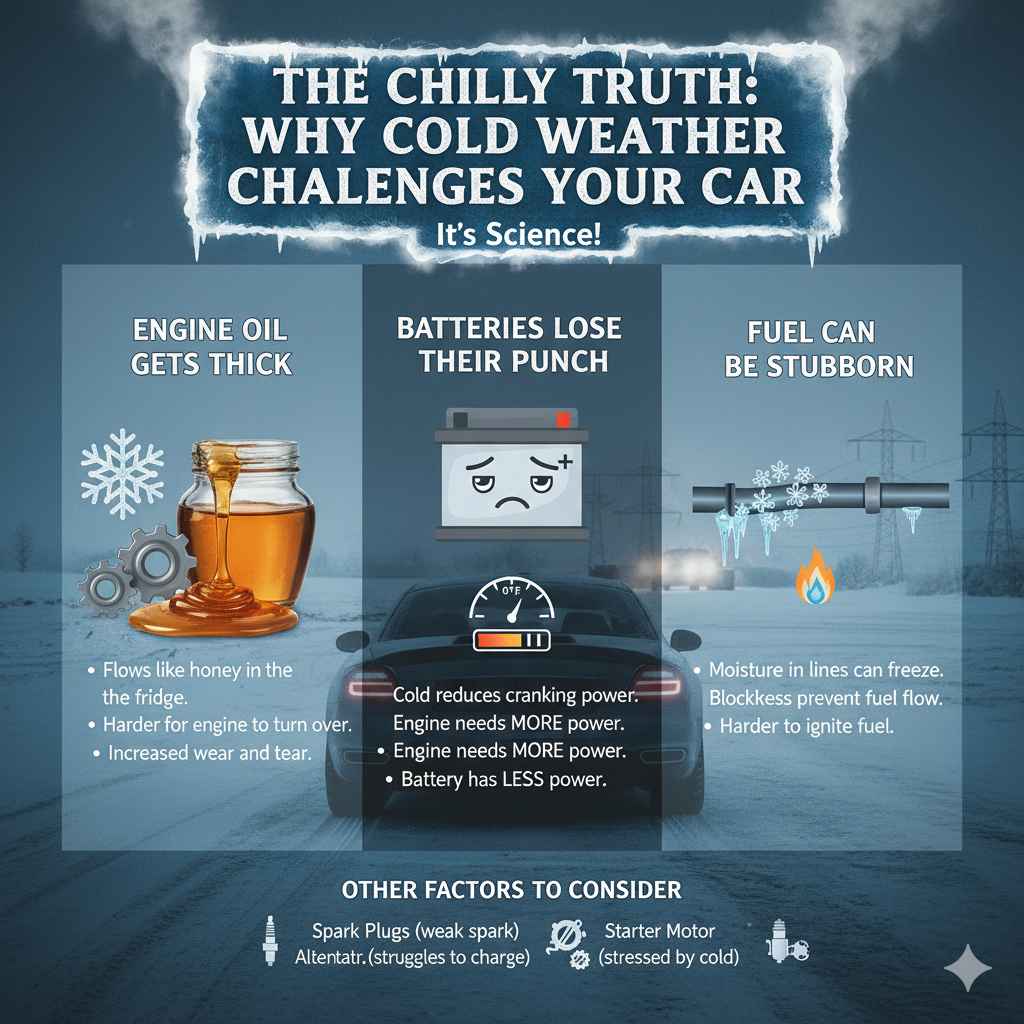
The Chilly Truth: Why Cold Weather Challenges Your Car
When we talk about cars having trouble starting in the cold, it’s not magic – it’s science! Several key parts of your car work harder, or even less effectively, as the temperature drops. Think of it like trying to run a race with a thick blanket on in freezing weather; it just takes more effort.
Engine Oil Gets Thick
One of the biggest culprits is your engine oil. At normal temperatures, oil flows easily, lubricating all the moving parts inside your engine. However, as it gets colder, oil becomes thicker, much like honey in the fridge. This thicker oil makes it harder for the engine to turn over because there’s more resistance. It also means that parts don’t get lubricated as quickly when you first start the engine, which can cause extra wear and tear over time.
Batteries Lose Their Punch
Your car’s battery is like its powerhouse. It has to generate a lot of energy to get the engine cranking. Cold weather significantly reduces a battery’s cranking power. A battery that might start your car just fine in 70°F (21°C) weather might struggle or fail completely at 0°F (-18°C). It’s a double whammy: the engine needs more power to turn over in the cold, and the battery has less power to give.
Fuel Can Be Stubborn
Modern cars use fuel injection, which is generally good at dealing with a range of temperatures. However, in extreme cold, the fuel itself can become an issue. If there’s any moisture in your fuel lines, it can freeze and create blockages, preventing fuel from reaching the engine. Also, the vapor pressure of gasoline can decrease in very cold temperatures, making it harder to ignite.
Other Factors to Consider
Beyond these main three, other components can be affected:
- Spark Plugs: If spark plugs are worn or fouled, they might struggle to create a strong enough spark to ignite the fuel-air mixture in cold conditions.
- Alternator: While the alternator charges the battery while the engine is running, a weak alternator might not keep up with the battery’s demands in extreme cold, especially if you have many accessories running.
- Starter Motor: The starter motor, which physically turns the engine over, can also be stressed by thicker oil and a weaker battery, making it more prone to failure in extreme cold.
The Critical Temperature Threshold: When Cars Start to Complain
So, what temp do cars have trouble starting? While there’s no single magic number that applies to every single car, we can identify general temperature ranges where problems become more common.
The Below Freezing Zone (32°F / 0°C and Below)
As soon as the temperature hits freezing (32°F or 0°C), you might start noticing your car crank a little slower than usual. This is often due to the oil beginning to thicken. It’s usually not a major problem at this point, but it’s a sign that the cold is starting to affect your vehicle.
The Seriously Cold Zone (0°F / -18°C and Below)
This is where cars really start to struggle. At 0°F (-18°C), and especially as temperatures drop further, the effects on the battery and engine oil become much more pronounced. A standard, healthy car battery can lose up to 50% of its cranking power at 0°F (-18°C) compared to 80°F (27°C). Combined with the significantly thickened oil, the starter motor has a very hard job to do. Many cars, especially older ones or those with less-than-perfect batteries, will have trouble starting in this range.
When It’s Absolutely Bitter (-20°F / -29°C and Below)
At these extreme temperatures, even well-maintained cars can face starting issues. Most car batteries are rated for cold-cranking amps (CCA), but even with sufficient CCA, the battery’s internal chemistry is less efficient. Engine oil, especially conventional oil, can become so thick it’s almost like sludge. Starting your car in these conditions puts immense strain on all its electrical and mechanical components. For many vehicles, starting becomes highly unreliable, and damage could occur if attempted frequently without proper preparation.
A Table of Temperature Effects
Here’s a quick overview of how temperatures generally affect your car’s starting ability:
| Temperature Range | General Effect on Car Starting | Main Concerns |
|---|---|---|
| Above 32°F (0°C) | Normal operation, minimal issues. | Standard wear and tear, but generally reliable. |
| 32°F to 10°F (0°C to -12°C) | Slight hesitation, slower cranking. | Oil begins thickening, battery power slightly reduced. |
| 10°F to 0°F (-12°C to -18°C) | Noticeable difficulty, slower cranking, may require multiple attempts. | Significant oil thickening, battery starting to strain. |
| 0°F to -20°F (-18°C to -29°C) | Serious starting problems, jump-starts often needed, potential strain on starter. | Oil very thick, battery significantly weakened, fuel system components stressed. |
| Below -20°F (-29°C) | Very difficult to start, may not start at all without special preparation. | Extreme oil viscosity, severely reduced battery output, risk of component damage. |
It’s important to remember that these are general guidelines. Factors like the age and condition of your battery, the type of oil used, and your car’s specific design play huge roles.
Preparing Your Car for Cold Weather: Be Proactive!
The best way to deal with cold-weather starting issues is to prevent them from happening in the first place. A little preparation can save you a lot of hassle and expense.
1. Battery Health Check
Your battery is your first line of defense against the cold. Before winter hits, get it tested. Most auto parts stores can do this for free. If your battery is more than 3-4 years old, or if it fails the test, consider replacing it. A new, fully charged battery is crucial for cold starts. You can learn more about car batteries and testing them from resources like the Battery University.
2. Use the Right Engine Oil
Check your owner’s manual for the recommended oil viscosity for cold weather. Many modern cars benefit from synthetic oil, which flows much better in low temperatures than conventional oil. A good synthetic oil can make a significant difference in how easily your car starts when it’s freezing outside. Look for multi-grade oils like 5W-30 or 0W-20, where the “W” stands for “Winter.” The lower the second number, the better it flows when cold.
3. Keep Your Fuel Tank Full(ish)
This might sound counterintuitive, but keeping your gas tank at least half full can help prevent fuel line freeze-ups. When the tank is low, there’s more air space, which can lead to condensation forming inside the tank. This moisture can then travel into the fuel lines and freeze. Also, if you need to start your car frequently in cold weather, having enough fuel is essential.
4. Consider a Battery Blanket or Block Heater
For those living in extremely cold climates, specialized equipment can be a lifesaver. A battery blanket warms your battery, helping it maintain its power output. A block heater warms the engine coolant, reducing oil thickening and making it much easier for the engine to turn over. These are often plugged into an outdoor electrical outlet overnight. Organizations like the Department of Energy provide valuable information on energy-saving tips for winter, which can include these types of vehicle preparations.
5. Check Your Coolant
While not directly related to starting, your coolant (antifreeze) is vital for your engine’s overall operation in the cold. Ensure it’s at the proper level and has the correct mixture of antifreeze to water to prevent freezing, which can cause catastrophic engine damage.
6. Inspect Spark Plugs and Wires
Worn spark plugs or damaged spark plug wires can lead to weak sparks, making it harder for the engine to ignite the fuel in cold conditions. If you’ve been experiencing misfires or rough idling, it might be a good time to have these checked.
What to Do If Your Car Won’t Start in the Cold
Even with the best preparations, sometimes a car just won’t cooperate. Here’s what to do:
- Don’t Keep Cranking: If the engine doesn’t turn over immediately, stop trying after about 10-15 seconds. Repeatedly cranking can drain your battery and overheat the starter motor.
- Check Battery Terminals: Ensure the battery terminals are clean and tight. Corroded or loose connections can prevent power from reaching the starter.
- Try a Jump Start: If you suspect the battery is weak, a jump start might be necessary. Make sure you have jumper cables and know how to use them safely. Always connect the positive (+) cables first, then the negative (-) cables, and attach the final negative clamp to a ground point on the dead car’s chassis, not the battery. The National Highway Traffic Safety Administration (NHTSA) offers safety guidelines for jump-starting.
- Use Starting Fluid (with Caution): Starting fluid is a highly flammable aerosol that can help ignite fuel in very cold conditions. Spray a small amount into the air intake (usually accessible by removing the air cleaner hose) and then try to start the engine. Use this sparingly, as too much can damage the engine.
- Call for Assistance: If none of these steps work, it’s time to call a tow truck or roadside assistance. They can either jump-start your car, tow it to a mechanic, or diagnose more serious problems.
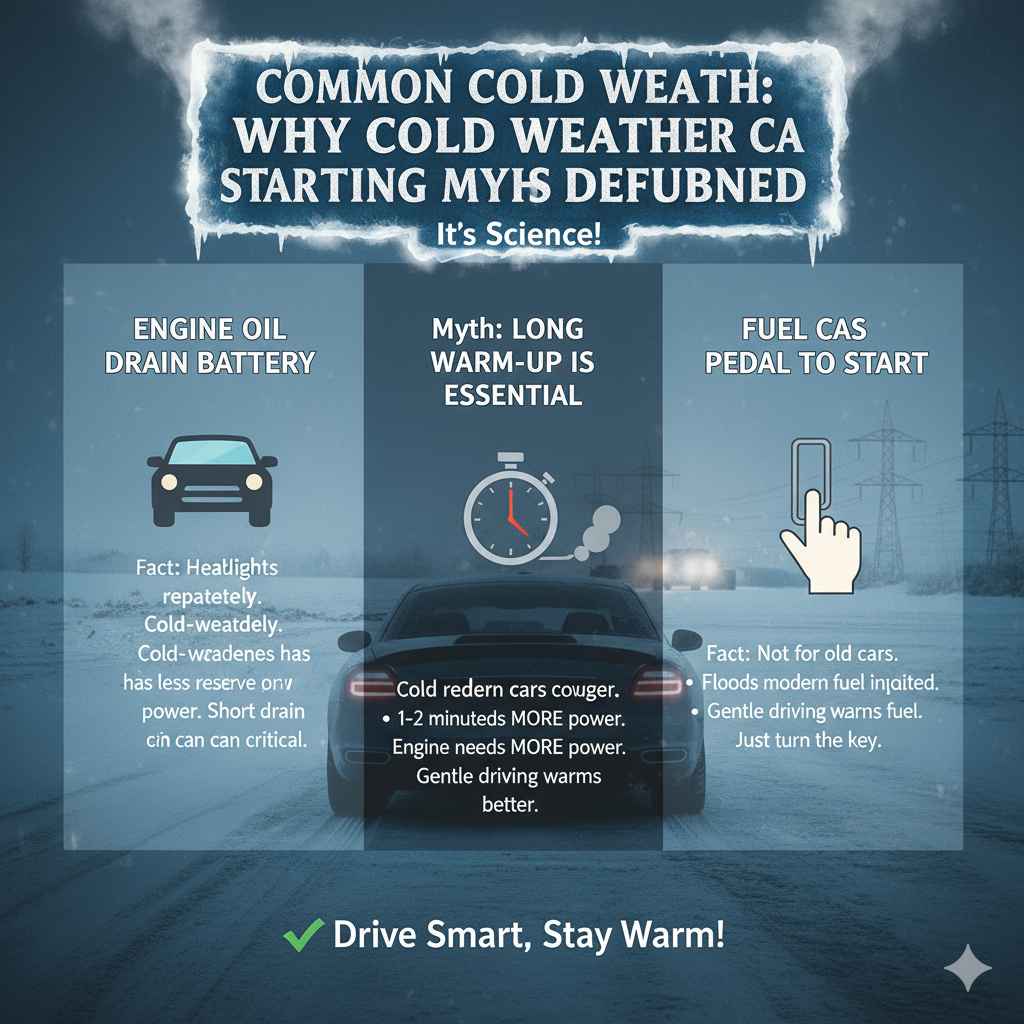
Common Cold-Weather Car Starting Myths Debunked
There are plenty of pieces of advice out there, but not all of it is accurate. Let’s clear up a few common myths:
-
Myth: Leaving your headlights on overnight will drain your battery.
Fact: While leaving headlights on will drain your battery, it’s unlikely to happen repeatedly without you noticing. The real issue in winter is that a battery weakened by cold might not have enough power left to start the car even after a short period of lights being left on, especially if it was already weak.
-
Myth: Warming up your car for a long time before driving is essential.
Fact: Modern fuel-injected engines don’t need extended idling like older carbureted engines. A minute or two is usually sufficient to let the oil circulate. Driving gently for the first few minutes will warm the engine up more efficiently and is better for it.
-
Myth: You should pump the gas pedal to help start the car.
Fact: This is only true for very old cars with carburetors. For modern cars with fuel injection, pumping the gas pedal can actually flood the engine and make it harder to start. Just turn the key or push the button.
FAQ: Your Cold-Start Questions Answered
Q1: At what temperature does a car battery start losing significant power?
A1: A car battery starts to lose noticeable cranking power as temperatures approach and fall below freezing (32°F / 0°C). At 0°F (-18°C), a battery can lose up to 50% of its rated cranking power.
Q2: Can very cold weather damage my engine if it doesn’t start immediately?
A2: While a few failed attempts are unlikely to cause major damage, repeatedly cranking a car in extreme cold with very thick oil can put a lot of strain on the starter motor and engine components. It’s best to stop trying after a few short attempts and seek assistance or try a different method like starting fluid (used correctly).
Q3: What does “cold cranking amps” (CCA) mean for my battery?
A3: Cold Cranking Amps (CCA) is a rating that indicates how much power a battery can deliver at 0°F (-18°C) for 30 seconds while maintaining a voltage above 7.2 volts. A higher CCA rating is better for cold weather starting.
Q4: Should I use a different oil type in winter?
A4: Yes, absolutely! Your owner’s manual will specify the appropriate oil viscosity for your climate. Many drivers switch to synthetic oil with a lower “W” rating (like 0W-20 or 5W-30) for better performance in freezing temperatures.
Q5: My car started fine yesterday, but now it won’t start in the cold. What could be wrong?
A5: This often happens when cold weather exposes an existing weakness. Your battery might have been on its last legs, or there could be a small moisture issue in the fuel line. Check the battery connections first, and if that doesn’t help, it might be time for a mechanic to look at it.
Q6: Is it okay to let my car idle for a long time in the cold?
A6: For modern cars, it’s generally not recommended to idle for excessively long periods. It uses fuel without effectively warming the engine and transmission. Driving gently for the first few minutes is a better way to warm up your car.
Q7: What’s the best way to prevent my car from freezing up in winter?
A7: Regular maintenance is key! Ensure your battery is healthy, use the correct engine oil (preferably synthetic), keep your fuel tank at least half full to minimize condensation in the tank, and ensure your coolant has sufficient antifreeze protection. If you live in a very cold region, consider a block heater.
Conclusion: Conquer the Cold with Confidence
Understanding what temp do cars have trouble starting is all about knowing how extreme cold affects your vehicle’s essential systems – primarily the battery and engine oil. By recognizing that temperatures below 0°F (-18°C) present significant challenges, and even freezing temperatures (32°F / 0°C) can start to slow things down, you can be better prepared. Regular maintenance, using the right fluids, and having your battery checked before winter are your best strategies. Don’t let the cold weather catch you off guard. With a little foresight and care, you can ensure your car starts reliably and you continue to travel safely and confidently, no matter how low the mercury drops.