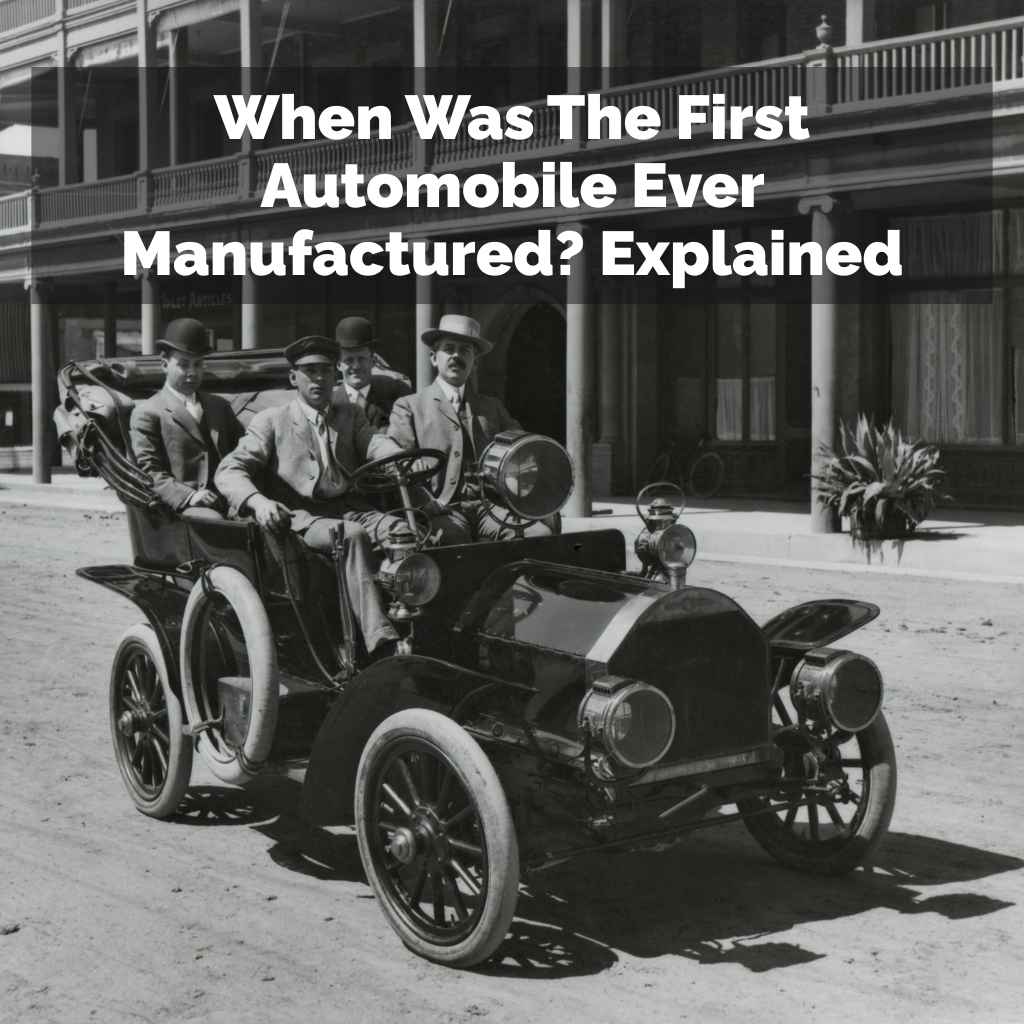
When Was The First Automobile Ever Manufactured? Explained
It’s a question many of us ponder, especially when we see a classic car or a modern marvel gliding down the street. We marvel at how far we’ve come. But when did it all begin?
When was the first automobile ever manufactured? It’s a journey filled with ingenious minds and a bit of trial and error. Let’s dive into that fascinating starting point.
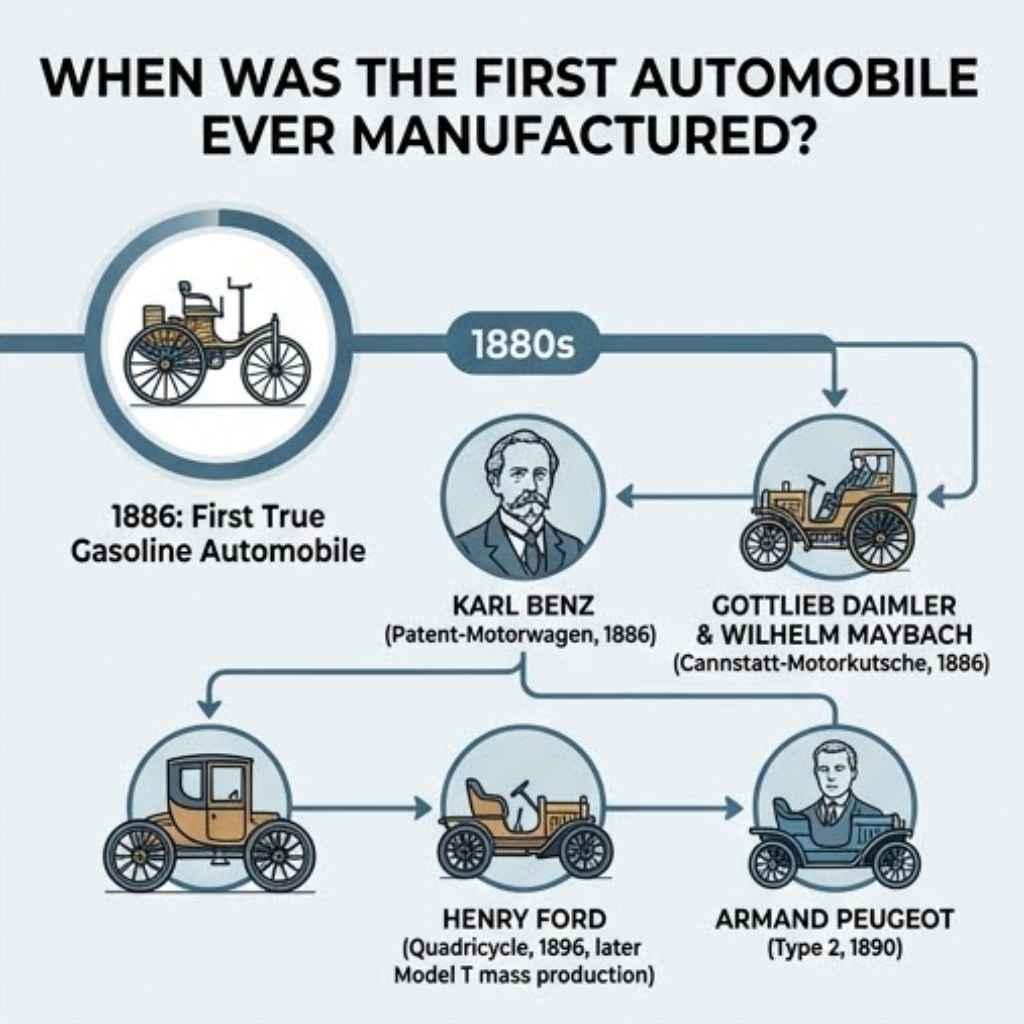
The first true automobiles, powered by internal combustion engines, emerged in the late 1880s. Karl Benz is widely credited with inventing the first practical car, the Benz Patent-Motorwagen, in 1886. This marked the beginning of a new era in personal transportation.
The Dawn of the Automobile
Thinking about the very first car feels like looking at a blueprint for the future. It wasn’t just one person’s idea. Many inventors tinkered with self-propelled vehicles for years.
Early attempts used steam power. Imagine a giant, noisy tea kettle on wheels!
These steam machines were heavy and slow. They needed a lot of water and took a long time to get going. They were more like mobile boilers than cars we know today.
People saw the potential, though. The idea of moving without horses was very exciting.
The real breakthrough came with the development of the internal combustion engine. This engine burns fuel inside itself to create power. It was smaller, lighter, and much more efficient than steam.
This changed everything for making a car that people could actually use.
Karl Benz and the Patent-Motorwagen
When we talk about the first automobile, one name usually comes up: Karl Benz. In Germany, he was working tirelessly. He wanted to create a practical, gasoline-powered vehicle.
His goal was a car that could be driven by ordinary people.
In 1886, Benz patented his “Motorwagen.” This three-wheeled vehicle is often called the first true automobile. It had a single-cylinder engine mounted at the back. The engine was cooled by water.
It had a carburetor to mix fuel and air.
Benz’s car was a marvel for its time. It could reach speeds of about 10 miles per hour. That might seem slow now, but it was revolutionary then.
The driver sat upright and steered with a tiller. It was a far cry from the luxury sedans of today.
Bertha Benz, Karl’s wife, played a crucial role. She believed in his invention even when others doubted it. She famously took the Motorwagen on a long journey without her husband’s knowledge.
This trip proved the car’s reliability.
She drove from Mannheim to Pforzheim in 1888. This was about 66 miles. She had to buy gasoline from apothecaries along the way.
She also dealt with mechanical issues. She even cleaned the engine herself. Her journey showed that the car could be practical for everyday travel.
Early Automobile Milestones
- 1769: Nicolas-Joseph Cugnot builds a steam-powered vehicle.
- 1807: Nicéphore Niépce creates what may be the first internal combustion engine.
- 1860: Étienne Lenoir builds the first commercially successful internal combustion engine.
- 1886: Karl Benz patents the Benz Patent-Motorwagen.
- 1888: Bertha Benz undertakes the first long-distance automobile journey.
Gottlieb Daimler’s Contributions
Across Germany, another inventor was also making great strides. Gottlieb Daimler, along with his partner Wilhelm Maybach, was also developing gasoline engines. They built their first motorcycle in 1885.
This was a two-wheeled vehicle powered by their engine.
In 1886, they adapted their engine to a four-wheeled carriage. This was essentially a horse-drawn carriage with a Daimler engine. It was a significant step towards a car as we might recognize it.
Daimler’s focus was on creating a high-speed engine.
Daimler and Benz worked independently for a while. Their paths would cross later. Their individual work laid the foundation for the automotive industry.
They both proved that gasoline engines could power vehicles effectively.
Daimler’s engine was a V-twin design. It was more powerful than Benz’s early engine. They continued to refine their designs.
They understood the need for better fuel systems and ignition. Their contributions were vital for making cars more practical.
The Birth of the Automotive Industry
Once Benz and Daimler showed that automobiles were possible, others jumped in. The late 1800s saw a flurry of innovation. Many countries were involved in this new race.
France became a major center for early car manufacturing. Companies like Panhard & Levassor and Peugeot began building cars. They built on the designs of Benz and Daimler.
They made improvements to steering and chassis design.
These early cars were often expensive and built by hand. They were seen as luxury items for the wealthy. Only a few were made each year.
The idea of mass production was still a distant dream. The roads were also not ideal for cars.
Most roads were made for horses and carts. They were often unpaved and rough. This made driving a new car a bumpy and sometimes dangerous experience.
Drivers had to be skilled mechanics as much as drivers.
The challenges were immense. But the appeal of personal freedom and speed was powerful. People were eager to embrace this new technology.
The early automobile was not just a machine; it was a symbol of progress.
Key Early Innovators and Their Focus
Karl Benz: Focused on a complete, integrated automobile design, including the engine, chassis, and steering. He aimed for practicality and usability.
Gottlieb Daimler: Concentrated on developing high-speed engines that could be applied to various vehicles, from motorcycles to carriages.
Wilhelm Maybach: Collaborated with Daimler, focusing on engine improvements and practical car design elements.
The Early Years of Car Manufacturing
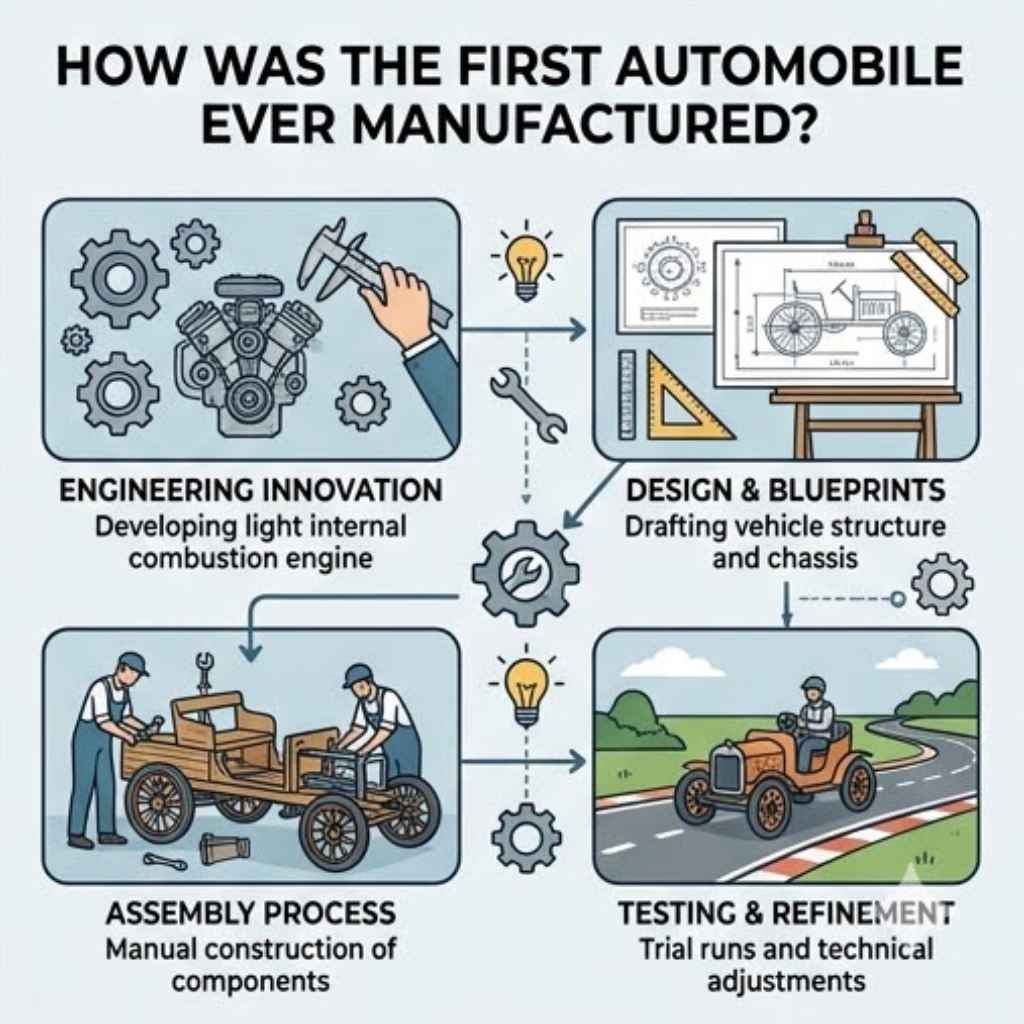
Manufacturing a car in the early days was very different from today. There were no assembly lines. Each car was often built by a small team of skilled craftsmen.
This made them very costly.
The components were not standardized. Parts for one car might not fit another. This meant repairs were difficult.
Mechanics had to be creative and skilled to fix these machines.
The materials used were also different. Steel was becoming more common, but wood was still used extensively in car bodies. Tires were made of solid rubber, which offered little comfort.
Suspension systems were very basic.
Safety was also a big concern. There were no seat belts, airbags, or crumple zones. Brakes were often simple drum brakes.
Driving required constant attention and quick reflexes. The environment was also challenging.
Fuel was not readily available in gas stations. Drivers had to carry their own fuel. Roads were poor.
Weather could make driving impossible. Despite these hurdles, the desire to own a car grew.
The first automobiles were fascinating machines. They represented human ingenuity. They were the result of a long quest for faster, more convenient travel.
The 1886 Benz Patent-Motorwagen stands as a true marker.
The Impact of the First Automobiles
When the first automobiles were manufactured, their impact was immediate, even if limited to a few people. They represented a radical shift in how people thought about travel. Before cars, travel was dictated by the speed of animals or the limits of public transport.
The automobile offered personal freedom. You could go where you wanted, when you wanted. This was a powerful concept.
It began to change the way people lived and worked. Families could visit distant relatives more easily.
Businesses could transport goods faster. This spurred economic growth. Cities began to change.
Roads were improved. New industries emerged, like tire manufacturing and gasoline production. The automobile was not just a vehicle; it was a catalyst for change.
The early cars were noisy and often unreliable. They were expensive status symbols. But they planted a seed.
The dream of owning a car became a goal for many. This dream would eventually lead to mass production and a world transformed.
Myth vs. Reality: Early Automobiles
Myth: The first cars were designed for speed and luxury.
Reality: Early automobiles focused on basic functionality and demonstrating the feasibility of self-propelled vehicles. Speed was limited, and comfort was minimal.
Myth: Car manufacturing began with a single, perfect design.
Reality: The development was a gradual process with many inventors contributing and refining ideas. The Benz Patent-Motorwagen was a significant step, but not the end of development.
From Hobby to Industry
In the beginning, building cars was more of a hobby for inventors and engineers. It was a fascinating challenge. They experimented with different engine types and designs.
The early automobiles were not sold in showrooms.
You couldn’t just walk into a store and buy one. They were often custom-built. People who could afford them would commission a car from a builder.
This made them incredibly exclusive.
The year 1886 is key because it’s when Karl Benz received his patent. This patent protected his design. It acknowledged his invention as something new and distinct.
This was important for him to proceed.
Other inventors were also filing patents for their own engine designs. It was a period of intense intellectual property activity. This competition helped drive progress faster.
The transition from a hobby to a true industry took time. It required more than just an engine. It needed reliable parts, better manufacturing methods, and a market of buyers.
This took several more decades to fully develop.
The development of the automobile was a global effort. While Benz is credited with the first practical car, many others contributed. This collaborative, competitive spirit is what fuels innovation.
The Legacy of the First Car Manufacturers
The companies that started making cars in the late 19th century are still around today, or their legacies live on. Benz and Daimler eventually merged in 1926 to form Daimler-Benz. This company became Mercedes-Benz.
It remains a symbol of automotive excellence.
Peugeot and Renault in France also have long histories. They were pioneers in engine technology and vehicle design. The early struggles and triumphs of these companies shaped the global automotive landscape we see now.
These early manufacturers faced many challenges. They had to convince people that cars were safe and practical. They had to develop new skills and tools for manufacturing.
They had to navigate a world not yet ready for them.
Their persistence paid off. They created a product that would change the world. The idea of personal mobility became a reality.
It unlocked new possibilities for how people lived, worked, and explored.
The spirit of these early makers is still present. It’s in the continuous drive for better fuel efficiency, safety, and technology. They set a high bar for innovation.
Their first creations were humble, but their impact was immense.
Early Car Manufacturers vs. Today
Style: Hand-built, custom designs vs. mass-produced, standardized models.
Production: A few units per year vs. millions of vehicles annually.
Materials: Wood, basic steel, solid rubber vs. advanced alloys, plastics, and synthetic rubber.
Technology: Basic engines, minimal safety vs. complex electronics, advanced safety systems, electric and hybrid options.
When Was the First Automobile Actually “Manufactured”?
Pinpointing the exact moment of “manufacture” can be tricky. If we define manufacturing as mass production, then the very first cars weren’t manufactured in that sense. They were built.
However, if we consider manufacturing as the process of creating a product for sale, then the Benz Patent-Motorwagen of 1886 is the answer. Karl Benz didn’t just build a prototype; he intended it for sale and distribution. He built multiple examples.
The term “manufactured” can also imply a factory setting. Early car factories were very small. They were more like workshops.
Skilled artisans assembled the vehicles. It was a meticulous process.
The year 1886 is the recognized starting point for the automobile. This is when the first practical, gasoline-powered vehicle was patented and produced. It laid the groundwork for all that followed.
Think about it. Before 1886, there was no “car factory” producing automobiles. There were just experiments and ideas.
Benz’s patent marked the beginning of a new industry. It changed the world in ways no one could have fully predicted.
So, when you ask when the first automobile was manufactured, the answer points to the late 1880s. It was a period of groundbreaking innovation. Karl Benz’s creation was the spark that ignited a revolution.
The Road Ahead: From Early Cars to Modern Machines
The journey from the Benz Patent-Motorwagen to today’s electric vehicles is incredible. It’s a story of continuous improvement. Each generation of engineers and designers built upon the last.
Early cars were simple mechanical devices. Modern cars are complex computers on wheels. They feature advanced navigation, entertainment, and safety systems.
They are more efficient and cleaner than ever before.
The challenges faced by early car makers are a reminder of how far we’ve come. They had to overcome skepticism, technical hurdles, and poor infrastructure. Their perseverance is inspiring.
The concept of the automobile has evolved too. It’s no longer just about getting from point A to point B. It’s about connectivity, sustainability, and the driving experience itself.
The first automobiles were a bold step into the future. They were a testament to human ambition and ingenuity. They truly paved the way for the modern world.
Frequently Asked Questions
Who invented the first automobile?
Karl Benz is widely credited with inventing the first practical automobile. He patented his Benz Patent-Motorwagen in 1886. While others worked on self-propelled vehicles, Benz’s design is considered the first true car.
What year was the first car made?
The first automobile, the Benz Patent-Motorwagen, was made in 1886. This vehicle was powered by an internal combustion engine and was designed for practical use.
How fast could the first cars go?
The very first automobiles, like the Benz Patent-Motorwagen, were quite slow by today’s standards. They could typically reach speeds of around 10 miles per hour. This was still faster than a horse-drawn carriage over long distances.
What powered the first automobiles?
The first practical automobiles were powered by gasoline-fueled internal combustion engines. This technology was a significant improvement over earlier steam-powered vehicles, which were heavier and less efficient.
Was the Benz Patent-Motorwagen the only early automobile?
No, while the Benz Patent-Motorwagen is considered the first practical automobile, other inventors were also developing self-propelled vehicles around the same time. Gottlieb Daimler, for example, was also creating engines and vehicles in Germany. Their independent work contributed to the early development of cars.
How were early cars manufactured?
Early cars were not manufactured on assembly lines like today. They were typically built by hand in small workshops by skilled craftsmen. Each car was often a custom or semi-custom build, making them expensive and produced in very limited numbers.
What was the biggest challenge for early car makers?
One of the biggest challenges was the lack of infrastructure. Roads were often unpaved and unsuitable for automobiles. Another challenge was convincing the public that cars were reliable and safe.
Fuel availability was also a significant issue.
Conclusion
The story of the first automobile is a testament to human curiosity and drive. From Karl Benz’s vision in 1886 to the complex vehicles of today, the automobile has transformed our world. The manufacturing process itself has undergone a revolution, moving from skilled hands to automated giants.
Products related to this article
Sponsored / affiliate links. As an Amazon Associate I earn from qualifying purchases. I may earn additional commission from eligible campaigns.
 BRIGHTFUFU Compressor Air Pump for Car Tires Tire Inflator with Psi High Pressure Compact Design for Emergency Use for Vehicles Bicycles and More
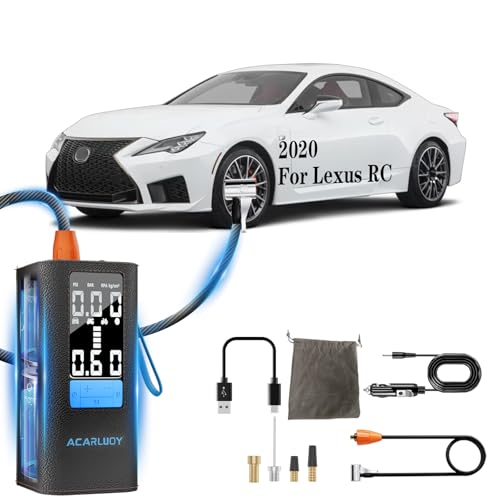 ACARLUOY Air Pump Car Tire,Automobile Tire Compressor,Cordless Air Compressor,Inflator Pump,Auto Shutoff,Fit for Lexus RC 2020,6000mAh Battery, LCD Screen, LED Light