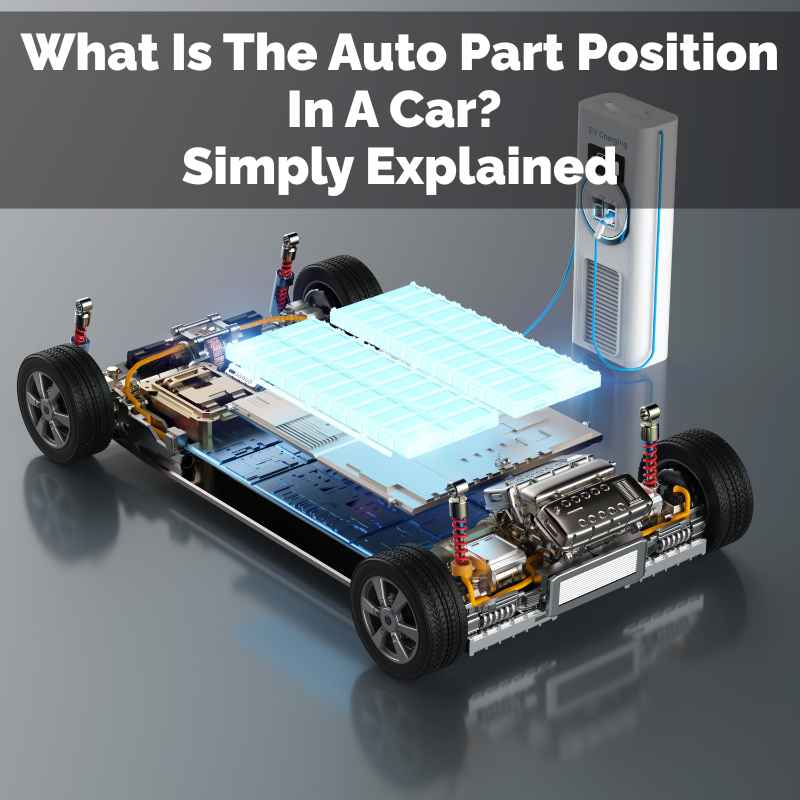
What Is The Auto Part Position In A Car? Simply Explained
The auto part position in a car refers to the physical location of a specific component within the vehicle’s structure. Knowing these positions helps with maintenance, repairs, and understanding vehicle systems. It’s like knowing where the engine, wheels, or steering wheel are, but for every single part.
Understanding Your Car’s Layout
Your car is a complex machine. It has many parts working together. Knowing where these parts are is super helpful.
It’s not just for mechanics. It helps you understand what’s going on. It also helps when you need to get something fixed.
Think of your car like your body. You know where your heart is. You know where your lungs are.
This makes it easier to talk about health issues.
The layout of car parts is generally consistent. There are common areas for big systems. The engine is almost always at the front.
The transmission connects the engine to the wheels. The exhaust system runs from the front to the back. The fuel tank is usually at the rear.
Knowing these general spots is a great start.
We will go through each major area. We’ll talk about what’s there. We’ll also talk about why knowing its spot matters.
This makes you a smarter car owner. You can ask better questions. You can even do some simple checks yourself.
This saves you time and money. It also gives you peace of mind. You’ll feel more connected to your vehicle.
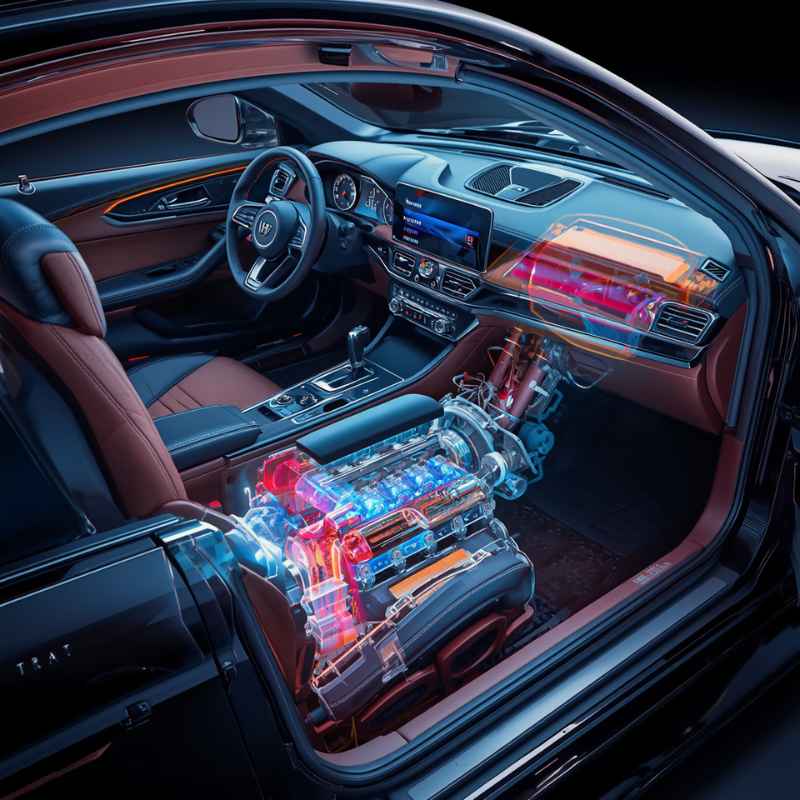
The Heart of the Machine: The Engine Compartment
The engine compartment is probably the most important area. It’s usually under the hood. Lifting the hood reveals a lot.
You’ll see the engine itself. It’s a big, heavy block. Many other parts are attached to it or sit nearby.
Let’s look at some key players here. The engine oil dipstick is a thin metal rod. It often has a bright loop handle.
It sticks straight up from the engine. You use it to check your oil level. A low oil level can hurt your engine badly.
So, knowing where this dipstick is is vital.
The battery is also in the engine bay. It’s a black rectangular box. It has two terminals on top.
One is positive, one is negative. The battery provides power to start the car. It also powers your lights and radio.
If your car won’t start, the battery is often the first thing to check. Its position makes it accessible for jump-starts.
Then there’s the radiator. This is usually at the very front of the engine bay. It’s a metal grid.
Coolant flows through it. This keeps your engine from overheating. You might see hoses going to and from it.
The radiator is a critical part for engine health.
You’ll also find the air filter box. This is where the engine gets its air. It’s usually a plastic container.
There’s a hose that goes from it to the engine. A clean air filter helps the engine run better. Knowing its spot makes changing it simple.
Hoses and belts are everywhere in the engine bay. Hoses carry fluids like coolant and brake fluid. Belts drive things like the alternator and power steering pump.
They are usually long and black. They wrap around pulleys. If a belt breaks, many car functions stop.
Knowing their general path helps when you see a broken one.
The washer fluid reservoir is another easy one. It’s often a translucent plastic tank. It might have a symbol of a windshield with spray on it.
This is where you pour the fluid to clean your windshield. It’s usually easy to spot and refill.
Finally, the brake fluid reservoir. This is usually a smaller, often translucent, plastic container. It holds the fluid for your brakes.
Low brake fluid can mean a brake problem. It’s good to know where this is.
Engine Bay Quick Scan
Engine Oil Dipstick: Thin rod, often with a loop handle. For checking oil level.
Battery: Black box with two terminals. Powers car electronics.
Radiator: Metal grid at the front. Cools the engine.
Air Filter Box: Plastic container for engine air. Affects performance.
Hoses and Belts: Carry fluids and drive parts. Look for leaks or cracks.
Washer Fluid Reservoir: For cleaning windshields. Easy to find and refill.
Brake Fluid Reservoir: Holds brake fluid. Check level for safety.
Under the Hood, But Not Visible: The Undercarriage
Not all important parts are under the hood. Many systems are located underneath the car. This is often the area mechanics get under to work.
Accessing these parts usually requires lifting the car.
The exhaust system is a big one here. It’s a series of pipes. It starts near the engine.
It runs all the way to the back of the car. It carries exhaust fumes away. You’ll see mufflers and catalytic converters as part of this.
If your car is loud, the exhaust system might have a hole.
The fuel tank is typically located under the rear of the car. It holds your gasoline or diesel. It’s usually a large metal or plastic tank.
Fuel lines run from it to the engine.
Suspension parts are also underneath. You’ll see shocks or struts. These help absorb bumps in the road.
They are usually connected to the wheels. You might also see various metal arms and links. These keep your wheels aligned.
The transmission is another key component. It’s usually located behind the engine. It transfers power from the engine to the drive wheels.
In front-wheel drive cars, it’s part of the transaxle unit. In rear-wheel drive cars, a driveshaft connects it to the rear axle.
For cars with rear-wheel drive, the rear axle is at the back. It holds the differential. This allows the wheels to turn at different speeds when cornering.
The drive shafts connect the transmission to the wheels.
Brake components are also visible from underneath. You’ll see brake lines. These are metal tubes carrying brake fluid.
You’ll also see parts of the suspension that connect to the brakes.
Undercarriage Components Overview
Exhaust System: Pipes running from engine to rear. Carries fumes. Includes mufflers and catalytic converters.
Fuel Tank: Located under the rear of the car. Stores fuel.
Suspension Components: Shocks, struts, arms. Absorb bumps and keep wheels aligned.
Transmission: Behind the engine. Transfers engine power to wheels.
Rear Axle (RWD): At the back. Houses differential for wheel speed control.
Brake Lines: Metal tubes carrying brake fluid to wheels.
Inside the Cabin: Your Command Center
The interior of your car is where you spend all your time. Many important auto part positions are here. They control how you interact with the car.
The steering wheel is obvious. It’s your primary control for direction. Behind it, you’ll find the instrument cluster.
This is your dashboard. It shows speed, RPMs, fuel level, and warning lights. Each gauge has a specific position.
The pedals are at your feet. You have the accelerator (gas pedal) on the right. The brake pedal is in the middle.
If you have a manual transmission, a clutch pedal is on the left.
The gear shifter is usually between the front seats or on the steering column. It selects gears like Park, Reverse, Neutral, and Drive. The parking brake lever is often between the seats too, or a button near the shifter.
The center console holds various controls. You’ll find the radio or infotainment system here. Climate controls (AC/heat) are also usually here.
This area is designed for easy access while driving.
Look up. The rearview mirror and side mirrors are crucial for visibility. They have fixed positions to give you the best view of what’s behind and beside you.
Inside the doors, you’ll find the door handles. These are for opening and closing the doors. On the driver’s side door panel, you’ll often find the controls for the power windows and power locks.
The fuse box is often hidden. It might be under the dashboard on the driver’s side. Sometimes it’s in the engine bay.
It contains fuses that protect electrical circuits. Knowing its location helps if a light or accessory stops working.
Cabin Controls and Locations
Steering Wheel: For directional control. Positioned in front of the driver.
Instrument Cluster: Dashboard gauges. Shows speed, fuel, warnings.
Pedals: Accelerator, brake, and clutch (manual). Located at the driver’s feet.
Gear Shifter: Selects drive mode (P, R, N, D). Between seats or on column.
Center Console: Houses radio, climate controls. Easy access.
Mirrors: Rearview and side. Essential for visibility.
Door Panel Controls: Window and lock buttons. On the driver’s door.
Fuse Box: Protects electrical circuits. Often under the dash.
The Business End: Wheels and Brakes
The wheels and brakes are critical for your car’s function and safety. Their positions are very specific.
The tires are what touch the road. They are mounted on wheels or rims. There are four wheels, one at each corner of the car.
The tire pressure is important. Knowing how to check it involves knowing where the valve stem is on each tire.
Behind the wheels are the brakes. In most modern cars, you have disc brakes. You can often see the brake rotor through the spokes of the wheel.
This is a metal disc that spins with the wheel. Clamped onto the rotor is the brake caliper. This holds the brake pads.
When you press the brake pedal, the caliper squeezes the pads against the rotor. This creates friction and slows the car down.
In some older cars or on the rear of some vehicles, you might find drum brakes. These are enclosed. You won’t see them as easily through the wheel.
They work with brake shoes pressing outward inside a drum.
The wheel hub is what the wheel bolts onto. It connects the wheel to the axle. The lug nuts hold the wheel securely to the hub.
Knowing which way to turn them to loosen (counter-clockwise) and tighten (clockwise) is important for changing a tire.
The parking brake cables or electronic parking brake modules are also connected to the rear brakes. They hold the car in place when parked.
Wheel and Brake System Components
Tires: Rubber contact with the road. Mounted on wheels.
Wheels/Rims: The metal part holding the tire.
Brake Rotors: Metal discs spinning with the wheel. Where braking happens.
Brake Calipers: Squeeze brake pads onto the rotor.
Brake Pads: Friction material that slows the car.
Drum Brakes (less common): Enclosed brake system with shoes.
Wheel Hub: Connects wheel to the car’s axle.
Lug Nuts: Secure the wheel to the hub.
Beyond the Obvious: Less Visible but Crucial Parts
There are many other auto part positions that are not as obvious. They are tucked away but are vital for your car’s function.
The ECU (Engine Control Unit), or car’s computer, is usually hidden. It’s often under the dashboard or in the engine bay. It manages engine functions and other systems.
The alternator is in the engine bay. It’s usually a cylindrical part driven by a belt. It generates electricity to charge the battery and power the car while the engine runs.
The starter motor is also in the engine bay. It’s a small electric motor that engages the engine to get it spinning when you turn the key. You hear it briefly when you start your car.
The power steering pump is often in the engine bay. It helps you turn the steering wheel easily. It circulates power steering fluid.
The air conditioning compressor is usually mounted on the engine. It’s driven by a belt. It’s a key part of your AC system.
Sensors are everywhere. There are oxygen sensors in the exhaust. There are speed sensors on the wheels.
There are temperature sensors for the engine and coolant. These send information to the ECU.
The headlights and taillights have bulbs. The bulbs are in housings at the front and rear of the car. Knowing the bulb type and location is handy for replacement.
Hidden Component Locations
ECU (Car Computer): Manages engine and car systems. Often hidden.
Alternator: Generates electricity. Located in engine bay, belt-driven.
Starter Motor: Cranks the engine to start. Small motor near engine.
Power Steering Pump: Assists steering. Usually in engine bay.
AC Compressor: Powers air conditioning. Mounted on engine.
Sensors: Monitor various functions (O2, speed, temp). Located throughout the car.
Light Bulbs: In headlight and taillight housings. Front and rear.
Real-World Scenarios and Why Position Matters
Knowing the position of auto parts isn’t just trivia. It has real-world benefits. Let’s look at some examples.
Scenario 1: Flat Tire. You get a flat tire on the side of the road. You need to change it. You know the spare tire is usually in the trunk or under the car.
You know the jack and lug wrench are often stored nearby. Knowing the location of the lug nuts on the wheel is essential. This allows you to loosen them correctly.
Scenario 2: Overheating. Your car’s temperature gauge shoots up. You pull over. You pop the hood.
You see steam. You know the radiator is at the front. You know the coolant reservoir is nearby.
You might cautiously check the coolant level. If it’s very low, you know that’s a problem. You know not to open a hot radiator cap.
Scenario 3: Weird Noise. You hear a squealing noise when you brake. You know the brakes are at each wheel. You might even know that the brake pads wear out.
If the noise is constant, it’s more likely related to the rotor or caliper. If it only happens when you brake, it points directly to the brake pads.
Scenario 4: Car Won’t Start. The engine cranks but won’t turn over. You remember the battery is under the hood. You know the terminals need to be clean.
You might even know where the positive and negative cables are. This helps if you need a jump-start.
Scenario 5: Check Engine Light. That dreaded light comes on. You know it means the computer has detected an issue. While you can’t diagnose it just by location, knowing there’s an ECU tucked away helps.
It explains why a mechanic might need to plug a diagnostic tool into a port, often near the driver’s feet.
These everyday situations show why knowing auto part positions is useful. It helps you understand what might be happening. It helps you communicate better with service professionals.
It also allows for quicker identification of simple issues.
When is it Normal, and When to Worry?
Some parts and their states are normal. Others are red flags.
Normal:
- A clean engine bay with no visible leaks.
- Tires with even tread wear.
- Normal dashboard lights when you start the car, which then turn off.
- The sound of the engine fan turning on and off.
- Slight heat radiating from the engine after a drive.
Concerning:
- Leaking fluids under the car. Look for puddles of red, brown, green, or black liquid.
- Grinding or squealing noises from the wheels when braking.
- Excessive smoke coming from the engine or exhaust.
- Warning lights on the dashboard that stay on (check engine, oil, battery, brake).
- A steering wheel that feels unusually hard to turn.
- A tire that looks very flat or is making a hissing sound.
- Belts in the engine bay that are cracked or frayed.
- Hoses that are bulging or feel brittle.
Knowing the position helps you identify where the issue might be. For example, if you see a leak, knowing if it’s near the front (engine oil, coolant) or middle (transmission fluid) helps narrow down the problem. If your car makes a noise from the back, you know to think about the exhaust or rear brakes.
Simple Checks You Can Do
You don’t need to be a mechanic to do some basic checks. Knowing the position of these parts makes it easy.
- Engine Oil Level: Locate the yellow or orange loop of the oil dipstick in the engine bay. Pull it out, wipe it clean, reinsert it fully, then pull it out again. Check the oil level against the markings.
- Coolant Level: Find the translucent coolant reservoir, usually near the radiator. Check the level against the “Min” and “Max” lines when the engine is COLD.
- Washer Fluid: Locate the reservoir, often with a windshield symbol. Open the cap and check the level. Refill if low.
- Tire Pressure: Find the valve stem on each tire. Unscrew the cap and press a tire gauge onto it. Check the pressure. Do this when tires are cold.
- Lights: Have someone check your headlights, taillights, brake lights, and turn signals while you activate them. Knowing where they are helps you identify which one might be out.
- Wiper Blades: Check the rubber on your wiper blades. If they are cracked or torn, they won’t clean the windshield well.
These simple checks can prevent bigger problems. They also help you feel more connected and knowledgeable about your car.
Frequent Questions About Auto Part Positions
Common Questions Answered
Where is the car battery located?
Most car batteries are located in the engine compartment, usually at the front or side. Some SUVs or trucks might have it under a seat or in the trunk.
What part is responsible for making the car go faster?
The engine creates power. The transmission then sends that power to the wheels to make the car move faster. The accelerator pedal controls how much fuel the engine gets, directly affecting speed.
How can I tell if my brakes are bad just by looking?
You can often see the brake rotors through the wheels. If they look heavily scored, grooved, or warped, they might need replacing. You can also look at the brake pads if you can see them.
If they look very thin, they are worn out.
Where is the serpentine belt located and what does it do?
The serpentine belt is a long, black rubber belt found in the engine bay. It wraps around several pulleys. It powers important accessories like the alternator, power steering pump, and air conditioning compressor.
What is the main purpose of the radiator?
The radiator is at the front of the car, in front of the engine. Its main job is to cool the engine. It does this by circulating coolant, which absorbs heat from the engine and then cools down as air passes through the radiator’s fins.
Where do I find the cabin air filter?
The cabin air filter is usually located behind the glove box or under the dashboard on the passenger side. It cleans the air that comes into the car’s cabin.
What does the transmission fluid dipstick look like?
Unlike the engine oil dipstick, the transmission fluid dipstick is often located further back, sometimes near the firewall or accessible from under the car. It might have a red or black handle and is used to check the level and condition of the transmission fluid.
Final Thoughts on Knowing Your Car’s Layout
Understanding auto part positions makes car ownership less intimidating. You can better identify issues. You can talk more clearly with mechanics.
This guide has covered the main areas and parts. Remember to always check your owner’s manual for specific details about your car. Knowing where things are is the first step to taking better care of your vehicle.
It’s about empowerment and confidence.
Products related to this article
Sponsored / affiliate links. As an Amazon Associate I earn from qualifying purchases. I may earn additional commission from eligible campaigns.