Why Does White Paint Peel On Cars? Proven Fixes
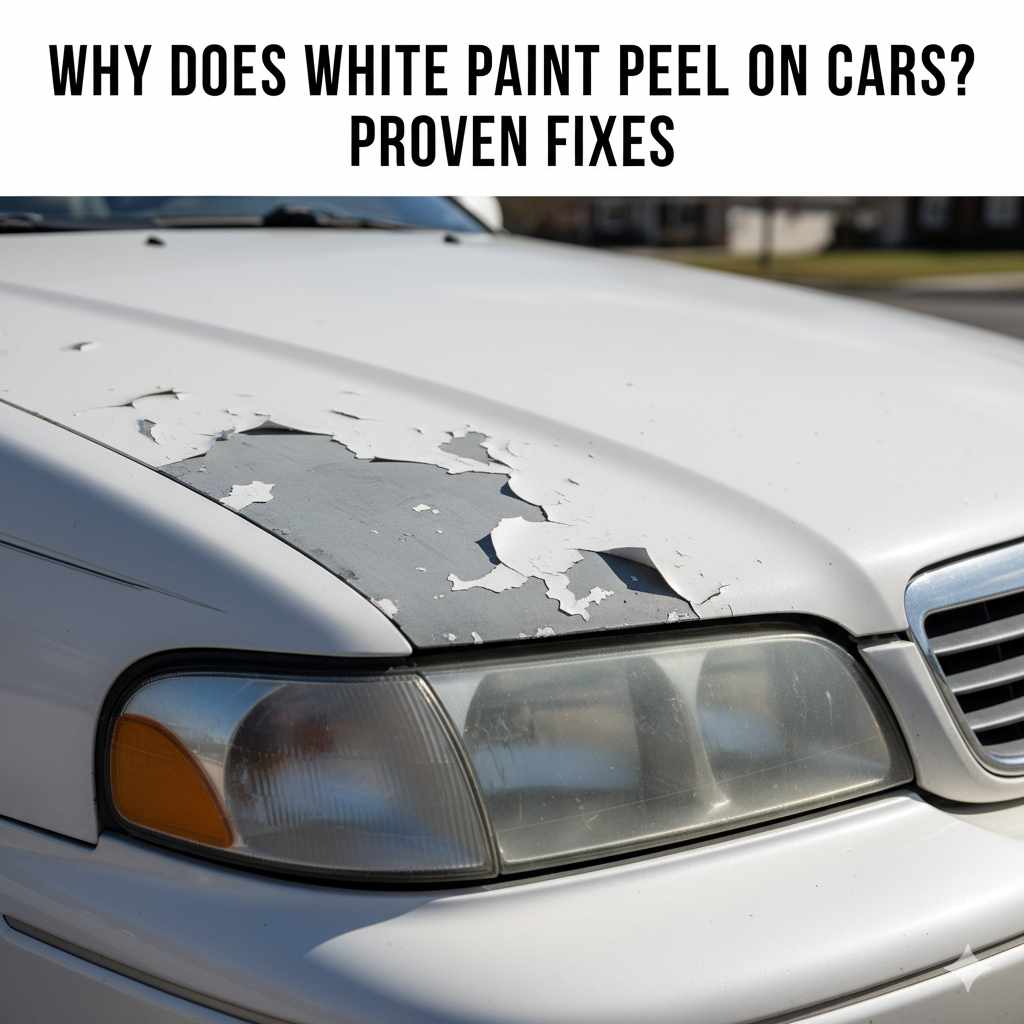
When white paint peels on cars, it’s usually due to moisture, UV damage, poor preparation, or age. The proven fixes involve addressing the root cause, which might mean repairing and repainting damaged areas with proper priming and sealing.
Seeing white paint peel off your car can be frustrating. It makes a car look neglected, even if you keep it clean. This might start as small flakes and eventually spread, especially on older white vehicles. But don’t worry! Understanding why it happens is the first step to fixing it. We’ll walk through the common reasons and, more importantly, how to tackle them, so you can get your car looking its best again.
Understanding Why Your Car’s White Paint Is Peeling
White paint on cars, like any car paint, is designed to protect the metal underneath and look good. When it starts to peel, it means something has gone wrong in the layers of paint or in how it was applied.
The Layers of Car Paint
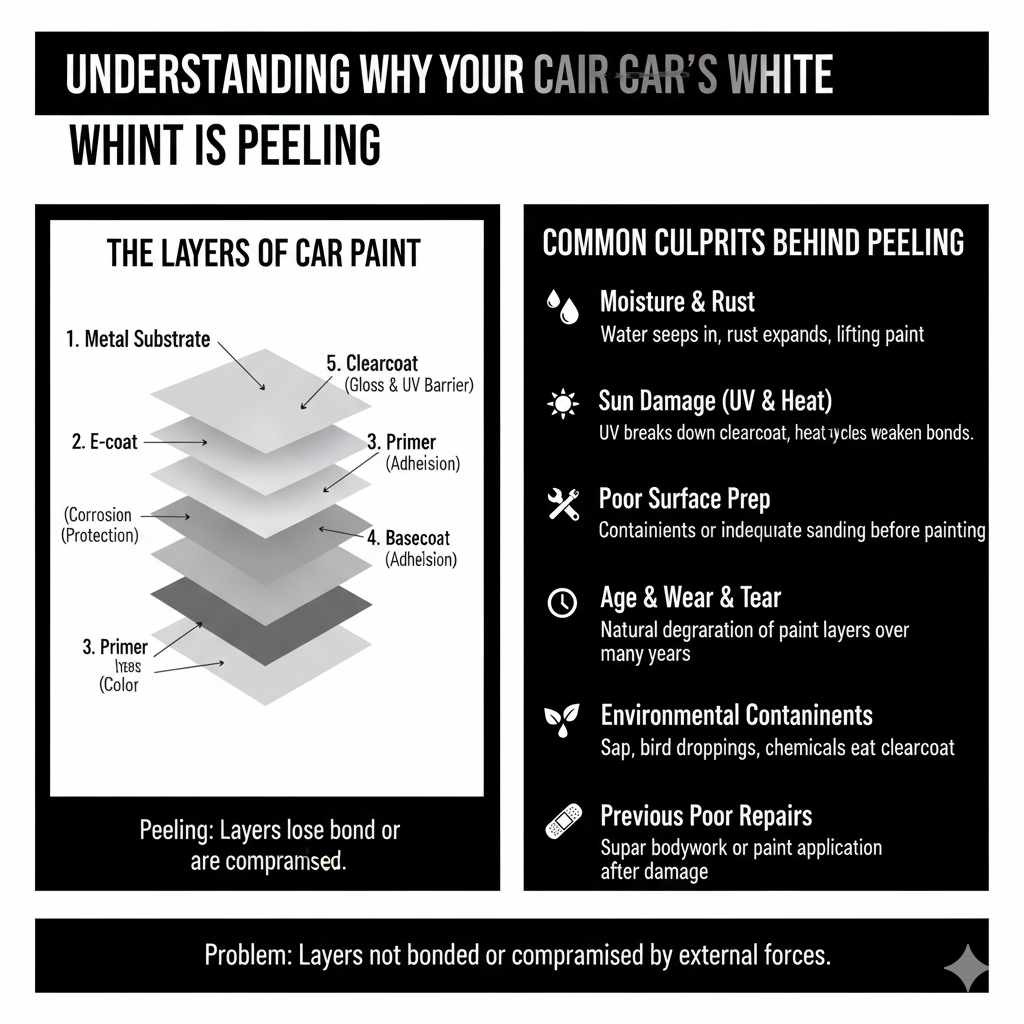
Before we dive into the problems, let’s briefly look at how car paint is layered. This helps understand what’s happening when it peels:
- E-coat (Electrocoating): This is the very first layer applied by the manufacturer. It’s a primer that electroplates the car body, providing crucial corrosion protection.
- Primer: A layer (or layers) of primer is applied over the e-coat. It helps the paint adhere better and provides a smoother surface.
- Basecoat: This is the color layer. For white cars, this is the visible white pigment.
- Clearcoat: The final, transparent layer. It protects the basecoat from UV rays, scratches, and makes the paint shiny.
When paint peels, it often means one or more of these layers are not properly bonded to the one below it, or they’ve been compromised by external forces.
Common Culprits Behind White Paint Peeling
Several factors can contribute to white paint peeling. Identifying the main cause will guide you to the best solution.
1. Moisture Intrusion and Rust
This is a big one, especially for older cars or those exposed to harsh environments. Water can seep through tiny imperfections in the paint, like chips or cracks. Once water gets under the paint, it can reach the metal, leading to rust. As rust forms, it expands and pushes the paint layers away from the surface, causing them to bubble and peel.
Think of it like this: rust is essentially the metal decaying and turning into a powdery substance that lifts the paint right off. This is particularly noticeable on white paint because any discoloration from rust often shows through more readily than on darker colors.
2. Sun Damage (UV Radiation) and Extreme Heat
The sun is a car’s worst enemy when it comes to paint. Ultraviolet (UV) rays from the sun are powerful. Over time, they break down the chemical bonds in the paint and clearcoat. This makes the paint brittle and chalky. When the clearcoat deteriorates, it can no longer protect the basecoat (your white color). This degradation can lead to the paint losing its adhesion and eventually peeling.
Extreme heat can also play a role. For example, if a car has been sitting in direct sunlight for years, the constant expansion and contraction of the metal and paint layers due to heat cycles can weaken their bond. This is why cars parked in garages or under covers often retain their paint quality much longer.
3. Poor Surface Preparation Before Painting
This is a common issue with aftermarket paint jobs or DIY attempts. For paint to stick properly, the surface must be perfectly clean, dry, and smooth. If the car wasn’t degreased, sanded adequately, or if there was contamination (like dust or oil) on the surface before painting, the new paint layers won’t bond well. This weak bond means the paint is more likely to lift or peel later, sometimes even months or years down the line.
A good painter will spend a lot of time preparing the surface. This involves:
- Thorough washing and degreasing
- Sanding to create a profile for adhesion
- Applying appropriate primers and sealers
Skipping these steps is a recipe for peeling paint.
4. Age and Wear and Tear
Car paint simply doesn’t last forever. Over many years, even with good care, the paint layers naturally degrade. The clearcoat wears thin, the basecoat fades, and the bond between layers weakens. Younger cars are less likely to experience this, but a car that’s 15-20 years old might start showing signs of paint failure simply due to its age, regardless of its color.
5. Environmental Contaminants
Things like tree sap, bird droppings, industrial fallout, and even harsh car wash chemicals can damage your car’s paint over time. If these contaminants aren’t removed promptly, they can eat through the clearcoat and damage the basecoat, weakening adhesion.
6. Previous Repairs (Poorly Done)
If your car has had previous accident repairs, the quality of those repairs matters. If the bodywork wasn’t done correctly or if the paint application after the repair was subpar, you might see peeling paint originating from those areas. This is similar to the ‘poor surface preparation’ point but specific to repair jobs.
The Visual Signs: What to Look For
Before extensive peeling occurs, you might notice early warning signs:
- Chalky Appearance: The white paint may look dull and feel powdery when you touch it. This is a sign the clearcoat is breaking down.
- Bubbling: Small blisters under the paint indicate moisture or rust is forming.
- Cracking: Fine cracks in the paint surface can lead to larger peeling areas.
- Flaking: Small pieces of paint lifting away from the surface.
Proven Fixes: How to Address Peeling White Paint
Addressing peeling paint requires patience and the right approach. The fix depends on how bad the peeling is and where it’s located.
Option 1: Minor Peeling – DIY Repair
If the peeling is small and localized, you might be able to fix it yourself. This involves removing the loose paint and then touching up the area. This is best for small chips or flakes.
Step-by-Step DIY Fix for Small Areas
- Clean the Area: Wash the affected spot thoroughly with car soap and water. Then, use a degreaser or isopropyl alcohol to remove any wax, oil, or grime. Make sure the area is completely dry.
- Remove Loose Paint: Gently scrape away all the loose, flaking paint using a plastic scraper or a razor blade held at a very low angle. You want to get down to solid paint or primer. Be careful not to scratch the surrounding good paint or bare metal.
- Feather the Edges: Use fine-grit sandpaper (e.g., 320-grit) to smooth the edges of the peeling area. This helps blend the repaired spot with the surrounding paint.
- Apply Primer: Apply a thin coat of automotive primer specifically designed for your car’s paint. You can use a small brush or a can of spray primer. Let it dry completely according to the manufacturer’s instructions.
- Sand (Optional but Recommended): Once the primer is dry, you can lightly sand it with very fine-grit sandpaper (e.g., 600-grit or higher) to create a smooth surface. Clean away the dust.
- Apply Basecoat (White Paint): Carefully apply thin coats of color-matched white basecoat paint. It’s crucial to use paint that exactly matches your car’s white shade. You might need to get a paint code from your car’s VIN or consult an auto parts store. Allow each coat to flash (dry slightly) before applying the next.
- Apply Clearcoat: Once the basecoat is dry and you’re satisfied, apply several thin coats of automotive clearcoat. This layer protects your new basecoat and adds shine.
- Cure and Polish: Allow the clearcoat to cure fully (this can take several days). Then, use a rubbing compound and polishing compound to blend the new paint into the old and bring back the shine.
Tools and Materials for DIY Fix:
- Car wash soap and water
- Degreaser or Isopropyl Alcohol
- Plastic scraper or razor blade
- Fine-grit sandpaper (e.g., 320, 600, 1000+ grit)
- Automotive primer (for your car’s type)
- Color-matched white basecoat paint
- Automotive clearcoat
- Masking tape and paper
- Rubbing compound
- Polishing compound
- Microfiber cloths
Option 2: Moderate to Severe Peeling – Professional Repair
If the peeling is widespread, covers a large area, or if you see signs of rust, it’s usually best to have a professional body shop handle it. DIY repairs on large areas are difficult to get right and might end up looking worse.
What a Professional Body Shop Does:
- Assessment: They’ll identify the extent of the damage and the likely cause, checking for rust or structural issues.
- Surface Preparation: They’ll strip away all loose paint and primer, potentially to the bare metal. If there’s rust, they will grind it away, treat the metal with rust inhibitors, and then apply anti-corrosion coatings.
- Bodywork: If there’s minor damage or dents associated with the peeling, they’ll repair those.
- Priming and Sealing: They apply specialized primers and sealers to ensure maximum adhesion and protection.
- Paint Application: Using professional spray equipment, they’ll apply the basecoat (your white color) and multiple coats of high-quality clearcoat.
- Color Matching: Professional shops have access to advanced color-matching technology to ensure the new paint perfectly blends with the rest of your car.
- Sanding and Polishing: After the paint cures, they’ll wet-sand and polish the area to ensure a seamless finish.
This approach is more expensive but offers a durable, professional-looking result. For comprehensive guides on bodywork, resources like those from the SEM Products technical training pages can offer insights into industry-standard practices for refinishing.
Option 3: Widespread Paint Failure (e.g., Roof or Hood)
Sometimes, large panels like the roof or hood can be severely affected due to prolonged sun exposure. In these cases, a full panel repaint is often the most effective solution. A professional will strip the entire panel, prep it, prime it, and repaint it using the multi-stage process mentioned above.
Preventing Future Paint Peeling
Once you’ve fixed the peeling paint, you’ll want to prevent it from happening again. Prevention is always easier and cheaper than repair!
Regular Washing and Waxing
Wash your car regularly using a pH-neutral car soap to remove dirt, debris, and environmental contaminants. Follow up with a quality car wax or sealant every few months. Waxing provides a protective barrier against UV rays and contaminants.
Parking Smart
Whenever possible, park your car in a garage or under a carport. If you have to park outside, try to find shaded spots, especially during the hottest parts of the day. This significantly reduces UV exposure and heat damage.
Address Damage Promptly
Fix paint chips, scratches, and dings as soon as you notice them. These small imperfections are entry points for moisture and can lead to rust and paint peeling.
Use a Car Cover
If you don’t have garage access, a quality car cover can provide excellent protection against the elements when the car is parked.
Consider Paint Protection Film (PPF) or Ceramic Coating
For added protection, especially on newer cars or those with freshly repainted surfaces, consider applying Paint Protection Film (PPF) or a ceramic coating. These offer robust defenses against UV damage, minor scratches, and contaminants.
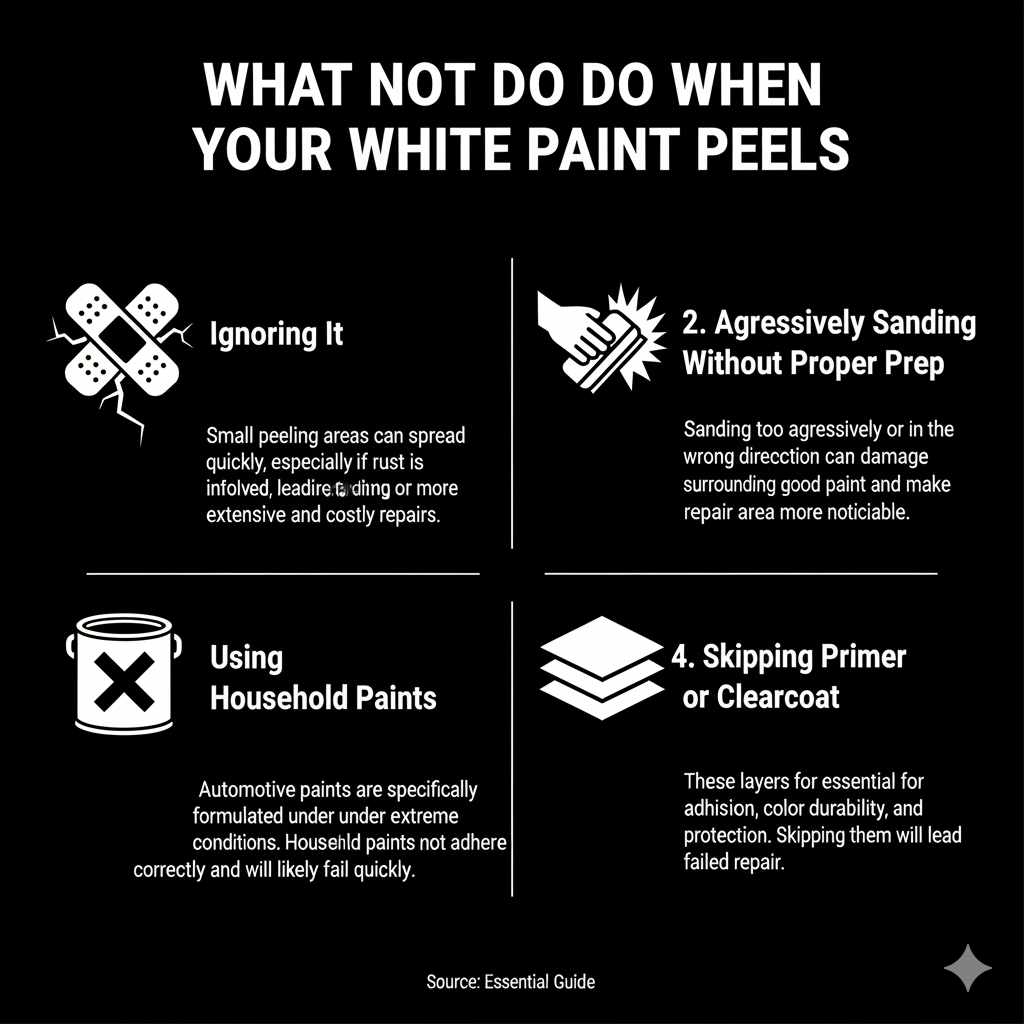
What NOT to Do When Your White Paint Peels
There are a few common mistakes that can make the problem worse:
- Ignoring It: Small peeling areas can spread quickly, especially if rust is involved, leading to more extensive and costly repairs.
- Aggressively Sanding Without Proper Prep: Sanding too aggressively or in the wrong direction can damage surrounding good paint and make the repair area more noticeable.
- Using Household Paints: Automotive paints are specifically formulated for durability under extreme conditions. Household paints will not adhere correctly and will likely fail quickly.
- Skipping Primer or Clearcoat: These layers are essential for adhesion, color durability, and protection. Skipping them will lead to a failed repair.
Frequently Asked Questions (FAQ) About White Car Paint Peeling
Q1: Is peeling paint on a car a sign of rust?
A: Yes, often. Peeling paint can be caused by moisture getting under the paint and leading to rust formation on the metal panel. The rust expands and pushes the paint layers off.
Q2: Can I just cover up peeling white paint with a sticker?
A: While a sticker might hide the visual issue temporarily, it won’t fix the underlying problem. Moisture can still get under the peeling paint, and it may worsen. It’s best to address the peeling paint itself.
Q3: How much does it cost to fix peeling white paint?
A: For a small DIY touch-up, the cost can be as low as $30-$50 for materials. For professional repairs on a small area, expect $100-$300. For an entire panel or a larger section of peeling, it could range from $500 to $2000+ depending on the size and complexity of the repair and your location.
Q4: Will my car’s white paint peel faster than other colors?
A: Not necessarily. All car paint colors can peel under similar conditions. However, white paint can sometimes show the effects of underlying rust or discoloration more prominently than darker colors do.
Q5: How long does automotive paint typically last before it starts to peel?
A: With proper care and in moderate climates, original factory paint can last 10-15 years or even longer. However, factors like extreme sun exposure, neglect, or poor initial application can shorten this lifespan significantly.
Q6: What is the best way to prevent white paint from peeling?
A: Regular washing and waxing, parking in shade or a garage, and promptly repairing any paint chips or scratches are the best preventative measures.
Q7: I see small bubbles under my white paint. What does that mean?
A: Bubbles are usually a sign that moisture or contaminants are trapped between the paint layers or between the paint and the metal. This often precedes peeling and can indicate the beginnings of rust.
Conclusion
Seeing white paint peel on your car can be disheartening, but it’s a common issue with solvable causes. Whether it’s the relentless sun, the creeping effects of moisture, or a less-than-perfect paint job, understanding these reasons helps you choose the right path to a solution. For minor spots, a careful DIY touch-up can restore your car’s finish and your confidence. For larger or more serious problems, especially those involving rust, consulting a professional auto body shop is the most reliable way to ensure a lasting repair. By taking preventive measures like regular washing, waxing, and smart parking, you can protect your car’s paint and keep it looking great for years to come. With a little effort and the right knowledge, you can bring back that clean, smooth white finish to your beloved vehicle.