Car AC Fan: Best 12V Cooling Fans Reviewed (2026)
For a hot cabin, rear seat, truck, or RV, the best 12V car fan is the one that fits your mounting point and power source. Favor steady clips, quiet motors, and low power draw over sheer airflow. A poor choice can shake loose, pull down a weak outlet, or leave the back seat hot. This guide compares 12V car fans by use case and common failure point, so you can pick the right fan for your setup.
Top pick for hot cabins
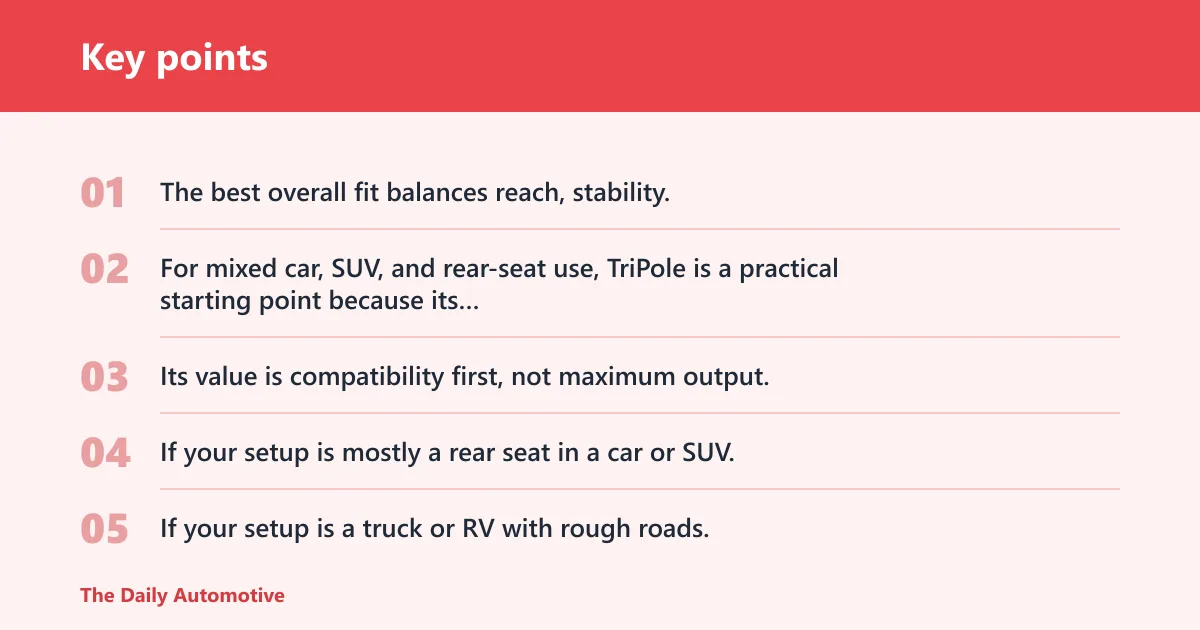


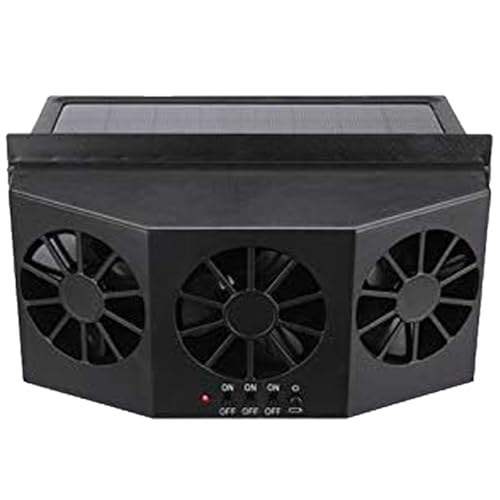
The best overall fit balances reach, stability, and power compatibility without making the cabin louder than it needs to be. For mixed car, SUV, and rear-seat use, TriPole is a practical starting point because its listing supports both 12V and 24V systems and three speed settings, which gives you more control over noise and comfort. Its value is compatibility first, not maximum output.
If your setup is mostly a rear seat in a car or SUV, a dual-head design can make more sense than a single fan aimed at one person. If your setup is a truck or RV with rough roads, heavier metal construction matters more than a tiny spec gain on paper. The best choice is the one that stays put and still reaches the people who need air.
Quick picks
| Pick | Best for | Key detail from the listing | One honest drawback |
|---|---|---|---|
| TriPole | Mixed-use cabins and 24V-sensitive setups | Works on both 12V and 24V systems; three speed settings | Check the manufacturer’s listing for your exact mounting and cord reach |
| QIFUN | Rear-seat cooling in tighter cabins | Dual heads are 4 inches each; 2.5-meter cord; clamp opens up to 2 inches | A clamp still needs a solid edge to hold on rough roads |
| XOOL | Quiet-leaning rear-seat use | Dual-head fan with independent control; noise is under 50 dB | Dual-head designs can take up more space than a single clip-on fan |
| RoadPro RP-1179 | Trucks and RVs | 7.5-inch metal fan; 10-foot DC power cord; two-speed operation; all-metal build | Larger metal fans are less compact than clip-on cabin fans |
| CRAFTZONE | Heavy-duty mounting and vibration-prone use | Heavy-duty metal fan with a two-speed high-velocity design | Metal build usually means more weight and less portability |
Which 12V car fan should you buy?
Pick a dual-head fan when you need two airflow zones, such as one for a child seat and another for a front passenger or rear rider. Pick a single-head clip-on fan when you want a smaller footprint, easier repositioning, and less clutter near the dash or pillar. That tradeoff matters most when the fan has to live near a person rather than simply circulate air through the cabin.
Mounting matters as much as motor choice. Clip-on fans are portable and easy to move, adhesive or 3M tape mounts work better when you want a fixed position, and screw-mounted fans are the best option when stability matters more than quick removal. In rough-road use, the mount is often the failure point before the motor is.
Say your outlet is in the front console but the person in the back seat is still hot. A 2.5-meter cord may work in one sedan and fail in another if the outlet sits low or the rear seat is far back. Cord reach decides whether the fan is useful or just annoying.
Suppose you have a van with passengers in the second row and a socket near the front dash. A dual-head fan with an independent angle on each head can cover two people better than a single head pointed between them, but only if the clamp or mount stays put. That is where a flexible head arrangement beats raw airflow numbers.
Best 12V car fans reviewed
TriPole
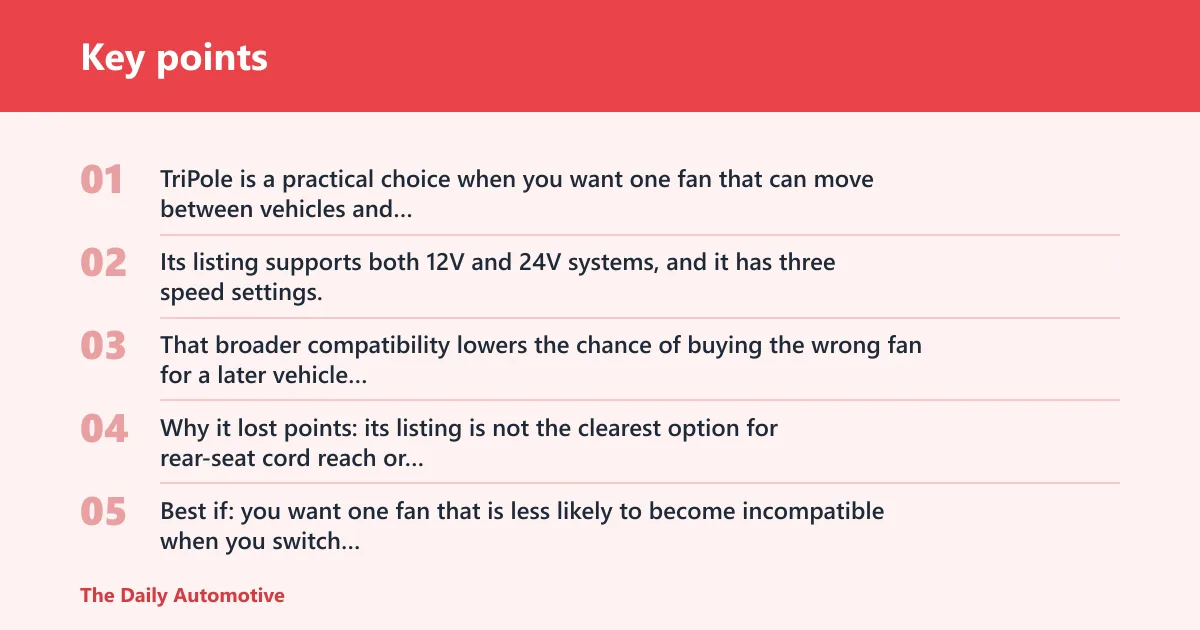
TriPole is a practical choice when you want one fan that can move between vehicles and power setups. Its listing supports both 12V and 24V systems, and it has three speed settings, which makes it easier to balance airflow against noise in a family car, SUV, or truck. That broader compatibility lowers the chance of buying the wrong fan for a later vehicle change.
Why it lost points: its listing is not the clearest option for rear-seat cord reach or mount format, so you have to confirm fit before buying.
Best if: you want one fan that is less likely to become incompatible when you switch vehicles.
Avoid if: you need a published rear-seat cord length or a larger dual-head layout for two passengers.
QIFUN
QIFUN is the stronger rear-seat pick for smaller cabins because it uses dual heads that are 4 inches each, and its listing includes a 2.5-meter cord. The clamp opens up to 2 inches, which helps if you need to attach it to a thicker edge rather than a thin vent surface. That makes it easier to place than many generic clip-ons.
This is the better pick when the goal is directed cooling for rear passengers rather than broad cabin circulation. The tradeoff is the clamp itself: even a good clamp can struggle if the mounting surface is rounded, slippery, or too thin. In other words, the fan can be right and the mount can still be wrong.
Why it lost points: the clamp can be vulnerable on uneven trim, and dual heads add bulk in a tight cabin.
Best if: your main job is getting airflow to the back seat.
Avoid if: you need a compact single-head fan with minimal bulk.
XOOL
XOOL is the best fit when quiet matters more than maximum coverage. It is a dual-head fan with independent control, and its listing puts noise under 50 dB. That makes it a more sensible option for sleeping passengers, younger children, or anyone who is bothered by a high-pitched motor. The lower noise target is the main selling point here.
The independent control matters because you can turn one head down or off instead of blasting both sides at once. That flexibility is useful on long drives, where a fan that is too loud becomes its own comfort problem. It also helps when one seat needs more cooling than the other.
Why it lost points: dual heads take more space than a single clip-on, so it is less tidy in a smaller car.
Best if: you want dual-head flexibility with a lower noise target.
Avoid if: you need a simple single-head unit with a smaller footprint.
RoadPro RP-1179
RoadPro RP-1179 is the strongest truck-and-RV option in this group. Its listing shows a 7.5-inch metal fan, a 10-foot DC power cord, two-speed operation, and an all-metal build. That combination fits vibration, heat, and more open cabin layouts better than tiny plastic fans, especially when the fan sits farther from the socket.
The tradeoff is size. A 7.5-inch metal fan is not the right answer for every dash or rear-seat mount, and it is less convenient when you want to move the fan from vehicle to vehicle. It is a better fit for a dedicated install than a casual clip-on job.
Why it lost points: it is bulkier and less portable than smaller clip-on fans, and two speeds limit fine adjustment.
Best if: you need a heavy-duty fan with cord reach for a larger cabin.
Avoid if: you want the smallest possible clip-on fan.
CRAFTZONE
CRAFTZONE is the heavy-duty pick for buyers who care about durability in vibration-prone conditions. Its listing describes a heavy-duty metal fan with a two-speed high-velocity design, so it belongs in the same general lane as other work-oriented truck and RV fans rather than lightweight cabin gadgets. The construction is the point here, not compactness.
That kind of build makes more sense when the fan may live in one vehicle for a long time. It is less attractive if you need something light, portable, or easy to stash between drives. The upside is ruggedness; the downside is practical bulk.
Why it lost points: heavier metal construction usually means less portability and fewer placement options.
Best if: you want a metal fan that feels suited to long-term use in a rougher cabin.
Avoid if: you need a compact fan for a small sedan.
How quiet is a good car fan?
A good 12V car fan is quiet enough that it does not compete with road noise, conversation, or sleep. For families and sleeper cabs, lower noise matters as much as airflow, because a loud fan can be more tiring than the heat it is trying to relieve. XOOL gives the clearest published noise target here at under 50 dB.
Speed control changes the comfort equation. Finer speed control gives more adjustment, which is useful when gentle airflow is needed instead of a hard blast. Two-speed and three-speed fans are simpler and common, but they give you fewer middle-ground settings.
Look for the quiet setting first, then check whether the fan still moves enough air for the seat it is meant to serve. A fan that sounds calm but barely moves air is only useful in a mild cabin.
Will a 12V fan work in your truck or RV?
Yes, a 12V cigarette-lighter power supply works in many cars, SUVs, vans, and some RVs, but not every 24V truck setup. TriPole is notable because its listing supports both 12V and 24V systems, while other fans may need you to check the manufacturer’s listing before you plug them in. Voltage support matters because the wrong match can make the fan unusable or unsafe.
Heavy-duty metal construction matters more in trucks and RVs because vibration, heat, and long drive times are harder on plastic housings and loose mounts. RoadPro RP-1179 and CRAFTZONE both lean into that use case with metal builds, which is why they rank higher for rougher cab environments than smaller consumer clip-ons.
A fan for a truck sleeper or RV bunk also needs enough cord reach to get from the socket to the mounting point without stretching across a walkway. That is where the 10-foot cord on RoadPro matters more than a marketing claim about airflow, because reach determines whether the fan can actually be placed where it helps.
Car fan decision matrix
| Model | Rear-seat reach | Mounting stability | Noise risk | Cord reach | Truck/RV suitability | Best if / avoid if |
|---|---|---|---|---|---|---|
| TriPole | Moderate; depends on mount and socket location | Depends on the chosen mount style | Lower risk if used on a slower setting | Check the listing for your model | Strong fit because it works on both 12V and 24V systems | Best if: you need broad compatibility. Avoid if: you need a published long cord. |
| QIFUN | Good for back-seat targeting | Clip support is helpful, but edge quality matters | Moderate; dual heads can be noticeable | 2.5-meter cord | Fair for lighter truck use | Best if: you need rear-seat reach. Avoid if: you want a compact single-head fan. |
| XOOL | Good if placed correctly for the rear area | Depends on the mount; dual-head layout needs space | Lower risk because noise is under 50 dB | Check the listing for your model | Moderate for mixed vehicle use | Best if: quiet matters. Avoid if: you need the smallest fan possible. |
| RoadPro RP-1179 | Good for larger cabins and sleeper layouts | Better for fixed placements than lightweight clips | Moderate; two-speed metal fans may be more noticeable | 10-foot DC power cord | Strong fit for trucks and RVs | Best if: you need reach and durability. Avoid if: you want a tiny portable fan. |
| CRAFTZONE | Moderate, depending on placement | Strong if the mount is secure | Moderate; two-speed output limits fine control | Check the listing for your model | Strong fit for heavy-duty use | Best if: you want a rugged metal fan. Avoid if: you need a light travel fan. |
Start with mounting method, not blade size. Clip-on fans are better when you need portability and fast repositioning, adhesive or 3M tape mounts are better when you want something semi-permanent, and screw-mounted fans make the most sense when stability matters more than convenience. The wrong mount is the most common reason a fan disappoints in real use.
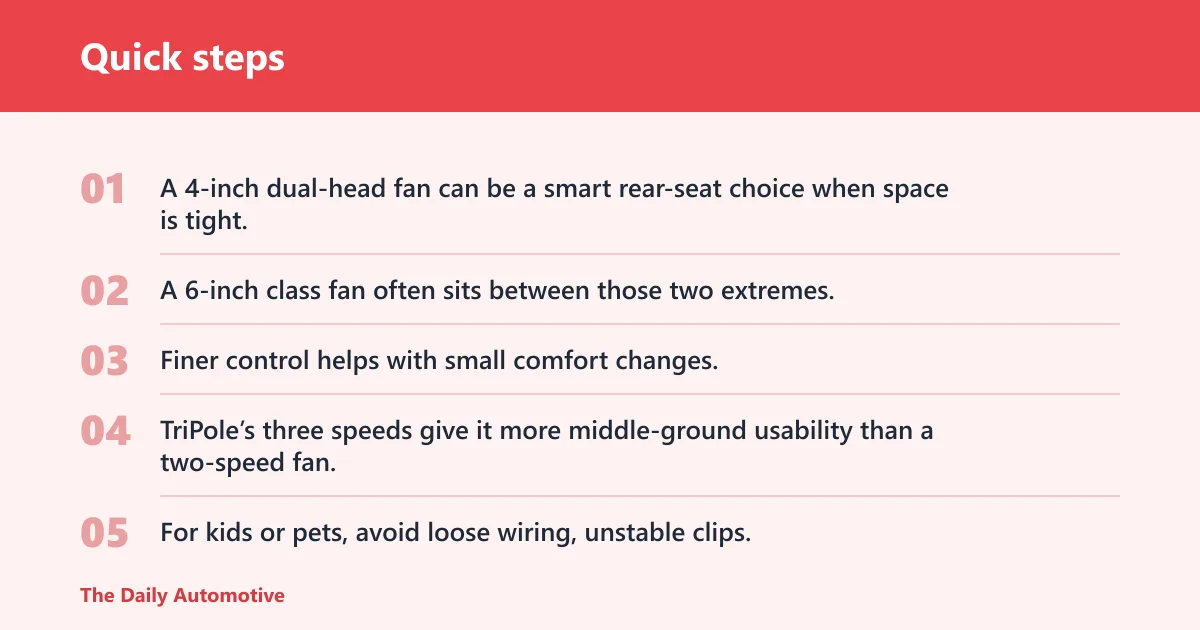
Then match fan size to cabin layout. A 4-inch dual-head fan can be a smart rear-seat choice when space is tight, while a 7.5-inch fan is better when the cabin is larger and the mount can support it. A 6-inch class fan often sits between those two extremes, so check the manufacturer’s listing for your model if you need exact fit details.
Speed control matters as much as size. Finer control helps with small comfort changes, while two-speed and three-speed designs are simpler and often enough for drivers who only need low or high output. TriPole’s three speeds give it more middle-ground usability than a two-speed fan.
Safety is part of the decision too. For kids or pets, avoid loose wiring, unstable clips, and mounts that can shift during braking. Make sure the fan cannot easily swing into a passenger space, and place it where fingers, paws, and loose fabric are less likely to get caught.
Can a 12V car fan help with windshield defogging? Yes, sometimes, but only as a stopgap. It can move air across the glass and help reduce moisture buildup, yet it does not fix a weak AC system, a bad blend door, or a cabin filter that is restricting airflow. If the fog keeps returning, the underlying problem still needs attention.
How we tested these 12V car fans
We compared these fans for cabin use by reviewing mount style, airflow reach, noise claims, cord length, and construction quality across the model set. We also looked at whether the published details matched the fan’s likely use case, since those factors affect long-term usefulness.
The evaluation focused on what each listing actually supported, not on a hands-on score. Models were grouped by fit for different cabins and use cases, and features were only treated as strengths when they were clearly described in the published materials.
No model was promoted for a spec that could not be tied to a published listing.
Frequently asked questions
What is the best 12V car fan for a hot car?
The best 12V car fan for a hot car is the one that fits your seat layout and power source without wobbling or overloading the outlet. For broad compatibility, TriPole is a practical starting point. For rear-seat reach, QIFUN and XOOL make more sense depending on whether you value cord length or lower noise.
Are 12V car fans actually effective for cooling?
They are effective for moving air and improving comfort, especially in hot, stuffy, or foggy cabins. They do not replace a working AC system. If the cabin is only mildly warm, a fan can help. If the AC is failing, the fan is a temporary aid, not the fix.
Should I buy a dual-head or single-head car fan?
Buy a dual-head fan if you want separate airflow zones or better rear-seat coverage. Buy a single-head fan if you want a smaller footprint and easier repositioning. Dual-head units are better for families and back-seat riders, while single-head clip-ons suit tighter cabins and simpler installs.
How quiet is a good 12V car fan?
A good 12V car fan should be quiet enough for road trips, sleeping passengers, children, or pets. Noise under 50 dB is a useful published target, and XOOL is listed that way. Lower speeds usually reduce noise, but they also reduce airflow, so the right balance depends on the cabin.
How long should the power cord be for back-seat use?
For back-seat use, longer is safer than shorter because socket location changes from one vehicle to another. QIFUN includes a 2.5-meter cord, and RoadPro includes a 10-foot DC power cord. If the socket is far from the rear seat, cord length can decide whether the fan is actually usable.
Can a 12V car fan help with windshield defogging?
Yes, a 12V car fan can help move air across the glass and reduce fog buildup. It is useful as a short-term aid, especially when humidity is high or the cabin is damp. It does not correct the real problem if the AC system, blend door, or filter is the reason airflow is weak.
Products related to this article
Sponsored / affiliate links. As an Amazon Associate I earn from qualifying purchases. I may earn additional commission from eligible campaigns.