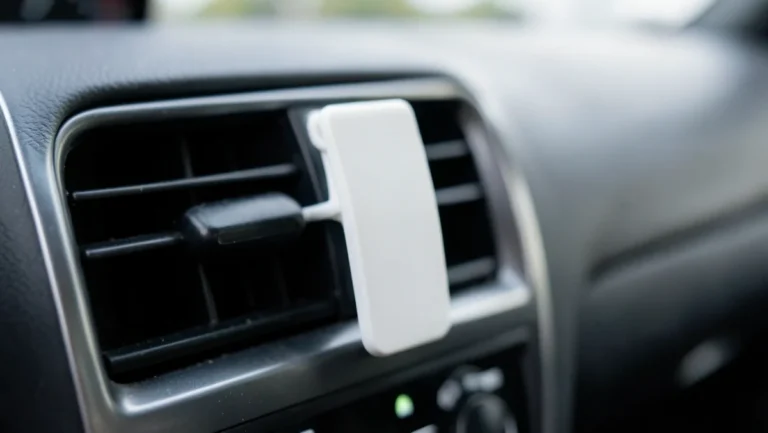
Portable 12V Car Air Conditioner Fan Review: Worth It?
A portable 12V car air conditioner fan is worth buying only for mild cabin comfort or rear-seat airflow; it will not cool a hot car like functioning AC, so skip it if you want a real temperature drop. Buying the wrong one can waste money and hide an HVAC fault that needs repair. This guide explains when a plug-in fan helps, when it only masks a problem, and when you should spend elsewhere.
Verdict

For a cheap plug-in buy, the Leolarmen-style 12V dashboard fan makes sense when you want moving air, low power draw, and easy placement. It is a poor match for pull-down cooling after a car sits in the sun. If your cabin feels like an oven at startup, the fix is usually shade, ventilation, or repairing the real climate system.
Specs at a glance
| Device type | How it cools | Power draw | Best use | Limits | Voltage protection |
|---|---|---|---|---|---|
| 12V cigarette lighter fan | Moves air, does not refrigerate | 8-15W | Cabin air circulation, rear-seat comfort | No true AC, little pull-down effect | Often depends on vehicle socket protection, not the fan itself |
| Evaporative car cooler | Water or ice packs plus airflow | Low, model dependent | Dry-climate personal cooling | Weak in humid weather, needs refilling or pre-freezing | Some models add low-voltage cutoff |
| 12V under-dash AC kit | Compressor-based cooling | About 960W | Classic cars, trucks, RVs, ATVs | Higher install effort and electrical load | Listed low-voltage cutoff at 11.5V |
Who it
A 12V plug-in fan fits drivers who want air movement more than temperature drop. It is most useful in a daily commuter for face-level airflow, in a parked car while waiting with the engine running, or as a rear-seat aid when front vents do not reach well. It is also a small comfort upgrade in compact cabins.
Say your sedan is already cool enough but the back seat feels stale on a 20-minute school run. A dual-head, rotatable fan aimed between two occupants can make the cabin feel less stagnant without asking the alternator for much power. That is comfort support, not air conditioning.
Suppose a classic truck has no factory AC and you only need something between stoplights and short errands. A fan can help with circulation, but the better answer may be a real compressor kit if the goal is cooling the whole cab, not just moving warm air around.
What works
Cabin air circulation is the main win here. A 12V cigarette lighter car cooling fan plugs into the 12V socket and moves air rather than refrigerating it, so it can reduce the dead-air feeling in a parked or slow-moving vehicle. That low-power design is why it is easy to install and easy on the electrical system.
Dual-head rotatable designs do one job better than single fixed fans: they aim airflow. The 360-degree adjustment and two fan heads let one stream reach the driver and the other reach a passenger, which is useful in narrow cabs, back seats, and truck sleepers where one vent path rarely serves everyone.
Low power matters. One reviewed dual-head fan uses just 8-15W, which is tiny compared with compressor cooling. For short trips, idle cooling, or keeping air moving in a small space, that is enough to improve comfort without adding much load.
Portable personal air coolers can also help in a very specific way. Some use a small tank or ice pack, offer 3-speed operation, and include timer or touch controls. They are closer to personal cooling than cabin cooling, which is why they work best when they sit near one person instead of trying to cool every seat.
What does not work?
Fan-only devices do not create cold air. They move whatever air is already in the cabin, which means they cannot act like a compressor-based air conditioner and they will not pull down a hot interior quickly. If the dashboard is scorching and the seats are heat-soaked, a fan mainly changes how the heat feels on skin.
Evaporative coolers have a hard ceiling in humid weather. They depend on water evaporation, so dry air helps them feel cooler, while moist air limits the effect. They also need refilling or pre-freezing, which makes them better for planned personal cooling than for all-day, leave-it-and-forget-it use.
Battery drain is another limit, especially for parked use. Even modest draw becomes a problem if a device runs too long without engine support, and any parked setup should have low-voltage protection to prevent battery discharge. The listed 11.5V cutoff on one compressor kit shows why that feature matters.
Noise and vibration are tradeoffs too. Small fans are usually quieter than larger cooling systems, but quiet does not equal effective. If a vehicle has weak vents, a failing blend door, or a tired compressor, a plug-in fan can hide the symptom for a while without fixing the fault.
Alternatives

The FRIZCOL clip-on fan is a better fit when you want portable airflow away from the dash. Based on the listed specs, the battery capacity and hooks make it useful for camping, golf carts, and seatback placement. The drawback is simple: it is a rechargeable fan, not a 12V automotive cooling device, so it moves air rather than cooling the cabin.

The Aspligo 10000BTU 12V under-dash unit is the real cooling option in this group. A compressor-based system with 10,000BTU or 12,000 BTU-class output belongs in classic cars, trucks, RVs, and other larger vehicles where actual refrigeration matters. The tradeoff is cost, install effort, and a much higher electrical demand than a fan.
Based on the published specs, this kind of unit is the answer when a vehicle needs true cabin cooling, not a pocket of moving air. It is also the least casual choice here. If the charging system is weak or the vehicle is rarely driven, the higher load and installation complexity can be a problem.
Portable 12v car air decision matrix
| Use case | Real cooling | Battery risk | Install effort | Noise | Climate fit | Value for money | Verdict |
|---|---|---|---|---|---|---|---|
| Daily commuter | 2/5 | 4/5 | 5/5 | 4/5 | 3/5 | 3/5 | Skip if HVAC works; buy only for airflow |
| Parked car waiting | 1/5 | 2/5 | 5/5 | 4/5 | 2/5 | 2/5 | Skip for heat soak; use shade or engine-on cooling |
| Classic car with no AC | 3/5 | 3/5 | 3/5 | 3/5 | 4/5 | 4/5 | Buy fan for comfort; consider a compressor kit for true cooling |
| Truck or RV sleeper | 4/5 | 3/5 | 3/5 | 3/5 | 4/5 | 4/5 | Buy evaporative or under-dash AC if sleep comfort matters |
| Humid-climate driver | 1/5 | 4/5 | 5/5 | 4/5 | 1/5 | 2/5 | Skip evaporative cooling; fan only if airflow is the goal |
Should you buy it?
Buy a portable 12V car air conditioner fan if your goal is airflow, not AC. It is a sensible add-on for a small cabin, rear-seat circulation, or a vehicle that already has working climate control but needs better air movement. For that job, the low power draw and simple plug-in setup are the appeal.
Skip it if you want a hot car to feel cold in minutes. In that case, the better money usually goes to fixing factory HVAC, adding tint or shade, improving ventilation, or stepping up to a compressor-based 12V under-dash system. If humidity is high, skip evaporative coolers too unless you only want a little personal comfort.
- Choose a fan if you want circulation and low draw.
- Choose an evaporative cooler if the climate is dry and you can refill it.
- Choose a compressor kit if you need true cabin cooling.
- Fix the vehicle first if the existing HVAC is broken.
Frequently asked questions
Does a portable 12V car air conditioner fan actually cool a car?
No. A 12V cigarette lighter fan moves air, so it can make the cabin feel less stagnant, but it does not refrigerate the air or pull heat out of the interior the way a compressor system does. It is comfort support, not real cooling.
Is a 12V car air conditioner fan worth it for parked cars?
Only in a narrow sense. A parked car heats up fast, and fan-only airflow does little once the cabin is already hot. It can help with a brief wait or with engine-on idle cooling, but for heat soak, shade and ventilation are better buys.
Will a 12V cigarette lighter fan drain my battery?
It can, but the risk is lower than with compressor cooling because fan devices may use as little as 8-15W. The real issue is run time while parked. Low-voltage protection matters because it helps prevent deep discharge before the starter battery is too low to crank.
What’s the difference between a 12V fan and a real 12V air conditioner?
A 12V fan only moves cabin air. A real 12V air conditioner uses a compressor and is rated by BTU, with 12,000 BTU a useful reference point for higher-capacity systems. The compressor kit also draws far more power, about 960W on one reviewed unit.
Can a portable car air cooler help in an RV or truck cab?
Yes, but the type matters. A fan can improve circulation in a sleeper cab or motorhome, while an evaporative cooler helps more in dry weather, and a compressor-based under-dash unit is the real cooling solution when you need lower cabin temperature rather than just moving air.
Do evaporative car coolers work in humid weather?
They work much less well. Evaporative cooling depends on dry air taking on moisture, so humid conditions limit the temperature drop. In muggy weather, they may still provide a little personal comfort, but they are a poor substitute for AC and often disappoint in a sealed cabin.
Products related to this article
Sponsored / affiliate links. As an Amazon Associate I earn from qualifying purchases. I may earn additional commission from eligible campaigns.