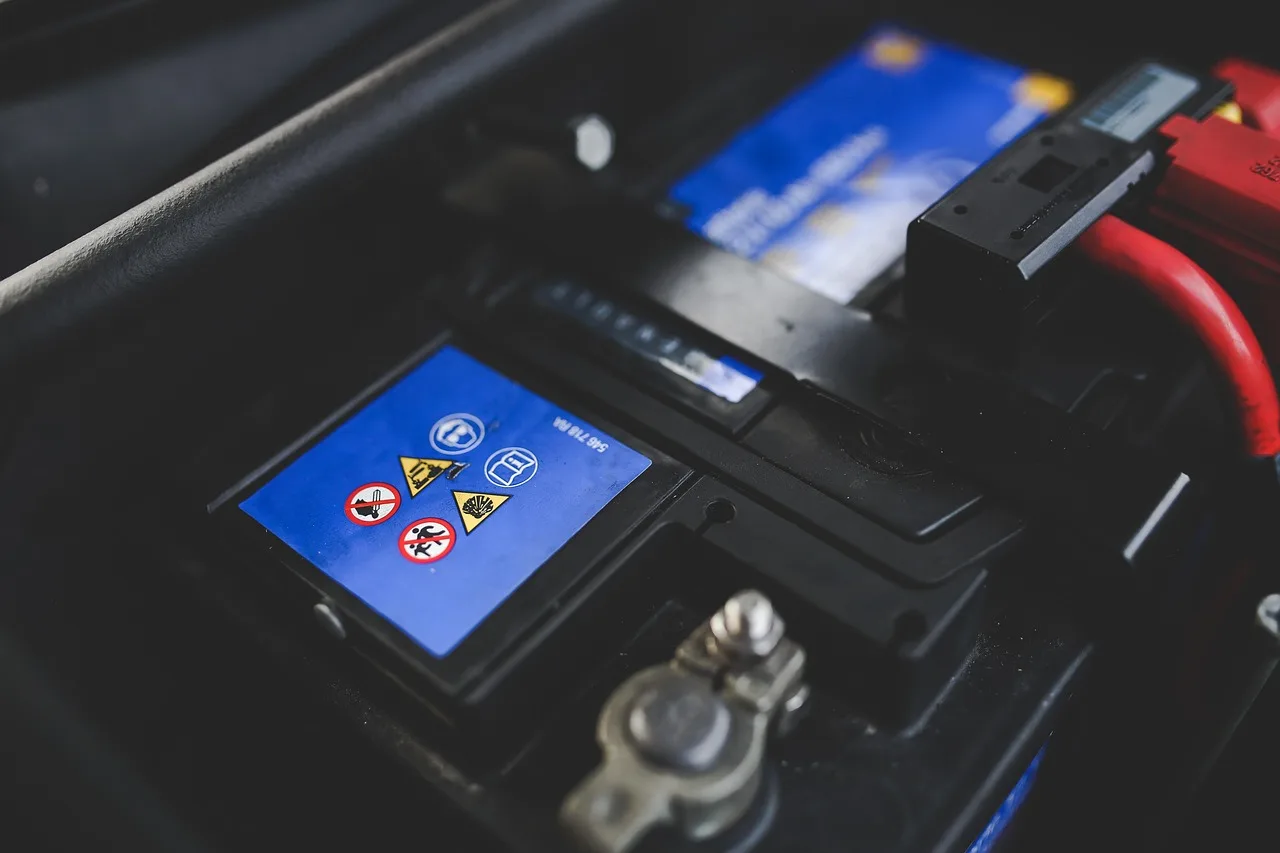
Best Car Batteries for Short-Trip Driving (2026): we compared
For short-trip driving, an AGM battery with somewhat more reserve capacity than stock is often a practical choice, and higher CCA can matter more when the car has stop-start, heavier electronics, or cold-weather starts. If you skimp, you may see slow cranking, warning lights, sulfation, and batteries that wear out sooner after many short runs of around 5 to 15 minutes. This guide ranks the best Car Battery for Short-Trip Driving by trip severity, electrical load, chemistry, reserve capacity, and fitment.
Best car battery for short-trip driving: our top pick
For short-trip driving, the best car battery is often an AGM battery that matches the vehicle’s group size and offers somewhat more reserve capacity than the factory unit. That mix handles repeated partial charging better than a basic flooded battery, especially when the car sees frequent restarts, short errands, and accessory draw between starts.
AGM matters because it is sealed, spill-proof, maintenance-free, and better at shrugging off vibration. In commuter use, that is the difference between a battery that copes with stop-and-go life and one that ages out early from staying partly charged.
The wrong choice is a high-CCA battery with weak reserve capacity or the wrong fitment. CCA helps starting, but it does not fix a charging system that never gets enough time to refill the battery.
📊 That Renogy battery is listed at 720 CCA. Source: 10 Best Car Batteries for Short Trips in 2026 for Stronger Cold….
Quick picks
- Best for mostly 5-10 minute trips: ACDelco Gold 48AGM
- Best for mixed city driving: WEIZE Platinum AGM Group 35
- Best for start-stop vehicles: ACDelco Gold 48AGM or WEIZE Platinum AGM, depending on group size
- Best budget option: Mighty Max MM-G26 AGM
- Best lithium option: No product here is the default lithium pick; lithium only makes sense if fitment and BMS compatibility are confirmed

Quick comparison
| Product | Badge | Best for | Price | ||
|---|---|---|---|---|---|
 |
Weize Platinum AGM Battery BCI Group 35 Automotive Battery,WEIZE | Our pick | BCI 35 · 650 CCA · 100 RC | $179.99
Price as of 8 Oct 2026
|
View |
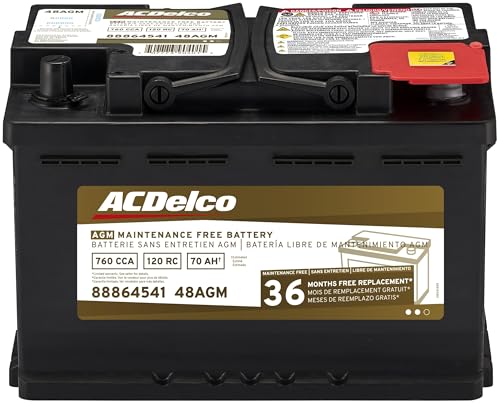 |
ACDelco Gold 48AGM (88864541) 36 Month Warranty AGM BCIACDelco | Upgrade pick | BCI 48 · AGM · 36 Month Warranty | $182.99
Price as of 8 Oct 2026
|
View |
 |
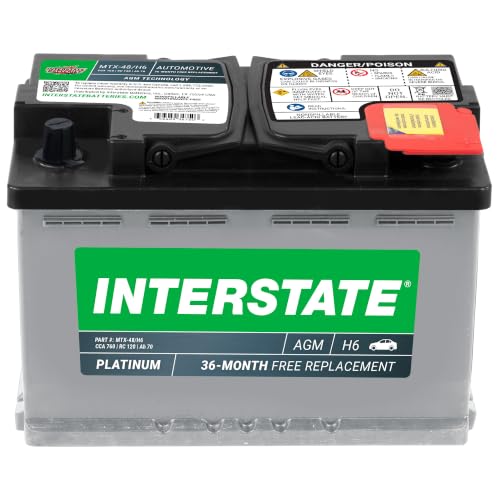
Interstate Batteries Marine/RV Battery 12V 100Ah 925CCAInterstate Batteries | Also great | Group 31M · 100Ah · 925 CCA | $459.95
Price as of 8 Oct 2026
|
View |
 |
Mighty Max Battery MM-G26 BCI Group 26 12V 45AH, 80RC, 540Mighty Max Battery | Budget pick | BCI 26 · 540 CCA · 80 RC | $189.99
Price as of 8 Oct 2026
|
View |
Read the table by matching commute severity first, then checking reserve capacity and group size. CCA matters, but reserve capacity and fitment usually decide whether the battery survives repeated short-hop use.
How we chose these batteries
Short-trip severity was the main filter. A car that gets five-minute errands needs a different battery than one that sees mixed city traffic or start-stop duty.
Reserve capacity and CCA were judged together, not separately. A battery with decent cranking power but thin reserve can still struggle when the alternator does not have long enough to recover the charge.
Fitment came next. Group size, terminal layout, and height have to match the tray and hold-down, or the spec sheet does not matter.
Chemistry was the final filter. AGM suits frequent restarting and partial charging better than standard flooded lead-acid, while lithium only works in narrower use cases where fitment and electronics are verified.
| Battery | Type | Group size | Minimum CCA | Reserve capacity | Best use case | Key tradeoff |
|---|---|---|---|---|---|---|
| ACDelco Gold 48AGM | AGM | 48 | AGM-class fit for frequent starts | Good reserve for short-hop use | Mixed city driving and stop-start-compatible vehicles | Costs more than flooded lead-acid |
| WEIZE Platinum AGM Group 35 | AGM | 35 | 650 CCA | 100 RC | Mostly 5-10 minute trips | Must confirm Group 35 fitment |
| Mighty Max MM-G26 | AGM | 26 | 540 CCA | 80 RC | Budget-minded lighter short-trip use | Less reserve than higher-end AGM options |
| Interstate Marine/RV 31M | AGM | 31M | 925 CCA | Deep-cycle oriented | High electrical loads where fitment allows | Large, costly, and often not a direct car replacement |
AGM battery: best for frequent starts and stop-start use
AGM is the safer default for short-trip drivers because it tolerates repeated restarts and partial charging better than a basic flooded battery. Its sealed construction also helps in cars that see rough roads, crowded commutes, and accessory draw after shutdown.
That sealed, maintenance-free design cuts acid leakage risk and removes the old routine of checking electrolyte levels. AGM is also the better fit when the vehicle has a start-stop system, because those cars ask more from the battery every day.
The drawback is price. AGM often costs more up front, and buying one without confirming the correct group size is an expensive mistake.
Flooded lead-acid battery: best for budget-minded drivers with lighter short-trip use
Flooded lead-acid still makes sense when the car sees lighter short-trip use, fewer accessories, and no stop-start system. It is the lower upfront-cost choice, and traditional construction is fine if the battery gets enough charging time between starts.
The weakness is tolerance. Repeated partial charging shortens life faster than it does in AGM, and maintenance matters more if the design is not fully sealed.
For winter use or cars with dash cams, infotainment retention, or other key-off draws, flooded batteries are easier to outgrow. The spec sheet can look fine while real-world short-hop use quietly wears it down.
What battery specs matter most for short trips?
Reserve capacity matters most because it measures minutes of backup power. That matters when the car is powering accessories, idling between short trips, or starting again before the alternator has had enough time to refill the battery.
CCA is still important, especially in cold weather and in vehicles that restart often. But a huge CCA number does not cure chronic undercharging, and it will not compensate for a weak alternator or a battery that is the wrong physical size.
Group size and fitment can override every other spec. H5/Group 47, H6/Group 48, and AUX14 are not interchangeable just because the posts look similar; tray dimensions, hold-down hardware, terminal orientation, and height all matter.
Start-stop systems change the buying priority. Cycle life and recharge tolerance matter more, which is why AGM is usually the safer bet.
Can short trips kill a car battery?
Yes. Short drives may not fully recharge the battery before the next start, and repeated partial charging slowly wears it down. A battery can survive occasional errands, but frequent 5- to 15-minute trips push it into a constant deficit that shortens life.
That is especially true when the car runs dash cams, infotainment memory, heated seats, or other key-off loads. The battery does not just start the car; it covers everything the alternator does not replenish in time.
Will a long drive charge a car battery?
A long drive can help, but it is not a guarantee that a weak or deeply discharged battery will recover fully. The alternator needs enough time and the right charging conditions, and a battery already damaged by repeated short trips may not come back to full health.
If the battery has been deeply discharged several times, one highway run may only buy time. That is why diagnosis matters before assuming the battery is the only problem.
Can driving short distances kill the battery?
Yes. Short-distance driving can kill a battery when the trips are frequent enough that the charging system never catches up. The battery then spends its life in a partial-state-of-charge condition, which is hard on both flooded lead-acid and, to a lesser degree, AGM.
The shorter the trip, the worse the math gets. Very short errands are often harder on the battery than mixed city driving that includes some longer stretches in between.
Will short trips drain a car battery?
They can. Short trips do not always drain a battery immediately, but they often leave it a little undercharged after every drive. After enough cycles, that small deficit becomes slow cranking, warning lights, and a dead no-start.
The bigger the accessory load, the faster that happens. A vehicle with a dash cam, remote start, or heavy infotainment use will need more reserve capacity than a bare-bones commuter.
Short-trip battery decision table
| Commute pattern | Minimum CCA | Minimum reserve capacity | Recommended battery type | Why this fits |
|---|---|---|---|---|
| Mostly 5-10 minute trips | At least 600 CCA in colder climates, or the vehicle’s OEM-equivalent starting spec | High reserve capacity; prioritize the highest RC available in the correct group size | AGM | Frequent partial charging and repeated starts punish weak batteries fast |
| Mixed city driving | OEM-equivalent CCA or better | Moderate-to-high reserve capacity | AGM, with flooded acceptable if loads are light | Some recovery time exists, but stop-and-go still creates charge deficit |
| Start-stop-heavy use | OEM-equivalent or higher CCA | High reserve capacity and strong cycle life | AGM | Frequent restarts demand a battery built for cycle life, not just peak cranking |
Red flags that point to alternator or parasitic drain instead of battery replacement
- Battery goes dead after sitting overnight, not after driving short distances.
- Headlights dim, dash lights flicker, or the charging warning lamp appears while driving.
- Battery terminals are corroded, loose, or hot after cranking.
- The car has a dash cam, alarm, or module that stays awake too long after shutdown.
- The replacement battery also goes weak quickly, which points away from the battery itself.
What car battery is best for short-trip driving?
For most drivers, the best car battery for short-trip driving is an AGM model with the correct group size and more reserve capacity than the old battery. That is the best balance of restart tolerance, accessory support, and day-to-day durability.
If the vehicle has stop-start or a heavy electrical load, AGM moves from “good idea” to “near necessity.” Flooded lead-acid is still acceptable for lighter use and lower budgets, but it is the weaker choice for repeated partial charging.
Weize Platinum AGM Battery BCI Group 35: best for mostly 5-10 minute trips
This is a strong fit for drivers who do a lot of short errands and need a sealed AGM battery with solid starting power. Based on the spec sheet and owner feedback, its 650 CCA and 100 RC make it easier to live with than a basic flooded battery in a stop-and-go routine.
What stands out is the combination of AGM construction, low self-discharge, and a sealed case that cuts leak risk. The drawback is simple: Group 35 fitment has to be checked carefully, and 100 RC is good rather than class-leading for the hardest short-trip use.
ACDelco Gold 48AGM: best for mixed city driving
This is the cleaner choice for mixed city driving when the car uses Group 48 and needs a battery that can take frequent starts without acting fragile. The AGM format fits the short-trip brief, and the 36 Month Warranty is a practical plus for a commuter battery.
Its stronger negative paste and separator design are the parts that matter here because they support performance and help reduce internal shorts. The drawback is the usual one for AGM: you pay more than you would for flooded lead-acid, and the battery is only a good buy if Group 48 is correct for the vehicle.
Mighty Max MM-G26: best for budget-minded short-hop drivers
This is the lower-cost AGM option for drivers who want sealed construction without stepping into a larger or pricier battery. With 540 CCA and 80 RC, it fits lighter short-trip use better than heavy accessory loads or harsh winter duty.
The honest drawback is that it gives up reserve capacity to the more expensive choices, so it is less forgiving if the car sits on a lot of key-off power draw. It also only makes sense when Group 26 is the right physical fit.
Interstate Batteries Marine/RV Battery 12V 100Ah 925CCA Group 31M AGM: best for high electrical load use
This is the extreme option for vehicles or conversions that can physically accept Group 31M and need serious cranking plus deep-cycle support. Based on the spec sheet, it is much more battery than a normal commuter usually needs.
The downside is obvious: size, cost, and fitment limitations make it a poor default for standard cars. It only belongs in the conversation when the vehicle’s tray and charging setup are built for that format.
Should I choose AGM or flooded for short commutes?
Choose AGM if the car sees frequent starts, stop-and-go traffic, winter use, or accessory draw after shutdown. Choose flooded lead-acid if the trips are lighter, the budget is tight, and the vehicle does not ask much from the battery between drives.
AGM is the better short-commute answer because it handles repeated partial charging more gracefully. Flooded batteries are acceptable, but they are less tolerant of the exact pattern that short-trip drivers create.
Do I need a higher reserve capacity battery for short trips?
Usually yes. Reserve capacity helps cover accessory loads and the time gap between starts, which matters more when the alternator does not get long enough to replenish the battery fully. For short-hop commuters, RC is often more useful than chasing a giant CCA number.
That said, more RC is not a fix for a charging problem. If the alternator is weak or the car has a parasitic draw, a bigger battery may only delay the failure.
Is a lithium car battery good for short-trip driving?
Sometimes, but not by default. A lithium LiFePO4 battery is lightweight, has BMS protection, and can be attractive where fitment and height are compatible, but the upfront cost is high and many cars are not a simple plug-and-play match.
Lithium also raises compatibility questions that AGM does not. For everyday short-trip commuters, AGM is the safer recommendation unless the vehicle, charging system, and physical space are already verified for lithium use.
Which one should you buy?
If you drive mostly 5-10 minute trips, buy the AGM battery with the highest reserve capacity that still fits your exact group size. If you do mixed city driving, choose the ACDelco Gold 48AGM or the WEIZE Platinum AGM depending on whether the car uses Group 48 or Group 35.
If your car has start-stop, choose AGM first and confirm the battery management system requirements before buying. If budget matters more than maximum reserve, the Mighty Max MM-G26 is the modest pick, but it is not the strongest choice for severe short-hop use.
If you also want roadside backup, add a jump starter. It should be treated as insurance, not a cure, because it will not solve undercharging.
Lithium LiFePO4 only makes sense when you have verified the vehicle’s fitment, charging profile, and height clearance. The Volvo ReCharge Concept used lithium-polymer battery technology and about 100 kilometres of battery-only range, but that kind of system is a special case, not a normal commuter swap.
Frequently asked questions
Can short trips kill a car battery?
Yes. Repeated short drives may not fully recharge the battery before the next start, and that repeated deficit slowly wears it down. The risk rises when the car has start-stop operation, winter loads, or electronics that stay alive after shutdown.
Will a long drive charge car battery?
A long drive can help recharge a battery, but it may not fully restore one that has been repeatedly undercharged or deeply discharged. If the battery is already weakened, one longer trip is often only a temporary fix, not a recovery plan.
Can driving short distances kill the battery?
Yes. Short distances can kill the battery when they happen often enough that the alternator never has enough time to refill it. That pattern is especially hard on flooded lead-acid batteries and still stressful for AGM if the trips are very short.
Will short trips drain a car battery?
They can. Short trips do not always drain the battery in one day, but they often leave it slightly undercharged after each use. Over time, that becomes a dead battery, especially in cars with accessory draw or repeated restarts.
What car battery is best for short-trip driving?
An AGM battery with the correct group size and enough reserve capacity is usually the best choice. It handles repeated starts and partial charging better than flooded lead-acid, and it is the safer pick for stop-start systems or cars with heavy electronics.
Should I choose AGM or flooded for short commutes?
Choose AGM for most short commutes, especially if the car sees stop-and-go traffic, winter starts, or accessory load after shutdown. Flooded lead-acid is acceptable when the driving pattern is lighter and the budget matters more than battery life.
Products related to this article
Sponsored / affiliate links. As an Amazon Associate I earn from qualifying purchases. I may earn additional commission from eligible campaigns.