Do Smart Cars Take Gas? Everything You Should Know
Do smart cars take gas? Many people wonder about fuel requirements when considering this compact, city-friendly vehicle. The answer is not a simple yes or no—it depends entirely on the specific model and year you’re looking at. This guide breaks down the fuel types used by smart cars, how to tell them apart, and what each option means for your driving experience.
Simply put, some smart cars run on gasoline, others are fully electric, and a few are hybrids. The gasoline models were mostly produced before 2017, while newer smart cars are all-electric. If you’re looking at a used smart Fortwo with a gas engine, it uses regular unleaded fuel. The modern Smart EQ fortwo, however, runs solely on electricity.
Key Takeaways
- Smart cars come in both gasoline and electric versions; the fuel type depends on the model year.
- Gasoline-powered smart cars (Fortwo, Forfour) use 87 octane regular unleaded fuel and get up to 40 mpg.
- Electric smart cars, like the Smart EQ fortwo, require no gasoline—they charge via a standard household outlet or EV charger.
- Hybrid smart cars exist in small numbers, but most are either pure gas or pure electric.
- Identifying your smart car’s fuel type is easy: check the fuel door, VIN, or dashboard instruments.
What Does “Smart Car” Mean?
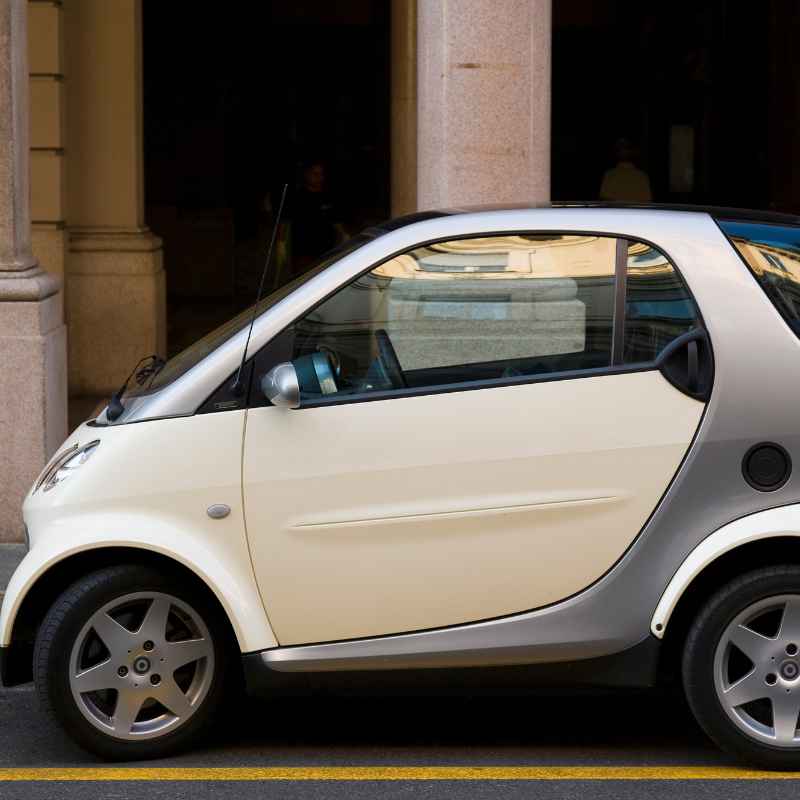
The term “smart car” refers to a microcar brand produced by the Smart division of Mercedes-Benz Group AG. The brand is best known for its ultra-compact two-seater, the Smart Fortwo, designed for tight urban parking and low emissions. Over the years, Smart has also released a four-seat model (Smart Forfour) and various concept vehicles.
Smart cars are famous for their tiny footprint—typically measuring under 8.9 feet in length. This makes them ideal for crowded city streets and extremely easy to park. But the small size also raises the question of fuel efficiency and energy source.
Understanding the brand’s history helps clarify why some models use gasoline while others are electric.
- Launched in 1998 with the first generation Smart Fortwo (gasoline engine).
- Electric version (Smart ED) introduced in 2007.
- In 2019, Smart announced all new models would be fully electric.
- The Smart EQ fortwo became the only available variant after 2020.
- Gasoline models are still common on the used car market.
| Generation | Years | Fuel Type |
|---|---|---|
| First (W450) | 1998–2007 | Gasoline (also diesel in some markets) |
| Second (W451) | 2007–2014 | Gasoline + Electric ED |
| Third (C453/W453) | 2014–2019 | Gasoline + Electric EQ |
| Electric Only (EQ) | 2020–present | Electric only |
As the table shows, the majority of smart cars sold before 2020 run on gasoline. That covers millions of vehicles on the road today, so the question “do smart cars take gas?” is still very relevant for used car shoppers.
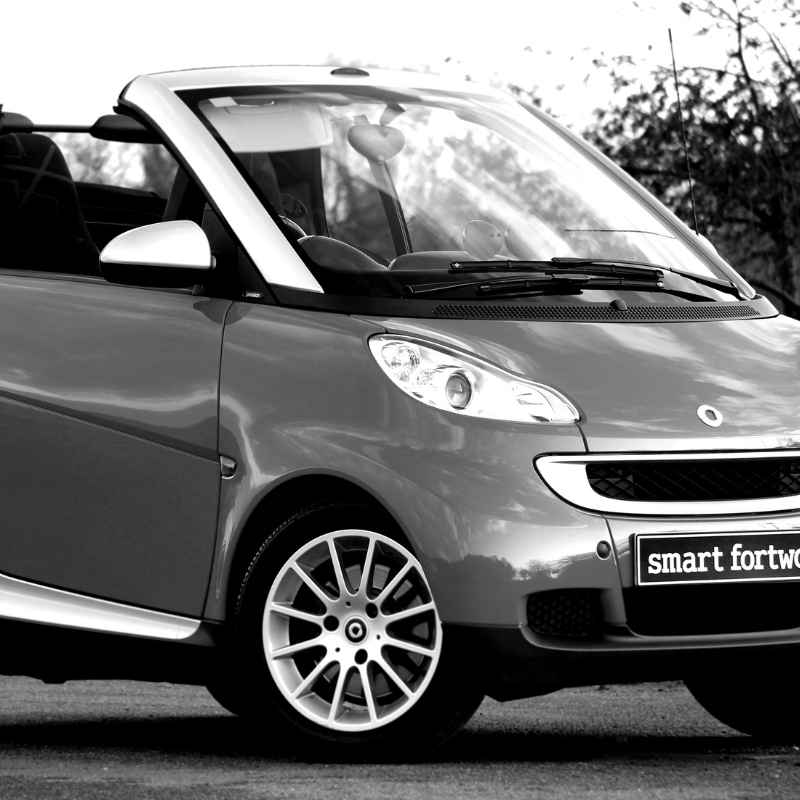
Do Smart Cars Take Gas? The Direct Answer
Yes, many smart cars do take gas—specifically, gasoline-powered models from the Fortwo and Forfour lineups. These vehicles are equipped with a traditional internal combustion engine that requires regular unleaded fuel (87 octane). The fuel tank capacity is about 8.7 gallons for the gasoline models, which gives a driving range of roughly 300–350 miles depending on driving conditions.
However, it’s crucial to understand that not all smart cars take gas. The electric models (Smart ED and Smart EQ) have no gas tank, no fuel filler door, and no combustion engine. They rely entirely on a lithium-ion battery pack that must be plugged in to charge.
Therefore, the answer to “do smart cars take gas?” is “it depends on the model.”
- Gasoline smart cars: Fortwo (450, 451, 453), Forfour (454, 453) — require 87 octane regular fuel.
- Electric smart cars: Smart ED (451), Smart EQ (453) — no gas, use electricity only.
- Hybrid smart cars: Very limited production (e.g., Smart Fortwo Electric Drive with range extender) — these can take gas to charge the battery, but they are rare.
- Most smart cars on the used market (2000–2019) are gasoline-powered.
| Model | Fuel Type | Average MPG (gas) or Range (electric) |
|---|---|---|
| Fortwo 450 (2000–2007) | Gasoline | 40–45 mpg |
| Fortwo 451 (2008–2014) | Gasoline | 36–41 mpg |
| Fortwo 453 (2015–2019) | Gasoline | 34–39 mpg |
| Smart EQ (2020–present) | Electric | 58–84 miles per charge |
So if you’re shopping for a used smart car and you want gasoline, look for models produced before 2020. For an electric-only experience, choose a Smart EQ or a Smart ED from 2013 onward.
How to Tell if a Smart Car Uses Gas or Electricity
When you’re looking at a used smart car, it’s easy to confirm the fuel type in just a few seconds. The most obvious giveaway is the fuel filler door. On gasoline models, you’ll see a small round door on the rear passenger side (usually right side) with a gas cap behind it.
On electric models, the same spot might have a small charging port door—or no door at all, because the charging port is often located under the front hood.
Another quick check is the exhaust pipe. Gasoline engines have a tailpipe at the rear; electric cars do not. You can also check the instrument cluster: gasoline smart cars have a fuel gauge with a gas pump icon, while electric ones show a battery level indicator.
Tip: If you’re buying a used smart car, ask the seller for the VIN and run a free online decoder. The 8th character of the VIN often indicates the engine type — ‘M’ for gasoline, ‘K’ for electric in many models.
Visual Checklist for Fuel Type
- Gasoline model: Round fuel door on rear panel, gas cap, exhaust pipe underneath bumper, fuel gauge on dashboard.
- Electric model: No fuel door (or small flap for charging plug), no exhaust pipe, battery gauge on dashboard, charging cable stored in the trunk.
- Hybrid model (rare): Has both a fuel door and a charging port, plus a small engine sound under load.
- Check the owner’s manual: gasoline models will have a section on fuel requirements.
- Look at the badging: “ED” or “EQ” means electric; “Fortwo” alone often means gasoline.
Using these checks, you can confidently answer the question “do smart cars take gas?” for any specific vehicle you encounter.
Gasoline Smart Car Models: Detailed Look
Gasoline-powered smart cars dominate the used market. The most common are the Fortwo 450 (1998–2007), Fortwo 451 (2008–2014), and Fortwo 453 (2014–2019). All use a 1.0-liter three-cylinder gasoline engine, except for a few turbocharged variants that used a 0.9-liter engine.
These engines are reliable and easy to maintain, but they require regular gasoline—no premium needed.
The fuel economy is excellent: the EPA rates the 2016 Fortwo at 34 mpg city / 39 mpg highway, while earlier models can achieve over 40 mpg on the highway. The tank holds about 8.7 gallons, giving a real-world range of 300+ miles. That’s impressive for a car that fits into half a parking spot.
- Engine: 1.0L I3 (naturally aspirated) or 0.9L I3 turbo (Brabus models).
- Fuel: 87 octane regular unleaded.
- Fuel tank capacity: 8.7 gallons (33 liters).
- Average fuel economy: 34–45 mpg combined.
- Emissions: Low CO2 output (around 90–110 g/km).
- Common issues: Fuel pump failure on early models; regular oil changes required every 5,000 miles.
Important: Do not use E85 or diesel in a gasoline smart car. The engine is designed only for regular unleaded gasoline. Using the wrong fuel can cause serious damage.
Gasoline smart cars are a great choice if you want the lowest upfront cost and don’t have easy access to charging. They also hold their value reasonably well, especially in cities where parking is tight.
Electric Smart Car Models: No Gas Needed
Electric smart cars have been around since 2007 with the Smart ED (Electric Drive). The most recent version, the Smart EQ fortwo, launched in 2017 and remains in production today. These cars use a 17.6 kWh lithium-ion battery pack that powers a rear-mounted electric motor producing 60 kW (80 hp).
The range is modest—about 58 miles EPA, but real-world tests show up to 84 miles in city driving.
Charging is simple: you can plug into a standard household 120V outlet (Level 1) and get a full charge in 6–12 hours, or use a Level 2 charger (240V) to charge in about 3.5 hours. Some public chargers can add a quick boost in under an hour. There is no gas tank, no oil changes, no tailpipe—just pure electric propulsion.
- Range: 58–84 miles per charge (city driving better than highway).
- Battery: 17.6 kWh lithium-ion, liquid-cooled.
- Charging: Level 1 (120V) 6–12 hours; Level 2 (240V) 3.5 hours.
- Top speed: 80 mph (electronically limited).
- Running cost: Equivalent to about $0.03 per mile vs $0.08–$0.12 for gas.
- Maintenance: No oil changes, no exhaust system, fewer moving parts.
Tip: If most of your driving is short city trips under 30 miles per day, an electric smart car is cheaper to run than any gasoline model. Plus, you can skip gas stations entirely.
Electric smart cars are ideal for urban commuters who want zero tailpipe emissions and minimal maintenance. However, they are not suitable for long highway drives due to limited range.
Comparing Gas vs Electric Smart Cars: Which Is Right for You?
Now that you know the answer to “do smart cars take gas?” depends on the version, let’s compare the two options side by side. This will help you decide whether a gasoline or electric smart car fits your lifestyle better.
| Factor | Gasoline Smart Car | Electric Smart Car |
|---|---|---|
| Fuel/Energy | Regular unleaded (87 octane) | Electricity (120V or 240V) |
| Range | 300–350 miles per tank | 58–84 miles per charge |
| Annual Fuel Cost | ~$800–$1,000 (12,000 miles) | ~$300–$400 (12,000 miles) |
| Maintenance | Oil changes, spark plugs, belts | Minimal (no oil changes, fewer parts) |
| Upfront Cost (used) | $4,000–$10,000 | $8,000–$16,000 |
| Emissions | ~90–110 g/km CO2 | Zero tailpipe emissions |
| Best Use | Mixed driving, longer trips | City commuting, short daily runs |
As the comparison shows, gasoline smart cars offer greater range and lower purchase price, but higher ongoing fuel and maintenance costs. Electric smart cars are cheaper to run and greener, but require access to charging and have limited range. Your choice depends on your driving habits.
Common Myths About Smart Cars and Fuel
There are several misconceptions about smart cars and gasoline. Let’s clear them up so you have accurate information.
- Myth 1: All smart cars are electric. False. Only models from 2020 onward are fully electric. Millions of gas-powered smart cars exist.
- Myth 2: Smart cars require premium fuel. False. All gasoline smart cars are designed for regular 87 octane unleaded. Premium is not needed and offers no benefit.
- Myth 3: You can convert a gas smart car to electric easily. Rare and expensive; not a DIY project. Conversion kits exist but cost $5,000–$10,000.
- Myth 4: Smart cars are hybrids. False. The vast majority are either pure gas or pure electric. The only hybrid variant was the 2014 Smart Fortwo Electric Drive with a range extender, which is extremely rare.
- Myth 5: Gas smart cars have terrible fuel economy. False. They average 34–45 mpg, which is excellent for a car of any size.
Warning: Never put diesel in a gasoline smart car. The filler neck is sized differently, but if you force it, you can severely damage the engine. If you accidentally misfuel, do not start the car—call a mechanic.
By knowing these facts, you can avoid costly mistakes and make an informed purchase.
Future of Smart Cars: Gas or Electric?
As of now, all new smart cars are electric. The brand announced in 2019 that it would transition to an all-electric lineup worldwide. The Smart EQ fortwo and Smart EQ forfour (sold in some markets) are the only models currently in production.
Gasoline smart cars were phased out completely by 2020 in most regions.
This means that if you want a brand-new smart car, you will not need gasoline. The answer to “do smart cars take gas?” for new models is a clear “no.” However, the used market will continue to offer gasoline versions for years to come. Smart has also hinted at future electric models with improved range—possibly up to 150 miles—which could make them more practical.
According to the International Energy Agency, electric vehicle sales are growing rapidly, and microcars like the Smart are perfect for urban electrification. The brand’s future is in zero-emission mobility, likely with larger batteries and faster charging.
- Production of gasoline smart cars ended in 2019.
- All new Smart models are electric and use the “EQ” badge.
- Used gasoline smart cars remain available and are still reliable.
- Future smart cars may have 100+ mile range and DC fast charging.
- Smart is exploring car-sharing and subscription models with EVs.
Whether you go gas or electric, understanding the fuel requirements is key to a happy ownership experience.
Frequently Asked Questions
Do all smart cars need gasoline?
No, only gasoline-powered models need fuel. Electric smart cars (Smart ED, Smart EQ) run entirely on electricity and have no gas tank.
What type of gas does a smart car take?
Gasoline smart cars use regular unleaded fuel with an octane rating of 87. Do not use premium or diesel.
Can I convert my gasoline smart car to electric?
It is possible but expensive and complex. Professional conversion kits cost between $5,000 and $10,000, and you lose factory warranty support.
How much does it cost to fill a smart car with gas?
At current U.S. gas prices (around $3.50 per gallon), filling an 8.7-gallon tank costs about $30. That gives you 300+ miles of driving.
Is a smart car cheaper to run on gas or electricity?
Electric smart cars are significantly cheaper per mile because electricity costs less than gasoline and maintenance is lower. However, the higher upfront cost of an EV may offset savings for some drivers.
Final Thoughts
The question “do smart cars take gas?” has a straightforward answer: older models do, newer ones don’t. Gasoline smart cars offer great fuel economy and a lower purchase price, making them a smart choice for budget-minded city drivers. Electric smart cars eliminate fuel costs and tailpipe emissions, ideal for eco-conscious commuters.
Whichever you choose, knowing the fuel type is essential for proper maintenance and cost planning. Check the model year and badges before you buy, and you’ll never be caught wondering where to fill up.