How Much Does It Cost to Have Mice Removed From a Car?
Expect about $150 to $500 for a basic mouse-removal cleanup, and about $500 to $2,000+ if wiring, insulation, or HVAC parts need repair. If you leave it alone, droppings, odor, and chewed wiring can turn a small cleanup into a much larger bill. This guide splits the price into inspection, cleanup, deodorizing, exclusion, and repair costs so you can estimate the total before you call a shop.
What does mouse removal from a car include?
Mouse removal usually starts with an inspection, then moves to nest removal, droppings cleanup, and a check of likely hiding spots such as the engine bay, cabin air filter area, vents, and wiring looms. Many shops will quote a separate exclusion or sealing add-on if entry points need to be blocked.
Inspection and entry-point check
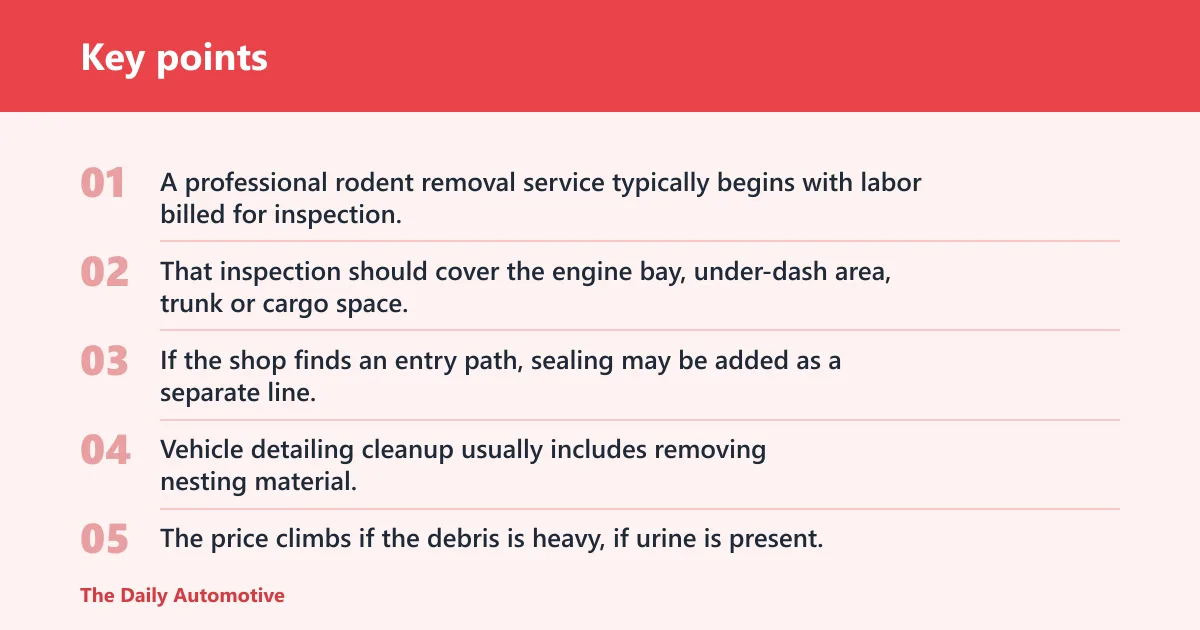
A professional rodent removal service typically begins with labor billed for inspection, often one to two hours depending on access. That inspection should cover the engine bay, under-dash area, trunk or cargo space, cabin air filter housing, and cowl area. If the shop finds an entry path, sealing may be added as a separate line.
Interior cleanup and nest removal
Vehicle detailing cleanup usually includes removing nesting material, vacuuming droppings, wiping contaminated surfaces, and sanitizing high-touch areas. The price climbs if the debris is heavy, if urine is present, or if the nest is packed into seat foam, carpet padding, or trim cavities.
Engine-bay and HVAC inspection
Mouse cleanup should not stop at the cabin. A mechanic may need to inspect the engine bay, air intake, air filter, blower area, and HVAC ducts for nesting material and chewed parts. That matters because contamination in the HVAC system can spread odor through the vents long after the visible debris is gone.
Car mouse cost estimator table
Use this table to separate the bill into line items before you approve work. The range below reflects common retail service pricing patterns, not a fixed quote, because severity, vehicle size, and labor time change the total fast.
| Service item | Low estimate | High estimate | What it usually includes | File insurance or pay out of pocket |
|---|---|---|---|---|
| Inspection | $75 | $200 | Rodent entry-point check, engine bay scan, cabin air filter housing, vents, wiring looms | Pay out of pocket if the total bill stays below your deductible |
| Interior cleanup | $100 | $350 | Droppings removal, nest removal, interior sanitizing, light stain cleanup | Pay out of pocket for isolated contamination |
| Engine-bay cleanup | $75 | $250 | Debris removal from the engine bay, air intake area, and under-hood cavities | Pay out of pocket unless damage extends to parts |
| Odor treatment | $75 | $300 | Urine odor treatment, deodorizing, ozone or equivalent odor service if offered | Pay out of pocket if odor is the main issue |
| Wiring repair | $200 | $1,500+ | Wire repair, sensor checks, hose replacement, chewed insulation, diagnostic labor | Consider a claim if the repair estimate exceeds your deductible by a useful margin |
A common first-timer mistake is asking for a single “mouse removal” price and stopping there. That hides the real split between cleanup and repair. If the vehicle only needs inspection, cleanup, and odor treatment, the bill can stay in the low hundreds. Once a wire or sensor is damaged, the total can jump fast.
How much does each cleanup step cost?
Cleanup costs depend on what is visible and what is hidden. Interior sanitizing and droppings removal can be modest, while odor treatment and HVAC contamination can add another service layer. If the cabin air filter or ducts are affected, expect the price to move beyond simple vacuum work.
Interior sanitizing and droppings removal
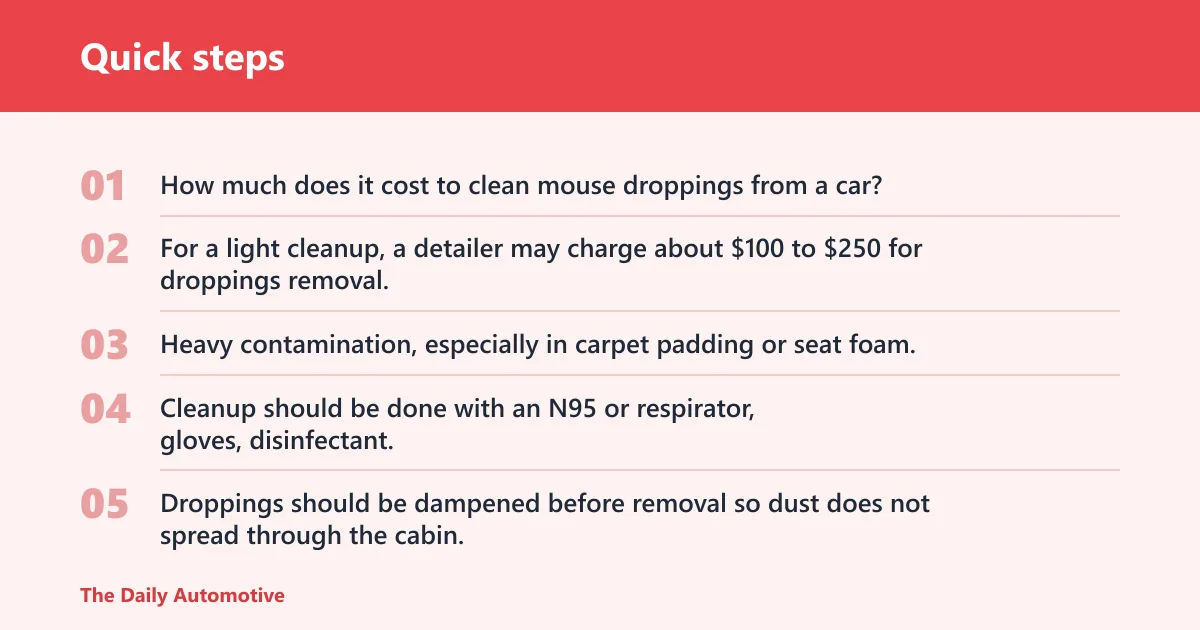
How much does it cost to clean mouse droppings from a car? For a light cleanup, a detailer may charge about $100 to $250 for droppings removal, surface cleaning, and basic sanitizing. Heavy contamination, especially in carpet padding or seat foam, can push the labor toward $300 or more.
Cleanup should be done with an N95 or respirator, gloves, disinfectant, and sealed disposal bags. Droppings should be dampened before removal so dust does not spread through the cabin. That is more than a hygiene step, it also reduces the chance you pay twice for repeat cleaning.
Odor treatment and deodorizing
How much does it cost to deodorize a car after mice? Odor treatment often runs $75 to $300, depending on the method and whether urine has soaked into soft material. Deodorizing is not always included in droppings cleanup, so ask for it as a separate line item.
If the nest sat near the HVAC intake, odor can keep returning each time the fan runs. That is why a shop may recommend both cabin cleanup and an air system check. Removing the source matters more than masking the smell.
Engine-bay cleanup and cabin filter service
Engine-bay cleanup often lands between $75 and $250, but the cabin air filter can add another $20 to $80 for the part plus labor if the housing is hard to access. If mice nested near the cowl or air intake, the shop may also inspect the HVAC system for debris and contamination.
Picture a compact car parked for two weeks near brush. The owner finds shredded insulation by the battery and a stale smell through the vents. In that case, the bill may include engine-bay cleanup, a cabin filter replacement, and HVAC inspection, even if the interior looks mostly clean.
When does rodent cleanup become repair?
Cleanup becomes repair when mice chew parts instead of leaving debris. Wiring harness damage, hose damage, sensor faults, and missing insulation can turn a modest cleanup bill into a major repair estimate. The cost change depends on how many systems the rodents reached and whether the problem is still isolated.
Wiring harness and sensor checks
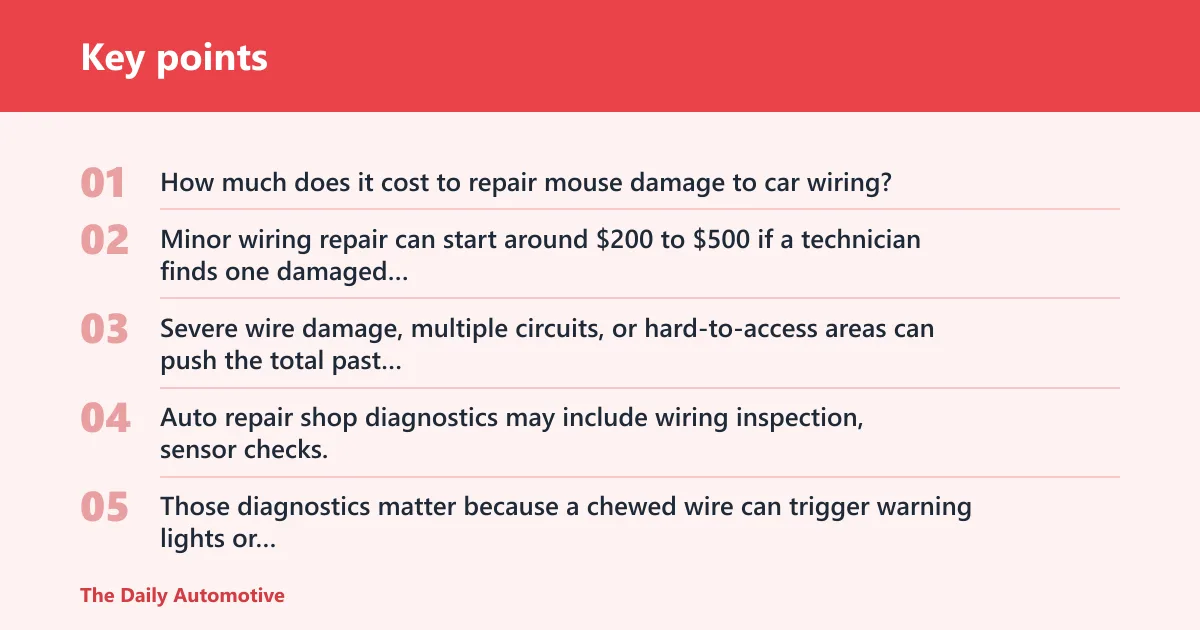
How much does it cost to repair mouse damage to car wiring? Minor wiring repair can start around $200 to $500 if a technician finds one damaged section and can splice or replace a short run. Severe wire damage, multiple circuits, or hard-to-access areas can push the total past $1,000 and, in some cases, above $1,500.
Auto repair shop diagnostics may include wiring inspection, sensor checks, air filter replacement, and HVAC system inspection. Those diagnostics matter because a chewed wire can trigger warning lights or intermittent faults even after the nest is removed.
Hose and insulation damage
Rodent damage repair can also include hose replacement and chewed insulation. Small hose repairs may be a few hundred dollars, while insulation replacement or deeper under-hood damage can lift the bill sharply. If the vehicle has no drivability issues, the repair may stay limited to a single area.
Minor versus severe repair scenarios
Say your crossover has a nest under the airbox, but the wires are intact. That is often a cleanup and filter-service job, not a full repair claim. Suppose the same vehicle also has a chewed oxygen-sensor lead and cracked hose. The estimate can cross from cleaning into repair territory very quickly.
Can insurance pay for mouse damage?
Does car insurance cover mice in a car? Comprehensive coverage may help if rodents damage wiring, insulation, or other covered parts, but the deductible often decides whether a claim makes sense. Small cleanup bills are usually cheaper to pay out of pocket, while larger repair estimates can justify a claim if the damage is clearly covered.
Comprehensive coverage basics
Insurance usually treats rodent damage as a comprehensive loss, not a collision loss. That means the policy may cover damage from mice, but not every cleanup task will be worth claiming. Odor treatment alone is often too small to clear a deductible.
Deductible versus estimate comparison
If your deductible is $500 and the estimate is $220 for inspection plus cleanup, a claim is unlikely to help. If the estimate reaches $1,200 because of a chewed wire or HVAC damage, filing may make more sense. The useful comparison is simple: estimate minus deductible.
When to file a claim
File a claim when the repair estimate clearly exceeds the deductible and the damage is well documented. Pay out of pocket when the problem is limited to droppings, a nest, or odor. That keeps a small cleanup from becoming a claim that saves very little.
What should you do first if you find mice in your car?
What should I do first if I find mice in my car? Start by protecting yourself, then remove food and nesting material if you can do it safely, and finally decide whether the problem is limited to cleaning or needs a mechanic’s diagnosis. Do not run the HVAC until the cabin filter and vents are checked.
Protect yourself while cleaning
Use gloves, an N95 or respirator, disinfectant, and sealed disposal bags before touching debris. Do not sweep dry droppings or vacuum them without containment. Safe handling reduces exposure and helps prevent a cheap cleanup from turning into a health issue.
Remove food and nesting material
Pull out food wrappers, cloth scraps, and visible nest material if they are easy to reach. Check the cabin, trunk, glove box, and under-seat areas. If debris is packed into vents, carpet, or the engine bay, stop and move to professional help.
Decide whether to call a detailer or mechanic
Call a detailer first if the issue is limited to droppings, odor, and loose nesting material. Call a mechanic if the check-engine light is on, a fuse blows, airflow changes, or you see chewed wires. The cheapest escalation path is inspection first, cleanup second, repair only if needed.
How do you keep mice from coming back?
Keeping mice out matters because repeat infestations multiply the cost. Sealing entry points, protecting vents and the cowl area, and parking in cleaner storage conditions all lower the odds of another cleanup bill. Prevention costs less than a second inspection, second deodorizing session, or second wiring repair.
Seal entry points
Exclusion work may include rodent-proof mesh, sealants, and labor for blocking small gaps near the firewall, drain passages, and body openings. Shops may also add vent and cowl protection. That work usually costs far less than repairing a harness after another visit from rodents.
Protect vents and cowl areas
If mice entered through the HVAC intake or cowl, ask about screening those areas during the next service visit. That add-on can be cheaper than repeated cabin filter replacement and odor work. It also helps stop debris from entering the ventilation system again.
Parking and storage habits that lower risk
Cleaner parking areas reduce risk and help keep food sources away from the vehicle. Long storage periods raise the chance of nesting, especially if the car sits near brush, trash, or bird seed. A car that stays clean outside usually costs less inside.
Frequently asked questions
How much does it cost to have mice removed from a car?
For a basic cleanup, expect about $150 to $500. That range usually covers inspection, droppings removal, nest removal, and some sanitizing. If the job also needs odor treatment, cabin filter service, or wiring repair, the total can move well above that range.
What is the average cost of mouse removal from a vehicle?
The average total depends on whether you mean cleanup only or cleanup plus repair. A simple infestation often lands in the low hundreds, while a vehicle with damaged wiring or HVAC contamination can reach $500 to $2,000 or more. The biggest split is labor versus parts.
Does car insurance cover mice in a car?
Comprehensive coverage may cover rodent damage, but only if the policy terms apply and the deductible makes sense against the estimate. Small cleanup bills often should not be filed. A claim is more reasonable when the repair estimate clearly exceeds the deductible and involves damaged parts.
How much does rodent fumigation for a car cost?
Most mouse problems do not need fumigation. If a shop offers odor or sanitation treatment that uses an ozone machine or similar process, the charge may fall around $75 to $300. That is different from repair work and should be listed separately from droppings cleanup.
Can a mechanic remove a mouse nest from a car?
Yes. A mechanic can remove a nest if it is in the engine bay, HVAC intake, or another area tied to a possible repair. For cabin-only contamination, a detailer may be the cheaper first call. The best choice depends on whether wires, sensors, or vents need diagnosis.
Is it cheaper to clean mice out of a car yourself or hire a pro?
DIY is cheaper in direct cost if the problem is light and you already have gloves, disinfectant, and disposal bags. A pro is usually worth it when droppings are heavy, the smell persists, or the engine bay and HVAC system need inspection. Mistakes with cleanup can raise the final bill.
Products related to this article
Sponsored / affiliate links. As an Amazon Associate I earn from qualifying purchases. I may earn additional commission from eligible campaigns.