How Much to Replace a Clutch in a Car? Full Cost Guide
Replacing a clutch in a car typically costs between $1,200 and $2,500 for most vehicles, but the final price depends heavily on your car’s make, model, and labor rates in your area. This complete cost guide breaks down every factor that affects clutch replacement pricing so you know exactly what to expect before heading to the shop.
Simply put, a clutch replacement costs $1,200 to $2,500 on average for parts and labor combined. Economy cars fall at the lower end, luxury and performance vehicles at the higher end. Labor makes up 50–60% of the total bill, with the clutch kit itself costing $200 to $800.
Key Takeaways
- Clutch replacement cost ranges from $1,200 to $2,500 for most cars, with labor accounting for over half the total.
- Parts alone run $200 to $800 for a quality clutch kit, but luxury and performance models push that figure much higher.
- Your car’s make and model is the single biggest price driver — replacing a clutch on a Honda Civic costs far less than on a BMW 3 Series.
- Signs like slipping gears, a sticking pedal, or burning smell mean you should inspect your clutch immediately to avoid costlier damage.
- DIY clutch replacement can save you $600 to $1,200 in labor, but requires specialty tools and mechanical experience.
What Is a Clutch and Why Does It Need Replacing?
A clutch is the mechanical link between your engine and transmission. When you press the pedal, the clutch disengages power so you can shift gears. When you release it, the clutch re-engages and sends power to the wheels.
Over time, the friction material on the clutch disc wears down. The National Institute for Automotive Service Excellence reports that a typical clutch lasts 50,000 to 100,000 miles depending on driving habits. Stop-and-go traffic, aggressive starts, and riding the clutch all shorten its lifespan dramatically.
Warning: Driving with a worn clutch can damage your flywheel and transmission, turning a $1,500 repair into a $4,000+ job. Address symptoms early.
The main components that wear out include:
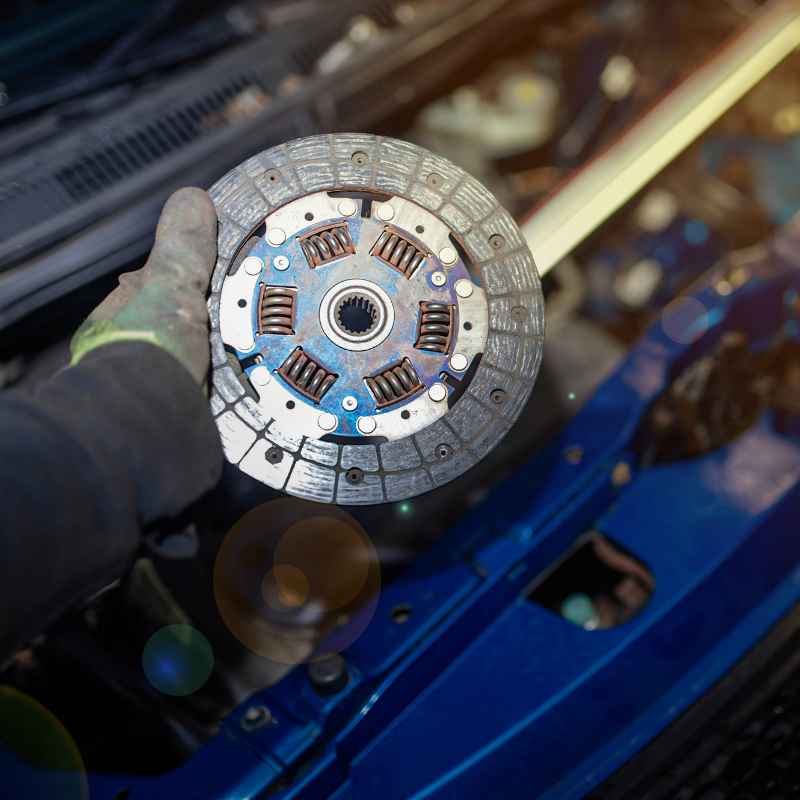
- Clutch disc — friction material wears thin over time
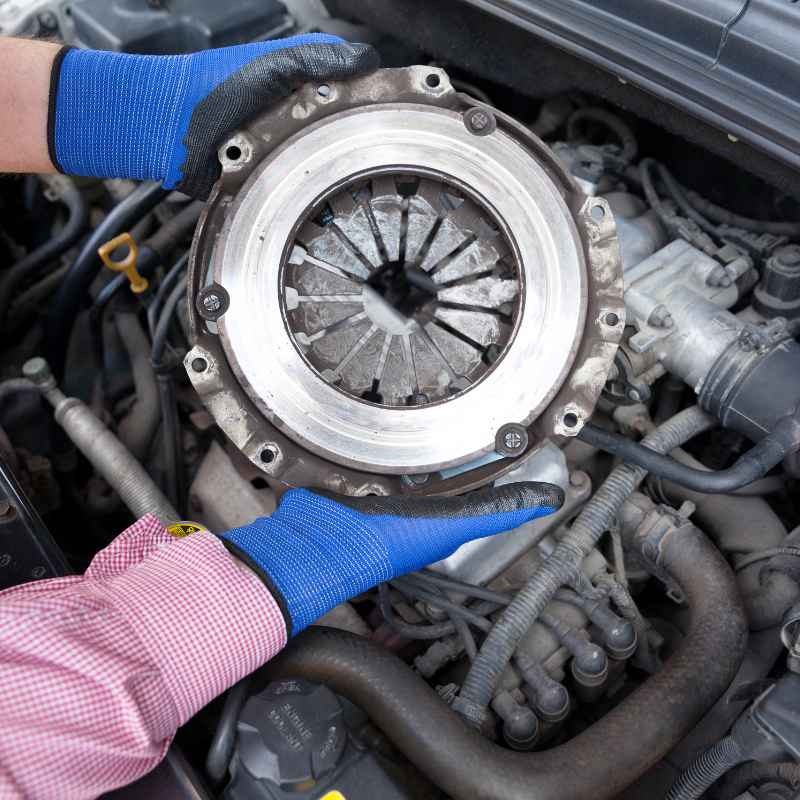
- Pressure plate — loses clamping force as springs fatigue
- Throwout bearing — can fail and cause noise or pedal issues
- Pilot bearing — supports input shaft, often replaced proactively
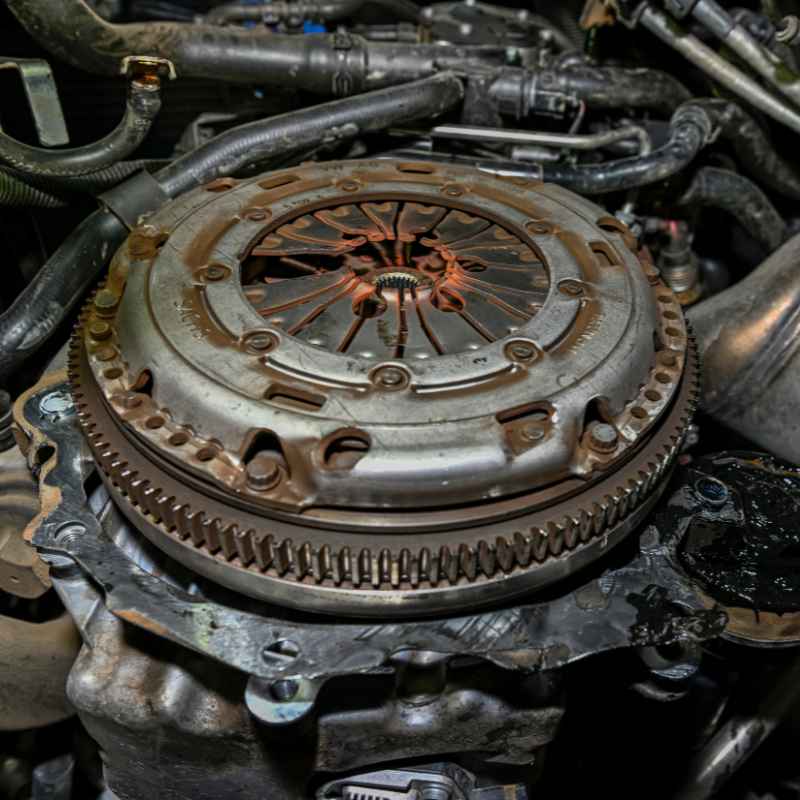
- Flywheel — may need resurfacing or replacement if warped or scored
Most mechanics recommend replacing the entire clutch kit (disc, pressure plate, throwout bearing) plus resurfacing or replacing the flywheel whenever you do the job. This prevents having to tear everything apart again in 20,000 miles because a cheap bearing failed.
How Much Does a Clutch Replacement Cost on Average?
The average clutch replacement cost across all vehicle types lands between $1,200 and $2,500. According to RepairPal, the national average for labor alone is $600 to $1,200, with parts adding another $400 to $1,300 depending on the vehicle.
Your total cost breaks down into two main categories:
| Component | Average Cost | Percentage of Total |
|---|---|---|
| Clutch kit (disc, pressure plate, bearing) | $200 – $600 | 15% – 25% |
| Flywheel (resurface or replace) | $100 – $400 | 8% – 15% |
| Labor | $600 – $1,200 | 50% – 65% |
| Fluids & shop supplies | $50 – $150 | 3% – 6% |
| Total | $1,200 – $2,500 | 100% |
Labor is the biggest chunk because the job is time-intensive. Most shops charge 5 to 8 hours of labor, and transmission removal is required on most vehicles. Some front-wheel-drive cars require dropping the subframe, which adds even more time.
According to the Bureau of Labor Statistics, the median hourly rate for automotive repair labor in 2024 was $95 to $150 per hour depending on your region. Independent shops tend to be cheaper than dealerships by 20% to 40%.
What Factors Affect Clutch Replacement Cost?
Several key variables influence what you will actually pay for a clutch replacement. Understanding these factors helps you budget accurately and avoid surprises.
Vehicle Make and Model
Your car’s brand and model is the single biggest cost driver. A clutch kit for a Honda Civic might cost $250, while the same kit for a Porsche 911 can exceed $1,500. Luxury and performance vehicles use higher-grade materials and often require specialized labor.
- Economy cars (Honda Civic, Toyota Corolla, Mazda3) — $1,000–$1,800
- Mid-range sedans (Honda Accord, Toyota Camry, Subaru Outback) — $1,200–$2,000
- Trucks and SUVs (Ford F-150, Jeep Wrangler, Toyota Tacoma) — $1,500–$2,500
- Luxury vehicles (BMW, Audi, Mercedes-Benz) — $2,000–$4,000
- Performance and exotic cars (Porsche, Ferrari, Lamborghini) — $3,000–$8,000+
Tip: Ask your shop for a quote using OEM (original equipment manufacturer) parts vs. aftermarket parts. Aftermarket clutch kits can save you 20%–40% and often match OEM quality.
Labor Rates in Your Area
Shop labor rates vary significantly by location. Urban areas with higher costs of living command higher rates. Dealerships also charge more than independent shops because they have higher overhead and factory-trained technicians.
| Shop Type | Hourly Rate | Total Labor Estimate |
|---|---|---|
| Independent shop | $80 – $120/hr | $500 – $960 |
| National chain | $100 – $140/hr | $600 – $1,120 |
| Dealership | $130 – $180/hr | $780 – $1,440 |
Getting quotes from three different shops in your area is the best way to gauge fair pricing. Make sure each quote includes the same scope of work so you can compare directly.
Parts Quality and Warranty
Clutch kits range from budget-friendly to premium performance. A basic Sachs or LUK kit (both original equipment suppliers) costs $200 to $400 for most vehicles. High-performance or ceramic clutches for modified cars can cost $600 to $1,200.
The flywheel is another variable. Some vehicles have a dual-mass flywheel, which costs $400 to $800 to replace, versus a single-mass flywheel at $100 to $250. If your flywheel is reusable after resurfacing, that saves you $200 to $500.
Signs You Need a Clutch Replacement
Recognizing the early warning signs of a failing clutch can save you from being stranded and prevent collateral damage to other drivetrain components. The Car Care Council estimates that 60% of clutch failures are preventable with timely maintenance.
Watch for these symptoms:
- Slipping gears — Engine revs increase but your speed doesn’t match, especially under acceleration or going uphill.
- Sticking or stiff pedal — The clutch pedal feels hard to press or sticks to the floor, indicating hydraulic or cable issues.
- Burning smell — A sharp, burnt odor similar to overheated brakes means the clutch friction material is overheating.
- Grinding or chirping noise — When you press the pedal, unusual sounds suggest a failing throwout bearing or pilot bearing.
- Difficulty shifting — Gears grind when you try to engage them, or the shifter feels notchy and resistant.
- Vibration or chatter — The car shudders when you release the pedal, often meaning the pressure plate or flywheel is warped.
Important: Some clutch problems are actually hydraulic issues (slave cylinder or master cylinder) that cost $200 to $400 to fix instead of $1,500. A proper diagnosis is essential before authorizing a full replacement.
If you notice any of these signs, schedule an inspection immediately. Continuing to drive on a worn clutch can score your flywheel, damage your transmission input shaft, and leave you stranded. The cost of early replacement is almost always lower than emergency repairs.
Labor Costs vs. Parts Costs for Clutch Replacement
Understanding the split between labor and parts helps you evaluate quotes and decide where you might save money. For a typical clutch replacement, labor makes up 50% to 65% of the total cost, while parts account for the rest.
Here is a realistic cost breakdown for a mid-range sedan like a Honda Accord:
- Clutch kit (disc, pressure plate, throwout bearing) — $350
- Flywheel resurfacing — $80 (or replacement at $300)
- Pilot bearing — $25
- Transmission fluid — $40
- Shop supplies & shop fees — $75
- Labor (6 hours at $110/hr) — $660
- Total — $1,230 to $1,450
If you take the same car to a dealership, the labor rate jumps to $150 per hour, and parts are marked up 20% to 40%. That same job could cost $1,800 to $2,200 at the dealer.
The parts markup at dealerships is worth paying attention to. A clutch kit that retails for $350 at an auto parts store might be listed at $550 on a dealer’s invoice. Always ask if you can supply your own parts — some independent shops allow it, though they might not warranty labor on customer-supplied parts.
Should You Replace the Clutch Yourself or Hire a Pro?
DIY clutch replacement is possible for experienced home mechanics, but it is not a beginner job. The complexity, need for specialty tools, and physical demands make it one of the more challenging repairs a DIYer can attempt.
DIY Clutch Replacement Costs
If you do the work yourself, your total cost drops to the price of parts plus any specialty tools you need to buy or rent. You can save $600 to $1,200 in labor.
- Clutch kit: $200 – $600
- Flywheel resurface or replacement: $100 – $400
- Transmission jack rental or purchase: $50 – $200
- Socket set, breaker bar, torque wrench (if not owned): $0 – $150
- Alignment tool (usually included with kit): $0
- DIY total: $350 – $1,350
Professional Installation Costs
Hiring a professional adds labor but gives you a warranty, guaranteed fitment, and peace of mind. Most shops offer a 12-month or 12,000-mile warranty on parts and labor.
- Independent shop: $1,000 – $1,800
- National chain: $1,200 – $2,200
- Dealership: $1,500 – $3,500+
- Professional total: $1,000 – $3,500+
The choice between DIY and professional comes down to your skill level, available time, and access to tools. If you have never done major drivetrain work, a clutch replacement is not the place to start learning. Mistakes like misaligning the clutch disc or overtightening pressure plate bolts can cause catastrophic failure within a few hundred miles.
How to Save Money on Clutch Replacement
Clutch replacement is expensive, but you have several ways to reduce the cost without sacrificing quality or safety. These strategies can save you $200 to $800 on the total bill.
Compare Multiple Quotes
Get written estimates from at least three shops in your area. Prices for the same job on the same car can vary by 30% to 40% between shops. Use the quotes to negotiate — some independent shops will match or beat a competitor’s price.
Choose Aftermarket Parts
OEM parts from the dealership are expensive because of brand markup. Aftermarket clutch kits from trusted manufacturers like LUK, Sachs, Exedy, or Valeo are often the exact same parts that automakers use, just sold without the OEM logo. You can save 20% to 40% on parts this way.
Bundle Related Repairs
Since the transmission has to come out anyway, consider replacing the rear main seal (a common leak point) and transmission mounts at the same time. The extra parts cost $50 to $150, but doing it later would add $300 to $600 in labor.
Avoid the Dealership for Older Cars
If your car is more than 5 years old or out of warranty, an independent shop is almost always the smarter choice. You get the same quality work for 20% to 40% less. Many independent shops employ former dealership technicians.
Check for Specials and Coupons
National chains like Midas, Meineke, and AAMCO sometimes run seasonal specials on clutch replacement. A quick online search for “clutch replacement coupon” plus your city can turn up $50 to $100 discounts.
Frequently Asked Questions
Can I drive with a bad clutch?
You can drive a short distance with a failing clutch if you are careful, but it is not recommended. Continuing to drive on a worn clutch can damage the flywheel, pressure plate, and transmission, turning a $1,500 repair into a $3,000+ job.
How long does a clutch replacement take?
A professional mechanic typically takes 5 to 8 hours to replace a clutch on a standard passenger car. Some front-wheel-drive vehicles with cramped engine bays can take 10 to 12 hours. DIY jobs often take a full weekend for an experienced home mechanic.
What is included in a clutch replacement service?
A complete clutch replacement should include a new clutch disc, pressure plate, throwout bearing, pilot bearing, and either resurfacing or replacement of the flywheel. Many shops also replace the transmission fluid and rear main seal as part of the service.
Is a clutch replacement covered under warranty?
Clutches are considered a wear-and-tear item by most automakers and are typically only covered under the basic bumper-to-bumper warranty (usually 3 years or 36,000 miles). Extended warranties and aftermarket service contracts often exclude clutch replacement entirely.
Why is clutch replacement so expensive?
Clutch replacement is labor-intensive because the transmission must be removed from the vehicle to access the clutch assembly. The job requires specialized tools, jacks, and mechanical expertise. Labor accounts for 50% to 65% of the total cost, and parts for quality kits are not cheap either.
Final Thoughts
Clutch replacement is one of the most significant maintenance expenses for a manual transmission vehicle, typically costing $1,200 to $2,500. The biggest cost drivers are your vehicle’s make and model, labor rates in your area, and whether you choose OEM or aftermarket parts. Catching symptoms early, comparing multiple shop quotes, and bundling related repairs can reduce your out-of-pocket cost substantially.
A well-executed clutch replacement restores smooth shifting and adds years of reliable service to your car, making it a worthwhile investment for any manual transmission owner.