How Often Should You Get Your Car Detailed: Essential Guide
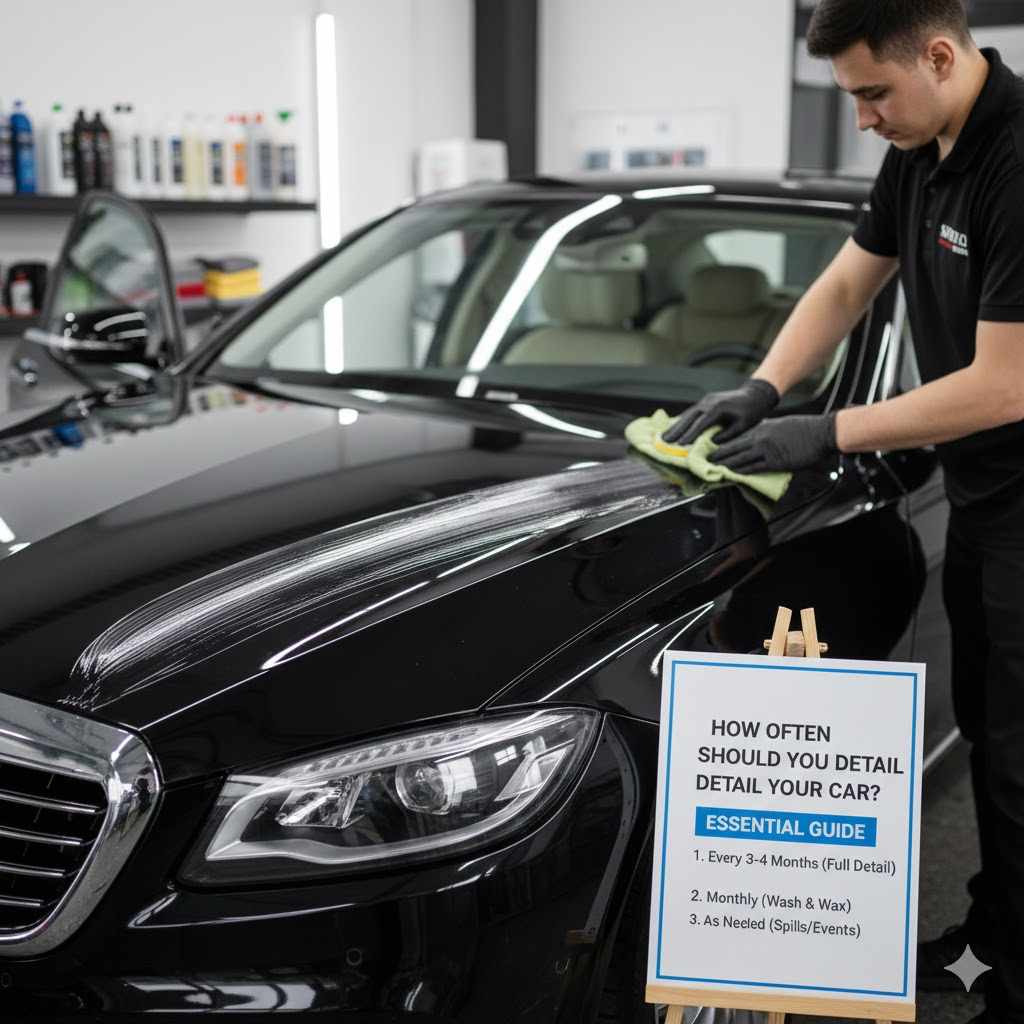
For most cars, getting a full detail 2 to 3 times per year is the perfect sweet spot. This protects your paint, keeps the interior fresh, and maintains your vehicle’s value. However, factors like your climate, driving habits, and whether you have kids or pets can mean you need it more or less often.
Have you ever looked at your car after a quick wash and thought, “It’s clean, but it doesn’t really shine anymore?” You’re not alone. Many drivers wonder how to get that brand-new look back. The secret isn’t just washing it more often—it’s car detailing.
But that brings up a big question: how often should you do it? Is it a monthly chore or a yearly treat? The answer can feel confusing. Don’t worry, I’m here to help. In this guide, we’ll break it down in simple terms. We will find the perfect detailing schedule for you and your car, without any complicated jargon. Let’s get your car looking its best!
What Exactly Is Car Detailing (and Why It’s Not Just a Car Wash)
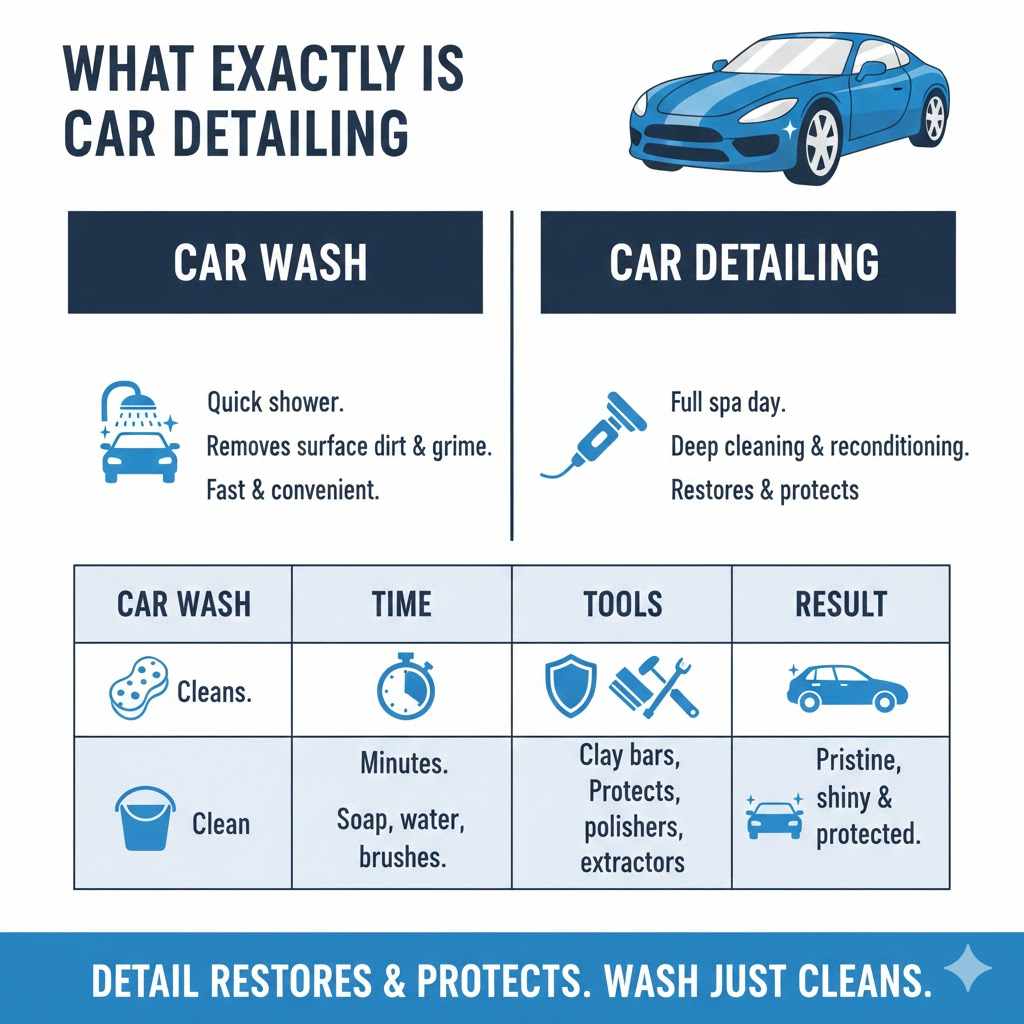
First things first, let’s clear up a common mix-up. A car wash and a car detail are two very different things. Think of a car wash as a quick shower and a car detail as a full spa day for your vehicle.
A standard car wash, whether you do it yourself or go through an automatic one, focuses on removing surface-level dirt, dust, and grime. It’s great for regular maintenance and keeping your car looking generally clean. Its main goal is speed and convenience.
Car detailing, on the other hand, is a deep, meticulous cleaning and reconditioning process for both the inside and outside of your vehicle. A detailer goes far beyond what a wash can do. They aim to restore your car to its best possible condition, almost like it just left the showroom.
Key Differences at a Glance:
- Goal: A wash cleans. A detail restores and protects.
- Time: A wash takes minutes. A detail can take several hours, sometimes even a full day.
- Tools: A wash uses soap, water, and big brushes. A detail uses specialized tools like clay bars, polishers, extractors, and high-quality microfiber towels.
- Result: A wash leaves your car clean. A detail leaves it looking pristine, shiny, and protected from the elements.
The Big Benefits: Why Regular Detailing Matters
You might be thinking, “That sounds like a lot of work. Is it really worth it?” Absolutely! Regular car detailing is one of the best investments you can make for your vehicle. Here’s why:
1. Protects Your Investment and Boosts Resale Value
Your car is one of the most expensive things you own. Detailing protects its paint from fading, chipping, and rusting caused by sun, salt, and dirt. A well-maintained interior prevents cracks in the dashboard and stains on the seats. When it comes time to sell or trade in your car, a vehicle that looks new will always fetch a higher price. A clean, shiny car signals to buyers that it has been well cared for.
2. Creates a Healthier Driving Environment
The inside of your car can be a breeding ground for dust, allergens, and germs. Think about all the things that end up on your carpets and seats! A thorough interior detail removes these contaminants. Deep vacuuming, steam cleaning, and shampooing upholstery get rid of hidden dirt and bacteria, making the air you breathe cleaner and healthier for you and your passengers.
3. Extends the Life of Your Vehicle’s Surfaces
Dirt and grime are abrasive. Over time, they act like sandpaper on your car’s clear coat, dulling the finish. Inside, dirt grinds into your leather and fabric seats, causing them to wear out faster. Detailing removes these harmful particles and applies protective layers—like wax on the paint and conditioner on the leather—that act as a shield against future wear and tear.
4. Improves Your Driving Experience
Let’s be honest—it just feels good to drive a clean car. A spotless interior, shiny paint, and crystal-clear windows can make your daily commute more enjoyable. It’s a simple way to bring a little bit of joy and pride back into your driving routine.
The Golden Question: How Often Should You Get Your Car Detailed?
Now we get to the heart of the matter. While the simple answer is “2 to 3 times per year,” the best schedule for your car depends on several key factors. Your car is unique, and so is its ideal detailing plan. Let’s look at what you need to consider.
Factor 1: Your Driving Habits
How you use your car every day plays a huge role.
- The Daily Commuter: If you drive long distances to work every day, your car is exposed to more road grime, pollution, and potential debris. You might want to aim for a full detail every 4-6 months (2-3 times a year).
- The Weekend Cruiser: If your car is mostly garaged during the week and only comes out for special trips, you can probably stretch it to once or twice a year.
- The Family Taxi: If you’re constantly shuttling kids, pets, and groceries, the interior will need more frequent attention. You might need a full interior detail every 3-4 months, with an exterior detail twice a year.
Factor 2: Your Local Climate and Environment
Where you live is just as important as how you drive.
- Harsh Winters: If you live in an area with snow and ice, road salt is your paint’s worst enemy. It can cause corrosion and rust. A detail before winter to apply protection and another one in the spring to wash it all away is essential.
- Hot, Sunny Climates: The sun’s UV rays can bake your car’s paint, causing it to fade and oxidize. The heat can also crack your dashboard and interior plastics. Regular waxing and interior conditioning are a must, so detailing every 4 months is a good idea.
- Coastal Areas: Salty air from the ocean can also accelerate rust. If you live near the coast, more frequent detailing (every 3-4 months) is wise.
- Dusty or Polluted Areas: Living near a construction site, a dirt road, or in a city with high pollution means more abrasive particles are landing on your car. Regular detailing will help protect the finish.
Factor 3: How You Store Your Car
Is your car parked in a cozy garage or left to face the elements?
- Garaged: A garaged car is protected from sun, rain, bird droppings, and tree sap. It will need detailing less often, likely just twice a year.
- Parked Outside: A car parked on the street or in a driveway is constantly exposed. It will need more protection and more frequent detailing, perhaps 3-4 times a year, to keep it looking great.
A Simple Detailing Frequency Guide
To make it even easier, here’s a table to help you find your perfect schedule.
| Your Profile | Recommended Full Detail Frequency | Key Focus |
|---|---|---|
| Daily Commuter in a Mild Climate | Every 6 months (2x a year) | General paint protection and interior upkeep. |
| Family Car with Kids/Pets | Every 4 months (3x a year) | Heavy focus on interior cleaning, stain removal, and sanitizing. |
| Car in a Snowy/Salty Region | Every 4-6 months, especially post-winter. | Undercarriage cleaning, rust prevention, and applying paint sealant. |
| Show Car or Weekend Driver (Garaged) | Every 6-12 months (1-2x a year) | Maintaining paint perfection with polishing and high-quality wax. |
| Car Parked Outside in a Hot, Sunny Climate | Every 3-4 months (3-4x a year) | UV paint protection (sealant/wax) and interior conditioning to prevent cracking. |
What’s Included in a Full Car Detail?
A full detail covers your car from top to bottom, inside and out. While services can vary, a comprehensive detail usually includes the following steps.
Exterior Detailing
This is all about cleaning, correcting, and protecting your car’s paint and other outer surfaces.
- Meticulous Hand Wash: Professionals use a two-bucket method to prevent scratching. One bucket has soapy water, and the other has clean rinse water. This keeps dirt from being rubbed back onto the paint.
- Decontamination (Clay Bar): After washing, a special clay bar is used to glide across the paint and pull out embedded contaminants like industrial fallout, rail dust, and tree sap that washing can’t remove. This makes the paint feel silky smooth.
- Polishing: This is the step that really makes a car shine. A machine polisher with a light abrasive compound is used to remove light scratches, swirl marks, and oxidation, restoring the paint’s gloss and clarity.
- Protection (Wax or Sealant): After polishing, a layer of protection is applied. Wax provides a warm, deep shine, while a synthetic sealant offers longer-lasting protection against UV rays and contaminants.
- Wheels and Tires: The wheels are deep cleaned to remove stubborn brake dust, and the tires are cleaned and dressed to give them a rich, black finish.
- Trim and Glass: All exterior plastic and rubber trim is cleaned and conditioned to prevent fading, and the windows are cleaned inside and out for a streak-free view.
Interior Detailing
This focuses on making the inside of your car spotless, sanitized, and fresh.
- Thorough Vacuuming: Every nook and cranny is vacuumed, including under the seats, between the crevices, and in the trunk.
- Carpet and Upholstery Cleaning: Fabric seats and carpets are shampooed and often steam-cleaned or hot water extracted to remove deep-seated dirt, stains, and odors.
- Leather Care: Leather seats are gently cleaned with a pH-neutral cleaner and then treated with a conditioner to restore moisture and prevent cracking.
- Dashboard and Console Cleaning: All hard surfaces like the dashboard, door panels, and center console are wiped down, cleaned, and treated with a non-greasy protectant that guards against UV damage. Using products that meet the EPA’s Safer Choice standards can ensure these cleaning agents are safe for you and the environment.
- Detailing the Details: Vents, cupholders, and other small areas are meticulously cleaned with special brushes and tools.
- Door Jambs and Windows: The often-forgotten door jambs are cleaned, and all interior glass is polished.
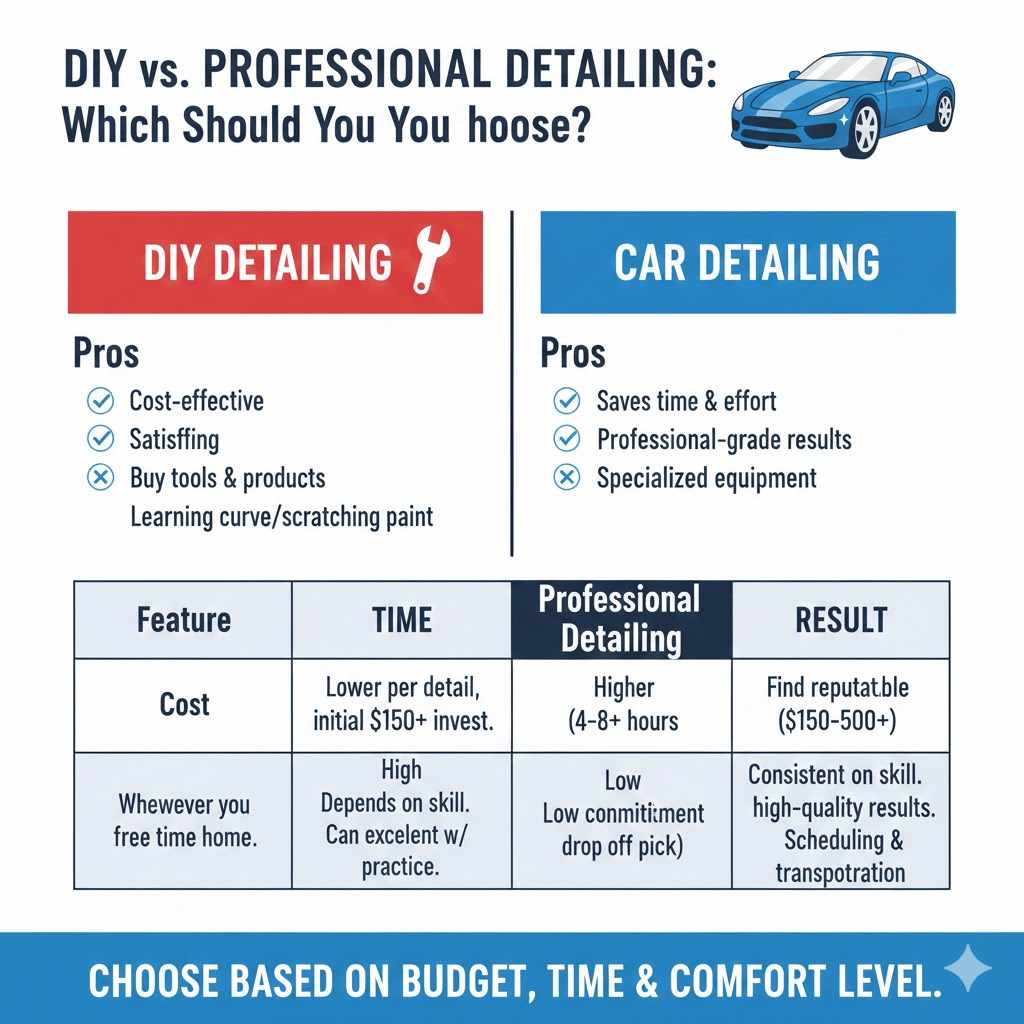
DIY vs. Professional Detailing: Which Should You Choose?
You have two main options: roll up your sleeves and do it yourself, or hire a professional. Both have their pros and cons, and the right choice depends on your budget, time, and comfort level.
DIY Detailing
For many car enthusiasts, detailing their own vehicle is a rewarding experience. It gives you complete control over the process and can save you money in the long run.
- Pros: Cost-effective after the initial investment in supplies, satisfying to do yourself, you can detail on your own schedule.
- Cons: Requires a significant time commitment (4-8 hours), requires buying the right tools and products, there’s a learning curve to avoid mistakes like scratching the paint.
Professional Detailing
Hiring a pro saves you time and ensures a high-quality result. Professionals have the experience, tools, and products to tackle even the toughest jobs.
- Pros: Saves you time and effort, professional-grade results, they have specialized equipment you may not own (like hot water extractors).
- Cons: Can be expensive, you need to find a reputable and trustworthy detailer, requires scheduling an appointment.
| Feature | DIY Detailing | Professional Detailing |
|---|---|---|
| Cost | Lower per detail, but requires initial investment in supplies ($150+). | Higher per detail ($150 – $500+). |
| Time | High time commitment (4-8+ hours of your own time). | Low time commitment (just drop off and pick up the car). |
| Results | Depends on your skill, effort, and products. Can be excellent with practice. | Consistent, high-quality results from experienced technicians. |
| Convenience | You can do it whenever you have free time at home. | Requires scheduling and transportation arrangements. |
Frequently Asked Questions (FAQ)
Is car detailing the same as a car wash?
No, they are very different. A car wash is a quick, surface-level clean to remove dirt. Car detailing is a much more thorough and labor-intensive process that cleans, corrects, and protects every surface of your car, inside and out, to restore it to like-new condition.
How much does a car detail usually cost?
Prices vary widely based on your location, the size of your vehicle, and the level of service. A basic full detail can start around $150-$250, while a more comprehensive package with paint correction could cost $500 or more.
Can detailing remove scratches from my car?
It depends on the scratch. Detailing can often remove light surface scratches and swirl marks through polishing. However, if a scratch is deep enough that you can feel it with your fingernail, it has likely gone through the clear coat and will require more intensive paint repair, not just detailing.
How long does a full car detail take?
A professional full detail is a meticulous process. Expect it to take anywhere from 4 to 8 hours. For vehicles that are in poor condition or for high-end services like ceramic coatings, it could even take a couple of days.
Is it worth detailing an old car?
Absolutely! Detailing can breathe new life into an older vehicle. It can restore faded paint, remove years of interior grime, and protect the car from further deterioration. It’s one of the best ways to improve the appearance and increase the resale value of an older car.
What’s the difference between wax and a paint sealant?
Both protect your paint, but they are made from different materials. Carnauba wax is a natural product that gives a deep, warm shine but typically only lasts for a few months. A paint sealant is a synthetic polymer that bonds to the paint, offering more durable protection (often 6 months or longer) and a slick, glossy finish.
Should I detail my car before selling it?
Yes, 100%. A pre-sale detail is one of the best returns on investment you can make. A car that looks clean, shiny, and well-maintained can sell faster and for a significantly higher price. It makes a powerful first impression on potential buyers.
Conclusion: Your Car Deserves a Spa Day
Figuring out how often to get your car detailed doesn’t have to be complicated. By thinking about your driving habits, where you live, and your car’s specific needs, you can create a simple schedule that works for you.
For most people, a full detail 2 to 3 times a year is the perfect rhythm to keep their vehicle protected, healthy, and looking fantastic. Between those full details, regular washes and simple interior clean-ups can maintain that fresh feeling.
Whether you decide to learn the ropes of DIY detailing or trust your car to a professional, you’re making a smart choice. You’re not just cleaning your car—you’re preserving its value, extending its life, and making every drive a little more enjoyable. So go ahead, treat your car. It works hard for you every day, and it deserves it!