How to Clean Inside Car Windows With Magic Eraser (Tint Risks)
A Mr. Clean Magic Eraser can clean the inside of a car window if the glass is bare and the foam is damp, but it is a scrubbing foam, and the old advice to use it on any window is where people get hurt. A retailer listing for a Mr. Clean Magic Eraser product tells users not to use it on post-factory tinted glass, and several car makers warn against abrasives on the inside of the rear window. This guide covers the damp technique, a surface-by-surface risk table, safer alternatives, and the signs that mean stop.
Why Is Cleaning Inside Car Windows So Tricky?
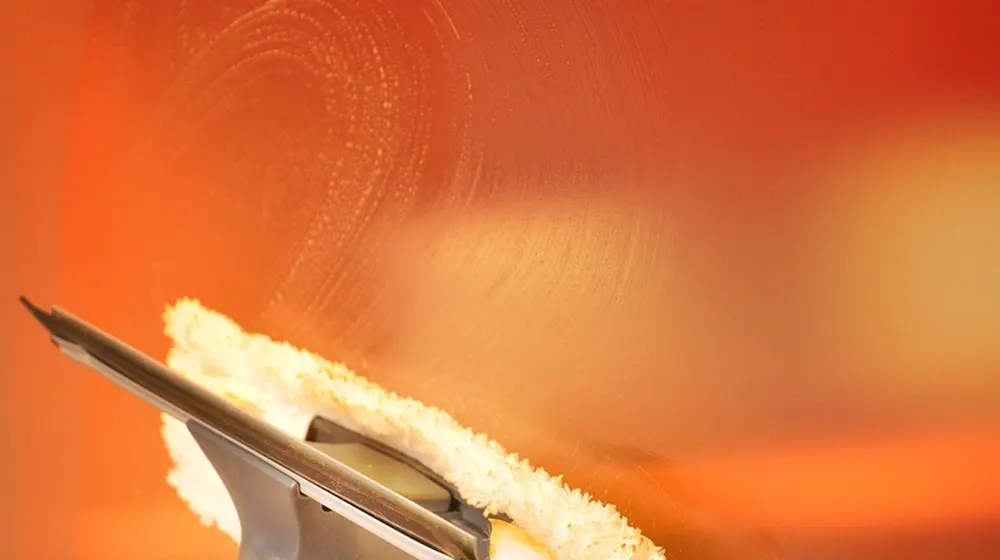
Interior glass collects a thin, oily film that exterior glass does not. Nissan’s owner’s manual notes it is normal for glass to pick up a film after the vehicle is parked in the hot sun, and Mazda’s manual describes an oily, greasy or waxy film that calls for glass cleaner. Because the film is greasy, a dry cloth smears it, and the haze shows up as streaks when the sun hits the glass at a low angle.
That is why a scrubbing sponge sounds appealing. The catch is that the inside face of the glass is also where aftermarket tint film, rear-window defogger lines and some sensor mounts live. A tool that works on bathroom tile is not automatically right for those surfaces. If you only need a tool to reach the far corners of a steeply raked windshield, the pick below does that without any abrasive.
Best Inside-Glass Reach Tool Pick
|
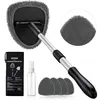
AstroAI Windshield Cleaner Tool and Car Interior Detailing Kit, 21 in A telescoping handle with washable microfiber pads is a no-abrasive way to reach the lower windshield corners that a hand cannot, which is the usual reason people reach for a scrubbing sponge.
|
As an Amazon Associate we earn from qualifying purchases. Spec-based pick from the listing, not a hands-on test.
If your windows are bare, untinted glass with no heating lines in the area you are cleaning, the technique below is reasonable. If you are not sure what is on your glass, work through the risk table first.
Where a Magic Eraser Is Risky: Surface, Risk and Source
This table is the part most guides skip. Every row is tied to a source we read, and where a source says nothing about Magic Eraser by name, the table says so instead of guessing.
| Surface on or near the glass | Risk with an abrasive foam | What the source says |
|---|---|---|
| Aftermarket tint film (inside face of the glass) | High. The foam can scratch, haze or lift the film. | A retailer listing for a Mr. Clean Magic Eraser product (Roller Mop) tells users not to use it on post-factory tinted glass. Solar Gard says not to use abrasive cloths, brushes or powder on its film, and not to use bristle brushes or abrasive scrubbing sponges. |
| Rear-window defogger grid lines | High. The lines are printed on the inside of the glass and can be broken by rubbing. | Mazda’s owner’s manual: do not use sharp instruments or abrasive window cleaners on the inside of the rear window, because they may damage the defogger grid. Kia gives the same warning for the conductors bonded to the inside of the rear window. |
| Factory-tinted or untinted bare glass | Lower, but still an abrasive. Use light pressure and a damp foam. | The Mr. Clean Magic Eraser Whole Home Classic page gives wet, squeeze, erase and rinse steps and lists no glass or car warnings, so the car-specific cautions come from retailer label text and car makers, not from that page. |
| Camera, rain-sensor or other coated areas near the mirror | Unknown for foam. Treat as high until your manual says otherwise. | Not covered by any Magic Eraser page we read. See our guide to getting tree sap off a windshield for the glass-safe method and the camera note. |
| Dash, door trim and plastics next to the glass | Moderate. Overspray or a slipped foam can dull or mark finishes. | Retailer label text for the Roller Mop also warns against use on vehicle body; treat a slipped foam on trim as a risk. See whole-interior detailing order for plastics. |
What You Will Need
- A Magic Eraser or generic melamine foam sponge, cut or folded so you hold a clean edge
- A bowl or sink of clean water, or a spray bottle
- Two or three clean microfiber cloths, one for rinsing and one for drying
- A flashlight or phone light to check for film and streaks from an angle
- A towel to protect the dashboard and seats from drips
Step-by-Step: How To Clean Inside Car Windows With Magic Eraser
Use this only on glass you have confirmed is bare or factory-tinted, away from defogger lines. The Mr. Clean product page describes the routine as wet, squeeze, erase, then rinse and reuse. The extra steps below are the car-specific safety checks.
Step 1: Check the Glass Before You Touch It
Look at the inside face of each window in daylight. Aftermarket film often shows as a slightly different shade from the factory glass, may have a visible edge near the top or a small gap at the border, and can show bubbles or fine lines. Defogger lines are thin horizontal strips on the rear glass. If you see either, skip that pane. If you are unsure, ask the shop that sold the car or tinted it.
Step 2: Dampen the Magic Eraser
Wet both sides of the foam thoroughly, then squeeze it so it is damp, not dripping. Plain water only. The product page says the eraser is activated by wetting and squeezing, and a retailer label for the Roller Mop also says never to combine it with chlorine bleach. Do not add glass cleaner, ammonia or other chemicals to the foam; that adds risk to the glass and your dash for no gain.
Step 3: Test a Small Spot First
Pick a corner of a clean-looking, untinted pane and wipe a patch about the size of your palm with very light pressure. Let it dry and look at it from an angle with a light. Retailer label text for the Roller Mop also tells users to test a spot and let it dry. If you see haze, fine scratches or any change in the surface, stop and switch to the microfiber method below.
Step 4: Wipe Gently in Straight Passes
Work in small sections with the flat of the foam, in straight overlapping strokes and with light pressure. Do not scrub in circles or lean on it. Foam sheds fine crumbs as it wears, so rinse it often. Keep the foam off the edges of the glass, the rubber seal, the defogger area and any film border.
Step 5: Rinse and Wipe Away Residue
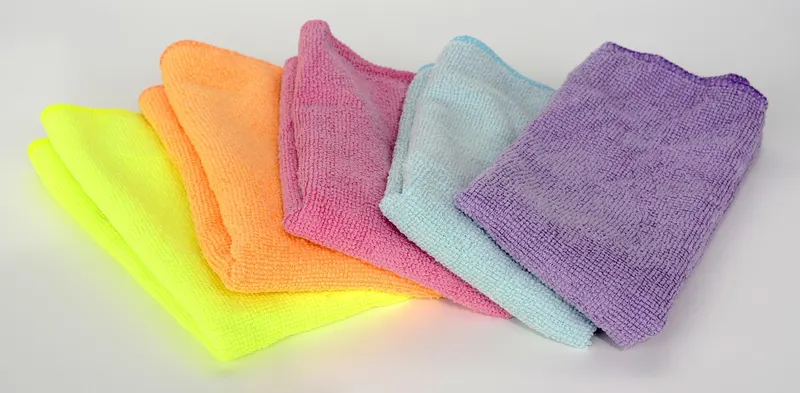
Wipe the glass with a damp, clean microfiber cloth to pick up foam crumbs and the loosened film. Residue left to dry can leave a hazy patch that looks like the film you just removed.
Step 6: Dry and Inspect From an Angle
Dry with a second, dry microfiber cloth using straight strokes. Then check the glass with a light held at a low angle, because streaks that are invisible from the front show up there. If streaks remain, another pass with a clean dry cloth usually clears them. Our guide to cleaning inside car windows without streaks goes deeper on the drying side.
Defogger Lines and Heated Glass: What Car Makers Say
This is the section older versions of this advice leave out. The grid on a rear window is conductive material on the inside of the glass, and it is easier to break than it looks. Mazda’s owner’s manual says not to use sharp instruments or abrasive window cleaners on the inside of the rear window because they may damage the defogger grid. Kia’s manual says the same about the conductors bonded to the inside of the rear window, and Nissan’s manual tells owners to avoid sharp tools, abrasive products and chlorine-based disinfectants on the inside of the windows.
Mazda’s MX-5 manual adds two details. It says not to scrape or scratch the inside of the glass because that could damage the thermal filaments, and for cleaning it says to use a soft cloth dampened in lukewarm water, wiping the filaments gently. It also warns that glass cleaning products could damage them. A Magic Eraser is an abrasive foam, and none of these manuals list it as acceptable, so keep it off the grid area entirely.
Magic Eraser vs Traditional Glass Cleaner: A Comparison
| Method | Good for | Main risk | Our take |
|---|---|---|---|
| Damp Magic Eraser, light pressure | Stubborn film on bare glass | Abrasive on tint, defogger lines and coatings | Occasional use on confirmed bare glass only |
| Microfiber cloth with plain water or mild soap | Routine cleaning, any glass type | Needs more passes on heavy film | Safest starting point |
| Glass cleaner and microfiber | Greasy film, sun haze | Check the product against your manual and film maker | Named by Mazda and Nissan for film on glass |
| Reach tool with microfiber pad | Hard-to-reach lower windshield corners | Less pressure on baked-on film | Good for upkeep between deeper cleans |
For tinted glass the comparison changes. Solar Gard’s care page tells owners not to clean new film for 30 days, not to use bristle brushes or abrasive scrubbing sponges, and suggests half an ounce of liquid dish soap in a quart of water. Its other care page says not to use ammonia-based or other strong cleaning products. For tint-specific picks, see our guide to window cleaners for tinted windows.
Removing Nicotine and Greasy Film Without the Foam
The film that builds up on inside glass is oily, and glass cleaner is what Mazda and Nissan name for it. Nissan says glass cleaner and a soft cloth will remove the sun-baked film. A reasonable order is plain water and microfiber first, glass cleaner second, and an abrasive foam only for a stubborn patch on bare glass after a spot test. If the haze returns within days, wipe the dash and vinyl nearby as well; our whole-interior detailing order covers that order.
When NOT to Use a Magic Eraser on Your Car Windows
- Any window with aftermarket tint film, or one you are not sure about. A retailer label for a Mr. Clean Magic Eraser product says not to use it on post-factory tinted glass.
- The rear window around defogger lines, per the Mazda, Kia and Nissan manuals.
- New tint film. Solar Gard says not to clean it for 30 days after installation.
- Paint, trim and the dashboard. See our guide to Magic Eraser and car paint for the paint side of this.
- Near the camera or rain-sensor area behind the mirror. Check your manual and our guide to getting tree sap off a windshield.
- Any glass that shows haze or fine scratches after your test spot.
When to Stop and See a Professional
- Tint is bubbling, peeling at the edge or has turned cloudy. A tint shop can tell you whether it can be cleaned or must be replaced; see how window tint is installed.
- A defogger line has a visible break or the rear window clears unevenly. A glass or auto-electrical shop can check the grid.
- A driver-assist warning appears after glass cleaning, or the camera area looks scratched. Have a shop check it.
- You cannot get a clear view at night because of fine scratches in the glass. Scratched glass needs a professional opinion on polishing or replacement.
Frequently Asked Questions (FAQ)
Can I use a Magic Eraser on car exterior windows?
The outside of bare glass is less exposed to tint and defogger lines, but the foam is still abrasive and a retailer label for a Mr. Clean product says not to use it on a vehicle body. Use a damp foam on glass only, rinse well, and keep it off paint and trim.
Can you use a Magic Eraser on a windshield?
Only on bare glass, damp and with light pressure, after a spot test. Keep it away from the camera and sensor area behind the mirror and check your owner’s manual first, since no Magic Eraser page we read covers those areas.
Will using a Magic Eraser damage my car’s interior?
It can. The foam is abrasive, so it can mark tint film, the rear-window grid and nearby trim. Protect the dash with a towel, keep the foam off non-glass surfaces, and stop if you see haze or scratches.
Is it safe to use a Magic Eraser on tinted windows?
Not on aftermarket film. A retailer label for a Mr. Clean Magic Eraser product says not to use it on post-factory tinted glass, and Solar Gard says not to use abrasive sponges or cloths on its film. Use microfiber with mild soap and water instead.
What is the best way to dry interior car windows to avoid streaks?
Use a clean, dry microfiber cloth in straight strokes right after the damp wipe, then check the glass from a low angle with a light. Our guide to cleaning inside car windows without streaks covers this in more detail.
Conclusion: Use the Foam Sparingly, Microfiber First
A damp Magic Eraser can clear stubborn film from bare car glass, but the safest default is microfiber with water or mild soap, and the foam only after a spot test on confirmed untinted glass. Skip it on aftermarket tint and anywhere near defogger lines, and when in doubt, check your owner’s manual or ask a tint or glass shop. This page is for general information and should be reviewed against your own vehicle’s manual.
Products related to this article
Sponsored / affiliate links. As an Amazon Associate I earn from qualifying purchases. I may earn additional commission from eligible campaigns.