How to Get the Title After Paying Off Your Car Loan
After the final loan payment clears, the lender is generally expected to release the title, though timing can depend on the state and the loan contract. Expect about 10 to 30 days for title release after the final loan payment clears, and contact the lender if nothing arrives. Wait too long, and you can miss lien-release deadlines, delay a sale or trade-in, and run into registration problems. This guide shows the checkpoints, state-by-state handoff, and the exact paperwork to request if the title is late.
Title release checklist
Use this four-point checklist to track the title from payoff to DMV update. Separate the lender’s job from the state’s job. A payoff can post, yet the title may still be moving through lien release, mailing, or electronic processing.
| Checkpoint | Who has the document | Typical delay | What to ask for | What to do if stuck |
|---|---|---|---|---|
| Loan payoff posted | Lienholder / loan servicer | Same day to a few business days | Written payoff confirmation and the date the payoff cleared | Verify the final amount, final interest, and any overnight payment details |
| Lien release issued | Lender, then DMV or owner depending on state | About 7 to 21 days in many cases | Release of lien, lien satisfaction, or title release notice | Ask whether the release was mailed, uploaded, or sent to the state |
| Title mailed or e-titled | Owner, DMV, or lender depending on title type | About 1 to 4 weeks after release in paper-title states | Mail date, tracking number, or electronic title release status | Confirm the mailing address and ask whether the title was sent to you or to the DMV first |
| DMV record updated | State motor vehicle agency | Days to weeks after release | Confirmation that the lien is cleared in state records | Check the state title record and file a correction if the lien still appears |
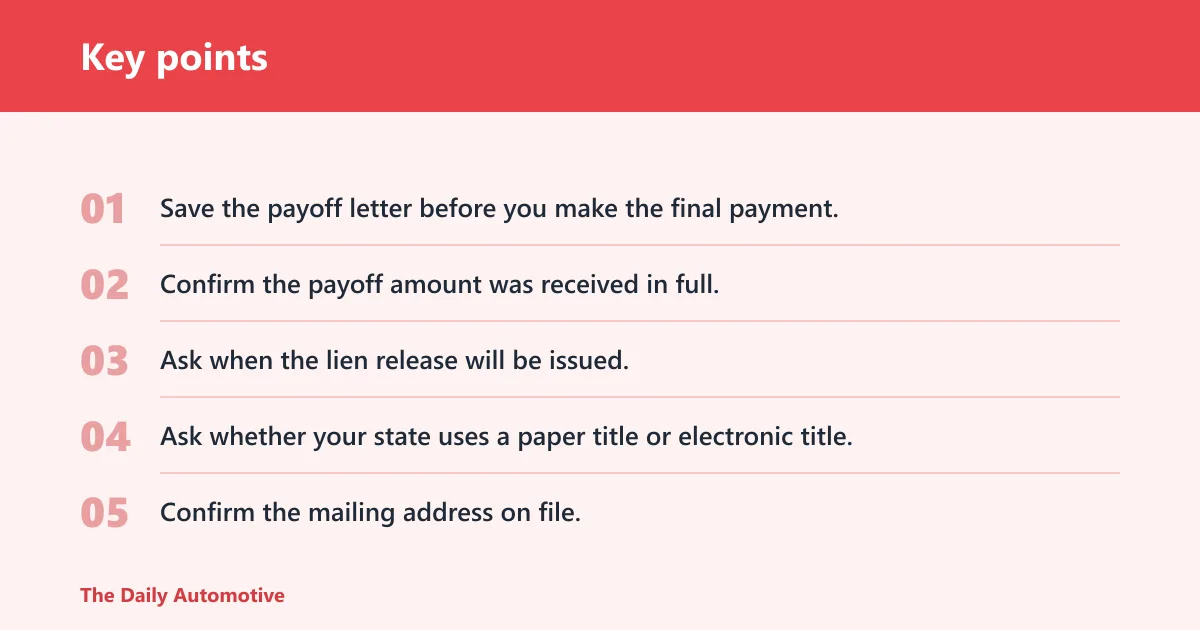
- Save the payoff letter before you make the final payment.
- Confirm the payoff amount was received in full.
- Ask when the lien release will be issued.
- Ask whether your state uses a paper title or electronic title.
- Confirm the mailing address on file.
- Request the tracking number or release reference if the title is mailed.
- Follow up with the DMV if the lien still appears on the state record after the stated delay.
Say your payoff clears on a Monday, but the lender says releases go out in weekly batches. That still counts as a posted payoff, yet the title clock may not start until the batch closes and the lien release is transmitted.
When do you get your title after payoff?
You usually get the title after the payoff posts and the lien release moves through the lender’s process, then the state’s process if your state needs one. In many cases that takes about 10 to 30 days, but paper titles, mailing delays, and state rules can push it longer.
When the clock starts
The clock should start when the lender records the final payment as received in full, not when the payment is sent. If your final payment was mailed, overnighted, or transferred from another servicer, wait for the posted date in writing before counting days. The payoff letter should state the final amount and often lists the address or instructions for the title release.
A common first-timer mistake is counting from the day the check was mailed. If the lender posts the payoff three business days later, that later date is the one that matters for release timing.
What the payoff letter should confirm
Your payoff letter should confirm the amount due, the date through which interest is covered, and where to send payment. It may also say whether the title release goes to you, to the DMV, or to an electronic title system. Keep that letter with the payment receipt and final account statement.
What is a lien release?
A lien release is the lender’s proof that the loan is satisfied. It is often separate from the vehicle title, and in some states the lender sends the release before the title can be mailed or updated in state records. If the lien is not cleared, the DMV may still show the lender on the title record.
Why the lien release comes first
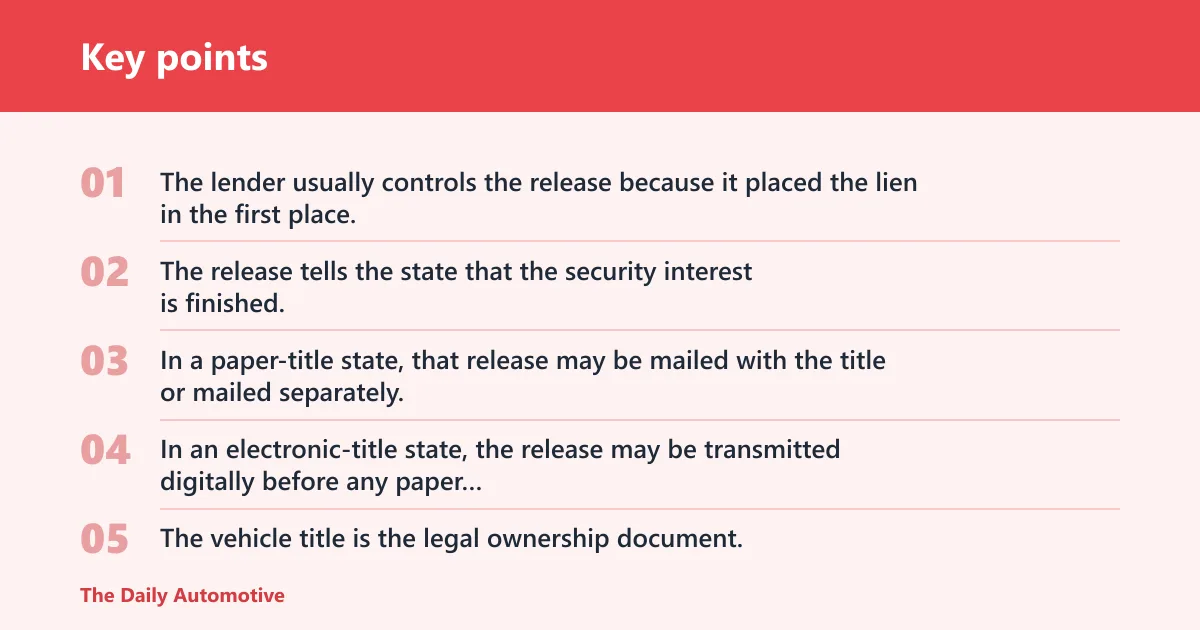
The lender usually controls the release because it placed the lien in the first place. The release tells the state that the security interest is finished. In a paper-title state, that release may be mailed with the title or mailed separately. In an electronic-title state, the release may be transmitted digitally before any paper title exists.
How it differs from the title
The vehicle title is the legal ownership document. The lien release is proof that the lender no longer has a claim on the car. You may need both documents later, especially if you sell, gift, or request a duplicate title. They are not the same paper, and one does not replace the other.
When the DMV still has work to do
Even after the lender clears the loan, the state may need to update the title record. That is why borrowers sometimes hear, “The loan is paid, but the title is still pending.” The DMV or motor vehicle agency may need the lien release before it can clear the record, especially in paper-title states with mailed forms.
Who sends the title after the loan is paid off?
It depends on the state and the title type. The lender may mail a paper title, send a lien release to the DMV, or release an electronic title through the state system. In some states, the DMV sends the clean title after the lien is cleared. In others, the lender sends everything directly to the owner.
Lender and servicing transfers
The lienholder or loan servicer is usually the first stop. If your loan was sold or transferred, the current servicer may not be the same company that originated the loan. That matters because the title release follows the current servicer of record, not the original lender shown on old statements.
DMV or motor vehicle agency
Some states require the lender to notify the DMV first, then the DMV mails or updates the title. Others allow the lender to send the title paperwork straight to you. If the lender says the title was sent but nothing arrives, ask whether the DMV is holding the next step.
Paper title versus electronic title
A paper title is a physical certificate that can be mailed after the lien is released. An electronic title is held in a state system until the lien is cleared, and some states require a conversion step before a paper copy can be issued. That difference changes who gets the document first and how long the process can take.
Picture a borrower in a paper-title state who moved after the final payment. The lender may mail the release to the old address on file, then the borrower has to update the mailing address and ask whether the title can be reissued or tracked through the DMV.
How long does the title process take?
Most delays fall into a few bands: a few business days for payoff posting, about 1 to 3 weeks for lien release, and another week or more for mailing or state processing. Electronic-title states can move faster on paper, but the DMV record still has to clear before the car is free of the lien in the state system.
Fast cases and slow cases
A fast case is one where the lender posts the payoff quickly, the release goes out in the next batch, and the address on file is correct. A slow case often involves a servicing transfer, a lender merger, a manual review, or a state that requires extra processing before a clean title can be issued.
Mail delays and address errors
Mail problems are common. A wrong apartment number, an old address after a move, or a forwarding order that expires can slow or lose the title. If the lender mailed a paper title, ask for the mailing date, whether certified mail or tracking was used, and whether the document was sent to the DMV first.
Why state rules change the timeline
States do not all handle title release the same way. Some keep titles electronic until the lien is lifted. Others mail paper titles to the owner after the lender reports the payoff. Check the state motor vehicle agency if the lender’s answer and the state record do not match.
How to get title after paying off car
Start with the lender, then move to the DMV if the title does not arrive on schedule. Ask for written confirmation that the payoff posted, request the lien release date, and confirm whether your state uses a paper title or an electronic title. If the title is still missing after the waiting period, ask for a tracking number or a duplicate-title path.
What to ask the lender
- Has the payoff posted in full?
- Was a lien release issued?
- Was the title mailed to me, to the DMV, or held electronically?
- What address or email was used?
- Was certified mail or tracking used?
What to ask the DMV
- Does the state still show a lien on the vehicle record?
- Was the release received from the lender?
- Is a paper title pending mailing?
- Do I need a form to request a corrected or duplicate title?
What to do if the title never arrives
If the lender says the title was sent but it never arrives, act on three likely causes first: wrong address, lost mail, or a state-system delay. Ask for written proof of the mailing or release, then compare the lender’s record with the DMV’s record. If needed, start a duplicate title request through the state.
Wrong address
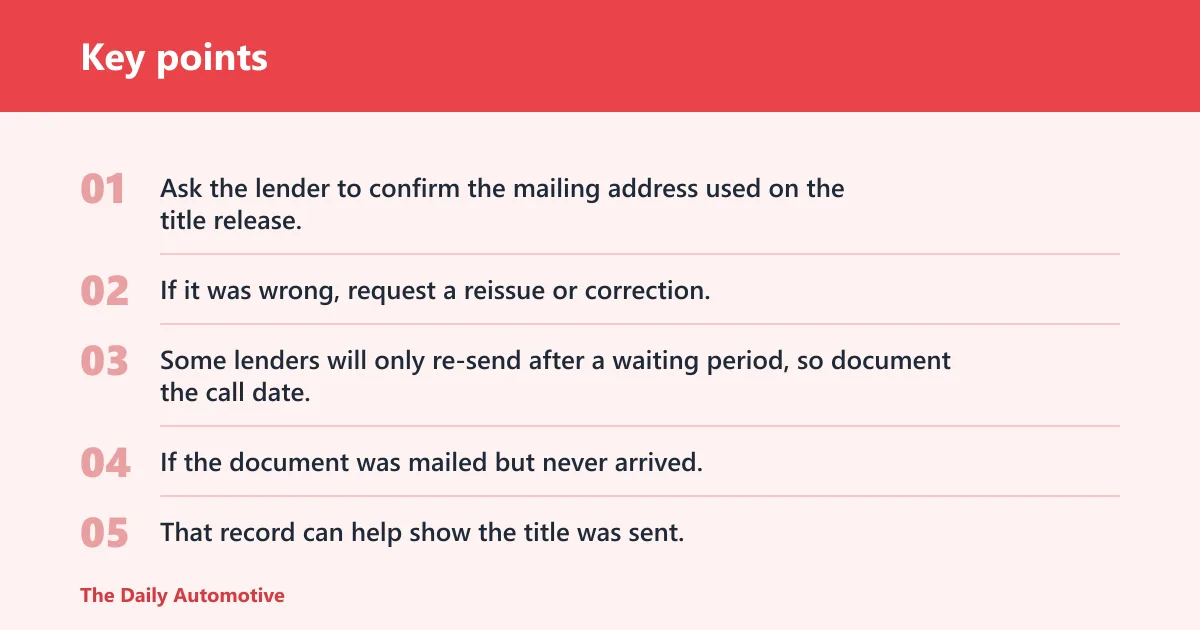
Ask the lender to confirm the mailing address used on the title release. If it was wrong, request a reissue or correction. Some lenders will only re-send after a waiting period, so document the call date, the representative’s name if given, and the address mismatch.
Lost mail
If the document was mailed but never arrived, ask whether certified mail or tracking was used. That record can help show the title was sent. If the delivery record is missing, the lender may need to confirm whether the title must be reissued or whether the DMV needs to send a replacement document.
Lender says it was sent
If the lender insists the title was mailed, ask for the release date, mailing method, and any reference number. Then check the DMV record. If the lien still appears in the state system, the lender may not have finished the release step, or the DMV may not have processed it yet.
Duplicate title request
If the original title is lost or damaged, the state DMV usually handles the duplicate title request. You may need identity proof, the vehicle information, and the lien release or a statement from the lender. A duplicate title is also the fallback when the original never shows up after a reasonable wait.
Suppose the lender mails a clean paper title to an address with an apartment number missing. The lender may count that as sent, but the owner still needs a duplicate title request or a corrected reissue if the envelope is returned or disappears.
What documents do I need to transfer or store a paid-off car title?
Keep the clean title, the lien release, the payoff letter, and the final account statement. Those papers help with resale, gifting, insurance questions, and duplicate title requests. If your state uses an electronic title, save the release confirmation and any DMV notice that the lien is cleared.
For resale or trade-in
Most buyers and dealers will want proof that the lien is gone. Bring the title, the lien release, and any state notice showing the title is clean. If the title has not arrived yet, a dealer may still wait for the paper copy or require the lender’s release first.
For insurance and records
Insurance companies usually do not need the title for routine coverage, but they may ask for ownership proof after a claim. Keep scanned copies in a secure place, along with the payoff letter and the release. If the title is electronic, save every confirmation number and date.
For duplicate-title requests
A duplicate title request often needs the vehicle identification number, owner identity, and proof that the lien is cleared. If the lender already released the title, that release can be the key document the DMV asks for before issuing a replacement.
How to get your car title after paying off loan in Florida
In Florida, the lender or lienholder typically handles the release through the state title system, and the process can be electronic rather than paper-first. After the payoff posts, confirm that the lien has been satisfied, then check whether the Florida title record has updated before expecting a paper document in the mail.
Florida-specific checkpoints
Ask whether the title is electronic, because that changes who receives the next notice. If the lender says the release was sent, the Florida Department of Highway Safety and Motor Vehicles may still need time to update the record. If you moved, verify the mailing address on both the lender and state side.
What Florida drivers should request
- Written payoff confirmation
- Release of lien date
- Mailing or electronic delivery status
- Instructions for a duplicate title if nothing arrives
Frequently asked questions
When do you get your title after paying off car loan?
Most owners receive the title after the payoff posts and the lien release clears, which is often about 10 to 30 days. In some states the title is mailed directly; in others the DMV updates the record first. If nothing arrives after that window, contact the lender and state agency.
How do you get title after paying off car?
Start by asking the lender for payoff confirmation and the lien release date. Then confirm whether your state mails a paper title or uses an electronic title system. If the title is delayed, ask for the mailing method, the address used, and whether the DMV still shows a lien.
How long does it take to get the title after paying off a car loan?
There is no fixed nationwide deadline. A common range is a few days for payoff posting plus one to several weeks for release and mailing. The same source states can be faster on paper processing, but DMV updates and address errors can still stretch the timeline.
What should I do if the lender never sends my title after payoff?
Ask for written proof that the loan posted as paid, the lien release date, and the mailing or electronic delivery record. If the lender insists it was sent, compare that answer with the DMV record. If the title is lost or missing, request the state’s duplicate title process.
Do I need a lien release before the title is mailed to me?
Yes, in most cases the lien release has to happen before the title can be cleanly mailed or updated in the state system. The release and the title are not the same document. Keep both, because the release may be needed even after the title arrives.
Can I sell my car before the title arrives after payoff?
Sometimes, but it depends on the buyer and the state. Many buyers will want the clean title in hand before closing the sale. If you need to sell quickly, ask the lender whether the lien release can be confirmed in writing while you wait for the paper title or DMV update.
Products related to this article
Sponsored / affiliate links. As an Amazon Associate I earn from qualifying purchases. I may earn additional commission from eligible campaigns.
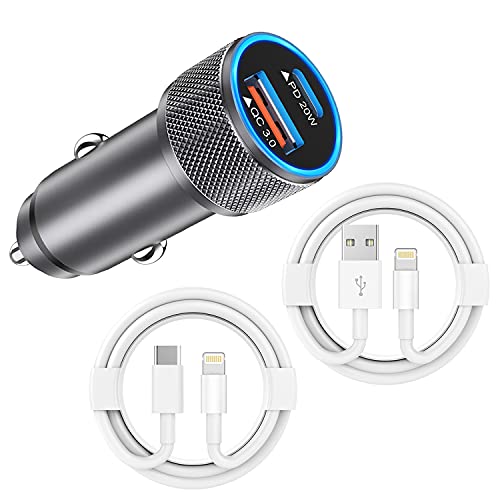 iPhone Car Charger,USB C Fast Car Charger[Apple MFi Certified] Apple Car Charging 38W Dual Port CarCharger Cigarette Lighter Adapter 2x3ft PD&QC 3.0 Lightning Cable for iPhone 14/13/12 Pro/11/Airpods
 Air compressor for tires that work off car outlet,Fit for BMW I3 (2013-2025),Suitable for BMW I3 150PSI portable tire inflator,12V DC compact air compressor