Simple Car Maintenance for Busy People: Local Pro Hacks 2026
Keeping your car running smoothly might seem tough, especially when you have a packed schedule. Many people find Simple Car Maintenance for Busy People: Local Pro Hacks 2026 to be challenging because they think it takes too much time or is too complicated. But it doesn’t have to be!
We’ll break down easy, quick tips that even the busiest among us can do. Get ready to learn how to save time and money with smart car care.
Easy Car Care For Busy Lives
Taking care of your car doesn’t need to take up your whole weekend. This section covers the most important, quick checks you can do to prevent bigger problems. We focus on simple tasks that have a big impact on your car’s health and your wallet.
Learn how small efforts now can save you from costly repairs later.
Checking Your Car’s Fluids
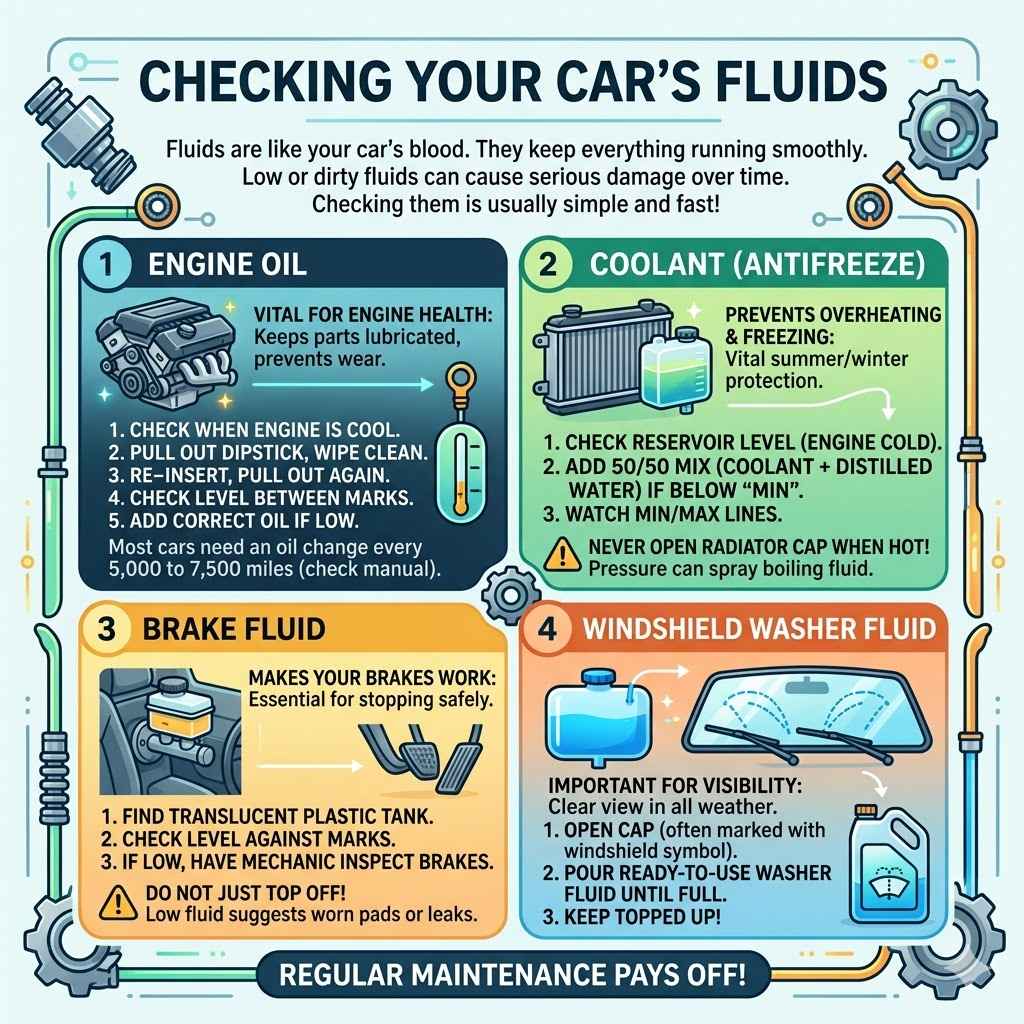
Fluids are like your car’s blood. They keep everything running smoothly. Low or dirty fluids can cause serious damage over time.
Thankfully, checking them is usually quite simple and can be done in just a few minutes.
Engine Oil: This is vital for keeping your engine parts from rubbing together. Too little oil, or oil that’s too old and dirty, causes extreme wear. Always check your oil when the engine is cool.
Pull out the dipstick, wipe it clean, put it back in, and pull it out again. Check the oil level against the marks on the dipstick. If it’s low, add the correct type of oil specified in your car’s manual.
Most cars need an oil change every 5,000 to 7,500 miles, but check your manual.
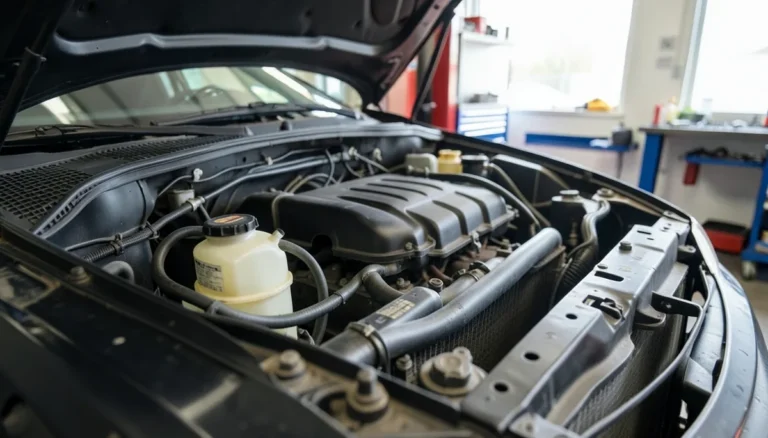
Coolant (Antifreeze): This stops your engine from overheating in the summer and freezing in the winter. Low coolant can lead to a blown head gasket, a very expensive fix. You can usually find the coolant reservoir under the hood.
Check the level against the ‘min’ and ‘max’ lines when the engine is cold. If it’s low, add a 50/50 mix of coolant and distilled water. Never open the radiator cap when the engine is hot; it’s under pressure and can spray boiling fluid.
Brake Fluid: This is what makes your brakes work. If the brake fluid level is low, it could mean your brake pads are worn out, or there’s a leak in the brake system. Both are serious safety issues.
The brake fluid reservoir is usually a small, translucent plastic tank near the driver’s side of the engine. Check the level against the marks. If it’s low, it’s best to have a mechanic inspect your brakes.
You should never just top off brake fluid without knowing why it’s low.
Windshield Washer Fluid: This one is easy and important for visibility. Keep it topped up so you can clean your windshield at any time, especially in bad weather. You can buy ready-to-use washer fluid at any auto parts store or even many grocery stores.
Just open the cap, often marked with a windshield symbol, and pour it in until full.
Tire Care for Safety and Savings
Your tires are the only part of your car touching the road. Keeping them in good shape helps with safety, gas mileage, and how long they last. Simple checks can make a big difference.
Tire Pressure Checks
Correct tire pressure is super important. Underinflated tires can cause poor handling, reduced fuel efficiency, and uneven tire wear. Overinflated tires can lead to a bumpy ride and make your car more prone to tire damage.
You can find the recommended tire pressure for your car on a sticker inside the driver’s side door jamb or in your owner’s manual. It’s usually written as PSI (pounds per square inch).
You’ll need a simple tire pressure gauge, which costs only a few dollars. Unscrew the cap from one of your tire’s valve stems. Press the gauge firmly onto the stem.
It will give you a reading. Compare this to your car’s recommended pressure. If it’s low, add air at a gas station air pump or use a portable air compressor.
If it’s high, press the small nub in the center of the valve stem to release air, then check again.
Checking your tire pressure at least once a month, and before long trips, is a smart habit. It takes less than five minutes and can save you money on gas and prevent premature tire replacement.
Tire Tread Depth
Tread is the pattern on your tires that helps them grip the road. Worn-out tread means less grip, especially in rain or snow, which is dangerous. You can check your tread depth easily.
One quick way is the “penny test.” Take a penny and place it upside down in one of the main grooves of your tire. If you can see the top of Lincoln’s head, your tread is too low and you need new tires. Your tires are generally considered worn out when the tread is down to 2/32 of an inch, which is about the depth from the top of Lincoln’s head to his collar.
Another method is to look for the wear bars. These are small raised bars molded into the bottom of the tread grooves. If the tread is worn down to be level with these bars, it’s time for new tires.
Tire Rotation
Tires wear out unevenly because the front and rear tires, as well as the left and right tires, do different jobs. Front tires often steer and handle more braking force, while rear tires mainly roll. Rotating your tires means moving them to different positions on your car.
This helps them wear more evenly, extending their life and ensuring consistent handling.
A common rotation pattern is to move the front tires straight to the rear and cross the rear tires to the front. However, the exact pattern can vary depending on whether your car has front-wheel drive, rear-wheel drive, or all-wheel drive, and if your tires are directional. Most car owners’ manuals will show the recommended rotation pattern.
For busy people, having this done during your oil change is an efficient way to tackle it.
Most mechanics recommend rotating tires every 5,000 to 7,500 miles. This is often done alongside an oil change, making it a simple way to keep up with maintenance.
Simple Exterior Car Checks
The outside of your car needs a little attention too. These checks are quick and help maintain your car’s appearance and basic function.
Lights Check
Your car’s lights are crucial for safety, both for you to see and for others to see you. Regularly checking your headlights, taillights, brake lights, and turn signals is a must. Ask a friend or family member to help you check the brake lights and turn signals.
Turn on your headlights to check the low and high beams. Make sure all lights are working and not cracked or foggy.
Wiper Blade Inspection
Wiper blades are essential for clear visibility in rain or snow. Over time, the rubber can dry out, crack, or become stiff, making them less effective. Streaks on your windshield are a sign they need replacing.
You can usually
Washing Your Car
While not strictly maintenance, keeping your car clean helps prevent rust and paint damage from dirt, salt, and other road grime. A quick wash every month or so can make a big difference. You don’t need to do it yourself.
Many automatic car washes are fast and affordable. If you do it yourself, use car-specific soap and a soft cloth or sponge to avoid scratching the paint.
Engine Bay Basics for the Time-Pressed
The engine bay is where the magic happens, but it can seem intimidating. We’ll cover a few key checks that are easy to do and important for your car’s heart.
Understanding Your Car’s Battery
A dead battery can leave you stranded. While batteries are designed to last several years, a few simple checks can help you avoid surprises.
Battery Terminal Check
Battery terminals are where the cables connect to your battery. Over time, they can build up a white, powdery substance called corrosion. This corrosion can prevent the battery from getting a good connection, making it hard to start your car or causing electrical problems.
If you see corrosion, you can clean it yourself. First, make sure the car is off. Using a wire brush or a battery terminal cleaning tool (available at auto parts stores), scrub the corrosion off both the battery posts and the inside of the cable clamps.
You can also use a mixture of baking soda and water to help neutralize the acid.
Some people use a thin layer of dielectric grease or petroleum jelly on the terminals after cleaning to help prevent future corrosion. If your battery is more than 3-5 years old, it might be a good idea to have it tested at an auto parts store. Many offer this service for free.
Listen for Strange Sounds
Your car often tells you when something is wrong through sounds. While diagnosing specific issues might need a pro, you can learn to recognize when something is off. For instance, a grinding noise when braking, a squealing sound when turning, or a knocking sound from the engine are all signals that need attention.
Don’t ignore these sounds; they can often indicate a minor issue that can become a major repair if left unaddressed. A quick trip to a mechanic to have the sound checked out can save you a lot of trouble down the road.
Keeping Your Engine Clean (The Easy Way)
While a full engine detail is usually for car enthusiasts, keeping the top of your engine relatively clean is a good idea. It can help you spot leaks or issues more easily. You don’t need to scrub every nook and cranny.
A simple wipe-down of accessible areas with a damp cloth or a specialized engine degreaser spray (follow product instructions carefully) can make a difference.
This can help prevent dirt and debris from interfering with components. For busy people, this can be done quickly when you’re checking your fluids. Just a few minutes spent wiping down accessible engine parts can help you get a better look at what’s going on under the hood.
Local Pro Hacks for Simple Car Maintenance
These are the insider tips that car pros use to keep their vehicles in top shape without spending all day in the garage. They’re all about smart choices and routine habits.
The Power of Regular Oil Changes
This is perhaps the single most important thing you can do for your car’s engine. Engine oil lubricates moving parts, cleans the engine, and helps cool it down. Over time, oil breaks down and gets dirty, losing its ability to protect the engine.
Old, dirty oil can lead to increased friction, overheating, and premature engine wear. Most cars recommend an oil change every 5,000 to 7,500 miles, but some synthetic oils can go up to 10,000 or even 15,000 miles between changes. Check your owner’s manual for the specific recommendation for your vehicle.
Case Study: The Overdue Oil Change Disaster
Sarah, a busy marketing executive, was always on the go. She often put off her car’s oil changes, thinking it was a minor task she could always do later. After nearly 20,000 miles since her last change, her car started making a loud knocking sound.
When she finally took it to a mechanic, she was told that the engine had suffered severe damage due to lack of lubrication. The repair bill was over $4,000, far more than a few oil changes would have cost. This is a stark reminder that neglecting simple maintenance like oil changes can lead to astronomical repair costs.
Finding a Trustworthy Local Mechanic
Having a good mechanic is like having a trusted doctor for your car. They can spot potential problems before they become serious and perform repairs correctly the first time. Ask friends, family, or colleagues for recommendations.
Look for shops that are certified by organizations like the Automotive Service Excellence (ASE). A good mechanic will explain what needs to be done, provide estimates, and answer your questions patiently. Don’t be afraid to get a second opinion if you’re unsure about a recommended repair.
Using Your Car’s Manual
Your car’s owner’s manual is a treasure trove of information. It tells you when your car needs specific maintenance, what type of fluids to use, and how to perform basic checks. Keep it in your glove box and refer to it regularly.
Many manuals are now available online as well, so you can access them from your phone or computer.
The “Listen and Look” Habit
This is a pro tip that costs nothing. Make it a habit to simply listen to your car when you drive and look at it when you park. Are there any new squeaks or rattles?
Does it seem to be driving differently? When you park, take a quick glance under the car for any new puddles of fluid. This simple awareness can alert you to problems early on.
What to Do When You Hear a New Sound
- Identify the Sound: Try to describe the sound. Is it a grind, squeal, click, knock, or hum?
- Note When It Happens: Does it occur when braking, accelerating, turning, or at a specific speed?
- Check for Obvious Issues: While the sound is happening, can you see anything unusual? (e.g., a tire looks low, smoke is coming from somewhere).
- Consult Your Manual: See if your manual mentions common causes for sounds.
- Schedule a Mechanic Visit: Even if you can’t pinpoint the exact cause, describe the sound and when it happens to your mechanic. This helps them diagnose it faster.
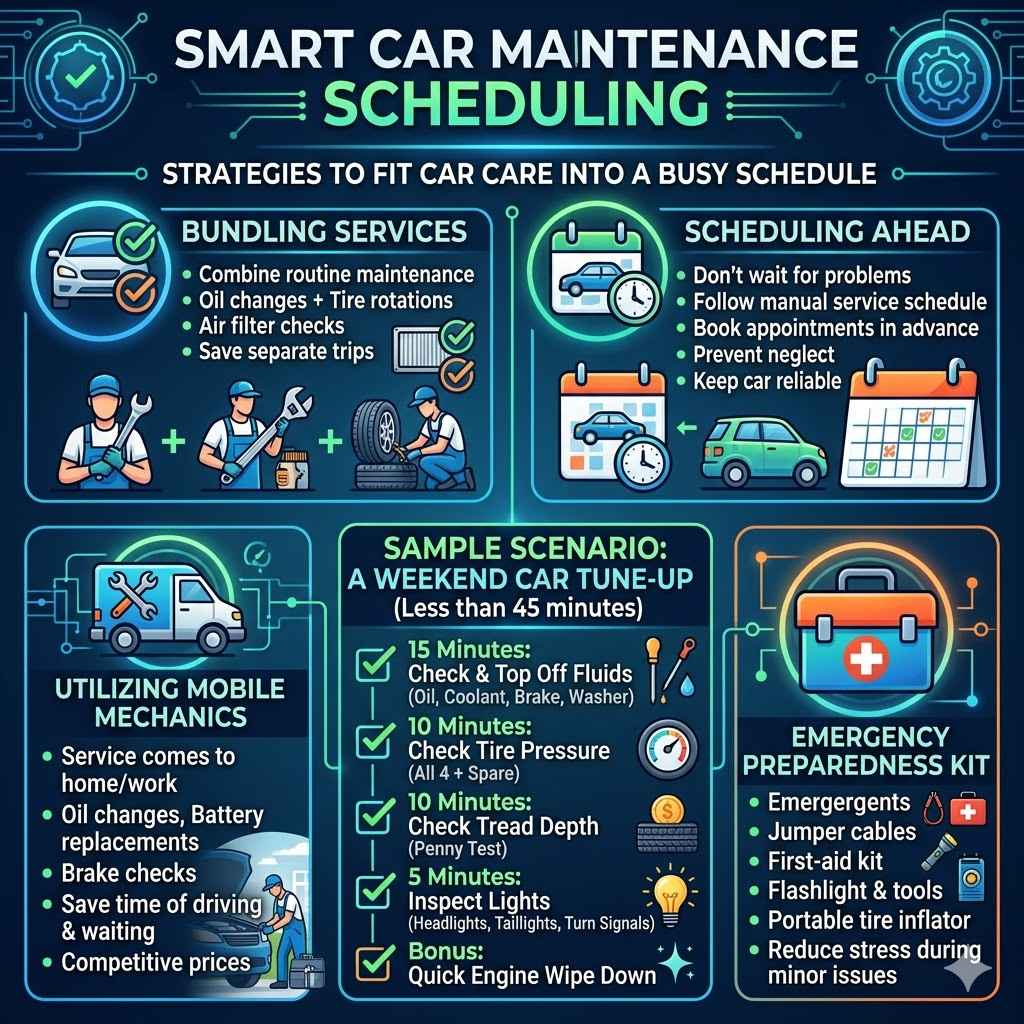
Smart Car Maintenance Scheduling
For busy people, fitting car maintenance into a packed schedule can be the biggest hurdle. These strategies make it easier.
Bundling Services
Many services can be done at the same time. When you go for an oil change, ask if your tires can be rotated or if your air filters can be checked. Most shops are happy to bundle these tasks, saving you a separate trip.
This is especially true for routine maintenance like oil changes, tire rotations, and fluid top-offs.
Scheduling Ahead
Don’t wait until a problem arises. If your car’s manual suggests a service at a certain mileage or time, schedule it in advance. Put it on your calendar like any other important appointment.
This proactive approach prevents neglect and ensures your car stays in good working order.
Utilizing Mobile Mechanics
For certain services like oil changes, battery replacements, or brake checks, mobile mechanics can come to your home or workplace. This saves you the time of driving to a shop and waiting. Many mobile mechanics offer the same quality of service as brick-and-mortar shops, often at competitive prices.
Emergency Preparedness Kit
While not maintenance itself, being prepared for minor issues is smart. Keep a basic emergency kit in your car. This could include jumper cables, a first-aid kit, a flashlight, basic tools, and a portable tire inflator.
Knowing you have these items can reduce stress if a small problem occurs.
Sample Scenario: A Weekend Car Tune-Up
Let’s say it’s a Saturday morning and you have a couple of hours free. Here’s how you can knock out some quick checks:
- 15 Minutes: Check engine oil, coolant, brake fluid, and washer fluid. Top off washer fluid if needed.
- 10 Minutes: Check tire pressure on all four tires and the spare (if you have one). Add air if necessary.
- 10 Minutes: Perform the penny test on all four tires to check tread depth.
- 5 Minutes: Visually inspect headlights, taillights, and turn signals.
- Bonus (if you have time): Quickly wipe down accessible engine parts with a damp cloth.
This entire process takes less than 45 minutes and can catch many common issues before they become serious.
Frequently Asked Questions
Question: How often should I check my car’s tire pressure
Answer: It’s a good habit to check your tire pressure at least once a month and before any long drives to ensure safety and efficiency.
Question: What’s the easiest way to know if my tires need replacing
Answer: Use the penny test; if you can see the top of Lincoln’s head when the penny is inserted upside down into a tread groove, your tires are likely worn out.
Question: Can I really check my car’s fluids myself
Answer: Yes, checking essential fluids like engine oil and coolant is quite simple and can be done with minimal tools, as outlined in this guide.
Question: What is the most important simple maintenance task for my car
Answer: Regularly changing your engine oil is considered the most critical maintenance task to prevent serious engine damage and prolong your car’s life.
Question: How can I find a good mechanic when I’m busy
Answer: Ask for recommendations from trusted friends or family, look for ASE certifications, and don’t hesitate to get a second opinion to ensure you find a reliable professional.
Wrap Up
Simple car maintenance for busy people is about small, consistent actions. Checking fluids, tires, and lights takes little time but saves big headaches. Follow these pro tips, use your manual, and bundle services.
Your car will thank you with reliable performance and fewer costly repairs.
Products related to this article
Sponsored / affiliate links. As an Amazon Associate I earn from qualifying purchases. I may earn additional commission from eligible campaigns.