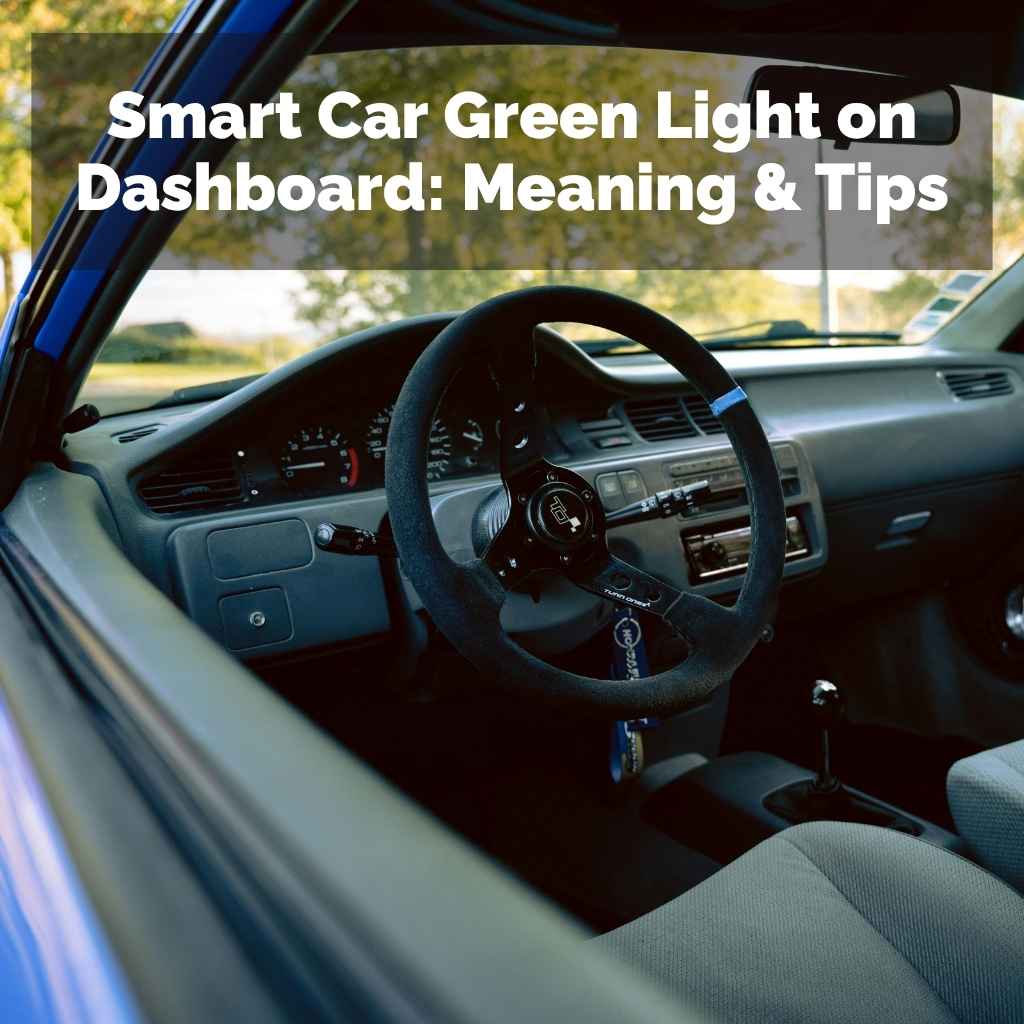
Smart Car Green Light on Dashboard: Meaning & Tips
Seeing a green light on your smart car’s dashboard can be a little confusing at first, especially if you’re new to driving or a newer car model. You might wonder what it means or if it’s something you need to worry about. Don’t worry, it’s usually good news!
This guide will break down the Smart Car Green Light on Dashboard: Meaning & Expert Tips in a way that’s super easy to get. We’ll walk through everything step-by-step so you know exactly what that green light is telling you and what to do next.
Understanding Smart Car Green Dashboard Lights
Green lights on your car’s dashboard are almost always a good sign. They typically indicate that a system is active, working correctly, or a particular feature is engaged and functioning as intended. Unlike warning lights which are often yellow, red, or orange, green lights are designed to provide reassurance to the driver.
They confirm that the technology built into your smart car is ready for use or is currently in operation. This section will explain the common types of green lights you might see and what they mean for your driving experience.
Common Green Light Indicators
There are several common green lights you might encounter, each signaling a different function or status. Understanding these basic indicators can help you feel more confident behind the wheel. They are there to help you, not to confuse you.
Cruise Control Engaged
When you set your cruise control, a green indicator usually lights up. This shows that your car is maintaining a set speed automatically. It’s a convenience feature, and the green light confirms it’s active.
You can often adjust the speed or disengage it by tapping the brakes or clutch. This light is great for long drives on highways, helping you relax a bit. It also ensures you don’t accidentally speed.
Low Beam Headlights On
A green symbol resembling a headlight often means your low beam headlights are active. These are essential for driving in low light conditions, such as dusk, dawn, or foggy weather. The green light is a reminder that your headlights are on, so you can see and be seen by other drivers.
It’s important to know when these are on so you’re not driving blind when it’s dark.
Daytime Running Lights (DRLs)
Many modern cars have Daytime Running Lights that turn on automatically when the car is running. These are usually less bright than regular headlights and are designed to make your car more visible during the day. A green indicator might show that your DRLs are active.
These lights improve safety by helping other road users spot your vehicle sooner, especially in bright sunlight or during twilight hours.
These are just a few examples. Your car’s manual will have a full list of all the specific lights for your model. It’s always a good idea to give it a quick read.
Illuminated Smart Car Systems
The green lights in your smart car are part of a sophisticated system designed to communicate with you. They are more than just simple bulbs; they represent active electronic systems that are performing a function. When a green light illuminates, it means a specific circuit has been completed, and a sensor or control module has confirmed its operation.
This visual feedback loop is a fundamental aspect of modern vehicle diagnostics and driver assistance.
Expert Tips for Interpreting Green Lights
While green lights are generally positive, knowing how to interpret them correctly can still be helpful. Experts suggest a few key practices to ensure you’re always in the know about your car’s status.
Consult Your Owner’s Manual
This is the most important tip. Every car model is different, and the exact symbols and their meanings can vary slightly. Your owner’s manual is the definitive guide for your specific vehicle.
It will have a dedicated section explaining all the dashboard lights, including the green ones. Keep it in your glove compartment for easy reference.
Recognize Patterns and Context
Pay attention to when specific green lights appear. For example, the cruise control light only comes on when you activate that feature. The headlight symbol appears when you turn on your lights.
Understanding the context in which a light illuminates helps you associate it with a specific action or system. This makes it easier to remember what each light signifies without having to constantly check the manual.
Understand System Status
Green lights confirm that a system is operational. For instance, a green indicator for your parking assist system means it’s ready to detect obstacles when you’re parking. This positive reinforcement from your car’s dashboard lets you know that the technology is functioning as expected, contributing to a safer and more convenient driving experience.
It removes doubt about whether a feature is active or not.
Learning these patterns will make you a more informed driver.
The Significance of System Readiness
Green lights serve as confirmation signals from your smart car’s onboard computer. They indicate that the associated systems have passed their self-tests and are ready to perform their intended functions. This readiness is crucial for safety and performance.
For example, a green indicator for a safety feature like stability control means it’s actively monitoring your driving and is prepared to intervene if necessary. It’s a subtle but constant reassurance.
This section provides a deeper look into the specific meanings behind common green lights and offers practical advice from automotive professionals. It goes beyond just identifying the light to understanding its implications for your journey. We’ll cover common scenarios and what each light truly represents in terms of your car’s operation and your driving safety.
This detailed explanation is designed to empower you with knowledge.
Specific Green Light Meanings in Detail
Let’s break down some of the most frequent green lights you’ll find on your smart car’s dashboard and what they specifically tell you.
Vehicle Stability Control (VSC) or Electronic Stability Control (ESC) Active
Many cars have a green light with a car icon and wavy lines underneath. This indicates that the Vehicle Stability Control (or ESC) system is active. This system helps you maintain control of your vehicle during difficult driving conditions, like slippery roads or sharp turns, by automatically applying brakes to individual wheels and reducing engine power.
When this light is on, it means the system is doing its job to keep you safe. It’s a vital safety feature designed to prevent skids and rollovers.
Hill Start Assist (HSA) Engaged
Some smart cars feature Hill Start Assist, which prevents your car from rolling backward when you start on an incline. When this system is engaged, a green indicator light, often showing a car on an incline with an arrow, will illuminate. This tells you that your car will hold itself in place for a few seconds after you release the brake pedal, giving you time to move your foot to the accelerator.
It makes starting on hills much easier and safer.
Lane Keeping Assist (LKA) Active
If your smart car has Lane Keeping Assist, you might see a green light with a car icon between two lane lines. This light signifies that the LKA system is active and helping to keep your vehicle within its lane. The system uses cameras to monitor lane markings and will provide gentle steering inputs or alerts if it detects you drifting out of your lane.
It’s a driver-assistance feature that enhances safety on long drives.
Automatic High Beams
Some cars are equipped with automatic high beams that switch on and off based on surrounding traffic and lighting conditions. A green indicator, often showing a headlight symbol with an ‘A’ or similar marker, will show that this feature is active. This system enhances nighttime visibility by using high beams when they are appropriate and automatically dimming them when oncoming traffic is detected, improving safety without you needing to constantly adjust them.
Each of these lights provides valuable information about your car’s advanced features. They are designed to offer assistance and safety.
Advanced Driver Assistance Systems (ADAS) Indicators
The proliferation of Advanced Driver Assistance Systems (ADAS) in smart cars has led to a wider array of indicator lights, including many green ones. These systems are designed to enhance driver awareness and safety by providing alerts and taking control in certain situations. The green lights are critical in confirming that these complex systems are operational and ready to assist.
They are a key part of the modern driving experience, offering peace of mind.
Expert Advice on Smart Car Green Light Usage
Automotive experts emphasize that while green lights are generally reassuring, drivers should still remain attentive. Here’s their advice:
Don’t Rely Solely on Green Lights
While a green light confirms a system is active, it doesn’t mean you can completely disengage. For example, when cruise control is on, you still need to monitor traffic and road conditions. Lane Keeping Assist is an aid, not a substitute for attentive driving.
Always keep your hands on the wheel and your eyes on the road. These systems are there to support, not replace, your role as the driver.
Note Any Unusual Behavior
If a green light stays on longer than expected, or if it flickers or turns off unexpectedly when it shouldn’t, it might indicate a minor issue with the system. While not as critical as a warning light, it’s worth noting. Sometimes, a system might briefly deactivate and reactivate itself, which is normal.
However, persistent unusual behavior warrants a closer look.
Understand System Limitations
All ADAS systems have limitations. For instance, Lane Keeping Assist might struggle with faded lane markings or in heavy rain. Hill Start Assist might not work on extremely steep or icy surfaces.
Knowing these limitations, which are detailed in your owner’s manual, prevents unexpected situations and ensures you use these features safely and effectively.
Being aware of these nuances makes you a smarter and safer driver.
| System | Green Light Meaning | Expert Advice |
|---|---|---|
| Cruise Control | System is set and active. | Monitor traffic; be ready to disengage. |
| Vehicle Stability Control | System is operational and ready to assist. | Do not override; it enhances control in slippery conditions. |
| Hill Start Assist | Car will hold position on an incline. | Use it to ease starting on hills; be prepared to accelerate. |
| Lane Keeping Assist | System is active and monitoring lanes. | Keep hands on the wheel; it’s a guide, not autopilot. |
Best Practices for Driver Assistance Features
Automotive safety experts consistently recommend familiarizing yourself thoroughly with your vehicle’s advanced driver assistance systems. These systems are a significant advancement in vehicle safety, but their effectiveness is maximized when drivers understand precisely how they work and what their limitations are. For example, features like automatic emergency braking, while life-saving, can sometimes be triggered by unexpected objects or debris on the road.
Therefore, it’s crucial to maintain situational awareness at all times.
Troubleshooting Smart Car Green Light Issues
While green lights are positive indicators, there might be rare occasions where you notice something unexpected. This section covers common troubleshooting steps and when to seek professional help for any green light anomalies. It’s about being prepared for the less common scenarios.
When a Green Light Doesn’t Behave Normally
Most of the time, green lights work perfectly. However, if you notice a green light behaving strangely, consider these possibilities.
Intermittent Illumination
If a green light for a system that should be constantly active (like VSC) flickers or turns off and on randomly, it could suggest a minor electrical issue or a sensor problem. It’s not an emergency, but it’s something to keep an eye on. The system might be temporarily losing its connection or receiving faulty data.
Light Stays On After System Deactivation
Sometimes, a green indicator might remain illuminated even after you’ve turned off the corresponding feature. This could be a glitch in the dashboard’s indicator system. Often, simply turning the car off and on again can reset it.
If the problem persists, it might point to a fault in the control module for that specific feature.
No Green Light When Feature is Active
Conversely, if you activate a feature, like cruise control, and the expected green light doesn’t appear, the system might not have engaged correctly. This could be due to a mechanical fault, a blown fuse, or an issue with the activation switch. It means the feature isn’t working, even if you think it is.
These situations are uncommon but good to be aware of.
Common Technical Glitches and Solutions
Many dashboard indicator issues, including those with green lights, can stem from minor electronic glitches. These are often resolved by a simple power cycle of the vehicle’s electrical system. For instance, a temporary communication error between sensors and the main computer can cause a light to behave erratically.
Turning the car off completely, removing the key (if applicable), and waiting a minute before restarting can often clear these transient errors. This process effectively resets the vehicle’s electronic control units (ECUs).
When to Seek Professional Help
While many minor issues can be resolved easily, some situations require a mechanic’s expertise. Here’s when you should consider professional service:
Persistent Anomalies
If you try basic troubleshooting steps like restarting the car, and the green light issue continues, it’s time to call a professional. Persistent problems often indicate a deeper underlying fault that needs expert diagnosis.
Multiple Lights Affected
If more than one indicator light, green or otherwise, is acting strangely, it might suggest a more significant electrical system problem. This could involve the car’s main computer, wiring harness, or power supply. These are complex issues best handled by a qualified technician.
Impact on Driving Performance
If the issue with a green light is accompanied by any noticeable change in how your car drives, such as loss of power, braking issues, or steering problems, do not drive the car. Have it towed to a service center immediately. Safety should always be the top priority.
Don’t hesitate to contact a mechanic if you’re unsure about any dashboard light behavior.
Diagnostic Tools and Expertise
Modern vehicles are equipped with complex diagnostic systems that can only be accessed and interpreted by specialized equipment. Professional mechanics use advanced scan tools that connect directly to your car’s onboard computer to read error codes and system data. These tools can pinpoint the exact cause of a malfunctioning indicator light, whether it’s a faulty sensor, a wiring issue, or a problem with a control module.
This level of diagnosis is crucial for accurately repairing complex automotive systems.
This section ties together the importance of green lights with overall vehicle safety. Understanding these indicators is not just about knowing what they mean; it’s about using that knowledge to drive more safely and responsibly. We’ll look at how these lights contribute to a safer driving experience and what you can do to maximize their benefit.
How Green Lights Enhance Driving Safety
Green lights play a crucial role in communicating the status of safety systems, directly contributing to a safer driving environment. When a green light confirms that a safety feature like stability control or lane departure warning is active, it provides drivers with a sense of assurance and awareness. This awareness allows drivers to better understand the support their vehicle is providing, enabling them to make more informed decisions on the road.
Confirmation of Safety Systems
Green indicators verify that essential safety features are online and functioning. For example, the green light for your anti-lock braking system (ABS) means it’s ready to prevent wheel lock-up during hard braking, allowing you to maintain steering control. Knowing these systems are active gives you confidence in your vehicle’s ability to assist you in emergencies.
Reduced Driver Stress
When you see a green light confirming a feature like adaptive cruise control is engaged, it can reduce the mental load on the driver, especially during long trips or in heavy traffic. This reduced stress can lead to better focus and fewer driving errors. The system handles some of the constant adjustments, freeing up your attention for more critical aspects of driving.
Proactive Awareness
Some green lights, like those indicating driver-assist features are active, promote proactive awareness. They signal that your car is actively monitoring the environment and ready to intervene if necessary. This encourages a more engaged and aware driving style, rather than a passive one.
You are aware of the assistance being provided.
These lights are your car’s way of saying “I’ve got your back.
The Role of Visual Communication in Vehicle Safety
The design of vehicle dashboards, with their array of lights and symbols, is a direct application of human-factors engineering principles aimed at enhancing safety. Green lights, by their nature, are perceived as positive and reassuring, conveying a sense of normalcy and correct operation. This visual communication is vital in helping drivers quickly assess the status of their vehicle’s numerous systems, especially those related to safety and driver assistance.
A clear and understandable dashboard contributes significantly to reducing driver distraction and improving overall road safety.
Tips for Maintaining Optimal Vehicle Safety
Ensuring your smart car remains safe involves more than just checking dashboard lights. Here are some expert tips:
Regular Maintenance is Key
Follow your car’s recommended maintenance schedule. Regular servicing ensures that all systems, including those indicated by green lights, are functioning correctly and are free from wear and tear that could lead to failure. This prevents small issues from becoming larger, more expensive problems.
Stay Updated on Recalls
Car manufacturers sometimes issue recalls for safety-related issues. Always check for recalls related to your vehicle and have them addressed promptly by an authorized service center. These recalls often cover critical safety systems that might otherwise go unnoticed.
Practice Defensive Driving
Even with all safety systems active, defensive driving is paramount. Anticipate potential hazards, maintain safe following distances, and always drive sober and alert. Your own driving habits are the most critical factor in your safety on the road.
Know Your Car’s Capabilities
Understand what your car can and cannot do, especially with its advanced features. Don’t push the limits of driver-assistance systems, and always be prepared to take full control of the vehicle. Familiarity breeds confidence and safety.
By combining vehicle knowledge with good driving practices, you create the safest possible environment for yourself and others.
Proactive Vehicle Care and Safety Habits
The commitment to vehicle safety extends beyond the dashboard indicators. Proactive care, such as adhering to recommended maintenance schedules, ensures that all components, including electronic sensors and control modules, are in optimal working condition. This preventative approach significantly reduces the likelihood of unexpected system failures.
Furthermore, cultivating safe driving habits, such as avoiding distractions and anticipating potential hazards, forms the foundational layer of road safety, complementing the technological advancements of the vehicle itself.
Frequently Asked Questions
Question: What does a green light on my smart car dashboard usually mean
Answer: Generally, a green light on your smart car’s dashboard indicates that a system or feature is active, working correctly, or engaged as intended. It’s usually a sign that something is functioning properly.
Question: Is a green light on my dashboard a warning
Answer: No, green lights are typically not warning lights. Warning lights are usually yellow, red, or orange and indicate a problem or a potential issue that needs attention.
Question: What should I do if a green light stays on longer than usual
Answer: If a green light for a system that should turn off remains on, try turning the car off and on again. If it persists, consult your owner’s manual or a mechanic.
Question: Does the meaning of green lights vary between car models
Answer: Yes, while many green lights have common meanings, the exact symbols and their specific meanings can vary between different car manufacturers and models. Always refer to your owner’s manual for precise information.
Question: Can a green light indicate a safety feature is active
Answer: Yes, many green lights confirm that advanced safety features like Vehicle Stability Control, Hill Start Assist, or Lane Keeping Assist are engaged and ready to assist you.
Summary
Green lights on your smart car dashboard are positive indicators. They confirm systems like cruise control, stability control, and driver-assist features are active and working. Understanding these lights, consulting your manual, and knowing when to seek help ensures you benefit from your car’s technology safely.
Products related to this article
Sponsored / affiliate links. As an Amazon Associate I earn from qualifying purchases. I may earn additional commission from eligible campaigns.