Tinted Glass for Cars: Factory Tint vs. Aftermarket Film
Factory tinted glass is baked into the window during manufacturing and mainly adds privacy, while aftermarket window film is applied afterward and can block up to 99% of UV rays plus a large share of solar heat.
Most vehicles leave the factory with only the rear glass lightly tinted, so the front door windows and windshield stay clear until you add film yourself. Aftermarket film also reduces glare, blocks harmful UV rays that fade upholstery, and adds a layer of privacy that is especially useful in busy urban areas or when you park in public.
Kits like the HTVRONT Window Film Kit make DIY installation straightforward with a felt squeegee and a detachable knife, and ceramic films such as the RockRose and PAMAGOO rolls below offer a specific visible light transmission (VLT) percentage so you can balance privacy against nighttime visibility.
Factory Tinted Glass vs. Aftermarket Window Film
These two things get confused constantly, so here is the real difference. Factory tint is a dye mixed into the glass itself during manufacturing at the factory – it cannot be changed, removed, or upgraded later, and it does very little to block heat or UV rays even though it looks dark. Aftermarket window film is a separate layer applied to the inside of your existing glass after you buy the car, and it is engineered specifically to reject solar heat and UV radiation, not just darken the glass for looks.
| What You’re Comparing | Factory Tinted Glass | Aftermarket Window Film |
|---|---|---|
| When it’s added | Built into the glass at the factory | Applied to existing glass, any time after purchase |
| UV protection | Minimal, no meaningful UV block | Ceramic film blocks up to 99% of UVA/UVB rays |
| Heat rejection | Very limited | Ceramic film can reject up to roughly 60% of solar heat |
| Customization | Fixed darkness, cannot be changed | Choose your own VLT percentage and film type |
| Typical cost | Already included in the vehicle’s price | Roughly $150 to $400+ professionally installed, or under $50 for a DIY kit |
Dyed vs. Carbon vs. Ceramic Window Tint Film
Not all aftermarket film performs the same way, and the type matters more than the darkness percentage. Dyed film is the cheapest option and simply darkens the glass, but it offers minimal heat rejection and tends to fade to a purple tint within 3 to 7 years as the dye breaks down under UV exposure. Carbon film costs more, has a matte finish that will not fade, does not interfere with radio or GPS signals, and typically lasts 10 or more years. Ceramic film, which is what all three products reviewed below use, sits at the top of the range: it is completely non-metallic so it will not interfere with GPS, Bluetooth, or toll transponders, it can reject significantly more infrared heat than carbon film, and it commonly lasts 10 to 15 years or more without fading.
Is Window Tint Legal on Your Car?
Legality depends entirely on the VLT percentage your state allows and which windows you are tinting, and the rules vary widely from one state to the next. Front windshields are usually restricted to a narrow strip along the top, if they can be tinted at all, while rear windows and rear side windows often allow much darker film. Check your state’s exact limits on our legal tint for car windows by state guide before you buy a roll, since going darker than your state allows can mean a fix-it ticket.
1. HTVRONT Window Film Kit (Best Full DIY Application Kit)
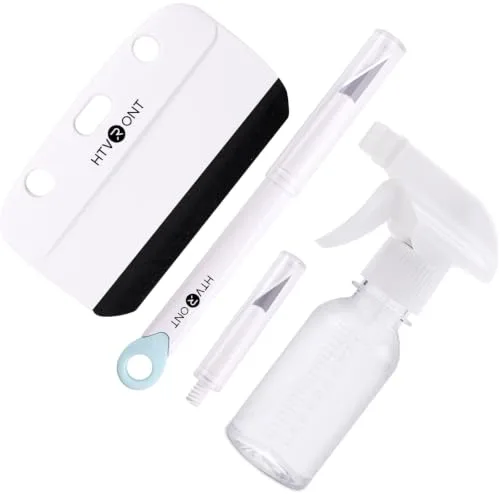
The HTVRONT Window Film Kit is the tool kit you need on hand before applying any of the film rolls below, whether you’re a first-time DIYer or just want a cleaner finish than a bare razor blade gives you. It is ideal for anyone who wants a professional-looking install without paying a shop.
Pros:
- Includes 4 essential tools for easy installation.
- Comes with a detachable knife and extra blade for precision.
- 100ML spray bottle ensures smooth application without bubbles.
Cons:
- The tools ship in white plastic only, which is purely cosmetic and does not affect function.
- The squeegee’s size means very large windshields may need several passes to fully clear bubbles.
The felt squeegee is designed to push out air bubbles without scratching the film, and the detachable knife with its extra blade lets you trim film flush against the window edge instead of leaving a rough overhang. The 100ML spray bottle holds the soapy water solution that lets you slide the film into position before it grips the glass, which is the single biggest factor in getting a bubble-free result as a beginner. For the full step-by-step application process, see our complete guide on how to install tint on a car window.
To buy this product, click here.
2. RockRose 20% VLT Nano Ceramic Window Tint (Best Heat Rejection)
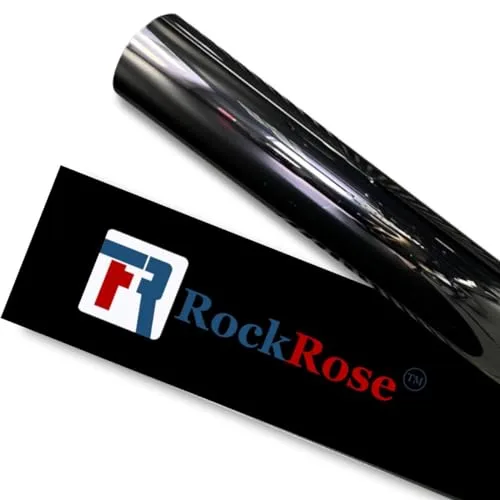
The RockRose 20% VLT Nano Ceramic Window Tint is built for drivers in hot, sunny climates who want the strongest heat rejection on this list without giving up the ceramic film’s signal-friendly properties. If you spend a lot of time parked in direct sun or want to cut down on air conditioning use, this is the roll to reach for.
Pros:
- 99% UVR block shields skin and upholstery from harmful rays.
- 85% IRR (infrared) block from the nano ceramic layer keeps the cabin noticeably cooler.
- 2-ply construction with strong adhesive resists scratching and lifting at the edges.
- 24 in x 15 ft roll is enough for a full sedan’s side and rear glass.
Cons:
- At only 20% VLT, it is noticeably dark, so check your state’s legal limit first.
- Being non-metallic ceramic film, it costs more per square foot than basic dyed film.
The standout feature of the RockRose film is how much heat it keeps out compared to dyed or metallic film at the same darkness. Because the ceramic particles reject infrared energy directly rather than just absorbing visible light, the cabin stays cooler even though the film is not metallic and will not interfere with GPS, key fobs, or toll transponders. The 99% UV block also protects your dashboard and seats from the fading and cracking that comes with years of direct sun exposure, and because it is a nano ceramic film rather than a basic dyed one, it is built to resist the purple fading that cheaper film develops after a few years. Curious whether tint actually keeps a car cooler in practice? Our breakdown on whether window tint makes your car hotter covers the real-world temperature difference.
To buy this product, click here.
3. PAMAGOO 35% VLT Ceramic Window Tint (Best Balanced Visibility)
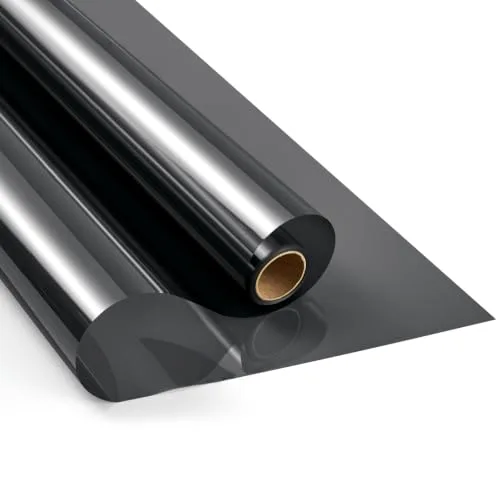
The PAMAGOO Car Window Tint is ideal for drivers who want a lighter, more legal-friendly VLT that still cuts real heat and glare, or for windows in states with stricter darkness limits. If you want to protect your car’s interior from UV damage while keeping strong visibility for nighttime driving, this is the more moderate pick on this list.
Pros:
- 35% VLT offers a better balance of visibility and privacy than the 20% RockRose roll above.
- Nano ceramic technology enhances heat rejection without any metal content.
- UV protection helps prevent interior fading.
- Scratch-resistant 5-layer construction adds durability.
Cons:
- Installation on curved rear glass may require professional help for the cleanest result.
- At 35% VLT it may still be too dark for some states’ front-window limits.
The 35% VLT rating means the film lets more light through the glass than the darker RockRose option above, which keeps the cabin brighter and easier to see out of at night while still cutting glare and UV exposure. The 5-layer scratch-resistant construction is what keeps the tint looking clean after years of window rolling and cleaning, rather than clouding or bubbling the way cheaper single-layer dyed film can. This makes the PAMAGOO roll a solid pick for anyone who wants real UV and heat protection but does not want their windows to look nearly black. For an idea of how long a job like this actually takes, see how long it takes to tint car windows by vehicle type.
To buy this product, click here.
Frequently Asked Questions
Is Factory Tinted Glass The Same As Aftermarket Window Film?
No. Factory tinted glass is a dye mixed into the glass during manufacturing, cannot be changed, and does very little to block heat or UV rays. Aftermarket window film is applied afterward, is engineered specifically for UV and heat rejection, and comes in a range of VLT percentages you can choose yourself.
What Tools Are Included In The HTVRONT Kit?
The HTVRONT Window Film Kit includes four essential tools: a felt squeegee, a detachable knife with an extra blade, and a 100ML spray bottle. These tools make applying window tint film easy and efficient for a first-time DIYer.
Which Type Of Window Tint Lasts The Longest?
Ceramic film lasts the longest, typically 10 to 15 years or more without fading. Carbon film is a close second at around 10 years, while basic dyed film usually starts fading to a purple tint within 3 to 7 years as the dye breaks down under UV exposure.
How Effective Is Ceramic Car Window Tint Film?
Nano ceramic window tint film like the RockRose and PAMAGOO rolls above blocks up to 99% of UV rays and rejects a large share of solar heat, all without any metal content to interfere with GPS or radio signals. It is also scratch-resistant, which helps it hold up over years of daily use.
How Easy Is It To Apply Window Tint Yourself?
Applying window tint is manageable with the right tools, such as the HTVRONT kit above, but it does take patience on curved rear glass. Our full step-by-step tint installation guide walks through cleaning, measuring, cutting, and smoothing the film for a professional-looking finish.
Does Window Tint Improve Car Privacy?
Yes. Window tint significantly reduces how easily people outside the car can see in, which protects your personal space and belongings. This is especially useful in busy parking lots or when the car is parked on the street overnight.
Conclusion
Tinted glass for your car can mean two very different things: the light factory dye baked into the glass at the plant, or the aftermarket film you add yourself for real UV and heat protection. Factory tint mostly adds a bit of privacy, while a ceramic film like the RockRose or PAMAGOO rolls above actually blocks heat and harmful UV rays.
The HTVRONT Window Film Kit simplifies installation with a felt squeegee, detachable knife, and spray bottle, making a clean DIY job realistic even for beginners. The RockRose 20% VLT film delivers the strongest heat and UV rejection on this list, while the PAMAGOO 35% VLT roll trades a little darkness for better nighttime visibility.
Before you buy a roll, check your state’s tint laws so the VLT percentage you pick stays street-legal. Done right, aftermarket window film gives you a cooler, more private, and better-protected interior without touching the glass itself.
Products related to this article
Sponsored / affiliate links. As an Amazon Associate I earn from qualifying purchases. I may earn additional commission from eligible campaigns.