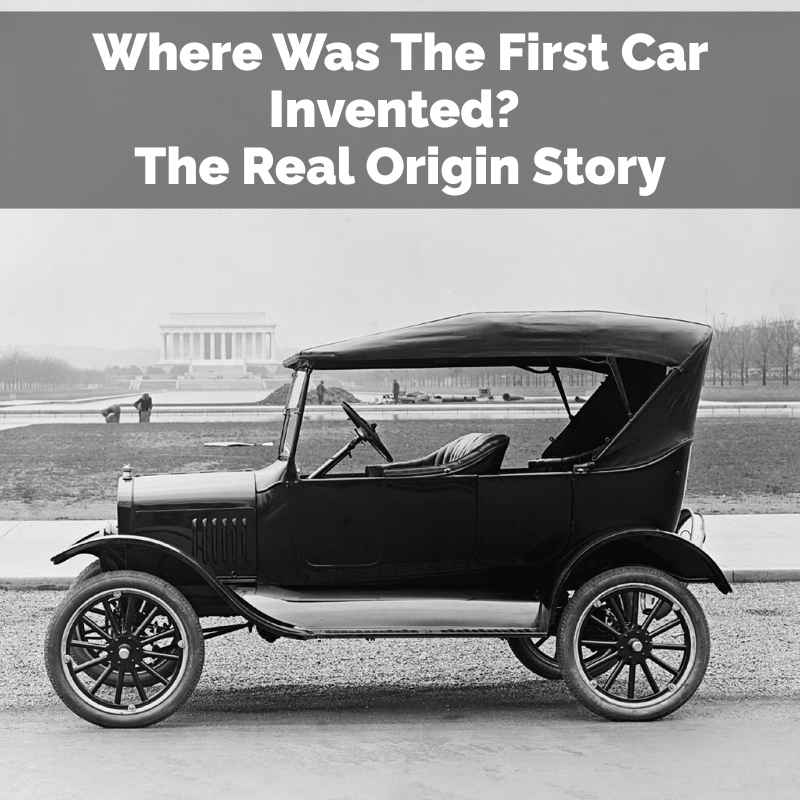
Where Was The First Car Invented? The Real Origin Story
This journey takes us back to a time before gasoline was common. We’ll look at the clever people who dreamed of self-propelled travel. You’ll learn about the very first attempts to make a car move on its own.
We’ll explore the key moments that led to the car we know today.
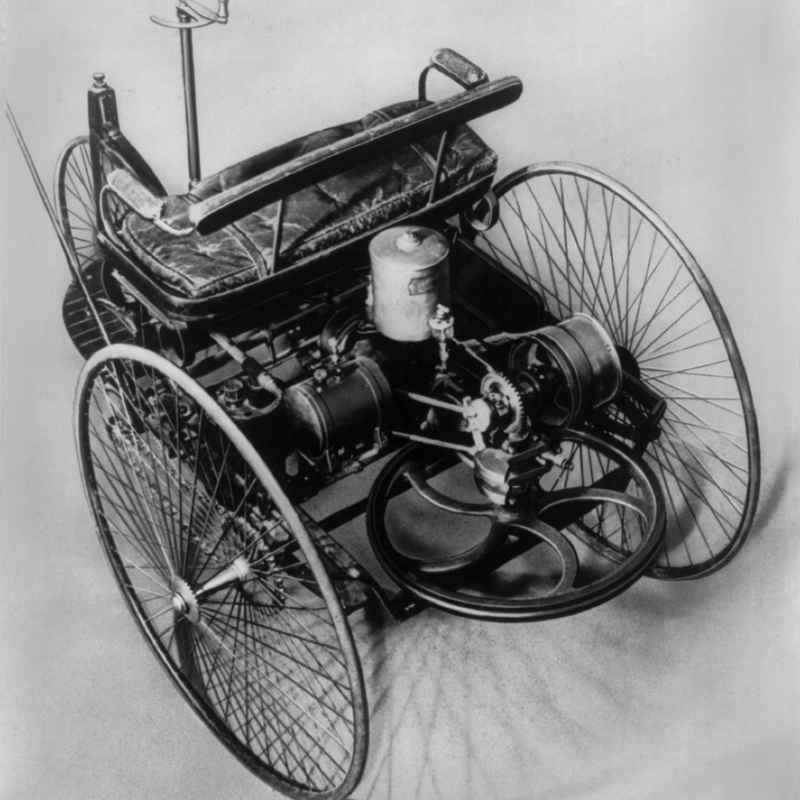
The very first car wasn’t a single invention, but a series of innovations. However, Karl Benz is widely credited with inventing the first true automobile powered by an internal combustion engine in 1886. This Benz Patent-Motorwagen is recognized as the birth of the modern car.
The Spark of an Idea: Before the Engine
Before anyone dreamed of a car, people dreamed of moving without horses. This idea is much older than you might think. People wanted faster ways to travel.
They wanted to go places without relying on animals.
Imagine a world without trains or cars. Travel was slow. It was often difficult.
Horses were the best option for speed. But horses needed food, rest, and care. They also had limits on how far they could go in a day.
So, inventors started thinking. How could we make something move by itself? They looked at steam power.
They looked at other energy sources. The goal was always the same: freedom from the horse.
Early Steam-Powered Dreams
The first real attempts at self-moving vehicles used steam. These were big, heavy machines. They looked more like tiny trains on wheels.
One of the earliest pioneers was Nicolas-Joseph Cugnot. In 1769, he built a steam-powered vehicle for the French army.
This vehicle was designed to move heavy artillery. It had three wheels. It was very slow and hard to steer.
It was also quite dangerous. Cugnot’s machine is often called the first self-propelled land vehicle. But it wasn’t really a car as we know it.
It was too big and clunky for personal travel.
Other inventors in the 19th century continued with steam. They made steam carriages. Some even ran short passenger services.
But steam engines were difficult. They took a long time to start. They needed a lot of water and fuel.
They were also very noisy and dirty.
These steam vehicles showed a promise. They showed that mechanical power could move people. But they weren’t practical for everyday use.
The world needed something lighter and more convenient. That something would come from a different kind of engine.
Key Early Inventions & Concepts
- Self-Propelled Vehicles: The core idea of a machine moving itself.
- Steam Power: Early experiments relied on boiling water to create pressure.
- Cugnot’s Fardier: One of the first documented self-propelled vehicles (1769).
- Steam Carriages: Later 19th-century efforts aimed at passenger transport.
The Internal Combustion Engine: A Game Changer
The real revolution in car making came with the internal combustion engine. This is the type of engine most cars still use today. Instead of using steam from outside, it burns fuel inside.
This makes it much more efficient and smaller.
Many people worked on different parts of this engine. Early ideas came from scientists in the 1800s. Étienne Lenoir built an engine that burned gas.
It was called a gas engine. It ran in 1860. It was a big step.
But it was still very inefficient.
Then came Nikolaus Otto. In 1876, Otto invented a better engine. It was called the four-stroke engine.
This engine was much more powerful and saved fuel. It became the basis for most gasoline engines. It was a huge leap forward for mechanical power.
People started to see the potential. If you could make this engine small enough, you could put it on wheels. You could create a vehicle that was truly personal.
A vehicle that could go anywhere without needing a track or a lot of fuel.
This engine technology was developing in several countries at once. Germany, France, and Britain were all seeing new engine designs. It was like a race to see who could harness this new power first and put it on the road.
Engine Evolution Snapshot
1800s Early Concepts: Basic engines that burned fuel.
1860 Lenoir Engine: First practical gas engine, but inefficient.
1876 Otto Four-Stroke Engine: A major breakthrough in efficiency and power.
The Goal: Make the engine small enough for a vehicle.
Karl Benz and the Birth of the Automobile
When we talk about the first car, one name usually comes up: Karl Benz. He was a German engineer. He had a clear vision.
He wanted to build a vehicle powered by a gasoline engine. Not just an engine, but a complete automobile.
Benz worked on his design for years. He faced many challenges. He had to invent many parts.
He needed to make them work together. He also needed to get a patent for his idea. This was important to protect his invention.
In 1885, Benz completed his first automobile. He called it the Benz Patent-Motorwagen. It had three wheels.
It had a single-cylinder engine at the back. The engine burned gasoline. It was a simple but brilliant design for its time.
Benz received the patent for his Motorwagen on January 29, 1886. This date is often considered the official birthday of the automobile. It was the first vehicle designed to be powered by an internal combustion engine.
It was not just an engine attached to a cart. It was a whole new machine.
The Motorwagen was not fast. It was not very comfortable. But it worked.
It could move on its own. It proved that the concept was possible. It was the beginning of a new era in transportation.
People were starting to see the future.
The Benz Patent-Motorwagen (1886)
- Inventor: Karl Benz
- Engine Type: Single-cylinder, four-stroke gasoline engine
- Wheels: Three
- Key Innovation: Designed from the ground up as a self-propelled vehicle.
- Patent Date: January 29, 1886
Bertha Benz: The True Test Driver
Karl Benz invented the car. But it was his wife, Bertha Benz, who really showed the world what it could do. In 1888, Bertha did something amazing.
She took the Motorwagen on a long trip without telling Karl.
She drove from Mannheim to Pforzheim. This was about 66 miles. She took their two sons with her.
This journey was not easy. The roads were not made for cars. They were mostly dirt tracks.
Fuel was hard to find.
Bertha faced many problems. The car ran out of fuel. She had to buy gasoline from pharmacies.
She used a hairpin to clear a blocked fuel line. She even used her garter to insulate a wire. She had to get help from a blacksmith to fix a brake issue.
This trip was a huge success. It proved the car was reliable. It showed people that it could travel long distances.
It was a real-world test. Bertha’s journey generated a lot of attention. It made people believe in the automobile.
She also came up with some smart ideas. She realized the car needed better brakes. She suggested a special gear for uphill climbs.
She was not just a passenger; she was an active participant in making the car better. Her courage and vision were essential.
Bertha Benz’s Historic Journey
- When: 1888
- Route: Mannheim to Pforzheim (approx. 66 miles)
- Significance: First long-distance automobile journey, proved reliability.
- Challenges Faced: Fuel stops, mechanical issues, poor roads.
- Innovations Suggested: Improved brakes, better climbing gears.
Gottlieb Daimler and Wilhelm Maybach: Parallel Innovation
While Karl Benz was developing his Motorwagen, other engineers were also working on similar ideas. Gottlieb Daimler and Wilhelm Maybach were two such figures in Germany. They were also pioneers of the internal combustion engine.
Daimler and Maybach focused on creating a high-speed engine. They wanted it to be small and light. They were successful in 1885 with their “Grandfather Clock” engine.
This engine was designed to be mounted on any kind of vehicle.
In 1886, they fitted their engine to a stagecoach. This created a four-wheeled vehicle. It was another very early automobile.
They also built a motorcycle in 1885. This showed the versatility of their engine.
Benz and Daimler were working independently. They didn’t know each other well at first. They were both pushing the boundaries of what was possible.
Their work contributed greatly to the development of the car. They were on parallel paths to invention.
It’s interesting to note that these early pioneers were often friends or rivals. They shared a common goal. They wanted to change how people traveled.
The competition and collaboration between them helped speed up innovation.
Daimler & Maybach’s Contributions
Focus: High-speed, light-weight engines.
1885: “Grandfather Clock” engine – adaptable power source.
1886: Engine fitted to a stagecoach – a four-wheeled automobile.
1885: Built one of the first motorcycles.
Impact: Pushed the envelope for engine design and vehicle application.
The Early Competition and Evolution
The invention of the automobile did not happen in a vacuum. Once the concept was proven, many others jumped in. France became a center for early car development.
Companies like Panhard & Levassor and Peugeot were building cars by the early 1890s.
These early French cars were often based on Daimler engines. They improved on Benz’s design. They started to add more features.
They made the cars more comfortable and powerful. They also started selling them to the public.
The first real automobile races also began. These races were not just for fun. They were a way to test different car designs.
They pushed manufacturers to make better, faster, and more reliable vehicles. The public loved watching these races.
The development of the car was rapid. Engineers figured out better steering. They improved suspension systems.
They made engines more powerful and efficient. The transition from three wheels to four wheels became common. Enclosed bodies started to appear.
It was a wild time for invention. People were experimenting with everything. Some ideas worked well.
Others did not. But each experiment taught them something new. They were all building on the foundations laid by Benz, Daimler, and others.
Fast Facts on Early Car Growth
- French Influence: France became a major hub for early car manufacturing.
- Racing’s Role: Competitions spurred innovation and public interest.
- Key Improvements: Steering, suspension, engine power, and body design.
- Rapid Pace: Technology evolved quickly in the late 19th century.
The Story of American Innovation
While Germany and France led the way in the very beginning, the United States soon caught up. American inventors and entrepreneurs saw the potential of the automobile. They began to adapt and improve the existing designs.
In the late 1800s, inventors like the Duryea brothers and Ransom E. Olds were building cars. They were also making them in greater numbers.
The idea of mass production was starting to take hold. This would change everything.
The early American cars were often built by hand. They were expensive. They were mostly owned by the wealthy.
But the dream of a car for everyone was growing. This dream would be fully realized by Henry Ford.
The Duryea Motor Wagon Company was founded in 1896. It was one of the first American companies to build gasoline cars for sale. The brothers were pioneers.
They showed that cars could be made and sold in the U.S.
Ransom E. Olds developed the Curved Dash Oldsmobile. It was produced in 1901.
It was one of the first mass-produced automobiles. It used a very simple assembly line. This made it more affordable.
It was a big step towards bringing cars to more people.
Early American Auto Pioneers
Duryea Brothers: Founded one of the first American gasoline car companies (1896).
Ransom E. Olds: Introduced the Curved Dash Oldsmobile (1901), an early mass-produced car.
Goal: Make cars more accessible and affordable for Americans.
The Impact of Henry Ford and the Model T
No story about the origin of the car is complete without Henry Ford. He didn’t invent the car itself. But he did something arguably more important.
He made the car accessible to the average person.
Ford introduced the Model T in 1908. It was built to be simple, durable, and affordable. But his real genius was in the assembly line.
He perfected the moving assembly line in 1913.
This assembly line changed how cars were made. Workers stayed in one place. They performed one simple task as the car chassis moved past them.
This made production incredibly fast. It also drastically reduced the cost of each car.
Before the Model T and the assembly line, cars were luxury items. Only the rich could afford them. Ford’s methods made car ownership possible for millions of families.
He put America on wheels.
The assembly line concept was revolutionary. It spread to other industries. It changed manufacturing forever.
The car went from a novelty to a necessity. It reshaped cities, suburbs, and the very fabric of American life.
Ford’s Model T Revolution
- Model T Introduced: 1908
- Key Innovation: Moving Assembly Line (perfected in 1913)
- Goal: A car for the common person.
- Impact: Drastically reduced cost, made car ownership widespread.
- Result: Revolutionized transportation and industry.
What This Means for You: Understanding the Legacy
Thinking about where the first car was invented helps us understand so much. It shows us that big inventions rarely come from one person. They are built on many ideas.
They evolve over time.
The story of the car is one of persistent effort. It’s about people who dared to dream of better ways to travel. It’s about engineers who solved complex problems.
It’s about families who took risks to prove an idea.
When you see a car on the road, remember its humble beginnings. Think about Cugnot’s steam giant. Think about Benz’s three-wheeled Motorwagen.
Think about Bertha’s daring drive. And think about the assembly lines that made cars a part of everyday life.
The journey from the first sputtering engine to the modern vehicle is a testament to human ingenuity. It’s a reminder that innovation is a continuous process. It’s about building on the past to create the future.
The car’s origin story is a core part of our modern world.
Frequently Asked Questions About the First Car
Who is credited with inventing the first car?
Karl Benz is widely credited with inventing the first true automobile powered by an internal combustion engine. He received a patent for his Benz Patent-Motorwagen in 1886.
Was the Benz Patent-Motorwagen the very first self-propelled vehicle?
No, the Benz Patent-Motorwagen was the first true automobile designed from the ground up as a self-propelled vehicle using an internal combustion engine. Earlier self-propelled vehicles, like Nicolas-Joseph Cugnot’s steam-powered fardier in 1769, existed but were very different in design and purpose.
Did Karl Benz invent the engine used in his car?
Karl Benz developed his own single-cylinder, four-stroke gasoline engine for his Motorwagen. This engine was designed to be compact and efficient enough to power a vehicle, a key innovation at the time.
What was special about Bertha Benz’s journey?
Bertha Benz made the first long-distance automobile journey in 1888. She drove her husband’s Motorwagen over 60 miles, proving the car’s reliability and generating significant public interest. She also encountered and solved mechanical issues along the way.
Were Karl Benz and Gottlieb Daimler working together?
No, Karl Benz and Gottlieb Daimler were working independently on their own designs for automobiles and engines in Germany during the same period. They were not collaborating in the early stages of their inventions.
What role did France play in early car development?
France was a major center for early automobile development and manufacturing. Companies like Panhard & Levassor and Peugeot were producing cars soon after Benz’s invention, often using improved designs and engines.
How did Henry Ford invent the car?
Henry Ford did not invent the car itself. Instead, he revolutionized car production with the moving assembly line, making the automobile affordable and accessible to the general public with his Model T.
Conclusion
The story of where the first car was invented is a rich tapestry. It’s a tale woven with countless threads of innovation. From steam-powered giants to gasoline-fueled marvels, the journey was long.
It took brilliant minds and brave souls. The automobile we know today stands on the shoulders of these pioneers.
Products related to this article
Sponsored / affiliate links. As an Amazon Associate I earn from qualifying purchases. I may earn additional commission from eligible campaigns.
 4G GPS Tracker Car Anti-Theft Long Battery Life 20000mAh Real Time GPS Tracking Device Magnet No Geographic Restriction Car Tracker with Alerts, Geo Fence, History Playback TK905C
 Maxlaxer El Wire Blue Interior Car LED Strip Lights, 5M Neon Wire USB 5V with Fuse Protection for Automotive Interior Decoration, with 6mm Sewing Edge