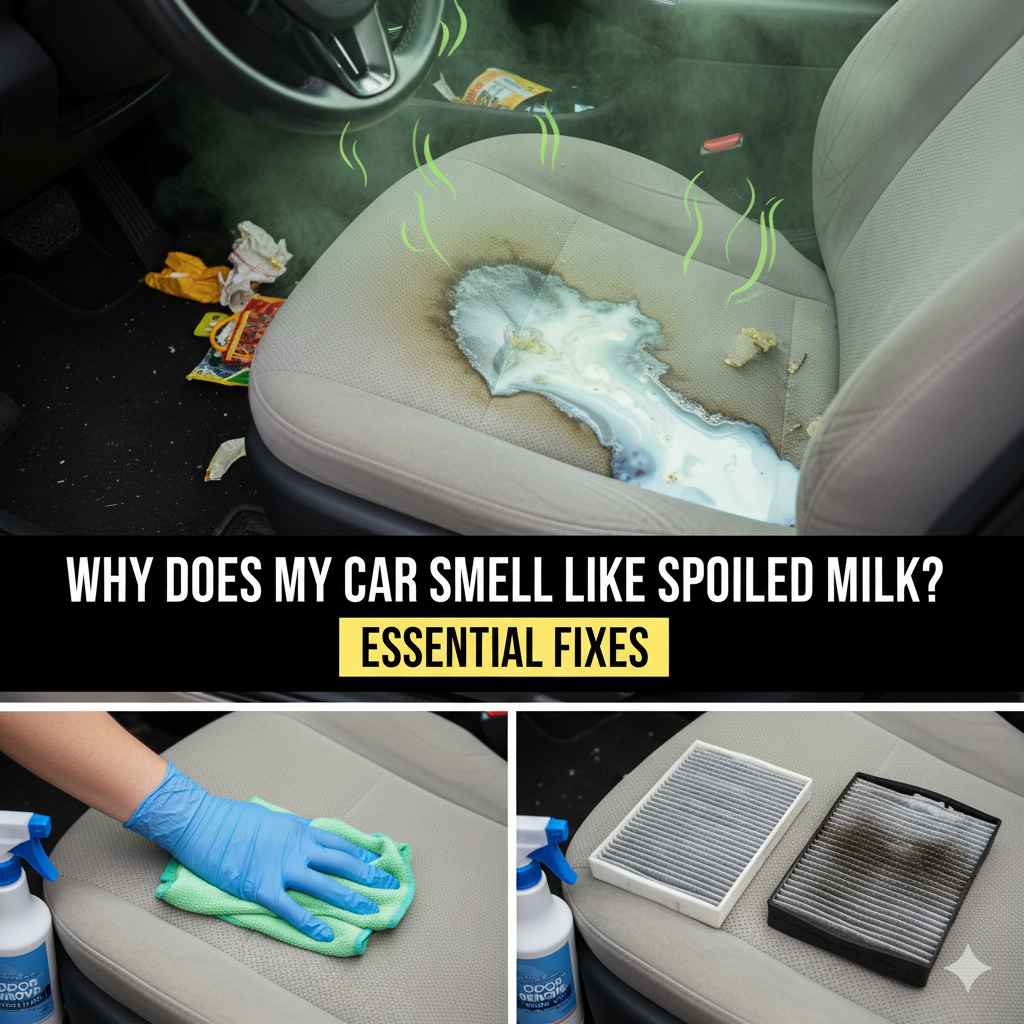
Why Does My Car Smell Like Spoiled Milk? Essential Fixes
If your car smells like spoiled milk, it’s often due to a coolant leak – specifically, an issue with your heater core or hoses. This smell can also signal a problem with your car’s ventilation system or spoiled food. Don’t worry, we’ll guide you through finding and fixing the cause quickly and safely!
That unmistakable sour, almost sickly sweet smell of spoiled milk can be a real head-scratcher, and even more alarming when it’s coming from your car. It’s a smell that most of us associate with something gone bad, and it can definitely make you wonder what’s happening under the hood. But before you start to panic, know that this is a relatively common issue, and you’re not alone in experiencing it. More importantly, it’s usually something you can get to the bottom of with some simple detective work and a few straightforward fixes. We’re here to help you figure out exactly what’s causing that car interior to smell like a dairy disaster and how to get rid of it for good. Let’s dive in and make your car smell fresh again!
Understanding the “Spoiled Milk” Car Smell
The pungent, sour odor that resembles spoiled milk in your car is usually a sign that something isn’t quite right with your vehicle’s systems. It’s not typically actual spoiled dairy products (though that’s a possibility we’ll cover too!), but rather a specific chemical smell that triggers that association. The most common culprit is a problem with your car’s cooling system, but other issues in the cabin or ventilation can also be the source. Understanding these potential causes is the first step towards solving the problem and ensuring your car runs smoothly and safely.
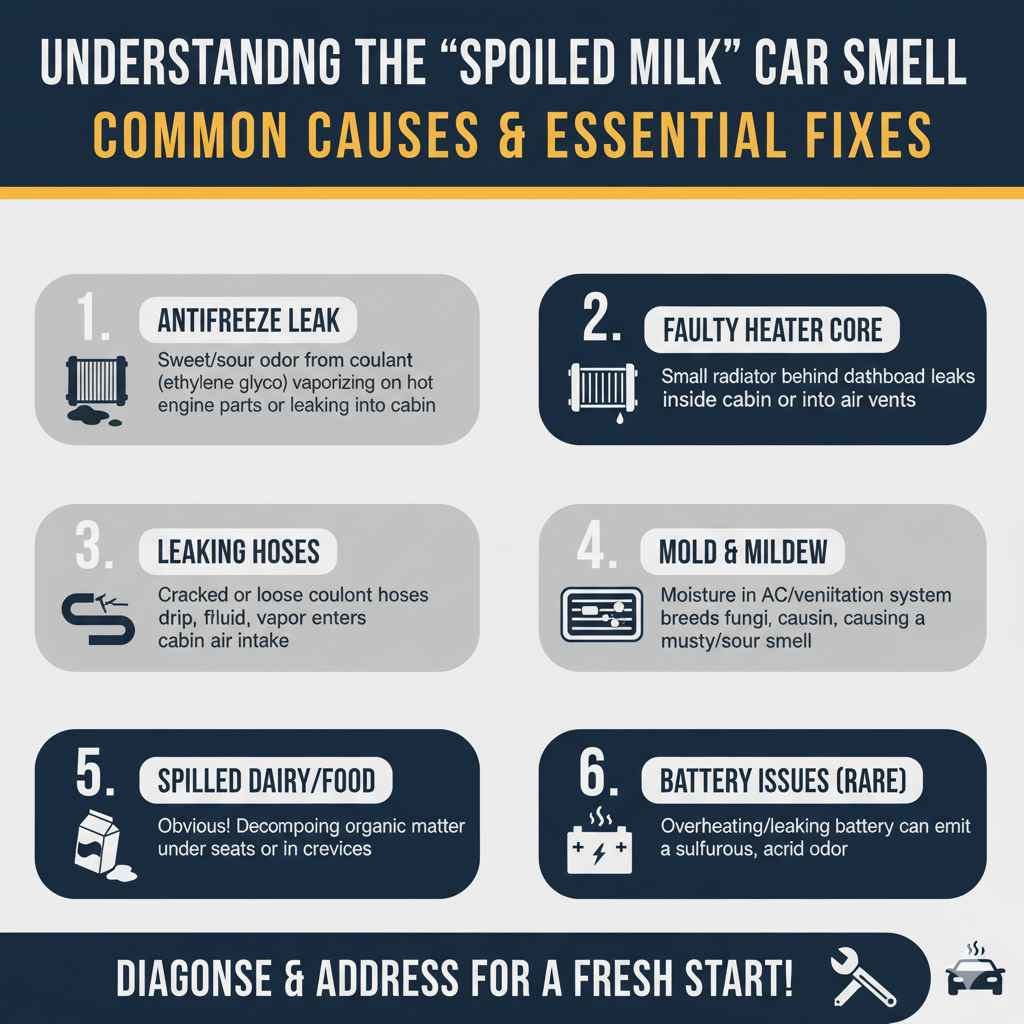
Common Causes of the Spoiled Milk Smell
When that funky odor fills your car, it’s a signal that requires attention. Let’s break down the most frequent reasons behind the “spoiled milk” scent:
1. Antifreeze Leak (The Most Likely Suspect)
This is by far the most common reason for a “spoiled milk” smell in a car. Engine coolant, often called antifreeze, has a distinctly sweet or sometimes slightly sour odor, which many people describe as similar to spoiled milk. This smell becomes noticeable when the coolant leaks onto hot engine parts, causing it to vaporize and enter the car’s cabin through the ventilation system. Alternatively, it can leak inside the cabin, particularly around the dashboard.
Why it smells: Antifreeze contains ethylene glycol or propylene glycol, which are responsible for its sweet aroma. When it gets hot or leaks, these compounds vaporize, and their distinctive smell can permeate your car.
2. Faulty Heater Core
The heater core is essentially a small radiator located behind your dashboard. It uses hot engine coolant to warm the air that blows into your cabin. If your heater core develops a leak, coolant can escape and drip onto the floor inside your car or evaporate into the air. This is a prime cause of that sweet or sour smell being present inside the vehicle, even when the engine isn’t necessarily overheating.
3. Leaking Radiator or Heater Hoses
The hoses that carry coolant from the engine to the heater core and radiator can degrade over time. Cracks or loose connections can lead to small antifreeze leaks. Even a minor leak can produce enough vapor to be noticeable, especially when the engine is running and hot. These leaks might drip onto the engine block, exhaust components, or even undercarriage, where the heat causes the coolant to vaporize and enter the cabin air intake.
4. Mold and Mildew in the Ventilation System
Your car’s ventilation system, including the air conditioning and heating ducts, can become a breeding ground for mold and mildew. When moisture gets trapped in these areas, it can lead to the growth of fungi that produce unpleasant odors. While often described as musty or damp, a particular type of mold or bacterial growth might sometimes be perceived as a sour or “spoiled” scent, especially if it’s mixed with other organic residues.
5. Spilled Dairy Products or Food Left in the Car
This might seem obvious, but it’s worth mentioning! If a container of milk, yogurt, or other dairy product has spilled and isn’t cleaned up thoroughly, it will naturally start to spoil and emit that familiar “spoiled milk” smell. The same applies to other organic food items left decomposing under seats or in hidden crevices. The heat inside a car can accelerate this process significantly.
6. Battery Issues (Less Common, but Possible)
In rare cases, a malfunctioning battery, particularly a lead-acid battery, can produce a sulfurous or rotten egg smell. While not exactly “spoiled milk,” some individuals might describe or associate this acrid smell with a sour, unpleasant odor. This is often a sign of a battery that is overheating or leaking, which is a serious safety concern.
Diagnosing the Source of the Smell
Pinpointing the exact cause of the “spoiled milk” smell requires a bit of investigation. Don’t worry, we’ll walk you through it step-by-step. Using your senses and a few basic checks can help narrow down the possibilities significantly.
Step-by-Step Diagnosis Guide
Follow these steps to help identify what’s causing that smell:
- Check Under the Hood (Engine Cool): With the engine completely cool, open the hood. Look for any obvious signs of leaks, especially around the coolant reservoir, radiator cap, and hoses. You might see puddles of colored liquid (coolant is often green, orange, or pink) or wet spots.
- Check for Wet Spots Inside the Car: Pay close attention to the floor mats, especially on the passenger side and under the dashboard. Dampness here can indicate a leak from the heater core or a blocked A/C drain.
- Inspect Hoses and Connections: Gently squeeze the radiator and heater hoses (when the engine is cool). Feel for any cracks, bulges, or soft spots. Check hose clamps for tightness.
- Examine the Coolant Reservoir: Ensure the coolant level is between the “min” and “max” lines. If it’s low, it strongly suggests a leak somewhere.
- Note When the Smell Appears: Does the smell appear only when the heater is on? This often points to the heater core. Does it appear more when the engine is hot? This suggests a leak related to engine temperature.
- Check if the Smell is Present When A/C is On: If the smell is strong when the A/C is running, it could be related to moisture and potential mold in the A/C evaporator.
- Look for Spilled Food or Liquids: Thoroughly check all interior compartments, under seats, and in the trunk for any forgotten food items or spilled drinks.
- Smell Around battery terminals: If you suspect a battery issue, carefully check for any corrosion or a strong sulfurous smell around the battery terminals.
Visual Clues and Indicators
Keep an eye out for these visual cues that can help you diagnose the problem:
- Colored Puddles Under the Car: Green, orange, pink, or blue puddles are almost always a sign of coolant leaks.
- White Smoke from the Exhaust (with a sweet smell): This can indicate coolant is leaking into the combustion chambers and burning.
- Foggy or Greasy Windshield: A thin film on the inside of your windshield, particularly when the defroster is on, can be a sign of coolant leaking through the heater core and vaporizing.
- Low Coolant Level: Regularly check your coolant level. A consistently dropping level points to a leak. You can often find guides on how to check your specific car’s coolant level online, such as on the U.S. Department of Energy’s fuel economy website, which provides general maintenance information.
- Damp Carpets: As mentioned, wet floor mats or carpets are a strong indicator of an interior leak.
Essential Fixes for the Spoiled Milk Smell
Once you’ve identified the likely cause, it’s time to address it. Depending on the complexity, some fixes are beginner-friendly, while others might require a trip to the mechanic.
Fix 1: Addressing Antifreeze Leaks
If you’ve confirmed an antifreeze leak, prompt action is crucial. Small leaks might be temporary fixes, but persistent leaks require more thorough repairs.
Temporary Fixes for Minor Leaks
For very minor leaks from hoses or radiator connections, sometimes tightening a clamp can solve the problem. However, these are temporary solutions.
Repairing/Replacing Hoses and Clamps
A cracked or brittle hose needs replacement. This is a DIY-friendly repair for many car owners.
- Gather Supplies: You’ll need the correct replacement hose for your make and model, new hose clamps (if old ones are corroded or ineffective), pliers for the clamps, a drain pan, and new coolant. Always use the type of coolant recommended by your car manufacturer.
- Drain the System: Let the engine cool completely. Place a drain pan under the radiator drain plug or lower radiator hose. Open the drain plug or detach the hose to drain the coolant.
- Remove Old Hose: Loosen the clamps on the old hose at both ends and carefully pull the hose off.
- Install New Hose: Place the new hose onto the connection points, ensuring a snug fit. Secure it with the new clamps, ensuring they are tight but not so tight that they damage the hose.
- Refill and Bleed: Close the drain plug. Refill the radiator and coolant reservoir with the correct mixture of coolant and distilled water. Run the engine with the radiator cap off (or bleed valve open, if applicable) to let air escape the system. Top up as needed until the air bubbles stop.
- Check for Leaks: Once refilled and after a test drive, re-check for any leaks.
Safety Note: Never handle hot coolant. Always wear gloves and eye protection when working with automotive fluids like coolant.
Fix 2: Replacing the Heater Core
This is often the most involved repair. If your heater core is leaking, it usually needs to be replaced. This is a job that many DIYers find challenging due to the dashboard disassembly required.
- Complexity: Replacing a heater core typically involves removing a significant portion of the dashboard to access the unit.
- DIY vs. Professional: While possible for experienced DIYers, it’s a task that often best left to professional mechanics, especially if you’re new to car repairs. The time investment and potential for damage to other components can be high.
- Signs of a Failing Heater Core: Beyond the smell, a leaky heater core can lead to a constantly damp passenger-side floorboard, a foggy windshield that’s hard to clear, and a loss of cabin heat.
Fix 3: Cleaning the Ventilation System for Mold and Mildew
If the smell persists but you don’t find any coolant leaks, mold or mildew in the AC/heating system is a likely culprit. This can often be resolved with specialized cleaning products.
- Use an AC Detailing Spray/Foam: These products are specifically designed to kill mold and mildew in HVAC systems. They are typically sprayed into the air intake vents or directly into the evaporator drain.
- Follow Product Instructions Carefully: Each product will have specific application steps. This often involves running the fan on high with the AC off, then spraying, and afterward letting the system run to circulate the cleaner and vent moisture.
- Cabin Air Filter Replacement: A dirty or wet cabin air filter can also trap moisture and contribute to smells. Replacing this is a simple DIY task for most cars and can significantly improve air quality. You can find tutorials for your specific car model by searching online, often on sites like AutoZone’s useful repair guides section.
Fix 4: Cleaning Spilled Food and Liquids
This is the easiest fix and something you can do immediately.
- Thorough Interior Cleaning: Remove all floor mats and seats if possible. Use an enzymatic cleaner specifically designed for breaking down organic matter and odors.
- Check Hidden Areas: Use a flashlight to meticulously check under seats, in cargo areas, and even inside seat crevices.
- Baking Soda or Activated Charcoal: After cleaning, place open boxes of baking soda or bags of activated charcoal under seats to absorb any lingering odors.
Fix 5: Dealing with Battery Issues
If you suspect a battery problem, it’s crucial to address it safely and professionally.
- Safety First: Battery acid is corrosive. If you see any signs of leaking or heavy corrosion, wear protective gear (gloves, eye protection) and proceed with extreme caution.
- Professional Inspection: A sulfurous smell often indicates a battery that is overcharging or has internal damage. Take your car to a qualified mechanic or battery specialist to have the battery and charging system inspected. A failing battery or alternator can be a fire hazard.
Preventive Maintenance to Avoid Future Smells
Staying on top of your car’s maintenance is the best way to prevent unpleasant smells and costly repairs down the line. Here are some key preventive measures:
- Regular Coolant System Checks: Follow your car manufacturer’s recommendation for coolant flushes and checks. This typically involves inspecting hoses, the radiator, and the water pump for leaks and wear.
- Keep Interior Clean: Make it a habit to regularly clear out trash and vacuum your car’s interior. Address spills immediately.
- Monitor A/C System: Run your air conditioning periodically, even in cooler months, to keep seals lubricated and help prevent moisture buildup. Consider an annual A/C service.
- Inspect Hoses and Belts: As part of routine maintenance, visually inspect hoses for cracks or swelling and belts for wear.
- Check Tire Pressure and Battery Health: While less directly related to the “spoiled milk” smell, ensuring these are in good condition contributes to overall vehicle reliability and safety, which is what we aim for.
When to Call a Professional Mechanic
While many basic car issues can be tackled as a DIY project, some problems are best left to the experts. Here’s when you should consider seeking professional help:
- Complex Repairs: If you’re uncomfortable with any of the repair steps, especially those involving significant disassembly like the heater core, it’s wise to consult a mechanic.
- Persistent Smells: If you’ve tried the basic fixes and the smell persists, there might be a more complex underlying issue that requires specialized diagnostic tools.
- Signs of Serious Leaks: If you see large coolant puddles, experience significant engine overheating, or notice white smoke from the exhaust, these indicate a potentially serious problem that needs immediate professional attention.
- Uncertainty: If you’ve gone through the diagnostic steps and are still unsure of the cause, a mechanic can quickly identify and resolve it.
These professionals have specialized equipment and extensive experience to accurately diagnose and repair issues, ensuring your car is safe and reliable.
Understanding the Costs
The cost of fixing the “spoiled milk” smell can vary significantly based on the cause:
| Potential Cause | Typical DIY Cost (Parts) | Typical Professional Cost |
|---|---|---|
| Minor Coolant Hose Leak | $20 – $100 (Hose, clamps, coolant) | $100 – $300 |
| Heater Core Replacement | $50 – $150 (Heater core only for DIY, but labor is high) | $600 – $1200+ (Major labor costs involved) |
| Ventilation System Cleaning | $20 – $50 (AC cleaner, cabin filter) | $100 – $250 (Includes A/C service) |
| Interior Cleaning (Food Spills) | $20 – $50 (Cleaning supplies) | $100 – $300 (Professional detailing) |
| Battery Replacement | $100 – $250 (Battery unit) | $150 – $350 (Battery + Labor) |
These are approximate figures and can vary based on your vehicle’s make and model, your location, and the specific parts needed. Always get a detailed quote from your mechanic before authorizing work.
Frequently Asked Questions (FAQs)
Why does my car smell like spoiled milk when the heater is on?
This is a very strong indicator that your heater core is leaking. The heater core uses hot engine coolant to warm the cabin air. When it leaks, coolant vapors enter your car’s interior, creating that characteristic sweet or sour smell, especially when the heating system is active and circulating air.