Why Is My Car Burning Gas So Fast? Genius Fixes
Your car is drinking gas like water? Don’t worry! Your car burning gas fast is often caused by simple things like underinflated tires, old air filters, or worn spark plugs. Easy fixes, like adjusting your driving style, can also make a big difference. We’ll dive into the common culprits and show you how to get your MPG back on track!
Have you noticed your gas gauge dropping faster than usual? It’s a frustrating, and often expensive, problem that many car owners face. Watching your hard-earned money disappear into the gas tank can be disheartening. But before you panic, know that there are very common reasons why your car might be burning fuel excessively, and many of them are straightforward fixes you can tackle yourself or with minimal help.
It’s also good to know that understanding these issues not only saves you money but also helps keep your car running smoothly and reliably for longer. Think of it as getting to know your car’s little quirks so you can address them before they become big problems. In this guide, we’ll break down the most frequent causes of rapid fuel consumption and provide easy-to-understand, practical solutions. We’ll cover everything from the tires on your wheels to the air your engine breathes, and even how you steer. Get ready to become your car’s best friend and get those miles per gallon (MPG) back up!
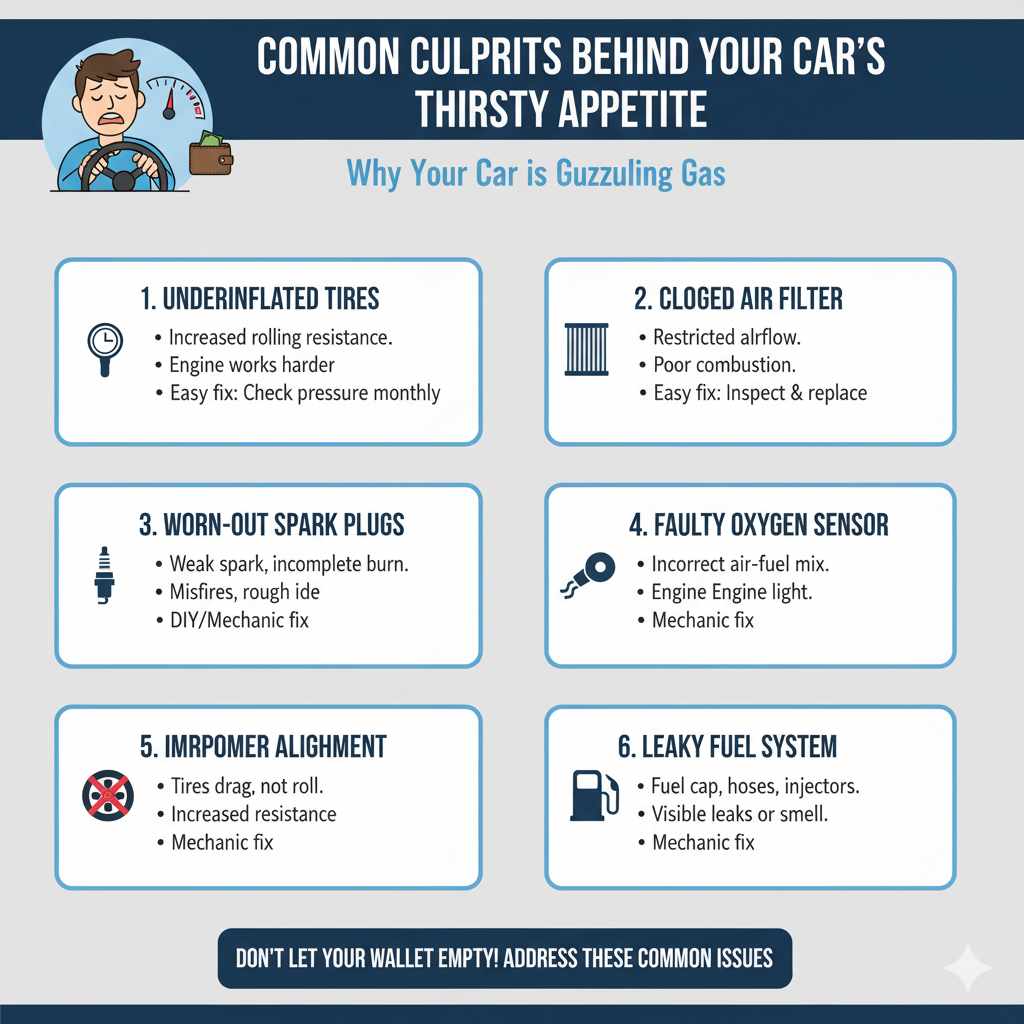
Common Culprits Behind Your Car’s Thirsty Appetite
When your car starts guzzling gas, it’s usually not one single mysterious problem. More often, it’s a combination of a few key areas that are either neglected or simply wearing out. Let’s break down the most common reasons why your fuel economy might be tanking.
1. Tire Pressure Matters More Than You Think
This is perhaps the easiest and most overlooked cause of poor fuel economy. Underinflated tires create more rolling resistance. Imagine trying to push a bike with flat tires – it takes way more effort! The same principle applies to your car. When your tires aren’t properly inflated, your engine has to work harder to move the vehicle, burning more fuel in the process.
- Why it happens: Tires lose air slowly over time, and temperature fluctuations can also cause pressure changes.
- The fix: Regularly check your tire pressure. The correct pressure for your vehicle is usually found on a sticker inside the driver’s side doorjamb or in your owner’s manual. You can buy an inexpensive tire pressure gauge at any auto parts store.
2. A Clogged Air Filter Chokes Your Engine
Your car’s engine needs a precise mix of air and fuel to operate efficiently. The air filter’s job is to prevent dirt, dust, and debris from entering the engine. When this filter gets clogged, it restricts airflow. Less air means the engine can’t burn fuel as effectively, leading to wasted gasoline and reduced performance.
- Why it happens: Air filters collect dirt over time, and in dusty environments, they can become clogged more quickly.
- The fix: Replacing an air filter is usually a very simple DIY job. You can inspect it by opening the hood and locating the airbox. If it looks dirty, it’s time for a new one.
3. Worn-Out Spark Plugs Mean Misfires
Spark plugs are essential for igniting the air-fuel mixture inside your engine’s cylinders. If your spark plugs are old, fouled, or worn, they won’t create as strong a spark. This can lead to incomplete combustion, meaning the fuel isn’t fully burned. Inefficient burning equals wasted fuel and can also cause rough idling, decreased power, and the dreaded “check engine” light.
- Why it happens: Spark plugs have a limited lifespan and degrade over time with normal use.
- The fix: Replacing spark plugs is a common maintenance item. The process can vary in difficulty depending on your car’s make and model. If you’re not comfortable with DIY, a mechanic can usually do this relatively affordably.
4. Faulty Oxygen Sensor Throws Off the Mix
Your car’s computer relies on oxygen sensors to measure the amount of unburned oxygen in your exhaust. This information helps the computer adjust the air-fuel mixture for optimal combustion and emissions control. If an oxygen sensor is failing, it can send incorrect readings, causing the engine to run too rich (too much fuel) or too lean (too little fuel), both of which can hurt your MPG. Often, a failing oxygen sensor will also trigger your “check engine” light.
- Why it happens: Oxygen sensors are exposed to extreme heat and exhaust gases, causing them to wear out over time.
- The fix: This is typically a job for a mechanic. Diagnosing and replacing an oxygen sensor requires some specialized knowledge and tools.
5. Worn-Out Tread and Improper Alignment
Just like underinflated tires, tires with worn tread or misaligned wheels can increase rolling resistance. Worn tread can’t grip the road as efficiently, while misaligned wheels cause tires to drag rather than roll freely. Both scenarios force your engine to work harder, burning more gas.
- Why it happens: Normal wear and tear, hitting potholes, or minor impacts can knock your alignment out of whack.
- The fix: Regularly inspect your tire tread. If it’s getting low, it’s time for new tires. For alignment, it’s best to visit a professional alignment shop or a trusted mechanic.
6. Leaky Fuel System Component
A small leak anywhere in the fuel system – from the fuel cap to the fuel lines or injectors – can lead to significant fuel loss, and therefore, reduced mileage. You might not always see or smell a leak, especially small ones.
- Why it happens: Rubber hoses can crack with age, fuel caps can lose their seal, and fuel injectors can become clogged or fail.
- The fix: Check your fuel cap to ensure it seals properly. For other leaks, it’s best to have a mechanic inspect the entire fuel system.
7. Engine Issues and Unburnt Fuel
More complex engine problems can also lead to poor fuel economy. Issues like clogged fuel injectors (mentioned with leaks, but can also cause poor atomization), a failing catalytic converter, or even internal engine wear can mean that fuel isn’t being burned efficiently.
- Why it happens: A variety of factors, from poor maintenance to natural wear and tear.
- The fix: These are generally more serious issues that require professional diagnosis and repair.
Genius Fixes to Boost Your MPG Immediately
Now that we know what might be causing your car to act like a thirsty beast, let’s talk about what you can do about it. Some of these fixes are quick wins you can do yourself, while others involve a trip to the mechanic.
1. Tire Pressure Tune-Up
This one is so important, it bears repeating. Maintaining the correct tire pressure is probably the single easiest thing you can do to improve your gas mileage. Driving with tires underinflated by just 10 PSI can reduce your MPG by up to 10%!
- Find your recommended tire pressure: Look for the sticker on the driver’s side doorjamb or check your owner’s manual. Never use the pressure listed on the tire sidewall, as that’s the maximum pressure.
- Purchase a tire pressure gauge: They are inexpensive and available at auto parts stores and even many large retailers.
- Check pressure when tires are cold: Tires are considered “cold” if the car hasn’t been driven for at least three hours or has only been driven a mile or two.
- Add air if needed: Use an air compressor at a gas station or a portable one. Add air in short bursts, checking the pressure with your gauge frequently until you reach the recommended level.
- Don’t forget the spare: Make sure your spare tire is also properly inflated.
For a comprehensive guide on tire care, the National Highway Traffic Safety Administration (NHTSA) offers great resources on tire safety and maintenance.
2. Swap That Dirty Air Filter
An easy DIY job that can make a surprising difference. A clogged air filter restricts airflow, making your engine work harder. Replacing it is like giving your engine room to breathe freely.
- Locate the air filter housing: It’s usually a black plastic box under the hood, connected to a large hose leading to the engine.
- Open the housing: Most housings are secured with clips or screws.
- Remove the old filter: Note its orientation (which way it faces).
- Insert the new filter: Make sure it’s seated correctly.
- Close and secure the housing: Double-check that all clips or screws are fastened.
If you’re unsure about your specific car, a quick search online for “[Your Car Make Model Year] air filter replacement” will likely bring up helpful videos.
3. Upgrade Your Spark Plugs
If your car has been running for a while without spark plug replacement (check your owner’s manual for the recommended interval, often every 30,000 to 100,000 miles depending on the type), it’s likely time. New spark plugs ensure efficient ignition and a cleaner burn of fuel.
When to consider: If you’re experiencing rough idling, misfires, or a significant drop in MPG, it’s a good time to investigate.
DIY vs. Professional: Replacing spark plugs can range from easy to a bit tricky depending on engine layout. If multiple plugs are hard to access or you’re not comfortable, it’s a job best left to a qualified mechanic.
4. Drive Smarter, Not Harder
Your driving habits have a huge impact on fuel consumption. Making a few simple adjustments can save you a lot of money at the pump without any cost to you!
- Smooth Acceleration: Avoid flooring the gas pedal. Accelerate gently and steadily.
- Maintain Steady Speed: Use cruise control on highways when appropriate. Constant speed is more fuel-efficient than fluctuating speeds.
- Anticipate Stops: Look ahead and ease off the gas pedal as you approach a red light or stop sign, rather than braking hard at the last second.
- Reduce Idling: If you’re going to be stopped for more than 30 seconds (e.g., waiting for someone), it’s often more fuel-efficient to turn off the engine and restart it when you’re ready to go.
- Observing Speed Limits: Fuel efficiency tends to decrease significantly at speeds above 50 mph. Driving within the speed limit is not only safer but also saves gas.
5. Reduce Weight and Drag
Extra weight in your car means your engine has to work harder to move it. Similarly, anything that increases aerodynamic drag will hurt your MPG.
- Clean out the trunk: Remove any unnecessary items you’ve been carrying around.
- Remove roof racks or cargo carriers: If you’re not using them, take them off. They create significant wind resistance, even when empty.
- Keep windows up at higher speeds: Open windows create drag. At highway speeds, using the air conditioning is often more fuel-efficient than driving with the windows down.
6. Regular Engine Maintenance
A little preventative maintenance goes a long way. Ensuring your car’s engine is running in tip-top shape is crucial for fuel efficiency.
- Oil Changes: Clean oil lubricates engine parts, reducing friction and allowing them to work more efficiently. Follow your car’s recommended oil change schedule.
- Fuel Injector Cleaning: Over time, fuel injectors can get clogged, leading to poor fuel atomization and inefficient combustion. Consider a fuel injector cleaner additive or professional cleaning periodically.
- Check Engine Light: If this light comes on, don’t ignore it! It’s often an early warning of a problem that’s impacting fuel economy, like a faulty sensor. The U.S. government consumer advice on car maintenance highlights the importance of addressing these warnings promptly.
Understanding Your Car’s Fuel System and Emissions
Your car’s fuel system is a finely tuned machine designed to deliver the right amount of fuel at the right time. It works hand-in-hand with the emissions system to ensure your car runs cleanly and efficiently. When components in either system aren’t working correctly, it can lead to increased fuel consumption.
How Fuel Delivery Affects MPG
The core of fuel delivery involves the fuel pump, fuel filter, fuel lines, and fuel injectors. If any part of this chain is compromised, your car’s engine won’t receive fuel optimally.
Fuel Pump Issues
A weak fuel pump might not deliver enough fuel pressure, causing the engine to run lean (too little fuel), which can lead to poor performance and potential engine damage. Conversely, an over-pressurizing pump is rare but could also lead to an overly rich mixture.
Clogged Fuel Filter
The fuel filter prevents dirt and debris from reaching the sensitive fuel injectors. A clogged filter restricts fuel flow, starving the engine and forcing the fuel pump to work harder. This is a relatively inexpensive part to replace but often overlooked.
Fuel Injector Problems
Fuel injectors spray a finely atomized mist of fuel into the engine. If they become clogged or dirty, they can spray fuel unevenly, or deliver less fuel, leading to poor combustion and reduced MPG. Some fuel system cleaners can help, but in stubborn cases, professional cleaning or replacement might be necessary. A table illustrating potential problems and their impact can be helpful:
| Fuel System Component | Potential Problem | Impact on Fuel Economy | Likely Fix |
|---|---|---|---|
| Fuel Pump | Weak pressure | Engine runs lean, poor performance, reduced MPG | Replace fuel pump |
| Fuel Filter | Clogged | Restricted fuel flow, engine starvation, reduced MPG | Replace fuel filter |
| Fuel Injectors | Clogged/Dirty | Poor fuel atomization, incomplete combustion, reduced MPG | Fuel system cleaner, professional cleaning, or replacement |
| Fuel Cap | Loose/Damaged Seal | Fuel vapors escape, minor fuel loss, potential emissions issues | Ensure proper seal or replace cap |
The Role of Oxygen Sensors and Catalytic Converters
Modern cars have complex emissions control systems that directly influence fuel efficiency. The oxygen (O2) sensor is a key player, as mentioned earlier. By constantly monitoring oxygen levels in the exhaust, it signals the engine computer to adjust the air-fuel ratio for optimal burning. When O2 sensors age or fail, they hinder this adjustment, leading to inefficiencies.
The catalytic converter is responsible for converting harmful exhaust pollutants into less harmful substances. While its primary role isn’t fuel economy, a failing catalytic converter can create excessive backpressure in the exhaust system. This backpressure forces the engine to work harder, consuming more fuel. A clogged catalytic converter is a serious issue that will also likely trigger a “check engine” light and significantly impact performance.
Electronic Control Module (ECM) and Other Sensors
Your car’s Engine Control Module (ECM), or Powertrain Control Module (PCM), is the brain of your engine. It receives data from numerous sensors (including the O2 sensor, Mass Airflow Sensor (MAF), Throttle Position Sensor (TPS), etc.) and uses this information to manage fuel injection, ignition timing, and other critical functions. If any of these sensors malfunction, they feed bad data to the ECM, leading to incorrect engine operation and poor fuel economy.
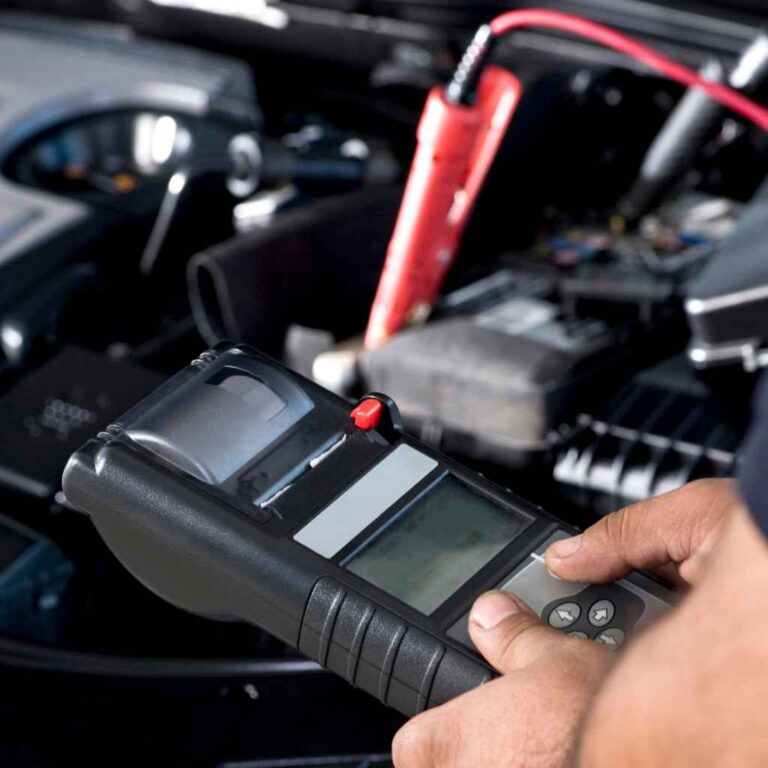
Identifying issues with these complex systems usually requires specialized diagnostic tools. Shops use OBD-II scanners to read trouble codes from the ECM, which can point towards a faulty sensor or component. For instance, a faulty MAF sensor might not accurately measure incoming air, causing the ECM to inject too much or too little fuel.
Impact of Age and Mileage
As vehicles age and accumulate miles, components naturally wear out. Rubber hoses can crack, seals can degrade, and electrical sensors can become less accurate. This wear and tear is a primary reason why older cars often have lower MPG figures than their newer counterparts. Regular, scheduled maintenance as recommended by the manufacturer is the best way to combat the effects of aging and mileage on your car’s fuel efficiency.
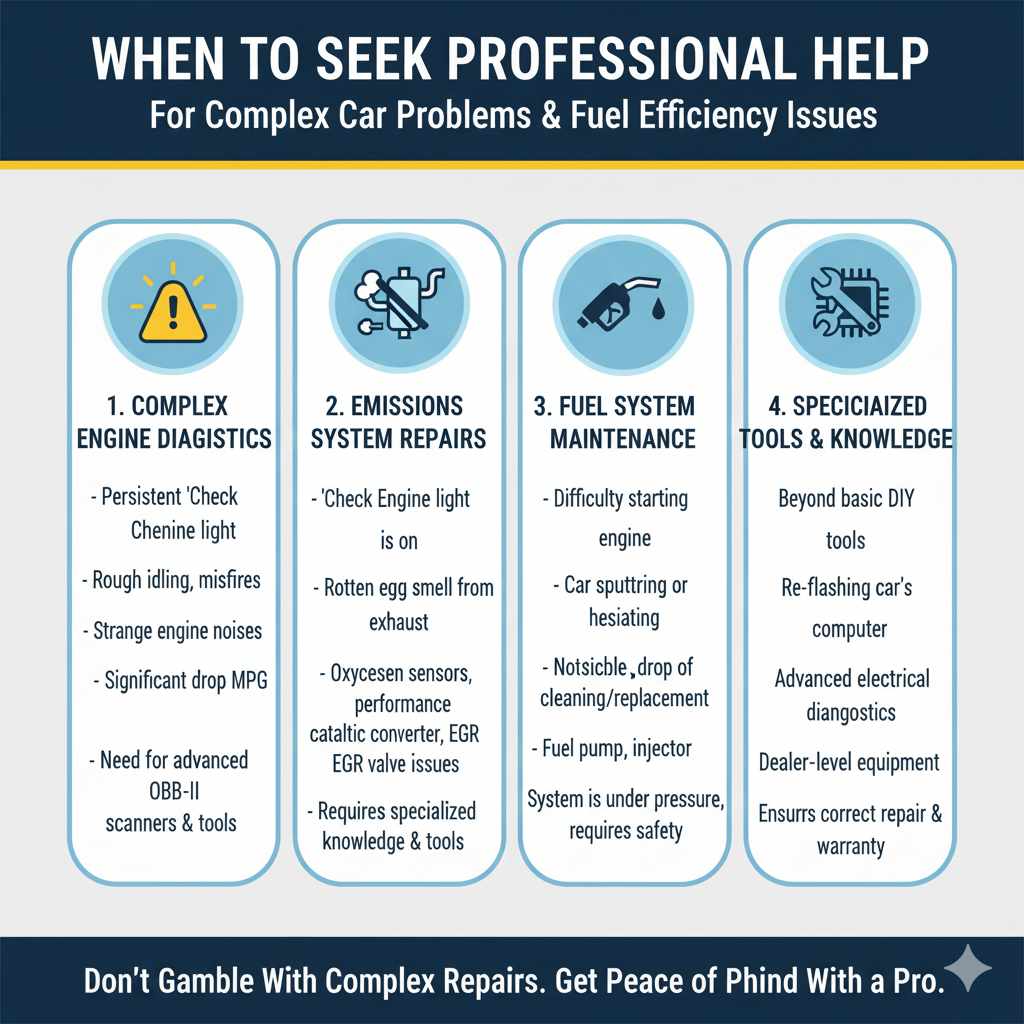
When to Seek Professional Help
While many issues causing your car to burn gas quickly are DIY-friendly, some require the expertise and tools of a professional mechanic. Knowing when to hand over the reins can save you time, frustration, and potentially prevent further damage.
Complex Engine Diagnostics
If you’ve addressed the simpler issues like tire pressure, air filters, and spark plugs yourself and your fuel economy hasn’t improved, it’s time to consider more complex engine problems. This can include issues with the fuel injection system, ignition system beyond spark plugs, or internal engine components.
- Warning Signs: Persistent “check engine” light, rough idling, misfires that don’t go away, strange noises from the engine, or a significant, unexplained drop in MPG.
- Why a Mechanic is Needed: Professionals have advanced diagnostic equipment (like OBD-II scanners) and specialized tools to pinpoint issues with sensors, fuel pumps, injectors, and other electronic or mechanical components without damaging them.
Emissions System Repairs
Issues with oxygen sensors, catalytic converters, or exhaust gas recirculation (EGR) valves are critical. Not only do they affect fuel economy, but they also impact your car’s emissions, potentially causing it to fail state inspections and contributing to pollution.
- What to Look For: The “check engine” light is often the first indicator. You might also notice a rotten egg smell (often from a failing catalytic converter) or decreased engine performance.
- Mechanic’s Role: Diagnosing and replacing these components requires specific knowledge of exhaust systems and emissions control. Incorrect installation can lead to further problems or even damage.
Fuel System Maintenance
While you might be able to add a fuel additive yourself, more involved fuel system work, like cleaning or replacing fuel injectors, or diagnosing fuel pump issues, is best left to professionals. The fuel system operates under pressure, and mishandling components can lead to leaks or dangerous situations.
- Signs of Trouble: Difficulty starting the engine, car sputtering or hesitating, or a noticeable drop in fuel economy.
- Professional Expertise: Mechanics can safely access and test the fuel pump, clean injectors thoroughly, and ensure no fuel leaks are present after repairs.
Specialized Tools and Knowledge
Some repairs, particularly those involving modern engine management systems, require tools that the average DIYer doesn’t have. For example, re-flashing the car’s computer or performing complex electrical diagnostics often necessitates dealer-level equipment or advanced automotive scan tools.
- When DIY isn’t for you: If a repair requires specialized tools beyond a basic wrench set and socket set, or if you’re simply not comfortable with the complexity of the task, it’s a good sign to call a professional.
- Peace of Mind: A qualified mechanic can ensure the repair is done correctly the first time, often coming with a warranty on their work, giving you peace of mind.
Frequently Asked Questions
What is considered bad gas mileage?
Generally, bad gas mileage varies by vehicle type and age. For example, a small sedan getting below 20 MPG might be considered poor, while a large SUV or truck might have lower expectations. A significant drop from your car’s usual MPG is a good indicator that something is wrong.
Can my driving habits really affect gas mileage that much?
Absolutely! Aggressive driving, like rapid acceleration and hard braking, uses significantly more fuel than smooth, steady driving. Speeding also drastically reduces MPG because your engine has to work harder to overcome air resistance. Even idling for extended periods wastes gas.
How often should I check my tire pressure?
It’s a good habit to check your tire pressure at least once a month, and before any long trips. Tires can lose pressure naturally over time, and temperature changes can also affect them. You can usually find the recommended tire pressure on a sticker on the driver’s side doorjamb or in your owner’s manual.
Is it expensive to fix a car burning too much gas?
It doesn’t have to be! Many of the most common causes, like low tire pressure, clogged air filters, or even driving habits, are very inexpensive or free to fix. More complex issues, such as faulty oxygen sensors or fuel injectors, might require professional help and cost more, but addressing them early often prevents more costly damage down the road.
Should I use a higher octane gas to improve mileage?
Unless your car’s manufacturer specifically recommends premium (higher octane) fuel for optimal performance, using it won’t typically improve your mileage and will just cost you more money. Most cars are designed to run perfectly well on regular unleaded gasoline. Check your owner’s manual for the correct fuel type.
How do I know if my air filter needs replacing?
A dirty air filter will look noticeably grimy, dark, and clogged with debris. You can often see light through a new filter’s material. If it’s visibly dirty, it’s likely time for a replacement. Many owners’ manuals also recommend a replacement interval, often around 10,000 to 15,000 miles.
Conclusion: Getting Your Car Back to Fuel Efficiency
It’s completely understandable to feel frustrated when your car seems to be guzzling more gas than it should. The good news is that most of the reasons behind a car burning gas too fast are quite common and often have straightforward solutions. From ensuring your tires are properly inflated to keeping your air filter clean and adopting smarter driving habits, there are many steps you can take to regain control of your fuel consumption and save money.
Remember, regular maintenance is your best defense against poor fuel economy. By keeping up with simple checks and replacements, you not only improve your MPG but also help your car run more reliably and reduce the risk of costly repairs down the line. Don’t hesitate to tackle the easier fixes yourself – it’s a great way to learn more about your car and build confidence.
For more complex issues, a trusted mechanic can help diagnose and repair problems, ensuring your vehicle is running as efficiently as possible. With a little attention and care, you can get your car back to its optimal fuel efficiency and enjoy smoother, more cost-effective journeys. So, check those tires, peek at that filter, and adjust that driving style – your wallet will thank you!