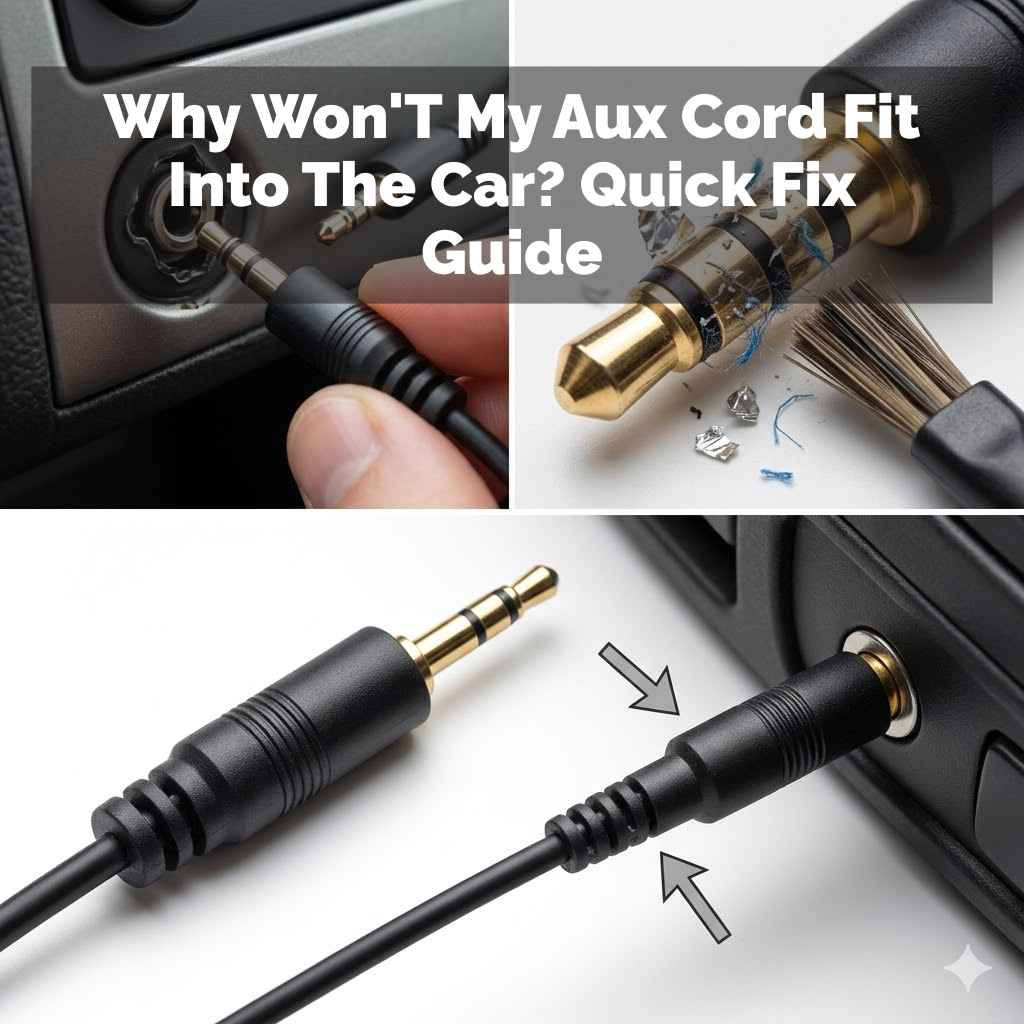
Why Won’T My Aux Cord Fit Into The Car? Quick Fix Guide
It’s a really common problem. You’re ready to blast your favorite tunes in the car. You grab your aux cord.
You try to plug it into the car’s aux port. It just won’t go in. You push a little harder.
Still nothing. It feels like the port is too small. Or maybe the plug is the wrong shape.
This can be super annoying, especially when you just want to relax and listen to music. Let’s figure out why this happens and how to fix it. You’re not alone in this.
Many people face this small but frustrating issue. We’ll break it down so you can get back to your playlist.
It is common for an aux cord plug not to fit into a car’s aux port due to physical obstructions, bent pins, damaged ports, or incorrect cable types. Simple checks like cleaning the port and plug, or trying a different cable, often resolve the issue.
What’s Going On With My Aux Cord?
So, why exactly won’t that little aux plug slide smoothly into your car’s audio jack? It feels like it should be simple. They’re designed to work together, right?
Well, there are a few sneaky reasons this can happen. Sometimes, it’s something obvious you just didn’t notice. Other times, it’s a bit more hidden.
We need to look at the plug itself, the port in your car, and even the type of cord you’re using. Understanding these parts helps us pinpoint the problem. It’s like being a detective for your car’s sound system.
Each piece has a role. If one part isn’t playing nice, the whole connection breaks.
The Plug and The Port: A Close Look
Let’s start with the aux plug. You know, that metal tip on the end of your cord? It’s usually shiny and has a few different sections.
These sections are key to how it works. They carry different sound signals. For most car audio and headphones, this is a 3.5mm jack.
That means it’s about 3.5 millimeters wide. It’s a standard size. The port in your car is designed to perfectly match this size and shape.
Think of it like a key fitting into a lock. If the key is bent or the lock is dirty, it won’t turn.
Now, look at your car’s aux port. It’s a small round hole. Inside, you might see a small metal sleeve.
This sleeve is part of the connection. It holds the plug in place and makes the electrical contact. If this port looks dirty or damaged, that’s a big clue.
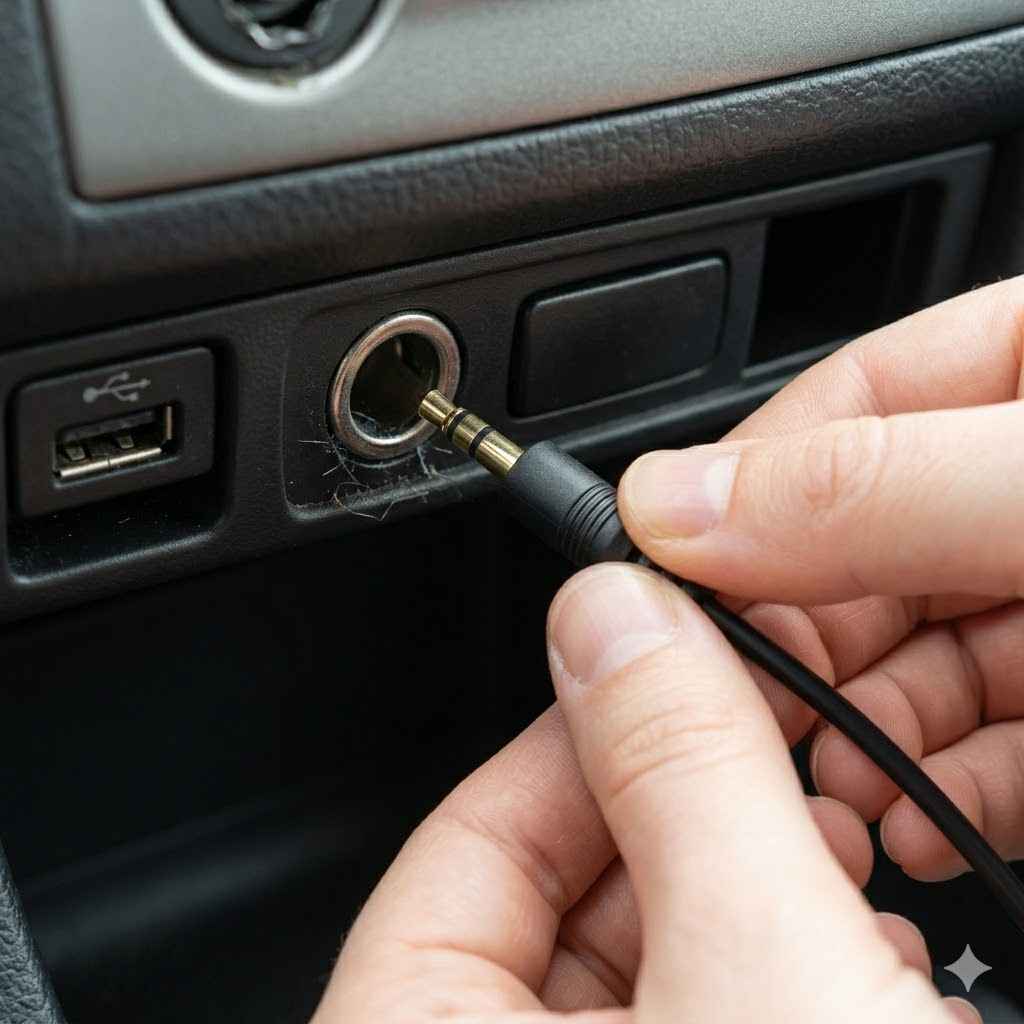
It might have dust, lint, or even small bits of debris stuck inside. This is super common, especially in older cars or ones that get a lot of use. That tiny bit of gunk can stop the plug from going all the way in.
Common Culprits for a Stubborn Aux Plug
The most frequent reason for this fit issue is simple physical blockage. Lint from pockets or car upholstery can build up in the aux port. This creates a barrier.
It’s like trying to put a key into a lock that’s full of fuzz. Another common problem is a bent plug tip. If you’ve ever dropped your phone or yanked the cord, the metal tip can get slightly bent.
This bend means it won’t slide straight into the port. It hits the sides instead.
Sometimes, the car’s aux port itself might have a slightly bent inner sleeve. This can happen if someone tried to force the wrong kind of plug in before. You might also have a damaged cable.
The plastic casing around the metal plug could be cracked or loose. This means the metal part isn’t sitting correctly. Lastly, though rare, you might have an aux cord that isn’t a standard 3.5mm.
Some specialized devices use slightly different sizes. But for cars, 3.5mm is almost always the rule.
My Own Aux Cord Nightmare: A True Story
I remember this one time, years ago. I was on a road trip with friends. We were heading up the coast.
The radio was getting old, and I wanted to play my curated playlist. I reached for my phone, ready to connect. I grabbed my trusty aux cord.
It had worked perfectly just days before. I went to plug it into the car’s dash. It wouldn’t go.
I tried again, a bit more pressure. Nothing. My friends started looking at me, waiting for the music to start.
I felt a wave of panic mixed with annoyance. It was hot, and the air conditioning wasn’t keeping up. All I wanted was some good tunes to cool us down.
I remember looking closely at the port. It looked fine. Then I looked at the plug.
It seemed okay too. I was so confused and a little frustrated. Was the car broken?
Was my phone broken? Was the cord broken? It felt like a silly problem, but it was ruining the mood.
I ended up having to use the car’s terrible radio station for another hour before we stopped for gas and I could buy a new cord.
That experience taught me a lot. It wasn’t just about the cord. It was about paying attention to the details.
I learned that a tiny bit of lint could be a showstopper. I also realized that even a slight bend in the plug could make it useless. Since then, I always give my aux cord and car port a quick check before I try to plug them in, especially when I’m in a hurry.
It saves so much hassle. And it avoids those awkward silences when the music is supposed to be playing.
Quick Port Check: What to Look For
Obstructions: Shine a light into the port. See any obvious dirt, lint, or gunk?
Damage: Look for bent metal inside the port. Does the inner sleeve seem loose or crooked?
Foreign Objects: Anything else stuck in there? Small stones? Bits of plastic?
Understanding the Aux Cable Types
While most aux cables look alike, there’s a slight variation that can sometimes cause fit issues. The standard for most audio devices is the 3.5mm TRS (Tip-Ring-Sleeve) connector. This is what you see on headphones and most car audio inputs.
The “Tip,” “Ring,” and “Sleeve” refer to the different metal sections on the plug. Each section carries a different audio signal (left channel, right channel, ground, and sometimes microphone).
However, there are also TRRS (Tip-Ring-Ring-Sleeve) connectors. These have an extra “Ring” section. This extra section is usually for microphone signals.
You see these on many smartphone headsets that allow you to talk on the phone. If you try to force a TRRS plug into a car’s TRS aux port, it might not fit. The extra metal section on the plug can interfere with the port’s internal structure.
This is less common for dedicated car aux ports but can happen with aftermarket adapters or even some older car systems. It’s always good to know you have a standard TRS cable for your car.
Cable Check: TRS vs. TRRS
Standard Aux (TRS): Has two black rings on the metal plug. Used for stereo audio output.
Headset Aux (TRRS): Has three black rings on the metal plug. Used for stereo audio and a microphone.
Car Aux Ports: Almost always expect a TRS plug. A TRRS plug might not fit or could cause damage.
Real-World Scenarios Where Aux Cords Fail to Connect
Let’s think about where this problem pops up most often. It’s usually in everyday situations. Imagine you’ve just bought a new-to-you used car.
You find the aux port, excited to set up your own music. But the cord won’t plug in. The previous owner might have damaged the port.
Or maybe they forced the wrong kind of cable into it. The metal sleeve inside could be bent. This is a common issue with used vehicles.
You think you’re getting a great feature, but it needs a little TLC.
Another common place is a car that’s seen a lot of use. Maybe it’s an older model or a family car where kids have been plugging and unplugging things constantly. Over time, the repeated stress can cause the port to loosen or the internal contacts to get damaged.
You might also encounter this in rental cars. Sometimes, people in rentals aren’t as careful with the car’s equipment. They might yank cords or try to jam things in.
This can leave the aux port in less than perfect condition for the next driver.
Think about your own car too. If you live somewhere dusty, like Arizona or parts of Texas, dust can get into everything. That aux port is like a little dust magnet.
Even in less dusty climates, everyday grime builds up. Crumbs from snacks, lint from your clothes, pet hair – it all finds its way in. It’s just the nature of a car interior.
So, the environment plays a big role. The constant motion and vibration of driving can also lead to wear and tear on the port over many years.
Environmental Factors Affecting Aux Ports
Dust & Dirt: Can create a physical barrier in the port.
Moisture: Though less common, can cause corrosion on contacts.
Wear & Tear: Frequent use and vibration can loosen components.
Accidental Damage: Forcing wrong plugs or yanking cords can bend internal parts.
What This Means for Your Car Audio
So, what’s the takeaway from all this? If your aux cord isn’t fitting, it’s usually not a huge, expensive problem. Most of the time, it’s something minor.
It’s normal for aux ports and cords to get dirty or slightly worn over time. Think about it – these are physical connections. They get used a lot.
A little bit of gunk or a tiny bend is a sign of normal use, not necessarily a broken car.
When should you start to worry? If you’ve tried cleaning the port and the plug, and they still won’t connect, or if you can see clear damage like a bent metal sleeve inside the port, then it might be time to get it checked. A really loose port where the plug just falls out is also a sign of wear.
But for most people, a stiff fit just means a little cleaning is needed. It’s about keeping those connection points clear and straight. The good news is that many cars still have these ports, even with Bluetooth becoming so common.
It’s a reliable backup.
When is it Okay? When to Worry?
Okay: Aux plug feels a little tight but eventually goes in. Plug looks clean. Port looks clean.
Your audio works after plugging it in.
Worry: Plug will not go in at all, even after cleaning. Visible damage to the port or plug. Plug feels very loose in the port.
Audio cuts out or is noisy after connecting.
Simple Steps to Get Your Aux Cord Working Again
Okay, let’s get this fixed. The first thing to do is rule out the simplest issues. Don’t skip these steps, no matter how basic they seem.
I’ve seen these fixes work more times than I can count.
1. Clean the Aux Port
This is the big one. You need to get any gunk out of that port. Grab a flashlight.
Shine it inside. See anything? If it’s just light dust, try compressed air.
Hold the can upright and give short bursts into the port. Be careful not to spray liquid. If it looks like packed lint or dirt, you can try a small, non-metallic pick.
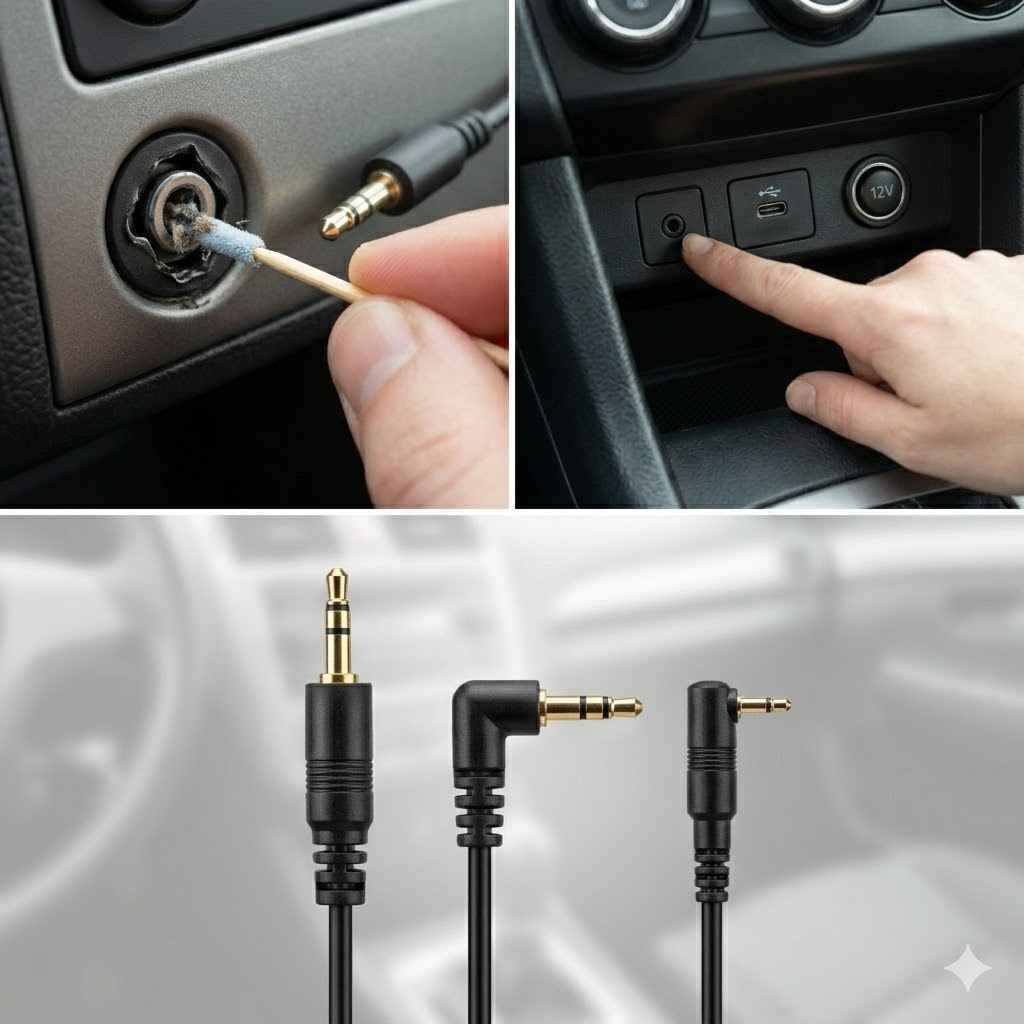
A wooden toothpick is good. A plastic dental pick is even better. Gently scrape around the inside edge of the port.
Don’t poke too hard. You don’t want to damage anything. Do this a few times.
Then, use compressed air again to blow out any loosened debris.
I often recommend a small detail brush, like a clean paintbrush, too. You can gently swirl it inside the port to loosen things up, then blow it out. Some people use a dry cotton swab, but be careful that fibers don’t get left behind.
The goal is to get the opening clear. Think about it like cleaning a tiny keyhole. You want it smooth and free of anything that blocks the key.
Cleaning Supplies You Might Need
- Flashlight
- Compressed air can
- Wooden toothpicks or plastic dental picks
- Small, clean detail brush (like a paintbrush)
2. Check and Clean the Aux Cable Plug
Now, look closely at the metal plug on your aux cord. Is the tip bent at all? If it’s slightly bent, you can try to gently straighten it with a pair of small pliers.
Be very careful not to break it off. If the plug looks fine, clean its tip too. Sometimes, the metal tip can get a bit grimy or corroded.
You can use a cotton swab lightly dampened with rubbing alcohol. Gently wipe the metal plug. Let it dry completely before trying to plug it in.
Make sure the plastic part right behind the metal tip isn’t too big. Some thicker plastic ends can also prevent a full connection. If your cord has a very chunky plastic base where the metal plug starts, it might be too wide for a snug port.
In these cases, a different cable might be the only solution.
3. Try a Different Aux Cable
This is a crucial step. It helps you figure out if the problem is with your cord or with your car. Grab another aux cord if you have one.
It could be from a pair of headphones, another device, or a friend’s cord. Try plugging that one into your car’s aux port. If the new cord fits and your music plays, you know your old cord was the issue.
Maybe it was bent, damaged, or just worn out.
If the new cord also doesn’t fit, then the problem is almost certainly with your car’s aux port. This is a good sign. It means you don’t need to replace your aux cable.
You can focus on the car’s port itself. This helps you narrow down the possibilities quickly and avoid unnecessary purchases.
Troubleshooting Flowchart
Problem: Aux cord won’t fit car port.
Step 1: Clean car aux port. Try cord again.
Result A: Fits and works! Great.
Result B: Still won’t fit. Move to Step 2.
Step 2: Clean aux cord plug. Straighten if bent. Try cord again.
Result C: Fits and works! Old cord was dirty/bent.
Result D: Still won’t fit. Move to Step 3.
Step 3: Try a different aux cable. Does it fit?
Result E: Yes, it fits! Old cord was the problem.
Result F: No, it doesn’t fit. Car port is likely damaged or obstructed beyond simple cleaning.
4. Check for Wrong Cable Type (TRS vs. TRRS)
As we talked about earlier, ensure you’re using a standard TRS aux cable. If your cable has three metal rings, it’s likely TRRS. These are for headsets with microphones.
Most car aux ports are designed for TRS cables, which have two metal rings. A TRRS plug might be physically too large to fit into a TRS port. Look at the metal tip of your aux cord.
Count the distinct black bands. If there are three, try a cable with only two bands. This is especially true if you’re using a cable that came with a smartphone headset.
5. Gentle Wiggling (Use with Extreme Caution)
If cleaning and trying a different cable haven’t worked, and you’re reasonably sure the port isn’t severely damaged, you can try a very gentle wiggle. With the aux plug partially ’s a sweet spot where it might slide in. This can sometimes help if the internal contacts are just slightly misaligned. However, if you feel any resistance or hear any crunching sounds, stop immediately.
You don’t want to force it and cause more damage. This step is for when you’re almost there, not for forcing a stuck plug.
Cautionary Note on Wiggling
Only attempt if:
- Plug is partially inserted.
- You feel slight resistance, not hard blockage.
- You are using a standard TRS cable.
- You are prepared to stop if any damage seems possible.
Never force a plug.
When to Seek Professional Help
If you’ve tried all the above steps and your aux cord still won’t fit, or if you suspect physical damage to the port, it’s time to get some expert help. Forcing things could lead to more expensive repairs. A mechanic or an car audio specialist can diagnose the issue properly.
They have the tools to see inside the port safely. They can also replace the entire aux port assembly if needed.
Don’t feel bad if you can’t fix it yourself. These ports are small and can be tricky. Sometimes, the internal wiring to the head unit is the problem, not just the port itself.
A professional can check all of that. They can ensure your car’s audio system is working correctly. It’s better to get it fixed right than to risk breaking it further.
Frequently Asked Questions About Aux Cord Fit Issues
Why is my aux cord plug too big for my car’s port?
This usually happens if the aux cord plug has a thicker plastic casing than the port can accommodate. Some older car ports are designed for very slim plugs. Also, ensure you’re not trying to use a TRRS (headset) cable in a TRS (standard audio) port, as the extra metal section can cause it to not fit.
Can dirt in the aux port actually stop the plug from going in?
Yes, absolutely. Even a small amount of packed lint, dust, or debris can create a solid barrier. Think of it like trying to fit a key into a lock that has a piece of gum stuck inside.
The plug needs a clear path to slide in smoothly.
My aux plug is bent. Can I straighten it?
You can try to gently straighten a slightly bent aux plug with small pliers. Be very careful not to break the metal tip off. If the plug is severely bent, it might be best to replace the entire aux cable, as it could also cause intermittent audio problems later.
What if the aux port in my car looks damaged?
If you can see that the metal sleeve inside the car’s aux port is bent, cracked, or broken, then the port likely needs to be replaced. Attempting to force a cable into a damaged port can cause further issues. It’s best to consult a car audio professional or a mechanic.
Is it okay to use a cotton swab to clean my aux port?
You can use a cotton swab, but be very careful that no cotton fibers are left behind in the port. These fibers can then cause issues with the connection. It’s often safer to use compressed air, a soft brush, or a non-metallic pick like a toothpick.
If you use a swab, make sure it’s only lightly dampened with rubbing alcohol and allow it to dry completely.
My car has Bluetooth, but I prefer the aux cord. Why won’t it fit?
Even if your car has Bluetooth, the aux port is a reliable backup. If your aux cord isn’t fitting, and you’ve confirmed it’s a standard 3.5mm TRS plug, the issue is likely dirt in the port, a bent plug, or minor damage to the port itself. Cleaning the port and plug is usually the first and most effective step.
Conclusion and Next Steps
It’s easy to get frustrated when a simple thing like plugging in an aux cord doesn’t work. But usually, the fix is quite simple. Most of the time, a bit of cleaning or a new cable is all you need.
We’ve covered the common reasons why your aux cord might not fit your car’s port. We’ve also walked through easy steps to fix it. Remember to be gentle.
Don’t force anything. And if all else fails, a professional can help. Now go enjoy your music!
Products related to this article
Sponsored / affiliate links. As an Amazon Associate I earn from qualifying purchases. I may earn additional commission from eligible campaigns.