How Often Should Car Tires Be Replaced? Expert Guidelines
It’s a question many of us ask ourselves, often when we’re rushing or when a tire just doesn’t look quite right: “How often should car tires be replaced?” It’s a common concern, and for good reason. Your tires are the only thing connecting your car to the road. They handle everything: stopping, steering, and carrying the weight of your vehicle.
When they aren’t in tip-top shape, it can affect your safety and your wallet.
This isn’t just about looking for bald spots. There’s a science and an art to knowing when your tires have served their time. We’ll dive deep into what really matters, looking at mileage, age, signs of wear, and even how your driving style plays a role.
By the end, you’ll have a much clearer picture of how to keep your tires performing their best, ensuring safer journeys for you and your passengers.
The general guideline is to
Understanding Tire Lifespan
Thinking about how long car tires last can feel a bit like guessing. But there are solid ways to figure it out. Two main things matter most: how much you drive and how old the tires are.
It’s not just about the miles you put on the odometer, though. The way you drive, the roads you drive on, and even the weather can all make your tires wear out faster or slower.
Most experts agree that a good set of tires should last somewhere between 50,000 and 70,000 miles. Some high-quality tires designed for longer life might even go up to 80,000 miles or more. However, this is just an average.
If you drive a lot of short trips, brake hard often, or drive on rough roads, your tires might wear out much sooner.
On the flip side, if you’re a gentle driver who does mostly highway miles on smooth roads, you might get more miles than average. It’s also important to remember that tires age, even if they aren’t used much. Rubber can break down over time.
So, even low-mileage tires might need replacing due to age.
When Wear Becomes the Main Factor
The most obvious sign that your tires need replacing is visible wear. Tires have a special feature called a tread wear indicator. These are small, raised bars built into the grooves of your tire.
When the tread surface wears down to be even with these bars, your tires are legally worn out in many places.
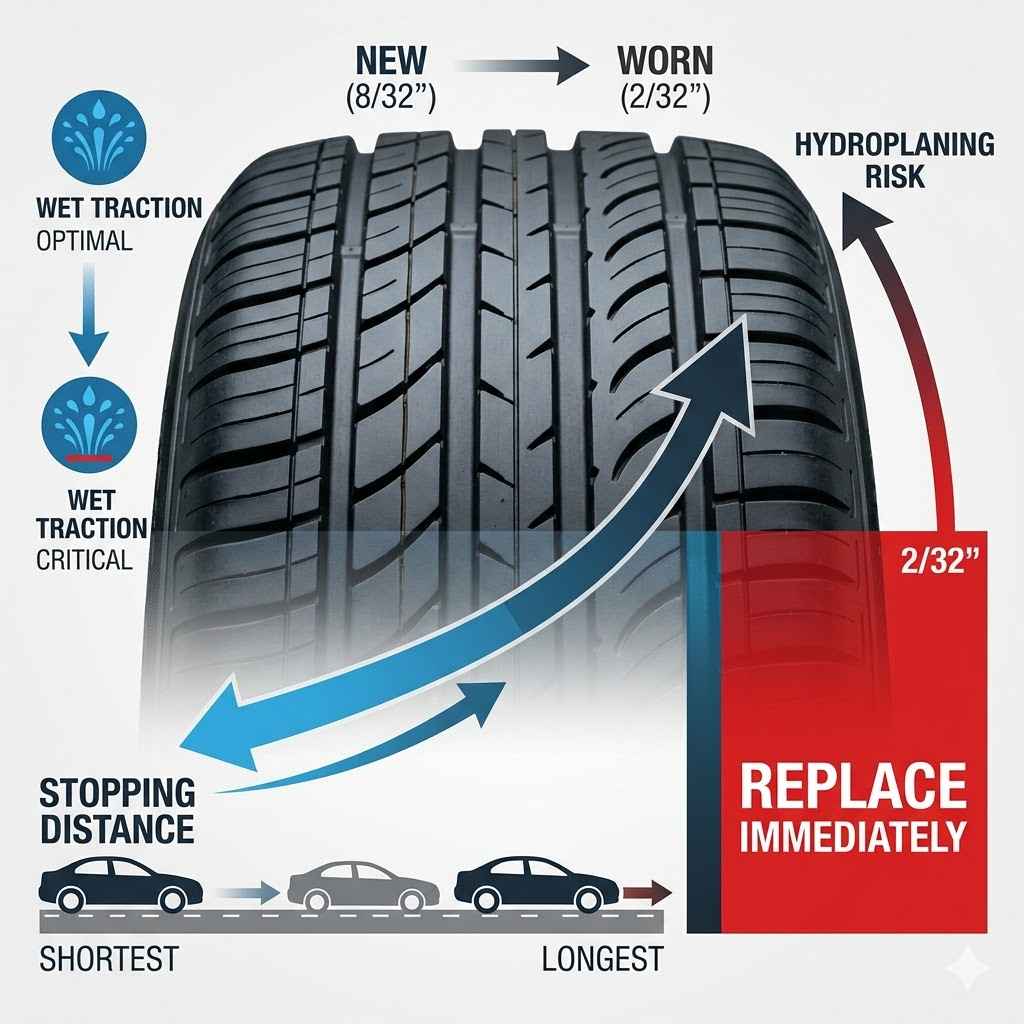
This usually means the tread depth has reached 2/32 of an inch. This is the minimum safe tread depth for driving. Less tread means less grip on the road.
This is especially dangerous in wet conditions, where worn tires can lead to hydroplaning. It’s like trying to walk on a slippery floor with smooth shoes; you’re more likely to fall.
You can check your tread depth easily. You can use a special gauge, which is very cheap. Or, you can do a simple penny test.
Stick a penny into the deepest part of the tread with Lincoln’s head facing down. If you can see the very top of Lincoln’s head, your tread is likely too low and it’s time for new tires.
Tire Wear Indicators: Your Built-in Guide
What they are: Small rubber bars found in the main grooves of your tire tread.
When to worry: When the tread surface is worn down to the same level as these bars.
Why they matter: They signal that your tire has reached its minimum safe tread depth (2/32 inch).
How to check: Look for them across the tire. If they are visible and level with the tread, it’s time for new tires.
Beyond the wear bars, look for uneven wear patterns. Does one side of the tire look more worn than the other? Is there a spot that looks more bald than the rest?
These can be signs of other issues, like improper tire inflation, wheel alignment problems, or suspension issues. Addressing these underlying problems can help your new tires last longer.
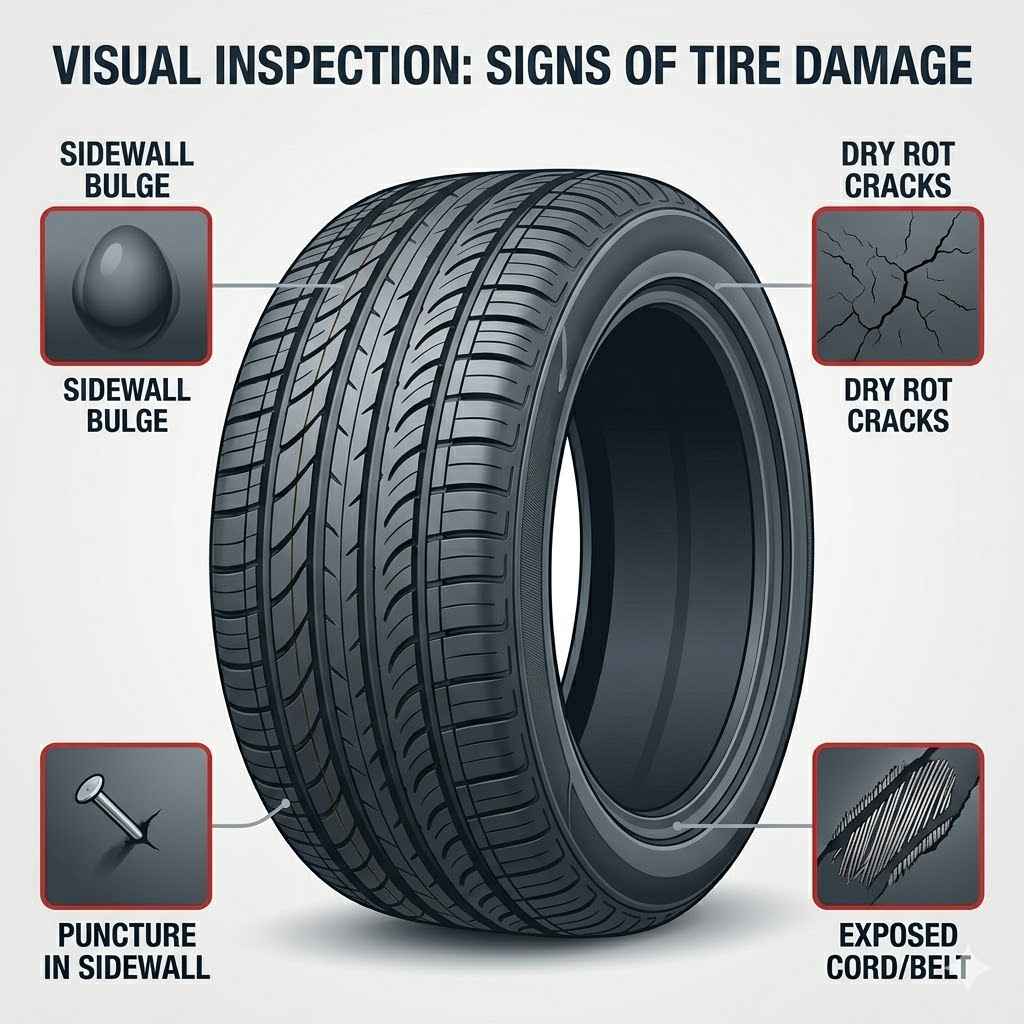
Cracks in the sidewall are another serious concern. These can look like small cuts or a web of tiny lines. They often appear due to age or exposure to harsh elements like sun and salt.
A cracked sidewall weakens the tire and can lead to a sudden blowout, which is extremely dangerous.
The Age Factor: Even Unused Tires Age
This is where many people get caught out. Even if your tires have plenty of tread left, they don’t last forever. Rubber, even high-quality rubber, degrades over time.
Exposure to sunlight, oxygen, and temperature changes all contribute to this aging process. This is why tire manufacturers and safety experts recommend replacing tires after a certain number of years, regardless of tread depth.
The most common recommendation is to replace tires after 6 years from their manufacture date. Some sources suggest up to 10 years, but it’s safer to be more conservative. The manufacture date is stamped on the sidewall of your tire.
It’s a four-digit code. The first two digits are the week of the year, and the last two digits are the year.
For example, a code like “3419” means the tire was made in the 34th week of 2019. So, if you bought a car new in 2020 and it still has its original tires from 2019, those tires are already about 5 years old. They might seem fine, but they are approaching the 6-year mark where replacement becomes more critical.
Why is age so important? As tires age, the rubber can become brittle and lose its flexibility. This makes them more prone to sudden failures, like tread separation or sidewall blowouts.
It’s like an old rubber band; it might look okay, but it snaps easily when stretched. An aged tire is less reliable under pressure.
I remember helping a friend who had a set of tires that looked almost perfect. Plenty of tread, no obvious damage. But they were about 8 years old.
She loved the car and rarely drove it, so the mileage was very low. One hot afternoon, while driving on the highway, one of the tires just gave out. Thankfully, she was able to pull over safely, but it was a scary experience.
It really drove home for me that age is a critical factor, even if mileage is low.
Tire Age Check: What to Look For
Find the DOT code: This is a series of letters and numbers on the tire’s sidewall.
Locate the date: The last four digits of the DOT code show the manufacture date (WWYY).
Calculate the age: Use the current year and month to determine how old the tire is.
General Rule: Consider
How Driving Habits Affect Tire Life
We all drive differently. Some of us are aggressive with the pedals, while others are smooth and gentle. Your driving style can significantly impact how long your tires last.
If you frequently accelerate hard, brake suddenly, or take corners at high speeds, you’re putting extra stress on your tires.
Think about it like this: every time you slam on the brakes, you’re essentially scraping rubber off the road surface. Quick acceleration wears down the edges of your tire tread. Sharp turns cause your tires to flex and heat up, which speeds up wear.
These actions create friction and heat, which are the enemies of tire longevity.
On the other hand, smooth acceleration and braking, and gentle cornering, reduce this friction and heat. This allows the tire tread to wear down more evenly and slowly. So, driving smoothly isn’t just better for your passengers’ comfort; it’s also better for your tires and your wallet.
This is a direct example of experience showing how behavior impacts wear.
Road conditions also play a huge role. Driving on rough, unpaved roads or roads with lots of potholes will wear out tires faster than driving on smooth, paved surfaces. Gravel roads, for instance, can be very abrasive.
Constantly hitting potholes can cause damage to the tire’s internal structure, even if you don’t see it immediately. This can lead to premature failure.
Climate is another factor. In very hot climates, the constant heat can accelerate rubber degradation. In areas with extreme cold and frequent use of salt on roads, chemicals can also affect the rubber.
Harsh winter conditions, with snow and ice, can also lead to wear if tires are constantly spinning or being subjected to rough surfaces.
Tire Inflation: The Unsung Hero of Tire Life
Proper tire inflation is one of the easiest yet most overlooked aspects of tire care. It’s incredible how much proper air pressure affects tire performance and lifespan. When tires are under-inflated, the edges of the tread carry more of the car’s weight.
This causes them to wear down much faster than the center of the tread.
Under-inflation also makes the tire run hotter. Heat is a major enemy of rubber. It weakens the tire structure and can lead to blowouts.
Plus, under-inflated tires create more rolling resistance. This means your engine has to work harder to move the car, which wastes fuel. You’ll notice you’re stopping at the gas station more often.
On the flip side, over-inflating your tires causes the center of the tread to bear too much weight. This results in the center wearing down much faster than the edges. Over-inflated tires also create a harder ride, making bumps feel much more severe.
They can also be more susceptible to damage from road hazards like sharp objects.
The correct tire pressure for your vehicle is not the maximum pressure listed on the tire itself. That’s the maximum the tire can safely hold. The correct pressure is listed on a sticker inside your driver’s side doorjamb, or sometimes in your owner’s manual.
It’s crucial to check your tire pressure regularly, at least once a month, and before long trips.
I learned this lesson the hard way with my first car. I noticed the front tires were wearing very quickly, and the ride felt bumpy. I kept thinking I needed new tires.
Then, a mechanic pointed out that my tire pressure was consistently too low. I hadn’t been checking it. After getting it to the right pressure, the wear slowed down dramatically, and the ride improved.
It was a simple fix that saved me money and extended the life of my tires.
Tire Pressure Snapshot
Under-inflated: Wears edges, runs hot, poor fuel economy, risks blowout.
Over-inflated: Wears center, harsh ride, more prone to impact damage.
Properly inflated: Even wear, optimal grip, best fuel efficiency, longest tire life.
Check monthly: Use a reliable tire pressure gauge. Adjust when tires are cold.
Signs Your Tires Need Replacing (Beyond the Obvious)
Sometimes, tires give us subtle clues that they’re nearing the end of their life. It’s good to be aware of these. You might notice changes in how your car handles.
Does it feel less stable when you drive? Does it pull to one side more than usual?
Vibrations or humming sounds coming from the tires while you drive can also be a sign. These might indicate a tire is out of balance, or worse, that the tire structure is compromised. A wobbly appearance when the car is parked can also be a sign of internal damage or severe wear.
One of the most critical signs is reduced traction, especially in wet weather. If you feel your car sliding or losing grip more easily than it used to, particularly when braking or turning on damp roads, your tire tread might be too worn. This is a serious safety concern.
Physical damage is another clear indicator. This includes cuts, punctures, bulges, or blisters on the sidewall or tread. Any significant damage like this means the tire’s structural integrity is compromised.
Even if a puncture can be repaired, the tire might need to be replaced if the damage is too close to the sidewall or is extensive.
I once had a tire that developed a slow leak. I kept topping it up, thinking it was just a small nail. But the hissing sound got louder over time.
Then, I noticed a slight bulge forming on the sidewall. That bulge was a warning sign of internal damage. I had it checked immediately and learned that the tire was at risk of a blowout.
Replacing it was the only safe option, even though the tread wasn’t completely gone.
What About Different Tire Types?
Not all tires are created equal. The type of tire you have can influence its expected lifespan. For example, performance tires, which are designed for maximum grip and handling, often have softer rubber compounds.
This means they tend to wear out faster than all-season touring tires, which prioritize durability and comfort.
All-terrain tires, often found on trucks and SUVs, are built for durability and can handle rougher surfaces. They might last a long time under normal driving conditions but can wear faster if frequently used off-road. Winter tires, with their specialized tread patterns and softer compounds for cold weather, are also designed for specific conditions and might not last as long in warmer climates.
The quality of the tire also matters. Premium brands often use better materials and manufacturing processes, which can result in longer-lasting tires. Cheaper, budget tires might have a lower initial cost but may wear out significantly faster, meaning you end up buying replacements more often.
Tire Type vs. Wear
Performance Tires: Softer rubber, excellent grip, faster wear.
All-Season Tires: Balanced tread, good durability, moderate wear.
All-Terrain Tires: Robust design, handles rough roads, variable wear.
Winter Tires: Specialized tread, soft compounds for cold, wear faster in heat.
Real-World Scenarios: When to Replace Your Tires
Let’s look at a few common situations to help you decide when it’s time for new tires. These are based on typical U.S. driving conditions and common tire usage.
Scenario 1: The Commuter
Sarah drives 50 miles round trip to work every day, mostly on highways. She has standard all-season tires. She drives smoothly and gets her oil changed regularly.
Her tires were new 3 years ago and have about 40,000 miles on them. The tread depth is still good, around 5/32 inches. However, the manufacture date is 5 years old.
Advice for Sarah: Even though her tread is good, the age of the tires is a concern. She should start planning for
Scenario 2: The Weekend Warrior
Mark uses his SUV mostly for short trips around town during the week. On weekends, he likes to explore local trails and sometimes drives on unpaved roads. His tires have 30,000 miles on them, but they were put on the vehicle when he bought it 7 years ago.
The tread looks okay, but he notices some small cracks near the sidewall.
Advice for Mark: Mark’s tires are significantly over the recommended age limit, and he’s noticing physical signs of aging (cracks). The mileage is moderate, but the age and visible damage mean he should replace them immediately. The risk of a blowout on a trail or remote road is too high.
Scenario 3: The City Dweller
Lisa lives in a big city and uses her compact car for errands and occasional weekend trips. She often deals with rough city streets, potholes, and frequent stops and starts. Her tires have 35,000 miles and are 4 years old.
She notices that the edges of her front tires seem more worn than the center.
Advice for Lisa: The uneven wear pattern suggests potential issues with tire inflation or alignment, which she should get checked. Given the rough driving conditions and the slight uneven wear, it’s a good time to have her tires inspected closely by a professional. If the wear is significant, replacement might be needed sooner than expected, especially if the tread depth is approaching 3/32 inch on the worn edges.
When Is It Okay to Keep Older Tires?
Honestly, there are very few situations where keeping tires significantly past their recommended age is truly advisable. The primary reason to replace tires is safety. The U.S.
National Highway Traffic Safety Administration (NHTSA) does not set a mandatory age limit for tires. However, they strongly advise consumers to replace tires that are 6 years old or older.
The only time you might arguably delay replacement on an older tire is if it has extremely low mileage (e.g., less than 10,000 miles) and shows absolutely no signs of degradation like cracks, dry rot, or deformities. Even then, this is a calculated risk.
For instance, if a classic car is kept in a climate-controlled garage and driven only a few times a year for very short distances, its original tires might appear visually sound for longer. However, even in these scenarios, the rubber is aging internally. The risk of a catastrophic failure increases with every passing year.
It’s also important to consider where the car is stored. Tires exposed to direct sunlight, extreme temperatures, or chemicals will degrade much faster than tires stored properly. So, even if the mileage is low, the environment matters.
It’s always best to err on the side of caution and replace tires when they reach their age limit, or when wear indicators appear.
Your Tire’s Timeline: A Quick Guide
0-3 Years: New or relatively new. Check pressure regularly. Rotate if recommended.
3-5 Years: Good mileage and tread. Continue regular checks. Monitor age for future planning.
5-6 Years: Tread still good? Check for cracks, dry rot. Consider replacement soon.
6+ Years:
The Connection Between Tire Replacement and Safety
This is the core of why understanding tire wear is so vital. Your tires are the critical link between your car and the road. When they are worn out or aged, this link weakens.
This directly impacts your ability to control the vehicle. Imagine trying to grip a steering wheel with wet, greasy hands – it’s much harder to maneuver.
Worn tires have significantly reduced grip, especially in wet conditions. The grooves in the tread are designed to channel water away from the tire’s contact patch. When these grooves are shallow, water can get trapped, causing the tire to lose contact with the road.
This is hydroplaning, and it can lead to a complete loss of steering and braking control.
Stopping distance is also greatly increased with worn tires. It takes your car much longer to come to a complete stop, which can be the difference between a safe stop and an accident. This is particularly dangerous in emergency braking situations.
Older, aged tires are also more prone to sudden failures. A blowout at highway speeds can cause a driver to lose control of the vehicle instantly.
The U.S. Department of Transportation and the National Highway Traffic Safety Administration (NHTSA) regularly highlight tire safety. They emphasize that properly maintained tires are essential for preventing accidents.
While they don’t mandate a specific age, their advisories strongly point towards replacing tires due to age-related degradation.
I’ve seen firsthand what happens when tires fail unexpectedly. A friend was driving on an older tire that had a slight bulge. She noticed it but put off replacing it for a few more weeks.
One day, while driving on a hot road, the sidewall gave out. The car swerved violently, and it took all her skill to regain control. It was a terrifying experience that could have easily resulted in a severe accident.
This reinforces the trust one must place in their vehicle’s components, especially tires.
Maintaining Your Tires for Maximum Life
You’ve invested in good tires; now you want them to last as long as possible. The key is consistent, proactive maintenance. It’s not a lot of work, but doing it regularly pays off big time.
Regular Inspections: Make it a habit to look at your tires weekly or bi-weekly. Check for any obvious damage, like cuts, bulges, or embedded objects. Also, visually check for wear patterns.
This takes about 30 seconds.
Tire Pressure Checks: As mentioned, check your tire pressure at least once a month, and always when the tires are cold. A good quality tire pressure gauge is an inexpensive tool that can save you money and headaches.
Tire Rotation: To ensure your tires wear evenly, they need to be rotated. Most manufacturers recommend rotating tires every 5,000 to 7,500 miles, often coinciding with an oil change. This involves moving the tires from one position on the car to another.
This simple process helps even out the wear between front and rear tires, and between the left and right sides.
Wheel Alignment: If your car pulls to one side, or if you notice uneven tire wear, it’s a sign that your wheel alignment might be off. Misaligned wheels cause tires to drag sideways, leading to rapid and uneven wear. Getting your alignment checked and adjusted periodically, especially after hitting a significant pothole or curb, is crucial.
Balancing: Tires need to be balanced to ensure they rotate smoothly. If a tire is out of balance, it can cause vibrations felt in the steering wheel or seat. Unbalanced tires can lead to uneven wear and stress on suspension components.
Balancing is usually done when tires are mounted and should be checked periodically or if you feel vibrations.
Driving Style: As discussed, gentle acceleration, braking, and cornering are key. Avoid hitting potholes or curbs whenever possible. This isn’t just about tire care; it’s also better for your car’s suspension and overall longevity.
Your Tire’s Best Friends: Maintenance Habits
Inspect: Look for damage and uneven wear weekly.
Inflate: Check cold tire pressure monthly.
Rotate: Every 5,000-7,500 miles for even wear.
Align: If car pulls or wear is uneven.
Balance: If you feel vibrations.
Drive Smooth: Avoid sudden stops and aggressive turns.
What This Means for You: Taking Action
So, what’s the bottom line? Knowing how often to replace your car tires boils down to a few key things. It’s a mix of mileage, age, and visible condition.
Don’t just rely on one factor. Look at all of them together.
When It’s Normal to Replace:
- When your tread depth reaches 2/32 of an inch (use the penny test!).
- When your tires are 6 years old, regardless of tread depth.
- When you see significant cracks, bulges, or other damage on the sidewall.
- When you notice consistent, extreme uneven wear that can’t be fixed by alignment.
When to Worry More:
- If you live in a very hot climate and your tires are over 5 years old.
- If you frequently drive on rough roads or in harsh weather conditions.
- If you notice sudden changes in handling, like pulling or vibration.
- If you’ve had a tire repaired due to damage, especially if it was near the sidewall.
Simple Checks You Can Do:
- Tread Depth: The penny test is your friend.
- Tire Age: Find that DOT code and check the manufacture year.
- Visual Inspection: Look for cracks, bulges, cuts, and funny wear patterns.
- Tire Pressure: Keep it at the recommended level found on your car’s doorjamb sticker.
Don’t wait for a problem to arise. Being proactive with your tires is one of the most cost-effective and safety-conscious things you can do as a car owner. It’s an investment in your safety and the reliability of your vehicle.
Quick Fixes and Tips for Tire Longevity
While there aren’t really “quick fixes” for worn-out tires, there are excellent tips to maximize their lifespan and ensure they perform their best for as long as possible. These are proactive steps, not repairs for worn-out tires.
Tip 1: Maintain Correct Tire Pressure: I can’t stress this enough. Checking your tire pressure weekly, or at least monthly, with a reliable gauge is the single most impactful thing you can do. Use the pressure recommended by your car manufacturer, not the maximum pressure on the tire sidewall.
Tip 2: Regular Tire Rotation: This is essential for even wear. If your car has a staggered wheel setup (different sizes front to rear), or if you have directional tires, consult your owner’s manual or a tire professional for the correct rotation pattern. Most standard cars can simply have front tires moved to the rear and vice-versa.
Tip 3: Drive Sensibly: Smooth driving habits—gentle acceleration, braking, and cornering—reduce stress on the tire rubber and extend its life. Think of it as being kind to your tires, and they’ll be kind to you.
Tip 4: Address Alignment and Balance Issues Promptly: If you notice your car pulling to one side or feel vibrations, get your alignment and balance checked. Driving with misaligned or unbalanced tires is like trying to run with one leg shorter than the other; it causes undue stress and premature wear.
Tip 5: Avoid Road Hazards: While not always possible, try to steer clear of potholes, curbs, and debris on the road. These can cause internal damage to tires that might not be visible immediately but can lead to failure down the line.
Tip 6: Choose the Right Tires for Your Needs: When it’s time to replace your tires, consider your typical driving conditions and climate. Choosing tires designed for your lifestyle will ensure optimal performance and longevity.
Frequently Asked Questions About Tire Replacement
How do I find the manufacture date on my tires?
Look for the DOT code on the tire’s sidewall. It’s a series of letters and numbers. The last four digits represent the manufacture date.
The first two digits are the week of manufacture, and the last two are the year. For example, 2521 means the tire was made in the 25th week of 2021.
Can I just replace one tire if it’s worn out?
It’s generally not recommended to
What is considered “low mileage” for tires?
Tires with less than 10,000 miles are generally considered low mileage. However, even with low mileage, age is a significant factor. If tires are 6 years old or more, they should be considered for replacement regardless of how little they have been driven.
How can I tell if my tires have dry rot?
Dry rot appears as small cracks or a dull, gray-ish appearance on the tire’s sidewall and sometimes on the tread. It’s caused by oxidation and UV exposure. If you see these signs, especially on older tires, it means the rubber is degrading and the tire is unsafe, even if the tread looks good.
Is it safe to drive on tires with tread depth below 2/32 inch?
No, it is not safe to drive on tires with tread depth below 2/32 of an inch. This is the legal minimum in most places. Tires with such shallow tread have significantly reduced grip, especially in wet conditions, making them prone to hydroplaning and increasing stopping distances.
It also makes you more likely to get a ticket.
How often should I check my tire pressure?
You should check your tire pressure at least once a month and before any long road trips. It’s best to check when the tires are cold, meaning the car hasn’t been driven for at least three hours or has been driven less than a mile. Temperature changes can also affect tire pressure, so seasonal checks are a good idea.
Conclusion: Keeping Your Wheels Turning Safely
Understanding when to replace your car tires is a blend of science and observation. It’s about mileage, yes, but also about age, condition, and how you treat them. Your tires are crucial for safety, and being informed helps you make smart choices.
Regularly check your tread, find that manufacture date, and keep your tires properly inflated. These simple steps will help you know when it’s time to invest in new tires, keeping you and your loved ones safe on every journey.
Products related to this article
Sponsored / affiliate links. As an Amazon Associate I earn from qualifying purchases. I may earn additional commission from eligible campaigns.