Best Polishing Pads for BMW Cars Reviewed
Picking the right polishing pads for your BMW can seem tricky at first. You see all sorts of types, and it’s hard to know which ones work best for getting that showroom shine. This guide makes choosing easy.
We break down everything you need to know about the Best Polishing Pads for BMW Cars Reviewed, so you can confidently make your car look amazing. Get ready to learn what makes a pad great and how to use it.
Finding the Best Polishing Pads for BMW Cars
This section is all about helping you discover the top polishing pads that are perfect for your BMW. We will look at what makes a pad good for BMW paint, which can sometimes be a bit softer or harder than other car brands. Knowing the right pads means you get better results, whether you’re removing swirl marks or just adding a final shine.
We’ll cover different types of pads and what they’re good for, making sure your BMW paint stays looking its best without any damage.
Understanding Pad Materials
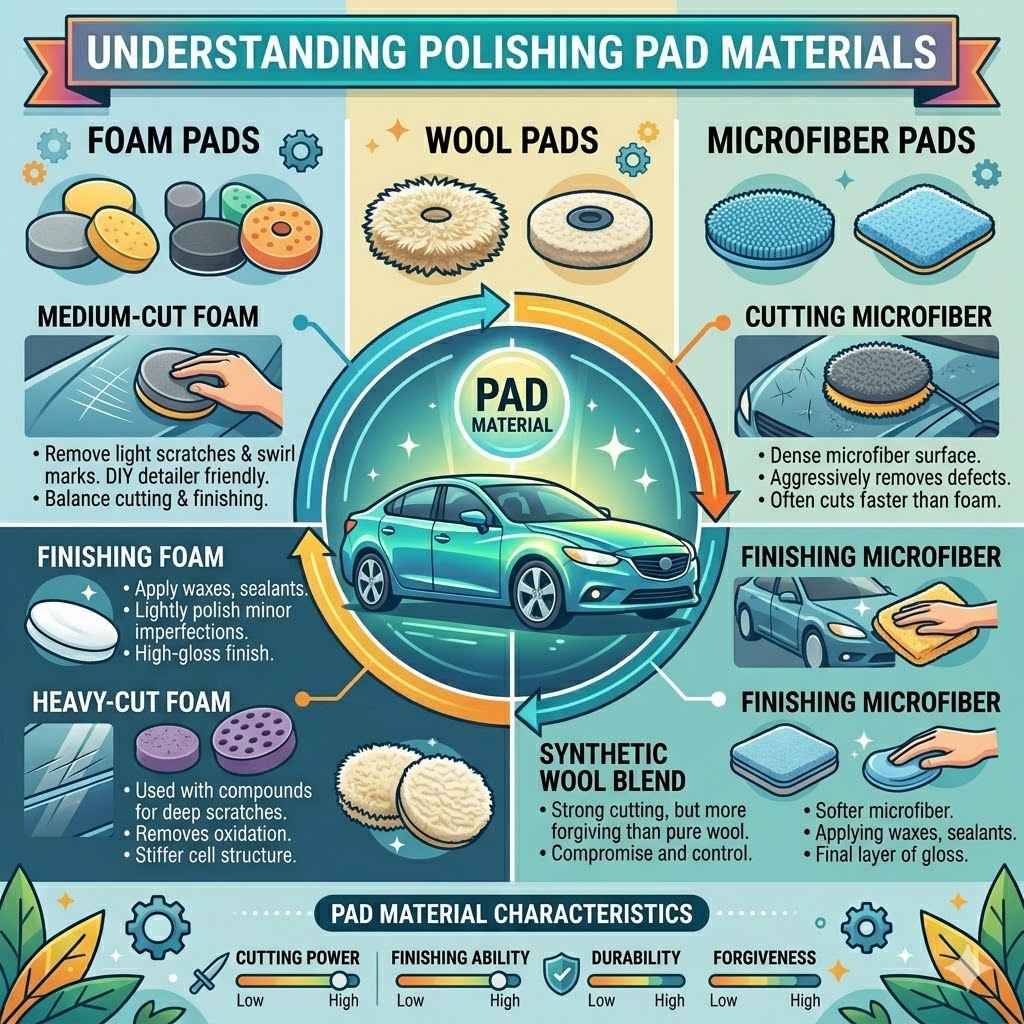
The material a polishing pad is made from is super important. It affects how the pad cuts, cleans, and finishes the paint. Different materials work better for different tasks.
For example, foam pads are very common, but there are many kinds of foam. Some are dense for cutting, while others are softer for finishing. Wool pads are great for heavy correction, but you need to be careful with them.
Ceramic pads are a newer option, offering unique benefits.
Foam Pads
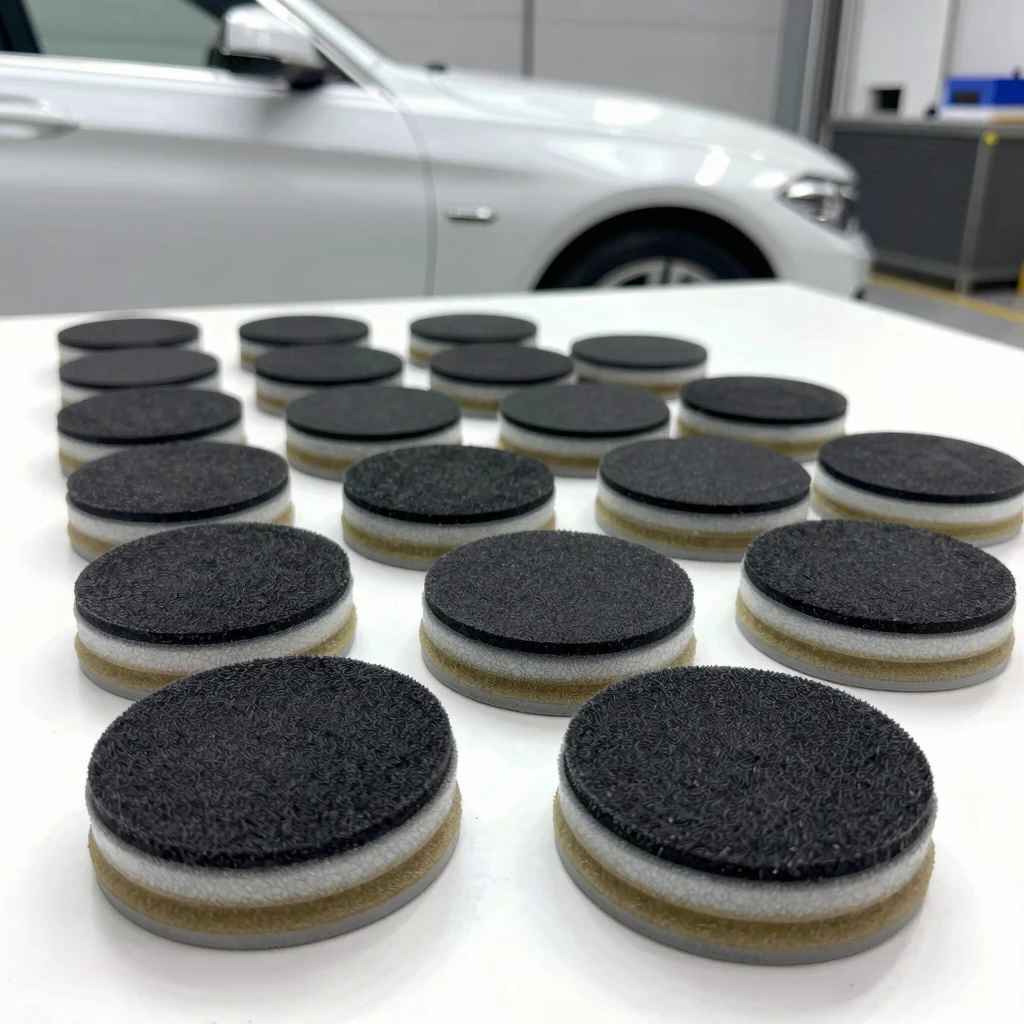
Foam pads are the workhorses of paint correction. They come in a huge variety of densities and cell structures.
Medium-cut foam pads are ideal for removing light scratches and swirl marks. They offer a good balance between cutting power and finishing ability. These pads are forgiving and work well for DIY detailers. They help remove defects without creating new ones if used properly with the right polish.
Finishing foam pads are very soft and designed to apply waxes and sealants, or to lightly polish away minor imperfections. They create a high-gloss finish and are crucial for that final sparkle. These pads don’t cut much paint, so they are safe to use after heavier compounding.
Heavy-cut foam pads are stiffer and have a more aggressive cell structure. They are used with heavy-duty compounds to remove deep scratches, oxidation, and stubborn defects. Using these requires more care, as they can easily damage paint if used incorrectly or with too much pressure.
Wool Pads
Wool pads are known for their aggressive cutting power. They are made from natural wool fibers.
Natural wool pads can remove severe defects very quickly. They are excellent for tackling deep scratches and heavy oxidation. Because they are so aggressive, they often require a follow-up step with a foam finishing pad to smooth out the surface.
Synthetic wool blend pads offer a good compromise. They provide strong cutting ability but are often a bit more forgiving than pure wool pads. These are a good choice when you need significant correction but want a little more control.
Microfiber Pads
Microfiber pads combine the cutting power of microfiber with the ease of use of foam. They are often used with all-in-one products.
Cutting microfiber pads have a dense microfiber surface that aggressively removes defects. They work well with polishes designed to be used with microfiber pads, often cutting faster than foam.
Finishing microfiber pads have a softer microfiber surface for applying waxes, sealants, or for light polishing. They provide a smooth finish and are great for adding a final layer of gloss.
Key Features for BMW Polishing Pads
When selecting polishing pads for your BMW, several features stand out. These details help ensure you get the best performance and avoid damaging your car’s paint. We’ll look at things like pad density, cutting ability, and how well they handle heat.
These are the core elements that make a pad suitable for various paint correction tasks on a BMW.
Pad Density and Firmness
Pad density is how tightly the material is packed together. A denser pad is firmer and usually cuts more. A less dense pad is softer and finishes better.
High-density pads are firm and rigid. They are best for aggressive cutting tasks. When you need to remove deep scratches, a firm pad will not collapse under pressure. This allows the polish to do its job effectively.
Medium-density pads offer a balance. They can cut moderately well but also offer good finishing capabilities. These are very versatile and a great starting point for many tasks.
Low-density pads are soft and flexible. They are perfect for applying waxes, sealants, or for the final polishing stage. They conform to curves and help create a brilliant shine without adding any abrasion.
Cutting vs. Finishing Power
Pads are rated by how much they cut (remove paint) and how well they finish (leave a smooth surface).
Cutting pads are designed to remove paint defects. They have an abrasive structure that works with a compounding polish. They remove swirls, scratches, and oxidation.
Polishing pads offer a moderate level of correction. They are used with finer polishes to remove light defects and refine the finish after compounding.
Finishing pads are very gentle. They are used with the least abrasive polishes or with waxes and sealants. Their main job is to enhance gloss and protect the paint.
Heat Management
Polishing creates friction and heat. Good pads manage this heat well to protect the paint.
Pads with excellent ventilation, like those with larger pores or specific cooling channels, dissipate heat effectively. This prevents the paint from overheating, which can cause damage.
Materials that are less prone to overheating are also desirable. Some advanced foam compounds offer better heat resistance.
Best Polishing Pads for BMW Cars Reviewed
Now we get to the heart of it: specific recommendations for your BMW. We have looked at what makes pads good in general, and now we will highlight some top choices. These pads have been tested and are known for their effectiveness on BMW paintwork.
We consider a range of needs, from light polishing to heavy correction. This list helps you pick the right tool for your specific detailing project.
Top Foam Pad Recommendations
Foam pads are incredibly popular due to their versatility and ease of use. For BMWs, choosing the right foam is key.
Lake Country CCS Pads are a standout choice. The closed-cell pockets on these pads help to hold polish better and prevent it from seeping into the foam too quickly. This means the polish stays on the surface where it needs to work. They come in a full range of cutting, polishing, and finishing densities, making them perfect for any BMW paint correction task.
Griot’s Garage BOSS Pads are another excellent option. They are designed to work with Griot’s orbital polishers but can be used with others. These pads use a unique double-density foam that enhances performance. The firmer base layer provides support, while the softer working surface allows for excellent polishing. They are known for their durability and effectiveness on a variety of paint types.
Meguiar’s Soft Buff Foam Pads are a solid choice for beginners. They are more forgiving than some aggressive pads and work well with Meguiar’s own polish and compound lines. The foam is durable and provides a consistent cut and finish.
Top Microfiber Pad Recommendations
Microfiber pads offer aggressive cutting power with a user-friendly feel.
Meguiar’s Microfiber Cutting Pads are highly effective. They are designed to work with their D/A Correction Compound to quickly remove swirls and scratches. The microfiber material cuts fast and leaves a surprisingly good finish for such an aggressive pad.
The Rupes Microfiber Cutting Pad is engineered for their Bigfoot polishers. It provides excellent cutting ability with their specific compounds. The pad’s construction helps to keep it cool and reduces dusting, leading to a cleaner work environment.
Top Wool Pad Recommendations
For the most stubborn paint defects on a BMW, wool pads are indispensable.
The Meguiar’s W-7207 Soft Wool Pad is a great entry into wool polishing. It offers good cutting power but is designed to be a bit more forgiving than some other wool pads. It’s suitable for removing moderate to heavy defects.
The Lake Country Wool Pads are available in various styles, including twisted wool and flat wool. Twisted wool is more aggressive for heavy cutting, while flat wool can offer a better finish after aggressive correction. These are reliable for tackling the toughest paint issues.
How to Choose the Right Pad for Your BMW Paint
Selecting the correct pad depends on the condition of your BMW’s paint and the specific goal you want to achieve. BMW paint can vary; some models have harder clear coats, while others are softer. Understanding this helps you pick the right tool to avoid damaging the paint.
We will guide you through deciding which pad is best for your needs, whether it’s a light refresh or a deep restoration.
Assessing Paint Condition
The first step is to check your car’s paint. Look at it under good lighting.
Light Swirls and Scratches: If you see light, spiderweb-like scratches or haze, you have minor defects. A light polishing pad with a finishing polish or a medium-cut foam pad with a light polish is usually enough.
Moderate Swirls and Scratches: Deeper scratches that you can feel with your fingernail, but are not through the clear coat, require more cutting power. A medium-cut foam pad or a microfiber cutting pad with a good polishing compound will be necessary.
Heavy Oxidation and Deep Scratches: If the paint is dull, faded, or has very deep scratches, you’ll need the most aggressive tools. This is where wool pads or aggressive microfiber cutting pads come in, paired with a heavy-duty compound.
Matching Pads to Polishes
Pads and polishes work together as a system. You need to match them correctly for the best results.
Heavy Compounds: Use these with aggressive cutting pads like wool or firm foam pads. The goal is to remove significant paint defects quickly.
Polishing Compounds: These are used with medium-cut foam pads or microfiber cutting pads for moderate paint correction. They refine the finish and remove less severe imperfections.
Finishing Polishes: These are paired with soft foam finishing pads or soft microfiber pads. They are used to enhance gloss and remove any minor haze left by previous steps.
Waxes and Sealants: Always use the softest finishing pads for applying these protective products. This ensures an even application and avoids scratching the surface.
Example Scenario: Restoring a Black BMW M3
Imagine you have a black BMW M3 that’s seen better days. The paint has moderate swirl marks from years of washing and drying. You want to restore its deep gloss.
First, wash the car thoroughly and decontaminate the paint.
Inspect the paint under good lighting to confirm the level of defects.
Select a medium-cut foam pad (like a Lake Country Orange CCS pad) and a good quality polishing compound designed for swirl removal.
Work in small sections, about 2×2 feet. Apply a few drops of polish to the pad.
Polish the section at a slow speed, then increase to a medium speed with light to moderate pressure. Keep the pad flat on the surface.
Wipe off the residue with a clean microfiber towel and inspect your work. You should see a significant reduction in swirl marks.
Follow up with a finishing foam pad (like a Lake Country White CCS pad) and a finishing polish to refine the gloss. This step removes any light hazing and maximizes shine.
Apply a paint sealant or ceramic coating for long-term protection.
Using Polishing Pads Safely on Your BMW
Proper technique is just as important as having the right pads. Using them incorrectly can lead to more damage than good, especially on a valuable car like a BMW. This section covers the safe and effective use of polishing pads.
We’ll discuss pressure, speed, and how to keep your pads in good condition so they last longer and perform better.
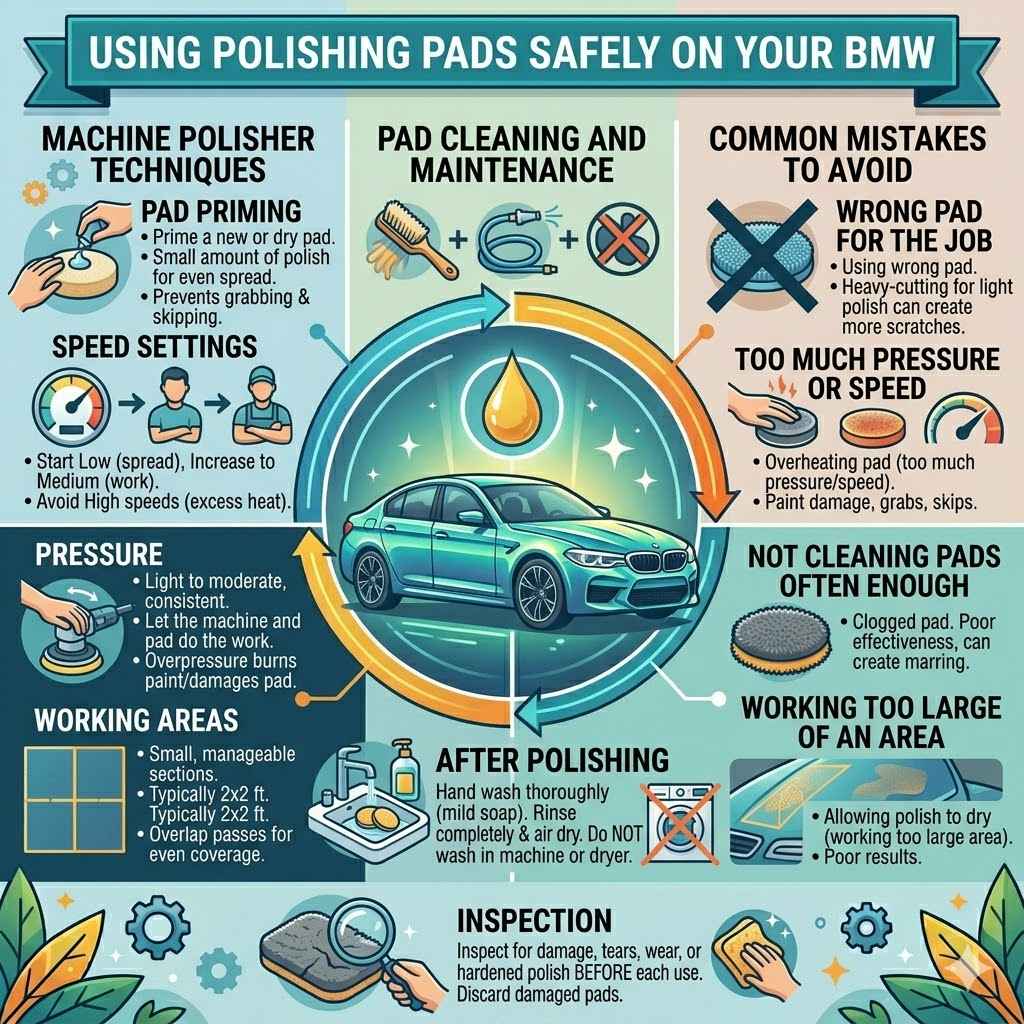
Machine Polisher Techniques
Using a machine polisher, whether it’s a dual-action (DA) or rotary polisher, requires specific handling. DA polishers are generally safer for beginners.
Pad Priming: Always prime a new pad or a dry pad with a small amount of polish. This helps the polish spread evenly and prevents the pad from skipping or grabbing the paint.
Speed Settings: Start with a low speed to spread the polish, then increase to a medium speed for working the polish. Avoid high speeds, as they generate excess heat.
Pressure: Apply light to moderate, consistent pressure. Let the machine and the pad do the work. Too much pressure can burn through paint or damage the pad.
Working Areas: Work on small, manageable sections at a time, typically 2×2 feet. Overlap your passes to ensure you cover the entire area evenly.
Pad Cleaning and Maintenance
Keeping your pads clean is vital for good results and pad longevity.
During Polishing: If a pad becomes heavily loaded with polish residue, clean it frequently. You can use a brush designed for pads or compressed air. This prevents the pad from becoming hydrophobic and losing its effectiveness.
After Polishing: Wash pads thoroughly by hand with a mild soap and water. Rinse them completely and allow them to air dry. Do not put foam pads in a washing machine or dryer, as this can damage them.
Inspection: Before each use, inspect your pads for any damage, such as tears, excessive wear, or hardened polish. Discard any damaged pads.
Common Mistakes to Avoid
There are a few common errors that people make when polishing cars. Being aware of these will help you protect your BMW.
Using the wrong pad for the job: This is the most common mistake. Using a heavy-cutting pad for a light polish can create more scratches.
Too much pressure or speed: This can cause the pad to overheat, leading to paint damage, or it can make the pad grab and skip across the surface.
Not cleaning pads often enough: A clogged pad will not polish effectively and can create marring.
Working too large of an area: This allows the polish to dry out before you can properly work it, leading to poor results.
Frequently Asked Questions
Question: What is the best type of polishing pad for a new BMW?
Answer: For a new BMW with minimal defects, a soft finishing foam pad or a soft microfiber finishing pad is best. Use these with a finishing polish or a glaze to add shine and protect the paint. Avoid aggressive cutting pads unless you are sure there are specific imperfections to address.
Question: Can I use the same pads for compounding and polishing?
Answer: It’s generally not recommended. Compounding uses more aggressive polishes and requires stiffer, cutting pads. Polishing uses finer polishes and needs softer, finishing pads to refine the paint.
Using the same pad for both can lead to poor results and marring.
Question: How often should I replace my polishing pads?
Answer: Pads wear out over time. Foam pads may start to break down, lose their shape, or become uneven. Microfiber pads can get matted.
If a pad is showing signs of damage, losing its effectiveness, or is excessively dirty and won’t clean, it’s time to replace it.
Question: Should I use wool or foam pads on my BMW?
Answer: It depends on the paint condition. Foam pads are versatile for light to moderate correction and finishing. Wool pads are more aggressive and best for heavy paint correction tasks on stubborn defects.
For general detailing, foam pads are often preferred due to their ease of use.
Question: What is “pad marring”?
Answer: Pad marring is a type of light scratching or hazing left on the paint surface by a polishing pad. It often happens when using an overly aggressive pad for the task, too much pressure, or if the pad is dirty. Using the correct pad and polish combination and proper technique helps prevent pad marring.
Summary
Choosing the right polishing pads for your BMW is key to achieving a flawless finish. We explored foam, microfiber, and wool options, highlighting their uses for cutting, polishing, and finishing. Understanding pad density, material, and how they pair with polishes ensures safe and effective paint correction.
Always assess your BMW’s paint condition, use proper machine techniques, and maintain your pads for optimal results and long-lasting shine.