Capital One Auto Navigator Review: Is It Worth Using?
Capital One Auto Navigator is legitimate, and it is worth using if you want a soft-check path to financing before you visit a dealer. The catch is straightforward: the tool can prequalify you and organize shopping, but the final deal still depends on the vehicle, the dealer, and Capital One’s underwriting.
Capital One Auto Navigator review: the verdict
Capital One Auto Navigator works best if you want a financing starting point before you step onto a lot. It is less useful if you already have a strong credit-union offer, need a very specific vehicle, or expect the online number to match the final contract without changes.
Where the tool helps
Auto Navigator combines a financing prequalification flow with a car-shopping tool. Capital One promotes it as part of its auto-financing experience, and that matters because it lets you work from a payment estimate before choosing a vehicle.
The real value shows up during shopping. You can narrow choices, see participating inventory, and avoid walking into a dealership with no budget target. That helps when you are comparing trims, mileage, or model years and need a clearer starting point.
Where it still needs dealer follow-through
The weak point is that Auto Navigator is not the final loan decision. Dealer participation matters. Vehicle eligibility matters. Final paperwork matters. If any of those change, the online estimate can change too.
That makes the tool useful for narrowing the field, but not for locking in a deal. If you treat prequalification as approval, you can waste time and miss a better offer elsewhere.
📊 Auto Navigator has a 4.8 rating based on 13,324 reviews. Source: Capitalone.
How Capital One Auto Navigator works
Capital One Auto Navigator prequalifies shoppers for financing and helps them search for a car through an online application flow. Capital One says you can check eligibility in as little as 90 seconds under the prompt “See if you’re pre-approved,” and it says there is no impact to your credit score.
The eligibility check and what “See if you’re pre-approved” means
That result is a prequalification, not a final underwriting decision. It shows that Capital One can extend an offer based on the information in the application and a soft credit pull, but it does not guarantee dealer paperwork, vehicle eligibility, or the final retail installment contract.
Capital One also says checking offers has no impact to your credit score. That makes the first step safer for comparison shopping, especially if you want to see whether a dealer offer is actually competitive.
How the shopping flow connects financing to vehicle search
Once you have an eligibility result, the tool moves into car search. That is the main difference between Auto Navigator and a basic preapproval form. It is built to connect an estimated financing range with specific vehicles, so the shopping phase and financing phase happen together.
That structure helps if you are still deciding between models. It is less helpful if you have already picked a car that may not meet Capital One’s vehicle rules or a dealer that does not participate.
What the Auto Learning Center adds to the process
Capital One includes an Auto Learning Center with car reviews, articles, tools, and resources. That matters because it gives shoppers more context before they commit to a vehicle or financing route.
It is part of Capital One’s broader digital set, alongside credit cards, checking, savings, auto loans, CreditWise, and the Capital One Mobile app. Capital One calls the app a top-rated mobile app for anytime account access, and CreditWise is described as a free credit score tool with no impact to your score.
What do the Auto Navigator ratings and reviews actually tell you?
The ratings are strong, but they mostly tell you that many users like the shopping and prequalification experience. Auto Navigator has a 4.8 rating based on 13,324 reviews, and Capital One says 96% of reviewers recommend the product. The review data is managed by Bazaarvoice, so you are seeing platform-managed customer feedback rather than a guarantee of loan approval or dealer satisfaction.
The review breakdown: 4.8 rating, 13,324 reviews, and 96% recommend
The split is heavily skewed toward positive reviews: 86% five-star, 9% four-star, 2% three-star, 1% two-star, and 2% one-star. That is a strong signal that many customers like the front-end experience.
It is not proof that every applicant gets a good rate or a smooth dealership transaction. Ratings can reflect the application flow, the app, the search tools, and the visible convenience of prequalification more than the final funding outcome.
How to read the star ratings
A high review score usually means the early-stage experience works for a lot of people. It does not mean the dealer accepted the same terms shown online. It also does not tell you whether the vehicle you want fit Capital One’s rules.
Picture a shopper with an approved range who later finds the chosen SUV is not eligible, or the dealer adds terms the online quote did not include. The review score can still be high even when that shopper runs into friction.
Pros and cons
Auto Navigator has a clear role, but it is not a one-size-fits-all financing answer. The best way to judge it is by the problems it solves before the dealership and the ones it cannot solve after you arrive.
Pros
- Gives you a prequalification step before dealer visits.
- Uses a no-credit-score-impact eligibility check.
- Connects financing with vehicle search in one flow.
- Includes the Auto Learning Center for car-shopping context.
- Helps you compare a dealer offer against a known starting point.
Cons
- Dealer participation limits where the tool works.
- Vehicle eligibility can block the deal after prequalification.
- Final loan terms can differ from the online estimate.
- Rate-sensitive shoppers may still do better with a credit union.
- App or account issues can slow down the process at the wrong time.
Who should use Capital One Auto Navigator?
It is a good fit for buyers who want a financing starting point before visiting a dealer, especially first-time buyers, thin-credit shoppers, and some self-employed borrowers. It is a weaker fit for shoppers who already have a lower-rate offer, need a very specific used car, or want a lender that is likely to fund outside a narrower dealer network.
Good fit: first-time buyers who want a starting point
First-time buyers often need structure more than flexibility. Auto Navigator can make the process more concrete by tying a financing range to actual cars. It can also reduce guesswork before the first dealership visit.
But it will not replace the need to compare total cost, APR, and fees. A first-time buyer who stops at the prequalification number may still walk into a contract that looks different on paper.
Good fit: thin-credit shoppers who need a soft-check path
Thin-credit shoppers often need to avoid unnecessary hard inquiries while they compare options. Auto Navigator’s no-impact eligibility step can help them see whether Capital One is even in range before committing to a dealer visit.
That said, thin-credit buyers should be careful about vehicle choice and dealer participation. A prequalification is only useful if the car and the seller both fit the program.
Potential fit: self-employed buyers who can document income
Self-employed buyers can use Auto Navigator, but documentation tends to be the pressure point. If income is irregular, review time can stretch because Capital One may need more proof than a W-2 borrower would expect.
Suppose a freelancer is trying to buy a compact crossover and only has one recent bank statement. That is the kind of file that can stall until tax returns, profit-and-loss records, or additional statements are provided.
Skip or compare first
If you already have a credit-union offer, compare that rate before relying on Auto Navigator. The same is true if the dealer says it can beat the online estimate with a more favorable structure. Auto Navigator is a tool, not the default best rate.
Decision checklist: where Auto Navigator can break down
This checklist maps the process to the most likely failure points. Use it before the application, after the eligibility result, and again at the dealer. It is the best way to avoid confusing a prequalification with a final approval.
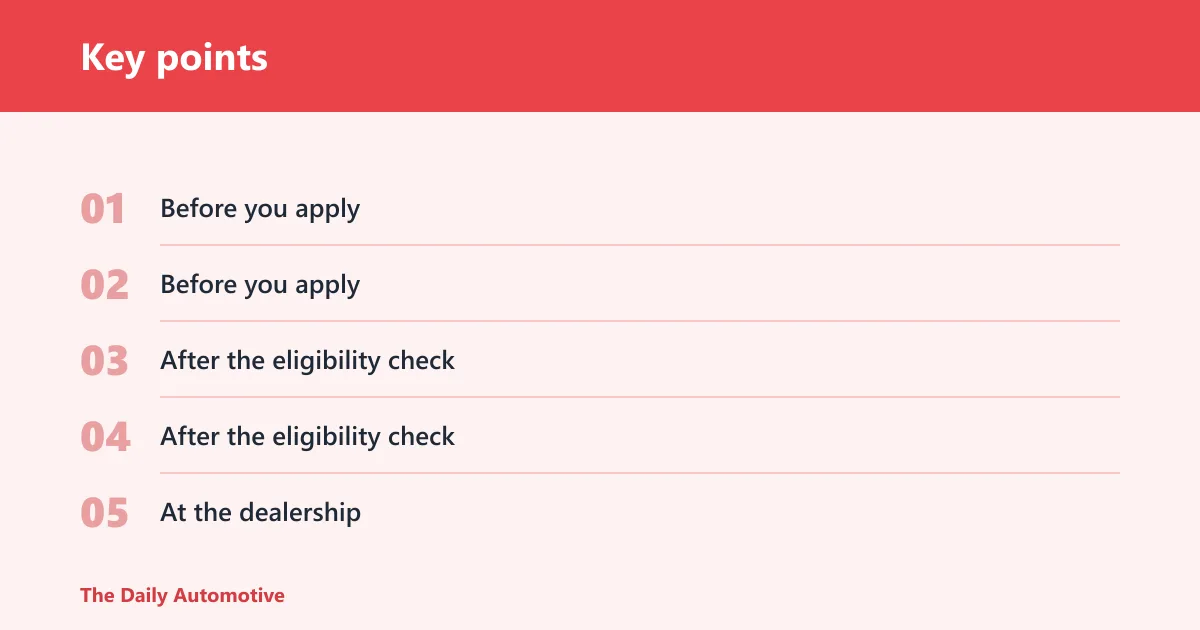
- Before you apply: confirm your credit profile, monthly budget, and income documents. If you are self-employed, gather tax returns, bank statements, or other proof that the lender is likely to ask for.
- Before you apply: decide whether the car you want fits the financing target. If the vehicle is too old, too expensive, or outside the program rules, the later steps can fail.
- After the eligibility check: verify that the dealer participates in Auto Navigator. Do not assume every store works with the program.
- After the eligibility check: confirm the exact vehicle is eligible, not just the model family. Trim, age, mileage, and condition can matter.
- At the dealership: compare the online estimate with the retail installment contract line by line. Look for payment, APR, term length, add-ons, and any fee differences.
- If the deal changes: ask whether the shift came from vehicle eligibility, lender review, or dealer pricing. If the answer is unclear, compare the deal with a credit union or walk away.
| Auto Navigator step | Likely failure point | What to verify before the dealer visit | Best buyer profile |
|---|---|---|---|
| Eligibility check | Income or credit file does not support the prequalify result | Budget, employment or income proof, basic credit profile | First-time buyer, thin-credit shopper |
| Vehicle search | Chosen car is outside Capital One vehicle rules | Year, mileage, price, trim, and dealer participation | Buyer still choosing among several cars |
| Dealer visit | Final contract differs from the online estimate | Fees, term, APR, add-ons, and final sale price | Any shopper using the tool as a comparison point |
| Funding review | Paperwork or proof of income slows approval | Recent pay stubs, tax returns, bank statements, ID | Self-employed buyer or buyer with variable income |
How long does Capital One Auto Navigator take to review documents?
Capital One does not appear to publish a fixed, universal timeline for document review. In practice, timing depends on what the lender asks for, how complete the paperwork is, and whether the dealer submission matches the prequalification details. If the file is clean, it can move quickly; if not, delays are common.
What slows document review
Missing income proof, unreadable scans, mismatched addresses, and incomplete vehicle details are the usual blockers. If the deal changes at the dealership, the lender may need a second look before funding moves ahead.
That is why shoppers should bring more than the minimum. A complete file shortens the back-and-forth.
How long does it take Capital One Auto Navigator to review proof of income?
Capital One does not publish a fixed proof-of-income review window either. Self-employed borrowers and applicants with variable income should expect more scrutiny than a straightforward salaried file, especially if the lender needs tax returns, bank statements, or other verification.
What to send first
Send the clearest documents first. If the request is vague, ask exactly which records are needed and for which period. That can prevent another round of review.
A common first-timer mistake is uploading only one month of deposits when a lender is likely to want a fuller picture. That usually slows everything down.
Can Capital One Auto Navigator work at any dealership?
No. Auto Navigator depends on dealer participation, so it does not work at all dealerships. Even where a dealer participates, the vehicle itself may still have restrictions tied to age, mileage, price, or type. Those limits can change whether the financing offer survives to the final contract.
What dealership participation means in practice
Participation means the dealer is set up to work with the program’s process. It does not mean every car on the lot is eligible, and it does not mean the final deal is fixed once you get prequalified.
That is why shoppers should confirm the store and the vehicle before traveling. It saves time and lowers the odds of hearing “the online offer doesn’t apply to this unit.”
Why final terms can change
Final terms can change if the lender needs more verification, if the car does not meet program rules, or if the dealer adds items that alter the contract. The online estimate is useful, but it is not the final binding number.
Common complaints usually start here: dealer friction, app or account issues, rate-shopping limits, and a gap between the prequalified number and the final paperwork.
Is Capital One Auto Navigator good for first-time, thin-credit, or self-employed buyers?
It can be, but the value depends on the buyer profile. First-time buyers often benefit from structure, thin-credit shoppers benefit from the soft-check step, and self-employed buyers benefit only if they can document income cleanly. The tool helps most when the file is straightforward.
First-time buyers
First-time buyers get the most value from the shopping structure. Auto Navigator can turn an abstract budget into specific cars and a likely payment range. It does not, however, remove the need to read the contract carefully.
It is best used as a starting point, not a final yes.
Thin-credit buyers
Thin-credit buyers may prefer Auto Navigator because it lets them check eligibility without a hard-hit start. That is useful when you are still rate shopping and trying to avoid too many inquiries.
Still, a soft-check prequalification does not mean the dealer or lender will accept every car. You need the car to fit the rules too.
Self-employed buyers
Self-employed buyers often run into proof-of-income delays. If income varies month to month, the review can take longer because the lender may need to confirm consistency rather than just a paycheck stub.
That makes preparation more important. If your records are scattered, Auto Navigator can become a paperwork exercise instead of a shopping tool.
Frequently asked questions
Is Capital One Auto Navigator legit?
Yes. Capital One Auto Navigator is a real financing and shopping tool tied to Capital One auto loans. It lets you check eligibility with a soft credit pull, but the final loan still depends on dealer participation, the vehicle, and underwriting.
Does Capital One Auto Navigator affect credit score?
Capital One says checking eligibility has no impact to your credit score. That applies to the prequalification step, not to every part of the car-buying process. A dealer or final loan application can involve separate review.
What does Capital One Auto Navigator pre-approval actually show?
It shows that Capital One has determined you may qualify for an auto-financing offer based on the information provided. It does not lock in the final APR, guarantee dealer terms, or promise that every vehicle will be approved.
What are common complaints about Capital One Auto Navigator?
Common complaints center on dealership friction, app or account issues, rate-shopping limits, and final terms that differ from the online estimate. Those complaints usually appear when shoppers mistake prequalification for a finished loan or skip dealer- and vehicle-eligibility checks.
How long does Capital One Auto Navigator take to review documents?
Capital One does not publish one fixed review time for documents. The pace depends on how complete the paperwork is, whether the information matches the application, and whether more proof is needed before the loan can move forward.
How long does it take Capital One Auto Navigator to review proof of income?
There is no published universal timeline. Proof-of-income review can be quick for clean salaried files and slower for self-employed applicants or anyone with variable income. Complete records usually shorten the process.