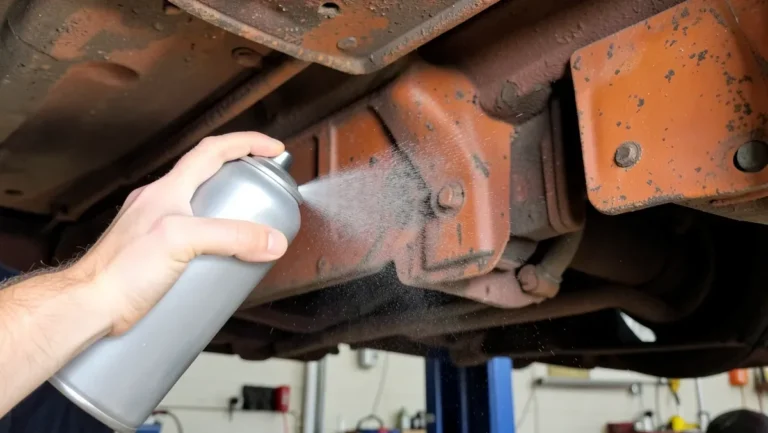
How Much Does It Cost to Replace a Car AC Evaporator?
Replacing a car AC evaporator usually costs $1,500 to $3,000, and hard-access jobs can reach $2,500 to $4,500 or more. The part is rarely the main cost. Labor, dashboard access, refrigerant recharge, and bundled seals or valves drive the bill, so a high quote only fits when the job really sits deep in the dash.
Evaporator quote table
This table lets you check a quote fast before you approve the repair. Compare the estimate in front of you with the vehicle layout, labor time, refrigerant type, and the extra parts the shop lists line by line.
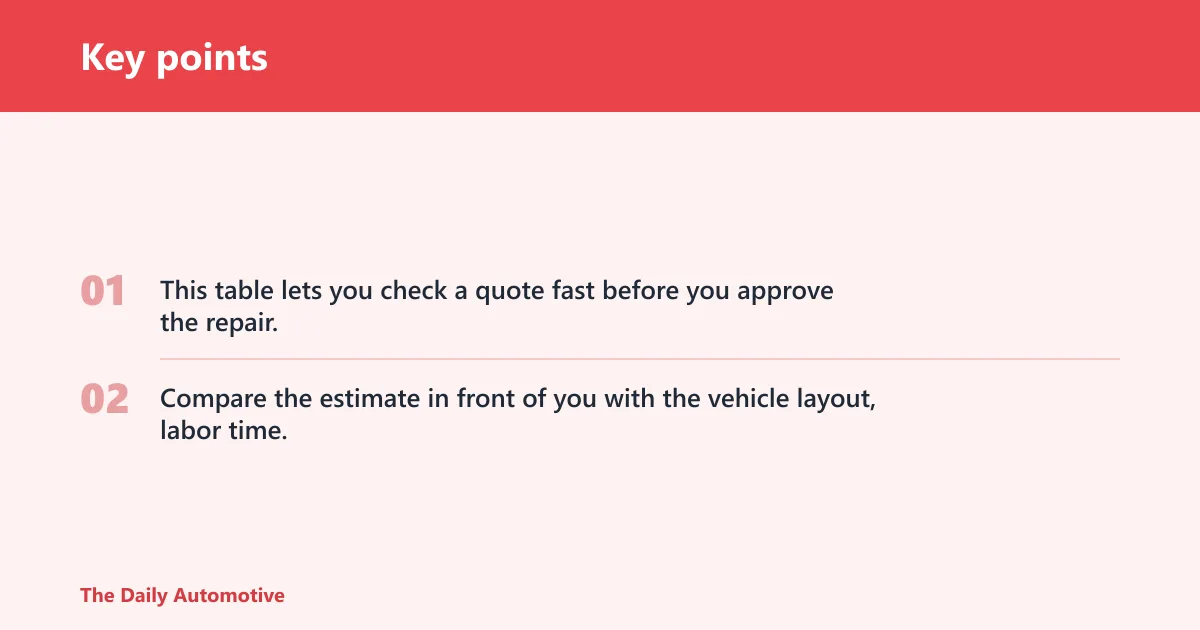
| Vehicle type | Likely labor hours | Part cost range | Recharge cost range | Common add-on parts | Quote red flags |
|---|---|---|---|---|---|
| Compact or midsize car with easier HVAC access | 8 to 10 | $150 to $450 | $120 to $250 | Expansion valve, O-rings, dryer if needed | Quote jumps well above $2,500 without a labor-hour breakdown |
| Typical modern sedan with partial dash removal | 10 to 14 | $200 to $600 | $150 to $400 | Expansion valve, O-rings, dryer, seals | No refrigerant type listed, or recharge billed twice |
| Luxury car or tight-packaging vehicle | 14 or more | $300 to $600 | $200 to $400 | Expansion valve, O-rings, dryer, additional trim clips | Dealer quote is high but still itemized; independent quote is vague and missing hours |
| 2017-and-newer vehicle using R-1234yf | 8 to 14 | $150 to $600 | $120 to $400, often higher than R-134a jobs | O-rings, expansion valve, dryer depending on design | Recharge cost looks low for R-1234yf or does not name the refrigerant |
What the evaporator does
The evaporator core sits inside the HVAC housing behind the dashboard on many cars. It cools cabin air by pulling heat from refrigerant, then the blower pushes air across that cold surface and into the vents. If the core leaks, the system has to be opened, recovered, and reassembled again.
Where it sits and why that matters
That location is why the job gets expensive. The part itself is usually cheap compared with the labor needed to reach it, remove the HVAC case, swap the core, and put the dash back together. On many vehicles, that means major interior disassembly.
A leaking evaporator can also leave oily residue in the HVAC box and reduce system performance over time. The main complaint is usually warm air or loss of cooling, not weak blower airflow. Weak airflow points more often to a cabin filter, blower issue, or blocked ducting.
How much does replacement cost?
Most published totals for evaporator replacement land around $1,500 to $3,000, with some luxury or hard-access repairs reaching $2,500 to $4,500 or more. Jerry estimates around $1,000 total for some jobs, while Empire puts 2026 totals at $1,200 to $2,500 at independent shops and $1,500 to $3,500 or more at dealers.
Parts versus labor
The evaporator core part is not usually the problem. Jerry lists the part at about $450, with parts usually running between $400 and $550, and labor averaging about $650. Empire lists the part at $150 to $600 and labor at 8 to 14 hours. That spread tells you where the quote moves.
Labor is the main cost driver. If the shop needs deep-dash access or full dashboard removal, the labor bill can be higher than the parts bill by a wide margin. A quote can look inflated, but a long labor time is legitimate when the HVAC box is buried behind the dash structure.
Why does the quote run high?
Evaporator replacement runs high because the part sits deep in the vehicle, the AC system must be opened and recharged, and the labor time often dominates the invoice. Independent shops usually charge less than dealers, but the same vehicle can still produce very different totals depending on packaging and labor rate.
Dashboard removal and vehicle design
Some cars need only partial dash disassembly. Others require major dashboard removal to reach the HVAC case. That difference can move the job from a long repair to a very long one. Empire’s 8 to 14 hour range is normal, and some vehicles go beyond that when the cabin structure blocks access.
Suppose a 2019 sedan needs 11 labor hours at an independent shop and uses R-1234yf. The total can rise quickly because the recharge is more expensive than on an older R-134a car, and the labor line alone may account for most of the bill.
Independent shop versus dealership pricing
Independent shops often quote lower totals because their labor rate is usually lower. Dealerships typically charge more for labor and parts, and they may quote a higher total even when the work list is the same. That does not make the dealer quote wrong; it means you need to compare hours and line items, not only the final number.
Does the dashboard have to come out?
Not always. Some cars allow partial dash access, while others need full or near-full dashboard removal to reach the HVAC case. The more tightly the dash is packaged around the heater box and air ducts, the more time the repair takes and the higher the labor cost climbs.
What to ask the shop
Ask whether the estimate assumes partial dash access or full removal. Ask how many labor hours are listed. Ask whether the shop has already checked the evaporator source rather than assuming it. Those three answers tell you a lot about whether the quote is based on vehicle layout or padded with guesswork.
- Ask for the labor hours, not only the total.
- Ask which refrigerant the vehicle uses.
- Ask whether the recharge is included.
- Ask which parts are included beyond the evaporator core.
- Ask what diagnostic evidence points to the evaporator, not another AC fault.
What should be replaced with it?
Common add-ons include the expansion valve, O-rings, and sometimes the dryer or receiver-drier, depending on vehicle design and parts condition. A refrigerant recharge is required after the system is opened. The same source lists the recharge at $120 to $400, while Jerry estimates an AC system recharge can cost around $150 to $500.
Which add-ons are typical?
The expansion valve is often replaced during evaporator work because it is paired closely with the evaporator circuit and can be difficult to reach later. O-rings and seals are common because the system has to be opened anyway. A dryer or receiver-drier may be added when the vehicle design or parts condition makes that sensible.
Do not assume every opened system needs every related part. The correct list depends on the vehicle and on the condition of the removed parts. A careful quote should name each add-on separately so you can tell whether the shop is bundling necessary pieces or adding extras you did not ask for.
How to sanity-check a quote
Start with the labor hours, then check the refrigerant type, then look at the parts list. That order matters because labor usually drives the total, and R-1234yf can materially raise the recharge cost. If the estimate skips those details, it is harder to tell whether the number is fair or padded.
A quote that looks high can still be reasonable if it shows 12 to 14 hours of labor, deep-dash access, R-1234yf recharge cost, and related seals or valve work. A quote with the same total but no explanation is harder to trust. The goal is not to reject a costly repair; it is to see why it costs that much.
Confirm the diagnosis first
Before approving evaporator replacement, confirm that the leak actually points to the evaporator. Stronger clues are warm air, repeated loss of cooling, and residue evidence tied to the HVAC box. A vacuum hold alone does not locate the leak. If the system is leaking elsewhere, replacing the evaporator will not fix the problem.
A common first-timer mistake is authorizing the biggest AC repair on the page before checking for simpler causes such as a low charge, a bad compressor, a stuck blend door, or a clogged cabin filter. Those problems can mimic AC trouble, but they do not call for evaporator replacement.
Can you drive with a bad evaporator core?
Usually yes, if the car still drives normally and the problem is limited to the air-conditioning system. A bad evaporator does not usually stop the engine or make the car unsafe to move. The bigger issue is that the AC will keep losing performance, and the leak can worsen over time.
When to stop waiting
If the cabin no longer cools, the system keeps losing refrigerant, or the quote is already tied to a confirmed evaporator leak, delaying the job only raises the chance of further system contamination and more labor later. At that point, the repair is less about comfort and more about avoiding a bigger invoice.
Picture a 2018 midsize SUV that still runs fine but blows warm air after a few days of cooling. If the shop confirms a dash-side evaporator leak and quotes 13 labor hours plus an R-1234yf recharge, that high total is more believable than a short, vague estimate with no labor breakdown.
Frequently asked questions
How much does it cost to replace an AC evaporator?
The big swing comes from labor hours, dashboard access, and refrigerant type. A quote that separates those items is easier to judge than one number with no detail.
How much does it cost to replace a car AC system?
A full AC system replacement is usually more expensive than an evaporator job because it can include multiple major components, not just the core. The final number depends on compressor, condenser, lines, evaporator, and recharge work. If you only need the evaporator, a full-system quote is not the right benchmark.
How much does it cost to repair an air conditioner in a car?
Car AC repair can be inexpensive for a leak, sensor, or control issue, or expensive when the evaporator sits deep behind the dashboard. For evaporator replacement, labor and recharge costs dominate. That is why two AC quotes can differ sharply even when both say “air conditioner repair.”
How much to replace AC evaporator?
A fair answer depends on the vehicle. A simpler job can land near the low end of the published range, while a deep-dash or dealer repair can run much higher. Ask for labor hours, refrigerant type, and the exact add-ons before you compare the number to another shop.
Why is car AC evaporator replacement so expensive?
Because the evaporator is buried in the HVAC housing, the job often requires major dash disassembly, refrigerant recovery, and a recharge afterward. Labor typically ranges from 8 to 14 hours, and some vehicles take more. The part is only one piece of a long, labor-heavy repair.
Does the dashboard have to come out for evaporator replacement?
Not always, but many vehicles need at least partial dashboard removal to reach the HVAC case. Some designs need much more disassembly than others. The best way to judge the estimate is to ask whether your specific model needs partial or full dash removal and how many hours the shop used.
Products related to this article
Sponsored / affiliate links. As an Amazon Associate I earn from qualifying purchases. I may earn additional commission from eligible campaigns.