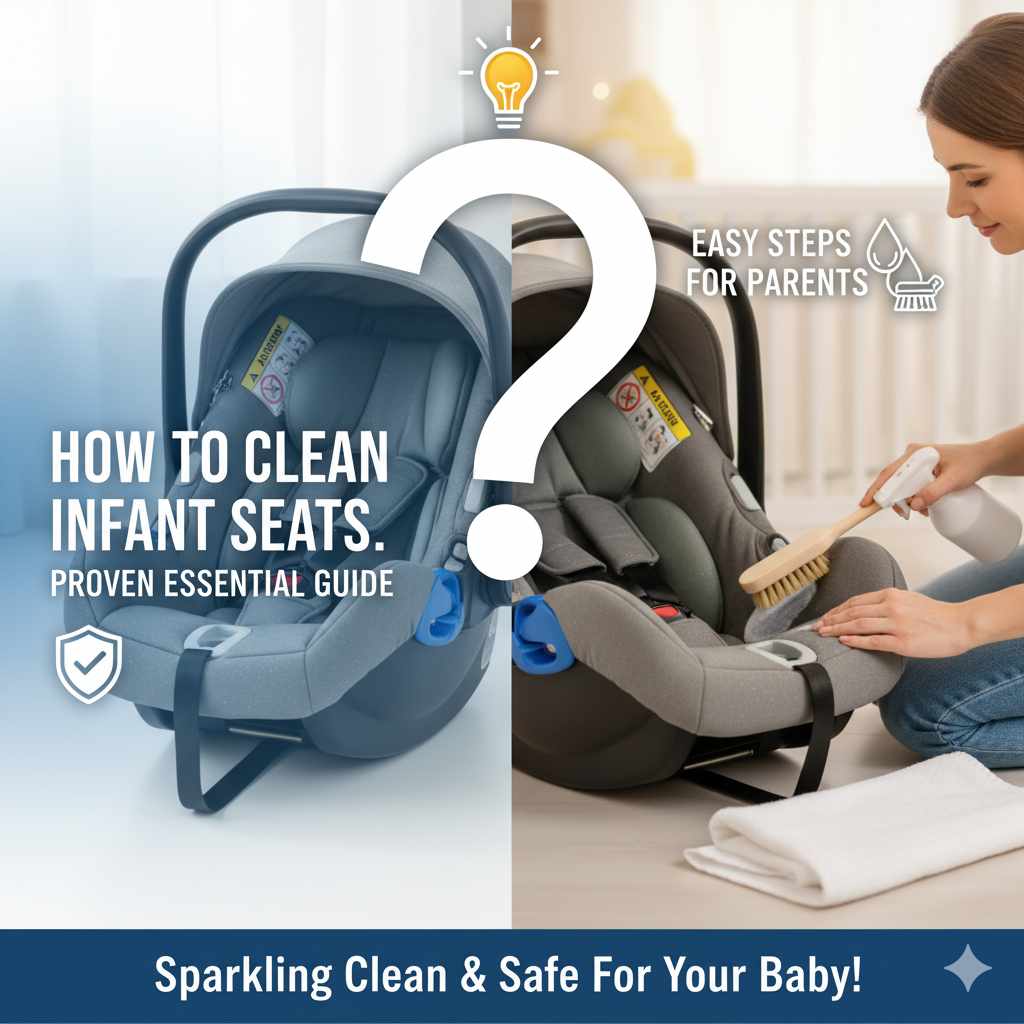
How To Clean Infant Car Seats: Proven Essential Guide
Your infant car seat can be cleaned easily and effectively with a few simple steps. This guide explains how to wash fabrics, sanitize plastic, and address tough stains to keep your baby’s ride safe and germ-free, ensuring peace of mind on every journey.
Keeping your little one’s car seat spick and span is more than just about looks; it’s crucial for their safety and health. Spills, crumbs, and the inevitable sticky fingers can make an infant car seat look and feel grimy pretty quickly. But don’t worry! Cleaning it doesn’t have to be a complex chore. With the right approach, you can have your baby’s seat fresh and safe in no time. Let’s walk through a simple, step-by-step process to make this task manageable and even a little bit satisfying.
Why Cleaning Your Infant Car Seat Matters
Your infant car seat is a critical safety device. Over time, it can accumulate a variety of messes:
- Food and Drink Spills: Formula, milk, pureed foods, and juice can leave sticky residues and attract pests.
- Germs and Bacteria: Babies can be more susceptible to germs, and car seats are shared environments.
- Dirt and Debris: Mud, sand, and everyday dirt can get tracked into the seat.
- Accidents: Diaper leaks or car sickness can create particularly challenging stains and odors.
Regular and proper cleaning ensures that the car seat remains hygienic and free from anything that could potentially harm your baby. It also helps maintain the integrity of the seat’s materials and safety harnesses.
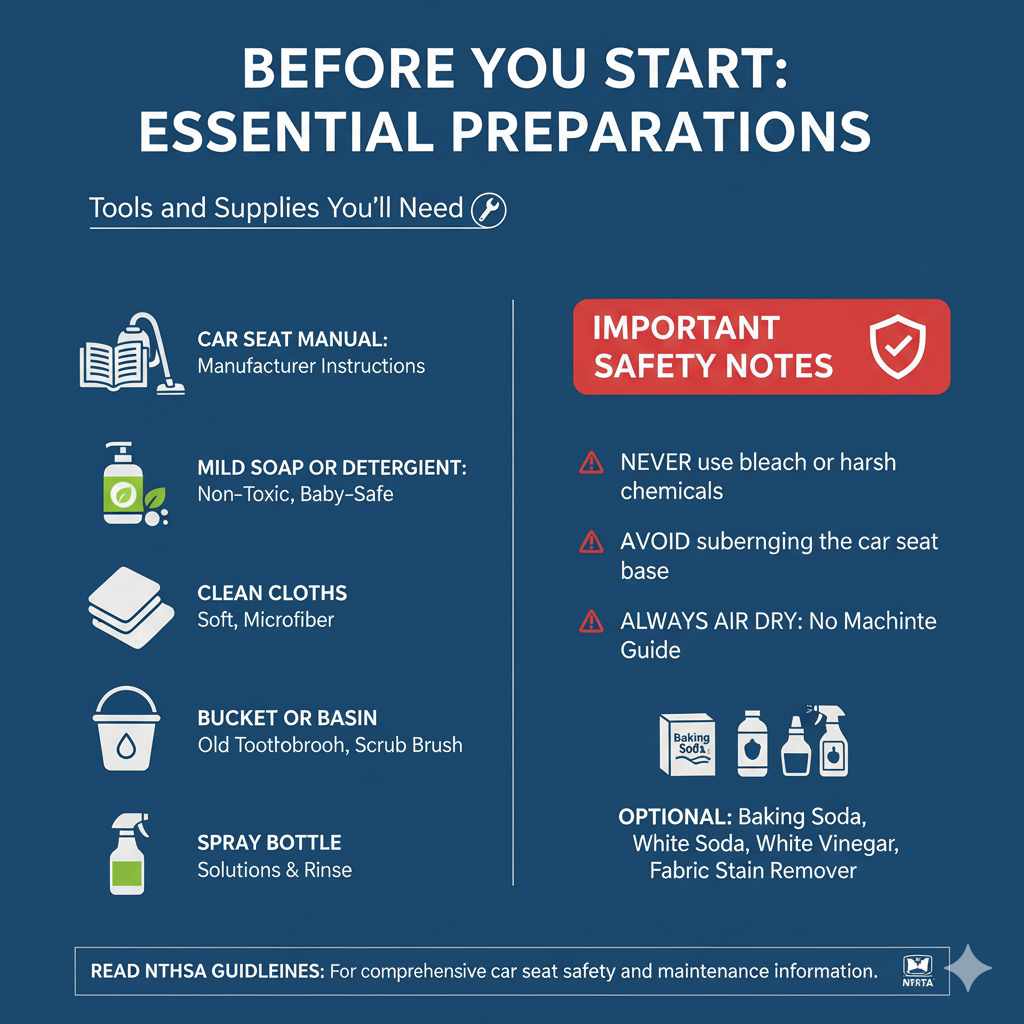
Before You Start: Essential Preparations
Before diving into cleaning, gather everything you’ll need. A little preparation makes the job much smoother.
Tools and Supplies You’ll Need
- Car Seat Manual: Always refer to your specific car seat’s manufacturer instructions. Some materials or cleaning methods might void warranties or damage the seat. You can usually find a digital copy on the manufacturer’s website.
- Vacuum Cleaner: With hose attachments for getting into crevices.
- Mild Soap or Detergent: Look for gentle, non-toxic options like baby-safe dish soap or a mild laundry detergent. Avoid harsh chemicals.
- Clean Cloths: Several soft, absorbent cloths (microfiber is great).
- Bucket or Basin: For mixing cleaning solutions.
- Soft Brush: An old toothbrush or a soft-bristled scrub brush can be useful.
- Spray Bottle: For applying cleaning solutions or rinse water.
- Optional: Baking Soda: For odor elimination.
- Optional: White Vinegar: For sanitizing and odor removal (use diluted and cautiously, testing on an inconspicuous area first).
- Optional: Fabric Stain Remover: Ensure it’s safe for baby products.
Important Safety Notes
Safety is paramount when dealing with car seats. Always remember these crucial points:
- Never use bleach or harsh chemicals: These can degrade the car seat’s plastic and fabric, compromising its safety.
- Avoid submerging the car seat base: The plastic and internal parts can be damaged by excessive water.
- Always air dry: Never use a machine dryer, as the heat can shrink or damage materials.
- Check the Manual: Your car seat’s manual is your ultimate guide. It will specify which parts are removable, washable, and what cleaning agents are approved.
- Read the National Highway Traffic Safety Administration (NHTSA) guidelines: For comprehensive information on car seat safety and maintenance, NHTSA provides excellent resources.
Step-by-Step Guide: Cleaning Your Infant Car Seat
Let’s get cleaning! We’ll break this down into manageable parts, focusing on the fabric components and the plastic shell.
Step 1: Remove Loose Debris
Start by thoroughly vacuuming the entire car seat. Use the crevice tool to reach deep into all the nooks and crannies where crumbs and dust love to hide.
- Shake out removable parts: If possible, detach any loose padding or covers and give them a good shake outside.
- Vacuum extensively: Pay close attention to seams, buckles, and the area where the harness straps emerge.
- Use a brush: For stubborn dried-on debris, gently brush it loose before vacuuming again.
Step 2: Detach and Wash Fabric Components
Most infant car seat covers and padding are designed to be removed for cleaning. Consult your manual to confirm this and understand the correct detachment method.
- Remove the fabric: Carefully unclip, unsnap, or unbuckle all fabric pieces. Note how they came off so you can reassemble them correctly.
- Check the care label: Look for a small tag on the fabric. It will usually indicate if it’s machine washable and on what setting (e.g., gentle cycle, cold water).
-
Hand Washing: If machine washing isn’t recommended or if you prefer a gentler approach:
- Fill a clean basin or sink with cool or lukewarm water.
- Add a small amount of mild soap or a very gentle detergent. Swish to create light suds.
- Submerge the fabric parts and gently agitate them with your hands.
- Use a soft brush for any stained areas, working the soap in gently.
- Rinse thoroughly with clean water until all soap residue is gone.
-
Machine Washing (if permitted):
- Place the fabric components in a mesh laundry bag for extra protection.
- Wash on a delicate or gentle cycle using cold water and a mild detergent.
- Avoid fabric softeners and bleach.
Step 3: Clean the Buckles and Harness Straps
These areas are often touched by little hands and mouths, and they need special attention. However, avoid soaking or heavily saturating the harness straps, as this can compromise their strength.
-
Buckles:
- Use a damp cloth with a tiny bit of mild soap to wipe down the buckle and tongue.
- Use a toothbrush or cotton swab to clean out any food particles stuck in the buckle mechanism.
- Wipe clean with a damp cloth and then a dry cloth.
-
Harness Straps:
- Spot clean the straps using a cloth dampened with water and a tiny amount of mild soap.
- Gently scrub any stained areas.
- Wipe thoroughly with a clean, damp cloth to remove all soap residue.
- Let them air dry completely. Do NOT use chemicals or submerge them in water.
Step 4: Clean the Plastic Shell and Frame
The durable plastic parts of the car seat can usually be wiped down with a slightly stronger solution, but still, avoid harsh chemicals.
- Prepare cleaning solution: Mix a solution of warm water and a mild detergent, or a 1:1 solution of white vinegar and water for extra sanitizing power (again, test on an inconspicuous area first).
- Wipe down: Dampen a clean cloth with the solution and wipe down the entire plastic shell, including the base (if it’s not a separate unit).
- Use a brush: For dirt and grime in textured areas or near seams, use a soft brush gently.
- Rinse: Wipe down with a clean cloth dampened with plain water to remove any cleaning solution residue.
- Dry: Wipe thoroughly with a dry cloth.
Step 5: Address Stubborn Stains and Odors
For those particularly tough messes, a little extra effort might be needed.
- Pre-treat stains: For fabric stains, apply a small amount of a baby-safe stain remover or a paste made of baking soda and water directly to the stain. Let it sit for 10-15 minutes, then gently scrub and proceed with washing.
-
Odor elimination:
- Baking Soda: Sprinkle baking soda liberally on dry fabric components (once they are fully dry from washing). Let it sit for several hours or overnight, then vacuum it off thoroughly.
- Vinegar: A diluted vinegar solution (1 part vinegar to 3 parts water) can be used to wipe down plastic parts to help neutralize odors. Ensure all vinegar scent dissipates before reassembling.
Step 6: Air Dry Everything
This is a critical step for the longevity and safety of your car seat.
- Fabric components: Hang them on a clothesline or lay them flat on a clean towel to air dry completely. Ensure they are fully dry before putting them back in the car seat to prevent mold and mildew.
- Plastic parts: Wipe them down with a clean, dry cloth.
- Harness straps: Ensure they are completely dry before reassembly. Hang them up if needed.
Step 7: Reassemble the Car Seat
Once everything is clean and bone dry, it’s time to put it all back together.
- Follow your manual: Refer to your car seat manual for precise reassembly instructions. This is especially important for correctly threading harness straps and securing padding.
- Check all connections: Make sure all snaps, clips, and straps are securely fastened.
- Test harness: Ensure the harness adjusts smoothly and the buckle fastens securely.
Cleaning Frequency: When and How Often?
The frequency of cleaning depends on how your car seat is used and any specific incidents.
- Regular Maintenance (Weekly/Bi-weekly): A quick vacuum into all crevices and a wipe-down of buckles is a good habit. This prevents minor messes from becoming big problems.
- Spot Cleaning (As needed): For immediate spills and small messes, spot clean the affected area with a damp cloth and mild soap.
- Deep Cleaning (Every 1-3 months, or after incidents): This is when you remove fabrics and wash them thoroughly. It’s also a good idea to do a deep clean after any significant spills like milk leaks or if you notice odors.
- After Illness or Accidents: If your child has been sick or there’s a significant mess (like a blowout or vomit), a deep clean is essential. Check your manual for specific sanitization advice in these cases.
Troubleshooting Common Car Seat Cleaning Issues
Here are some common challenges and how to tackle them:
Issue: Mold or Mildew
Cause: Moisture trapped in fabric or foam.
Solution: If mild, hand wash affected fabric parts in a solution of equal parts water and white vinegar, rinse well, and air dry completely in the sun if possible. If severe, the car seat may no longer be safe and might need replacement. Check your manual and manufacturer guidelines.
Issue: Extremely Tough Stains (e.g., poop blowout)
Cause: Organic matter setting into the fabric and padding.
Solution: After removing loose solids, spot treat immediately with a paste of baking soda and water. Let it sit for at least 30 minutes, then gently scrub. You may need to repeat this process. For fabric parts, follow by hand washing as described above. For stubborn odors, leave baking soda on the dry fabric for 24 hours before vacuuming. If staining persists and you’re concerned about hygiene, consider replacing the affected fabric components if your manufacturer allows it.
Issue: Sticky Residue from Spills
Cause: Sugary drinks, candy, or syrup.
Solution: Use a cloth dampened with warm water and a small amount of mild dish soap. Gently work at the residue. For tight spots, a damp cotton swab can be effective. Rinse thoroughly with a clean, damp cloth to remove all soap. Ensure it’s completely dry.
Table: Cleaning Solution Guidelines
Here’s a quick reference for what to use (and what to avoid) for different parts of your infant car seat:
| Car Seat Part | Recommended Cleaning Solution | Method | Things to Avoid |
|---|---|---|---|
| Fabric Covers & Padding | Mild Soap/Detergent, Cool/Lukewarm Water | Hand wash or Machine wash (gentle cycle, cold water) per manual. Spot treat stains with baby-safe remover or baking soda. | Bleach, Harsh Chemicals, Fabric Softeners, Machine Dryers, Excessive Heat |
| Harness Straps | Mild Soap & Water (diluted) | Spot clean ONLY with a damp cloth. Rinse thoroughly with a clean, damp cloth. | Soaking, Submerging in Water, Harsh Chemicals, Bleach, Machine Washing/Drying |
| Buckles & Hardware | Mild Soap & Water or Rubbing Alcohol (sparingly on metal parts) | Wipe with a damp cloth. Use toothbrush for crevices. Dry thoroughly. | Soaking in Water, Harsh Chemicals, Lubricants (unless specified by manual) |
| Plastic Shell & Base | Mild Soap/Detergent & Warm Water OR Diluted White Vinegar (1:1) | Wipe down with a clean cloth. Use a soft brush for grooves. Rinse with plain water. | Abrasive Cleaners (Scouring pads, steel wool), Bleach, Harsh Solvents |
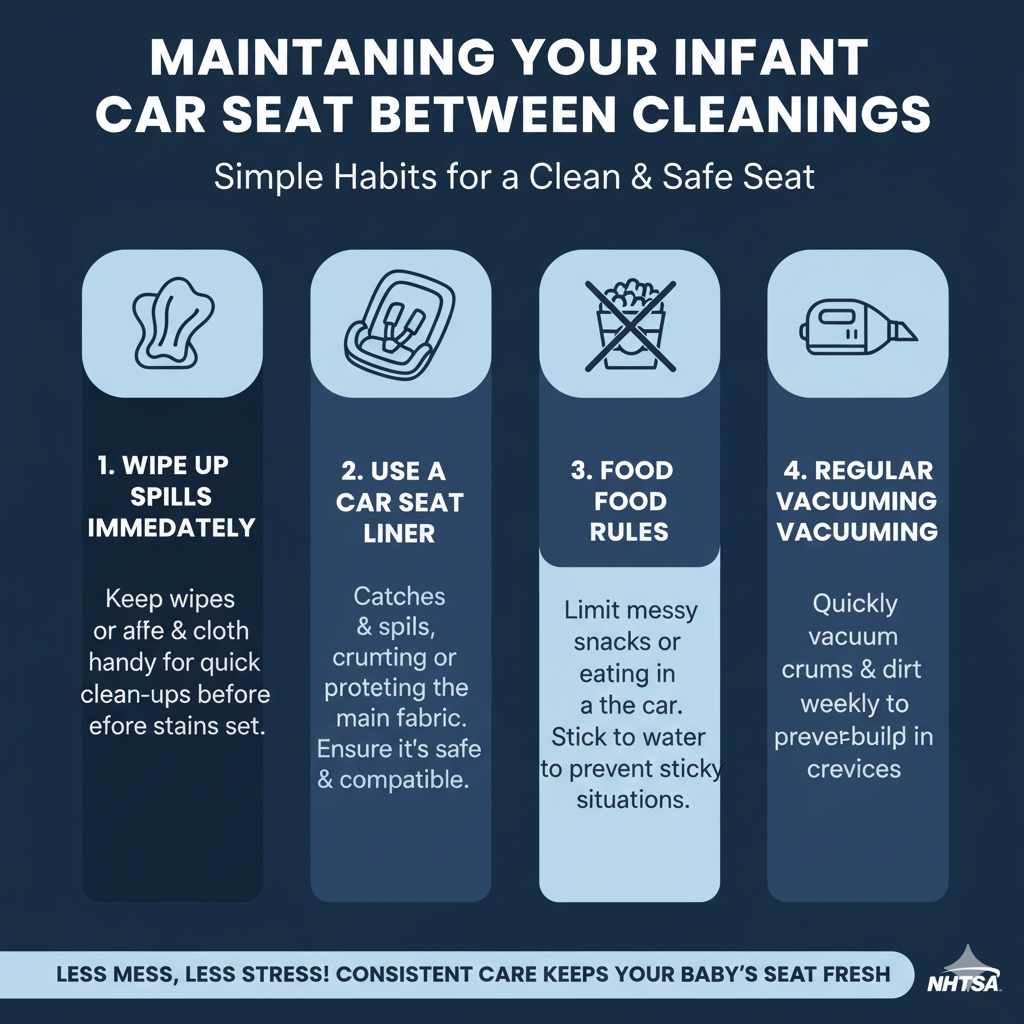
Maintaining Your Infant Car Seat Between Cleanings
A little ongoing care can make big cleaning jobs less frequent and less daunting.
- Wipe Up Spills Immediately: The sooner you tackle a spill, the easier it is to remove. Keep a pack of unscented baby wipes or a small microfiber cloth in your car for quick clean-ups.
- Use a Car Seat Liner: A liner made of breathable fabric can catch crumbs and spills, protecting the main car seat fabric.
- Food Rules: Try to limit eating and drinking in the car, or at least stick to less messy snacks.
- Regular Vacuuming: A quick vacuum once a week or bi-weekly can prevent dirt and debris from getting ground into the fabric.
Frequently Asked Questions (FAQs)
Q1: Can I put my infant car seat fabric in the washing machine?
A1: Always check your car seat’s manual. Most modern infant car seat covers and padding are machine washable on a gentle cycle with cold water. However, some may be spot clean only. Never machine wash harness straps; they are typically spot clean only.
Q2: How do I clean the harness straps without damaging them?
A2: Harness straps should never be submerged in water or put in a washing machine or dryer, as this can weaken their fibers and compromise safety. Gently spot clean them with a cloth dampened with mild soap and water. Ensure all soap residue is wiped away with a clean, damp cloth, and allow them to air dry completely.
Q3: What should I do if my car seat smells bad?
A3: First, ensure there are no hidden spills or debris causing the odor. After a thorough cleaning and ensuring everything is completely dry, sprinkle the fabric components with baking soda, let it sit for several hours or overnight, then vacuum it off thoroughly. For plastic, a diluted vinegar spray can help neutralize odors.
Q4: Is it safe to use baby wipes to clean the car seat?
A4: Unscented baby wipes are generally safe for spot cleaning minor messes on both fabric and plastic parts. Avoid wipes with alcohol or harsh chemicals, which could damage materials or leave residue. For deeper cleaning, it’s best to use mild soap and water.
Q5: Can I use baby powder on my car seat?
A5: It’s generally not recommended to use baby powder (talcum powder) on or around your car seat. It can create a slippery surface on the harness, affecting its ability to hold your child securely. Additionally, fine powders can be inhaled and are not ideal for use in a confined space like a car.
Q6: How do I clean a car seat after a vomit or diaper blowout?
A6: For severe messes, remove any solid matter immediately. Spot treat affected fabrics with a paste of baking soda and water or a stain remover safe for baby products. Hand wash any removable fabric parts thoroughly according to the manual. For the harness, spot clean carefully as described above. Wipe down plastic parts thoroughly. Afterward, you can use a diluted vinegar spray on hard surfaces for additional sanitizing. Ensure everything is completely dry and aired out before reassembly.